


How to Do Abhyanga Massage at Home: Benefits, Oils, and Step-by-Step Guide

Updated: Sep 17
Feeling stressed, tense, anxious, dry, exhausted, or disconnected from your body? According to Ayurveda, daily self-care rituals play an important role in calming the nervous system, improving circulation, supporting healthy skin, and restoring balance throughout the body and mind. One of Ayurveda's most beloved practices for grounding and nourishment is Abhyanga, the traditional practice of warm oil self-massage.
Abhyanga is traditionally used to help soothe excess Vata, support circulation, lubricate the joints, nourish the skin, encourage relaxation, and promote a greater sense of calm and wellbeing. Ayurveda views self-massage as more than physical care—it is a mindful ritual that supports emotional balance, healthy aging, restful sleep, and overall vitality.
While many Abhyanga guides focus primarily on full-body oil massage, traditional Ayurvedic self-care also includes specialized practices for the head and ears. These often-overlooked therapies offer additional support for the nervous system, sense organs, hair, scalp, and Vata balance, making them valuable additions to a complete Abhyanga routine.
In this comprehensive guide, you'll learn how to perform Ayurvedic self-massage at home, including the benefits of Abhyanga, Ayurvedic head massage (Shiro Abhyanga), Ayurvedic ear massage (Karna Purana), the best oils for different doshas, step-by-step massage techniques, and simple ways to make these deeply nourishing Ayurvedic rituals part of your daily routine.

Explore more on the Saumya Blog, selected top Ayurveda blogs and websites to watch.
Abhyanga massage is Ayurveda's traditional warm oil self-massage practice that nourishes the skin, calms the nervous system, supports healthy circulation, lubricates the joints, and promotes overall well-being. Performed with dosha-appropriate oils, Abhyanga is an important part of Dinacharya (Ayurveda's daily routine) for maintaining balance and long-term health.
Key Takeaways
Abhyanga is Ayurveda's traditional warm oil self-massage practice used to nourish the body, calm the nervous system, and promote overall health and wellbeing.
Regular Ayurvedic self-massage may help support relaxation, healthy circulation, lymphatic flow, joint comfort, restful sleep, healthy skin, and healthy aging.
Choosing the correct Abhyanga oil based on your dosha, season, stage of life, and current state of balance is essential for achieving the greatest benefits.
This comprehensive guide includes full-body Abhyanga, Ayurvedic head massage (Shiro Abhyanga), and Ayurvedic ear massage (Karna Pratisaranam) for a complete Ayurvedic self-care experience.
Classical Ayurvedic texts praise Abhyanga for supporting strength, vitality, longevity, healthy sleep, and Vata balance.
Modern research suggests Abhyanga massage may help reduce perceived stress and support nervous system relaxation.
Most people benefit from practicing Abhyanga 2–5 times per week, although the ideal frequency varies according to individual needs and constitution.
Combining Abhyanga with diaphragmatic breathing, meditation, and Ayurvedic daily routines (Dinacharya) may enhance its calming, grounding, and restorative effects.
Consistency matters more than perfection—even a few minutes of regular Abhyanga can become a powerful act of daily self-care.
Table of Contents
What Is Abhyanga?
Abhyanga is a traditional Ayurvedic self-massage practice that uses warm herbal oils and specific massage techniques to nourish the body, calm the mind, and support overall wellbeing. Traditionally performed before bathing, Abhyanga helps nourish the skin, calm the nervous system, support circulation, balance the doshas, and promote overall health and vitality.
The word Abhyanga comes from Sanskrit and is often translated as "oil massage" or "self-anointing with oil." For thousands of years, Ayurvedic practitioners have recommended Abhyanga as an essential component of Dinacharya, Ayurveda's daily self-care routine.
Unlike many modern wellness practices, Abhyanga is not simply about relaxation. Ayurveda views warm oil massage as a powerful act of nourishment that supports the body, mind, and spirit simultaneously. The warm oil helps soothe Vata dosha, while the rhythmic massage strokes encourage circulation, support healthy lymphatic flow, and cultivate a profound sense of grounding and calm.
Abhyanga in the Classical Ayurvedic Texts
The practice of Abhyanga is deeply rooted in Ayurveda's classical texts. In the Ashtanga Hridayam, daily oil massage is praised for supporting healthy aging, sound sleep, strength, vitality, and the balancing of Vata dosha.
"Abhyanga should be practiced daily. It wards off old age, exertion, and aggravation of Vata. It bestows good vision, nourishment to the body, long life, sound sleep, healthy skin, and strength."— Ashtanga Hridayam, Sutrasthana 2:8–9
Today, many people practice Abhyanga to support relaxation, reduce feelings of stress, nourish dry skin, improve body awareness, and create a deeper connection with themselves through a simple daily ritual of self-care.
What Does the Research Say About Abhyanga?
While research on Abhyanga is still emerging, early studies support some of Ayurveda's traditional observations.
A pilot study published in the Journal of Alternative and Complementary Medicine found that participants receiving a one-hour Abhyanga massage experienced significant reductions in perceived stress and heart rate, suggesting that Abhyanga may support relaxation and nervous system balance.
While additional research is needed, these findings align with Ayurveda's long-standing use of Abhyanga to calm the nervous system, support wellbeing, and promote overall balance.
Charaka Samhita (Sutrasthana 5)
The Charaka Samhita describes daily oil massage as a practice that helps pacify Vata, support strength, improve appearance, nourish the tissues, and promote healthy aging. A body regularly anointed with oil is said to become strong, supple, and less susceptible to the effects of physical exertion and aging.

15 Benefits of Abhyanga: Why Ayurvedic Self-Massage Is a Powerful Daily Practice
1. Helps Balance and Stabilize Vata Dosha
Abhyanga is one of Ayurveda's most effective therapies for calming excess Vata. The combination of warm oil and gentle massage helps counter dryness, restlessness, worry, and feelings of being overwhelmed.
How to Balance Vata Dosha
2. Promotes Relaxation and Helps Reduce Anxiety
The soothing nature of daily self-massage helps calm the nervous system and encourages a greater sense of ease, grounding, and emotional balance.
Gut-Brain Connection in Ayurveda: Reduce Anxiety Through Digestion
How to Breathe Diaphragmatically and Change Your Life
3. Supports Deeper, More Restful Sleep
Many people find that regular Abhyanga helps quiet mental activity and prepares the body for restorative sleep, making it a valuable Ayurvedic practice for occasional insomnia and sleep disturbances.
Ayurvedic Tips for Good Sleep
4. Helps Reduce Stress and Fatigue
By supporting relaxation and nervous system health, Abhyanga can help reduce the effects of chronic stress while promoting healthy energy levels throughout the day.
5. Enhances Focus, Concentration, and Mental Clarity
When the mind is calmer and the nervous system is balanced, concentration often improves. Regular Abhyanga may help support mental clarity, focus, and productivity.
7 Ayurveda Practices to Enhance Concentration
6. Supports Healthy Circulation Throughout the Body
The massage strokes used during Abhyanga encourage healthy blood flow, helping nourish tissues and support overall vitality.
7. Promotes Healthy Lymphatic Flow and Natural Detoxification
Abhyanga helps stimulate lymphatic circulation, supporting the body's natural cleansing processes and healthy fluid movement.
8. Nourishes and Softens the Skin
Warm herbal oils deeply moisturize the skin, helping reduce dryness while promoting softness, suppleness, and a healthy natural glow.
9. Supports Joint Health and Flexibility
Regular oil massage helps lubricate tissues surrounding the joints and may support comfortable movement, flexibility, and overall mobility.
10. Helps Tone and Nourish the Muscles
Abhyanga provides gentle stimulation to the muscles while supporting healthy tissue nourishment and recovery.
11. Supports Healthy Hair and Scalp
Applying oil to the scalp can help nourish the hair, support scalp health, and promote soft, healthy-looking hair.
Hair Loss and Luscious Locks with Ayurvedic Hair Remedies
Experience Bliss: Benefits of Ayurvedic Head Massage
12. Supports Healthy Aging
Ayurveda has traditionally recommended Abhyanga as a rejuvenating daily practice that helps nourish the tissues and support graceful aging.
13. Enhances Immunity and Builds Ojas
According to Ayurveda, regular self-massage helps build Ojas—the subtle essence associated with vitality, resilience, strength, and overall wellbeing.
14. Helps Balance the Doshas
Abhyanga is particularly beneficial for calming Vata and Pitta imbalances while providing the stimulation often needed to support healthy Kapha balance.
Wild List of Vata Imbalances
Hot List of Common Pitta Imbalances
Sturdy List of Kapha Imbalances
15. Promotes Overall Vitality and Wellbeing
Perhaps most importantly, Abhyanga encourages a deeper connection with the body, helping cultivate energy, resilience, and a greater sense of physical and emotional wellbeing.
A pilot study published in the Journal of Alternative and Complementary Medicine found that participants receiving a one-hour Abhyanga massage experienced significant reductions in perceived stress and heart rate, suggesting that Abhyanga may support relaxation and nervous system balance.

How to Practice Abhyanga: 20-Step Self-Massage Guide
What Is Abhyanga?
Abhyanga is a traditional Ayurvedic self-massage practice that involves applying warm herbal oil to the body using specific massage strokes. Traditionally performed before bathing, Abhyanga helps nourish the skin, calm the nervous system, support circulation, and promote overall balance and wellbeing.
How Do You Perform Abhyanga Self-Massage?
To perform Abhyanga, warm your Ayurvedic oil, apply it from the feet upward using long strokes on long bones and circular motions around joints, massage the abdomen in clockwise circles, allow the oil to absorb, then finish with a warm bath or shower.
Abhyanga Overview
Time Required: 20–30 minutes
Best Time: Morning before bathing (or evening)
Difficulty: Beginner-Friendly
Why Practice Abhyanga?
Regular Abhyanga may help:
Support relaxation and reduce stress
Promote healthy circulation
Encourage lymphatic flow
Nourish and soften the skin
Support joint comfort and flexibility
Promote restful sleep
Help balance the doshas
Build Ojas, Ayurveda's essence of vitality and resilience
What You'll Need
¼–½ cup dosha-specific Ayurvedic oil
Flip-top bottle
Bowl or sink with hot water
Old towel designated for Abhyanga
Warm, draft-free room
Bath or shower
Slippers or non-slip footwear
Abhyanga at a Glance
Warm the oil
Prepare your space
Take a few calming breaths
Apply oil from feet to head
Use long strokes on limbs
Use circular motions on joints
Massage the abdomen clockwise
Allow the oil to absorb
Enjoy a warm bath or shower
How to Do Abhyanga Self-Massage at Home
1. Warm Your Oil
Place ¼–½ cup of your dosha-specific Ayurvedic oil into a flip-top bottle and place the bottle in hot water until the oil is warm. If your bathroom is comfortably warm and your tap water is sufficiently hot, simply place the bottle in the sink and allow it to warm naturally.
2. Gather Your Supplies
While your oil is warming, gather the few other supplies you'll need for your Ayurvedic self-massage.
3. Check the Temperature
The Abhyanga oil should feel soothing and pleasant on your skin—not too hot and not too cool.
4. Prepare Your Space
Find a warm room and sit or stand on a towel that you don't mind getting oily. Over time, the oil will build up, so choose a towel to which you don't have a strong attachment.
5. Center and Ground Yourself
Take a few diaphragmatic breaths to center and ground yourself. Allow yourself to become fully present in the moment. Our two-minute meditation technique is the perfect companion to your Ayurvedic self-massage practice.
6. Apply the Oil
Massage the warm oil into your skin. You're gently working the oil into your body's largest organ of digestion—your skin. The warmth of the oil is deeply soothing to Vata, while the herbalized Abhyanga oil is directly absorbed and digested by the skin. How perfect is that?
7. Use the Right Amount of Oil
You should not feel like a sardine in a can of oil. Instead, use enough oil to provide a comfortable glide for your massage strokes, but not so much that it is dripping off your body.
8. Begin at the Feet
Starting with your feet, massage upward from feet to head.
9. Follow the Shape of Your Body
As you massage, use strokes that mirror the structure of each part of your body. Take a moment to observe your body and you'll notice that we're made up of both long bones and round joints.
10. Use Long Strokes and Circular Strokes
Apply three long strokes over long bones and three circular strokes around round joints.
Let's use the feet as an example. Apply three long strokes over the metatarsals, followed by three circular strokes around the ankles. Continue with three long strokes on the lower legs and three circular strokes around the knees. You get the idea.
11. Massage the Abdomen
Massage your abdomen in gentle clockwise circles, following the natural direction of digestion. This traditional Ayurvedic massage technique helps support healthy digestion.
12. Follow the Flow of Digestion
Begin with your hand near the sternum. Move to the left side of the abdomen, circle down toward the navel, continue across to the right side, and then back upward. Repeat slowly three times.
13. Give Extra Attention Where Needed
If there is an area of your body that needs additional attention, provide it. Spend a little more time there, using extra strokes while allowing your awareness to settle into the tissues.
14. Don't Forget the Hands, Feet, Ears, and Scalp
Your hands, feet, ears, and scalp are rich in nerve endings and benefit from extra attention several times each week.
15. Wash Your Feet Thoroughly
Before bathing, be sure to thoroughly wash any excess oil from your feet to help prevent slipping.
16. Allow the Oil Time to Penetrate
We recommend practicing diaphragmatic breathing or enjoying one of our 11-minute guided practices after your massage. This allows the oil additional time to penetrate deeply into the skin.
If you're short on time, you can simply proceed directly to a warm bath or shower.
17. Enjoy a Warm Bath or Shower
Enjoy a warm bath or shower. Soap only the few strategic areas of the body rather than the entire body.
To remove excess oil, make a horseshoe shape with your hand by creating a "U" with your thumb and index finger. Use this shape to gently squeegee excess oil and water from your skin.
18. Dry with a Designated Towel
Pat yourself dry using a towel designated specifically for Ayurvedic self-massage. Over time, the towel will naturally accumulate some of the oil.
19. Protect Yourself from Slipping
Step into rubber-soled slippers or similar footwear after your bath or shower. Residual oil may remain on your feet, so take care to avoid slipping.
20. Complete Your Ritual
If you enjoy essential oils, apply a few drops to your wrists and neck. This can enhance your Abhyanga experience and allow you to carry the aroma and benefits with you throughout the day—or night. Veena's Tip
If you're new to Abhyanga, don't worry about performing every stroke perfectly. Consistency matters far more than perfection. Even five to ten minutes of warm oil self-massage practiced regularly can provide many of the traditional benefits of this nourishing Ayurvedic ritual.

Choosing the Best Abhyanga Oil for Your Dosha
The best Abhyanga oil depends on your constitution (Prakriti), current state of balance (Vikriti), the season, climate, and individual needs. In general, choose an oil whose qualities help balance the dosha that is most prominent or aggravated.
Vata
Vata is dry, cold, light, and mobile. Vata generally benefits from warming, nourishing, and grounding oils.
Sesame oil — a traditional choice for Vata
Ashwagandha-infused oil — nourishing and grounding
Almond oil — warming and nourishing
Sesame oil is often the simplest choice for a Vata-focused Abhyanga practice.
Pitta
Pitta is hot, sharp, and light. Pitta generally benefits from cooling and soothing oils.
Coconut oil — cooling and soothing
Sunflower oil — light and cooling
Cooling herbalized oils — may be selected for a more individualized approach
Coconut or sunflower oil are common choices when Pitta and heat are prominent.
Kapha
Kapha is heavy, cool, slow, and stable. Kapha generally benefits from lighter, warming oils.
Mustard oil — traditionally warming
Sesame oil — warming and stimulating
Invigorating herbalized oils — may be appropriate when heaviness is prominent
Mustard or sesame oil may be appropriate when Kapha qualities such as heaviness and sluggishness are prominent.

Selecting an Abhyanga Oil for Multiple Doshas
Dual-dosha constitutions are common. Tridoshic constitutions, in which all three doshas are present, are also possible. When more than one dosha is involved, Ayurvedic oil selection considers the qualities shared by the doshas as well as the qualities that can help bring the overall presentation toward balance.
The specific oil may vary according to the season, climate, stage of life, current state of balance, and individual needs.
Vata is dry, light, cold, rough, subtle, and mobile, while Pitta is oily, hot, sharp, light, spreading, and liquid. Vata and Pitta share the quality of lightness (laghu), and both exhibit a form of mobility or spreading tendency (gati or sara).
To balance these shared qualities, an Abhyanga practice for a Vata-Pitta individual can emphasize grounding, stability, and nourishment, while avoiding excessive heat that may aggravate Pitta.
A nourishing oil can therefore be appropriate, provided it supports Vata without increasing Pitta's heat.
Pitta and Kapha share the quality of oiliness (sneha). When these doshas are involved together, the amount of oil used for Abhyanga may be an important consideration. A lighter application of oil may be appropriate rather than using a large amount.
Vata and Kapha both have the quality of cold. An Abhyanga practice for Vata-Kapha may therefore emphasize warmth, including warming the oil, keeping the environment comfortably warm, and choosing an oil with warming qualities.
This approach illustrates an important Ayurvedic principle: oil selection for multiple doshas is not simply a matter of choosing one oil for one dosha and another oil for the other. The qualities of both doshas are considered together, and the oil and overall Abhyanga practice are selected accordingly.
For common dual-dosha combinations:
Vata-Pitta → favor nourishing and grounding qualities while avoiding excessive heat.
Pitta-Kapha → favor an approach that does not add excessive oiliness or heat; use oil in moderation.
Vata-Kapha → emphasize warmth while providing enough nourishment for Vata.
This can seem complicated at first. Having a clear understanding of your doshic picture can help. Rather than choosing an oil from a list of qualities alone, notice what you are experiencing—such as dryness, heat, heaviness, restlessness, or sluggishness—and consider this alongside your constitution, the season, and your current state of balance. When the picture is unclear, guidance from an experienced Ayurvedic practitioner can help you determine the most balancing Abhyanga practice.

Abhyanga and the Seasons
Ayurveda recognizes that the qualities of the seasons can influence the doshas in everyone. While your constitution influences how you tend to respond, the season, environment, and your current state of balance can also affect which doshic qualities are present.
For this reason, your Abhyanga practice does not necessarily remain the same throughout the year. Oil selection, the qualities emphasized in the massage, and the pace and intensity of the practice can all be adapted according to the season and your individual needs.
Summer: Supporting Pitta
Summer is generally associated with Pitta, as heat and intensity become more prominent in the environment. Those with a Pitta constitution or a current excess of Pitta may be particularly sensitive to these qualities.
During the warmer months, consider Abhyanga oils with cooling and soothing qualities, such as coconut or sunflower oil. The practice can also be gentler and less stimulating, with attention to avoiding excessive heat.
Autumn: Supporting Vata
Autumn is characterized by qualities such as dryness, coolness, lightness, and movement, which are associated with Vata. These qualities can become more pronounced as the weather becomes cooler, drier, and more changeable.
During this season, emphasize warmth, nourishment, grounding, and stability. Sesame oil is a traditional choice for Vata. Warming the oil and practicing in a comfortably warm environment can further support these qualities.
A slower, steady approach to Abhyanga may be especially grounding during a season characterized by increased movement and change.
Spring: Supporting Kapha
Spring is traditionally associated with Kapha, as qualities such as heaviness, moisture, coolness, and stability can become more prominent.
During spring, consider a lighter, warming approach to Abhyanga. A lighter application of oil, more stimulating massage, and warming oils may be appropriate when Kapha qualities such as heaviness and sluggishness are prominent.
Garshana, a traditional dry-brushing practice, may also be incorporated into a spring self-care routine when appropriate.
Ayurveda Adapts the Practice
Abhyanga may appear simple at first, but its application can be highly individualized. Your constitution, current state of balance, season, climate, and the qualities you are experiencing all provide information about how the practice can be adapted.
Abhyanga is not simply about choosing an oil for your dosha. It is about understanding qualities and adapting the oil and practice to support balance as those qualities change.
When these principles are considered together, Abhyanga becomes more than a fixed massage routine. It becomes an adaptable Ayurvedic practice that can change with you and with the seasons.

Enhance Your Abhyanga Experience with Ayurvedic Aromatherapy
Certain scents can trigger physiological responses that encourage relaxation and support restful sleep. Aromatherapy is a wonderful Ayurvedic ritual that pairs beautifully with Abhyanga and is easy to incorporate into your evening routine.
There are many ways to enjoy essential oils:
Mist your pillow with a natural spray
Add a few drops to a warm bath
Use in a steamy shower (or a cool shower if you tend to run hot)
Diffuse essential oils in your bedroom
Place a few drops on a cotton ball near your bedside
While many essential oils can be beneficial, certain aromas are traditionally considered especially balancing for each dosha:
Vata-Pacifying Aromas
Warm, sweet, and grounding scents such as:
Lavender
Rose
Clove
Patchouli
Vanilla
Pitta-Pacifying Aromas
Sweet and cooling scents such as:
Sandalwood
Jasmine
Kapha-Pacifying Aromas
Warm, spicy, and invigorating scents such as:
Camphor
Juniper
Eucalyptus
Marjoram
Clove
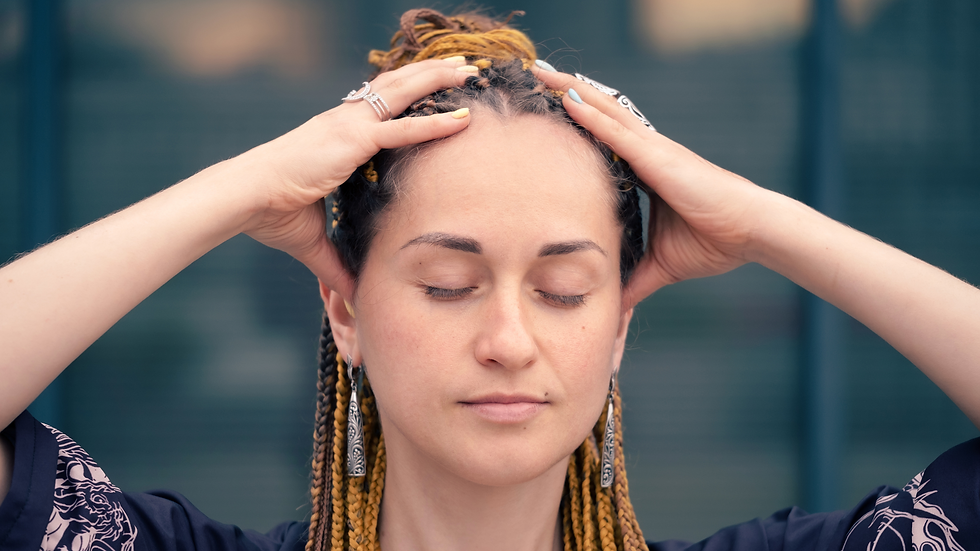
4 Benefits of Ayurvedic Head Massage (Shiro Abhyanga)
Ayurvedic head massage, known as Shiro Abhyanga, is a deeply nourishing practice that supports the hair, scalp, nervous system, and sense organs. Whether enjoyed on its own or as part of your full-body Abhyanga routine, this simple ritual can leave you feeling grounded, refreshed, and rejuvenated.
1. Deeply Relaxes the Body and Mind
Ayurvedic head massage is profoundly calming to the nervous system. Many people find it so relaxing that they wonder why they haven't always included it in their self-care routine.
2. Supports Healthy, Lustrous Hair
Regular oil massage helps nourish the scalp and hair roots, promoting hair that feels softer, thicker, shinier, and healthier.
3. Rejuvenates the Sense Organs
According to Ayurveda, head massage helps nourish and rejuvenate the sense organs, including the eyes, ears, and nose, supporting overall sensory wellbeing.
4. Supports Healthy Aging
Stress is one of the greatest contributors to premature aging. By encouraging relaxation and helping melt away tension, Ayurvedic head massage may support a more youthful and vibrant appearance.
Include Shiro Abhyanga in Your Daily Routine
You may include Ayurvedic head massage as part of your morning or evening Abhyanga routine, or enjoy it as a stand-alone practice whenever you need grounding, nourishment, and relaxation.

Ayurvedic Ear Massage (Karna Purana): Benefits & Practice
What Is Ayurvedic Ear Massage?
Ayurveda teaches that the ears are one of the primary seats of Vata dosha. Constantly exposed to sound, wind, cold, and other environmental influences, the ears can become easily aggravated when Vata is out of balance.
The ears are also considered a gateway into the head and nervous system, making ear care an important part of a healthy Ayurvedic self-care routine. In Ayurveda, ear oil massage is known as Karna Pratisaranam and is traditionally practiced to nourish, protect, and soothe the ears while helping calm excess Vata.
7 Benefits of Ayurvedic Ear Massage
Ayurvedic ear massage is a simple yet powerful self-care practice that may help support ear health, nervous system balance, and overall wellbeing.
1. Helps Soothe Tinnitus
Regular ear oil massage is traditionally used to calm and soothe the ears and may help reduce occasional ringing, buzzing, or other Vata-related ear discomforts.
2. Supports Ear Comfort
Warm oil helps nourish delicate ear tissues and can be especially comforting during dry, windy, or cold weather.
3. Helps Balance Vata Dosha
Because the ears are closely associated with Vata, applying warm ear oil is considered one of Ayurveda's simplest ways to help calm and balance excess Vata.
4. Supports Healthy Ear Wax Production
Ear oil massage helps maintain natural moisture within the ear canal and supports healthy ear wax production.
5. Deeply Grounds the Nervous System
Warm oil therapies are among Ayurveda's most effective tools for reducing excess Vata. Ear massage can be particularly grounding, calming, and supportive for the nervous system.
6. Traditionally Used to Support Balance and Ease Occasional Dizziness
Ayurvedic practitioners have long used ear oiling practices to help support balance and reduce occasional sensations of dizziness.
7. Helps Relax the Jaw, Neck, and Shoulders
The ears are closely connected to surrounding muscles and tissues. Gentle ear massage may help release tension in the jaw, neck, and shoulder region.
Include Ear Massage in Your Daily Routine
You may include Ayurvedic ear massage as part of your morning or evening Ayurveda routine, or enjoy it as a stand-alone practice whenever your ears, head, or nervous system need a little extra care.
How to Perform Ayurvedic Ear Massage
Step 1: Warm the Ear Oil
Before bedtime, place two drops of gently warmed ear oil into each ear.
You may apply the oil using the tip of a clean little finger or a cotton ball. Apply the oil only to the opening of the ear canal—there is no need to go deeper.
Step 2: Use a Nourishing Ear Oil
Clients love our Ear Oil, which contains tulsi, turmeric, garlic, cloves, and jatamamsi in a base of sesame and olive oils.
A friendly note from Veena: My dogs also love our Ear Oil, so be sure they don't try to lick it out of your ears!
Step 3: Make It Part of Your Routine
You may practice ear massage as part of your morning or evening Abhyanga ritual, or enjoy it as a stand-alone self-care practice whenever you need a little extra grounding and nourishment.
Veena's Tip
Many clients are surprised by how calming ear oil massage feels. Because the ears are a primary seat of Vata dosha, even this small daily ritual can have a remarkably grounding effect on the body and mind.
Important Safety Note
If you have an ear infection, ear tubes, hearing concerns, a diagnosed ear condition, or any discomfort in the ears, consult your healthcare provider before performing Ayurvedic ear oil massage.

How Often Should You Do Abhyanga Massage?
One of the questions I am asked most often is, "How often should I do Abhyanga?"
The good news is that Abhyanga self-massage can be practiced daily and is traditionally considered one of Ayurveda's most beneficial self-care rituals.
That said, Ayurveda recognizes that there is no one-size-fits-all approach. The ideal frequency depends upon your unique constitution (Prakriti), your current state of balance (Vikriti), the season, your age, stress levels, and your overall health. These factors are evaluated during a personalized Ayurveda consultation.
General Guidelines by Dosha
As a general rule of thumb:
Vata Dosha
Individuals with a Vata-dominant constitution tend to benefit from Abhyanga most frequently.
Recommended: 4–5 times per week, or even daily during periods of stress, travel, dryness, anxiety, or cold weather.
Pitta Dosha
Pitta types generally benefit from regular oil massage, especially when using cooling oils appropriate for their constitution.
Recommended: 3–4 times per week.
Kapha Dosha
Kapha types typically require less oil and more stimulation. While Abhyanga remains beneficial, dry brushing (Garshana) is often especially helpful.
Recommended: 2–3 times per week, with regular Garshana (dry brushing) incorporated into the routine.
Veena's Perspective
I often remind clients that consistency matters more than perfection. If daily Abhyanga feels supportive, wonderful. If your schedule only allows for two or three sessions each week, that's wonderful too. Listen to your body. Let your practice support your life rather than becoming another item on your to-do list. The best Abhyanga routine is the one you can practice consistently.


Contraindications: When Should You Avoid Abhyanga Massage?
When should you avoid Abhyanga massage?
Traditional Ayurvedic teachings recommend avoiding Abhyanga immediately after eating, during indigestion, fever, excess Ama (toxins), menstruation, pregnancy, and after certain cleansing therapies such as Basti and Vamana.
Abhyanga is one of Ayurveda's most nourishing daily self-care practices and is generally safe for most people. However, there are times when Ayurvedic self-massage is traditionally contraindicated or best postponed until the body returns to a more balanced state.
It Is Best to Avoid Abhyanga:
Immediately after eating
During indigestion orconstipation
When feverish or chilled
When excess Ama is present
During menstruation
During pregnancy
Immediately after Basti or Vamana
When doing one more thing feels stressful
After Eating or During Indigestion and Severe Constipation
Abhyanga increases circulation and movement throughout the body. Ayurveda teaches that self-massage does not discriminate between what it circulates. If food remains undigested or digestion is impaired, increased circulation may further distribute what the body is still trying to process.
If you are experiencing significant constipation, bloating, or indigestion, an Ayurvedic consultation can help identify which of the five Vayus (Pranic movements) may be out of balance and restore healthy digestive function.
When Feverish or Chilled
According to Ayurveda, fever occurs when Agni (digestive fire) leaves its home in the digestive tract and circulates throughout the body.
Because Abhyanga uses warm oil and stimulates circulation, it may further aggravate this process. Traditional Ayurvedic teachings therefore recommend postponing Abhyanga until the fever has resolved and strength has returned.
When Ama or Excess Kapha Are Present
In Ayurveda, Ama is often described as undigested food, emotions, and experiences that accumulate when digestion is impaired.
Common signs of Ama may include:
Brain fog
Heaviness
Low energy
Ayurveda teaches that "like increases like." Because Abhyanga utilizes warm, nourishing oils, it may not be the most appropriate therapy when significant Ama or Kapha accumulation is present.
During Menstruation
Menstruation is considered a natural cleansing process in Ayurveda. Traditional teachings often recommend extra rest, nourishment, and a lighter routine during this time.
Because Abhyanga can stimulate circulation and movement, some Ayurvedic practitioners recommend pausing full-body oil massage during menstruation and resuming once the cycle is complete.
During Pregnancy
Traditional Abhyanga can be stimulating and may encourage detoxification processes that are generally avoided during pregnancy.
If you are pregnant, consult your healthcare provider and a qualified Ayurvedic practitioner before beginning any new Ayurvedic self-care practice, including Abhyanga.
Immediately After Basti or Vamana
Basti and Vamana are specialized Ayurvedic cleansing therapies that direct movement through specific channels of the body to eliminate accumulated waste.
Because these therapies are already cleansing and mobilizing, traditional Ayurvedic teachings recommend avoiding Abhyanga immediately afterward. Why circulate what the body is actively trying to eliminate?
When Doing One More Thing Feels Stressful
This may be the most important contraindication of all.
Ayurveda teaches us to nourish the body, mind, and spirit—not create additional pressure.
If you're having one of those days when adding even a healthy practice feels overwhelming, let Abhyanga go for the day. Rest. Breathe. Be kind to yourself.
Then return to your practice tomorrow.
Veena's Perspective
One of the most common mistakes I see is turning self-care into another item on an already overwhelming to-do list.
Abhyanga should feel nourishing, grounding, and supportive. If the practice itself is creating stress, listen to what your body is telling you. Ayurveda is not about forcing wellness—it is about cultivating balance.

Enhance the Benefits of Abhyanga with Meditation and Breathwork
Abhyanga nourishes the body through the healing qualities of warm oil and mindful touch. Meditation and diaphragmatic breathing nourish the mind and nervous system. Together, these practices create a powerful Ayurvedic approach to reducing stress, balancing Vata dosha, and cultivating lasting wellbeing.
There is a saying:
"The mind is more in the body than the body is in the mind."
Just as Abhyanga helps soothe the body and nervous system, the Saumya Ayurveda Three-Step Meditation Process helps shift us from fight-flight-freeze mode into rest-restore-relax mode—the state from which healing, digestion, sleep, and rejuvenation naturally occur.
When combined with a regular Abhyanga practice, meditation and breathwork can deepen your sense of grounding, relaxation, and connection to yourself.
Give these practices a try for forty days and observe the changes. The more grounded, centered, and relaxed we become, the more smoothly life tends to flow.
1. Learn Diaphragmatic Breathing and Change Your Life
One of the best ways to prepare for Abhyanga—or extend its benefits afterward—is through diaphragmatic breathing.
When we relearn how to breathe diaphragmatically, we shift from the body's stress response—fight, flight, or freeze—into a state of rest, restoration, and relaxation. This is where we want to live. This is where healing, clarity, resilience, and vitality thrive.
Learn Diaphragmatic Breathing and Change Your Life. Download your free eBook and discover how breathing correctly each day can help shift your nervous system from fight-flight-freeze into rest, restore, and relax—the state from which we want and need to live.

2. Deepen Your Abhyanga Practice with Guided Meditation
After completing your Abhyanga massage, spend 11 minutes in quiet reflection or guided meditation.
This allows the oil additional time to penetrate the tissues while helping the nervous system absorb the calming effects of the practice.
Our guided meditations make wonderful morning and evening companions to Abhyanga.
3. Create a Sustainable Ayurvedic Daily Routine
Abhyanga is most powerful when it becomes part of a larger daily rhythm of self-care.
Explore:
Choose the practices that provide you with the greatest support and begin there.
Veena's Perspective
"Choose a couple of practices from the routines that provide you with the greatest support. Perform them while applying our two-minute meditation technique and your mundane tasks transform into a mellifluous meditation. This is meditation applied to daily life."— Veena Haasl-Blilie
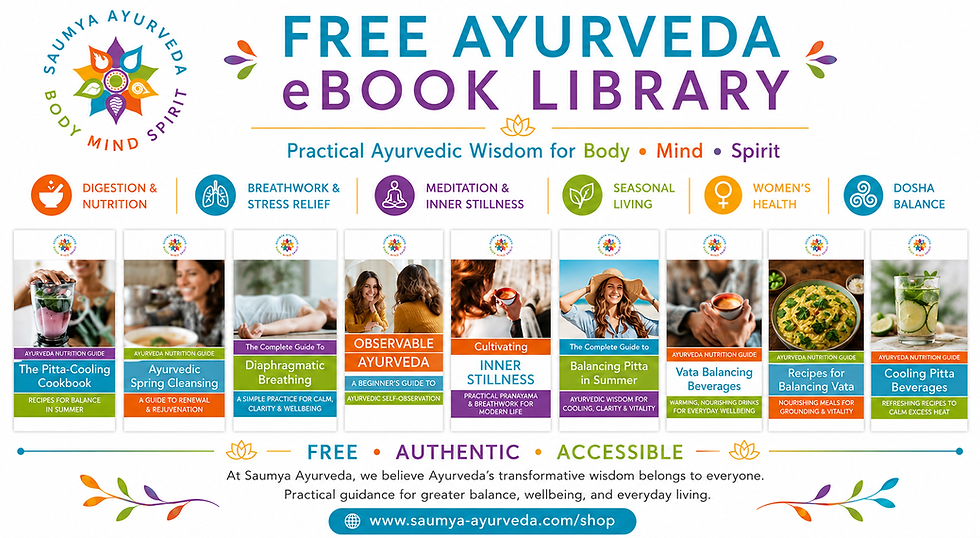
Our Commitment to Accessible Ayurveda Education
At Saumya Ayurveda, we believe Ayurveda's transformative ancient wisdom belongs to everyone—not just those who can afford it. That's why we're committed to making high-quality, authentic Ayurveda education available globally, free of charge.
Through our free eBooks, guides, and educational resources, we offer practical, grounded wisdom to help those seeking greater balance, vitality, and wellbeing integrate Ayurveda into their daily lives.
Accessible. Authentic. Free. Just as it was meant to be.
Free Ayurveda eBooks – Download practical guides, recipes, and wellness resources to support your health journey.
Ayurveda Blog – Enjoy easy-to-read articles, seasonal wellness tips, healthy recipes, and everyday inspiration—always educational, never a sales pitch.
Free Guided Traditional Progressive Meditations – Practice authentic, step-by-step guided meditations to cultivate calm, focus, and inner stillness.
Monthly Educational Newsletter – Receive seasonal Ayurveda insights, new articles, healthy recipes, and free resources delivered to your inbox each month.

Frequently Asked Questions About Abhyanga
What is Abhyanga?
Abhyanga is a traditional Ayurvedic self-massage practice that uses warm herbal oils and specific massage techniques to nourish the body, calm the nervous system, support circulation, and promote overall health and wellbeing.
What are the benefits of Abhyanga massage?
Regular Abhyanga may help support relaxation, healthy circulation, lymphatic flow, joint comfort, healthy skin, restful sleep, healthy aging, and overall balance. Ayurveda also considers Abhyanga one of the most effective practices for balancing Vata dosha and building Ojas, the essence of vitality and resilience.
How often should you do Abhyanga?
Most people benefit from practicing Abhyanga two to five times per week. Vata types often benefit from more frequent oil massage, while Kapha types may perform Abhyanga less often and incorporate dry brushing (Garshana) into their routine.
What is the best oil for Abhyanga?
The best oil depends on your dosha, season, stage of life, and current state of balance. Sesame oil is traditionally recommended for Vata, coconut oil for Pitta, and lighter, stimulating oils such as mustard oil may be beneficial for Kapha.
What is the best time of day to do Abhyanga?
Traditionally, Abhyanga is performed in the morning before bathing. However, evening Abhyanga can also be beneficial, especially for calming Vata, promoting relaxation, and supporting restful sleep.
Should you shower after Abhyanga?
Yes. After allowing the oil time to penetrate the skin, enjoy a warm bath or shower. Ayurveda traditionally recommends using minimal soap and preserving some of the nourishing oil on the skin whenever possible.
Can I do Abhyanga every day?
Yes. Classical Ayurvedic texts praise daily Abhyanga as a practice that supports strength, vitality, healthy aging, sound sleep, and overall wellbeing. However, daily practice may not be appropriate during certain conditions, such as fever, indigestion, pregnancy, or when excess Ama is present.
Is Abhyanga good for stress and anxiety?
Abhyanga is traditionally used to calm the nervous system and soothe excess Vata dosha, which is often associated with feelings of stress, overwhelm, worry, and anxiety. Many people find that regular Abhyanga helps them feel more grounded, relaxed, and connected to their bodies.
Can I do Abhyanga during menstruation?
Traditional Ayurvedic teachings generally recommend pausing full-body Abhyanga during menstruation. Because menstruation is considered a natural cleansing process, Ayurveda often encourages additional rest, nourishment, and a lighter self-care routine during this time.
Can I practice Abhyanga during pregnancy?
If you are pregnant, consult your healthcare provider and a qualified Ayurvedic practitioner before beginning Abhyanga or any new self-care practice. Traditional Ayurvedic teachings often recommend modifying or avoiding certain oil massage practices during pregnancy.
Does Abhyanga include head and ear massage?
Yes. Traditional Ayurvedic self-care often includes Shiro Abhyanga (head massage) and Karna Pratisaranam (ear massage) in addition to full-body oil massage. These specialized practices may help support the nervous system, healthy hair and scalp, the sense organs, and Vata balance.
Is Abhyanga good for healthy aging?
Ayurveda has long recommended Abhyanga as a daily rejuvenation practice. Classical Ayurvedic texts describe regular oil massage as supportive of healthy aging, strength, vitality, healthy skin, sound sleep, and longevity.

What Our Clients Say | Saumya Ayurveda Testimonials
Real Transformations Through Ayurveda Consultation
Physician Testimonial (Medical Endorsement)
“As a physician, I have always believed that prevention is better than cure. In today’s healthcare environment, Ayurveda offers a logical and natural approach to long-term health and prevention.
I began working with Veena during a very demanding phase of my life, and she made the process accessible even within my busy schedule. I was encouraged to follow a steady, sustainable approach focused on real lifestyle change.
Over time, I experienced meaningful improvements in balance, energy, and well-being. In my medical practice, I now see many patients with similar stress- and diet-related imbalances, which has further reinforced my trust in Ayurvedic principles.
I have since referred several patients to Saumya Ayurveda and consider Veena a valuable resource in supporting holistic well-being.”
Dr. Gauri Nagargoje
M.D., Oncology & Hematology
Physician Testimonial (Medical Endorsement)
“As a physician, I initially struggled with Ayurveda’s simplicity and depth, but Veena’s guidance made it practical, scientific, and deeply effective.
Veena has transformed my health and perspective on healing. I experienced significant improvements in focus, digestion, stress response, and overall vitality.
Her personalized approach made lifestyle changes easy and sustainable.
This journey not only improved my health but also inspired a lifelong commitment to integrating Ayurveda into holistic healthcare.”
Dr. Jessica Bedi
D.O., & Ayurvedic Doctor


Anne R., Minneapolis, Minnesota USA
Explore more client success stories from Saumya Ayurveda and see how Ayurveda supports healing, balance, and transformation.

Discover the Saumya Ayurveda Way
Ayurveda begins with seeing the whole person.
At Saumya Ayurveda, symptoms are not viewed in isolation. Ayurveda looks at the relationship between digestion, elimination, sleep, stress, energy, daily rhythms, mind, stage of life, season, climate, constitution, and current dosha imbalances to understand the patterns that influence how you feel.
When health concerns persist, it can be frustrating to feel that individual symptoms are being addressed without understanding the bigger picture. Ayurveda offers another way—one that asks not only “What is the symptom?” but also “What are the body and mind communicating?”
Personalized Ayurveda, Rooted in Tradition
Saumya Ayurveda combines classical Ayurvedic principles with practical guidance for modern life. Your Ayurveda plan is based on your individual prakriti (natural constitution), vikriti (current state of doshic imbalance), lifestyle, and circumstances—not a generic dosha checklist or one-size-fits-all protocol.
The goal is not to overwhelm you with rules. It is to help you understand your own body and mind, and make sustainable changes that fit naturally into your life, informed by the wisdom of Ayurveda.
For those who want ongoing support, concierge-style Ayurveda consultation packages provide personalized guidance, thoughtful follow-up, and practical tools to help turn Ayurvedic principles into everyday habits.
Education First. Personalized Guidance When You Need It.
Veena takes an education-first, client-centered approach. At Saumya Ayurveda, our favorite product is knowledge. You won’t find education built around selling a supplement, herb, or wellness product. Instead, you’ll find traditional Ayurvedic perspectives, practical guidance, and timeless principles that help you better understand your body, mind, and unique constitution.
When understanding deepens, better choices naturally follow.
Learn. Observe. Understand. Transform.
Begin your Ayurveda journey with a free 15-minute Discovery Call with Veena and explore whether personalized Ayurvedic guidance is right for you.

Meet Veena: Your Trusted Ayurvedic Guide for Clients Worldwide
Veena Blilie is a Certified Ayurvedic Practitioner, Ayurveda teacher, meditation guide, and monk with over three decades of experience helping clients worldwide achieve greater balance and well-being through Ayurveda.
As founder of Saumya Ayurveda and President Emeritus of the Meditation Center, Veena serves clients worldwide through personalized Ayurvedic wellness guidance, meditation, and yoga practices.
Saumya Ayurveda has been recognized as the #1 Ayurveda cooking blog and the #3 Ayurveda website and blog and has received multiple consecutive awards for best wellness practice.
Through her work, Veena shares practical Ayurvedic guidance, nourishing recipes, and wellness education for modern living.
Inspired from an early age by learning herbal remedies, food as medicine, and traditional healing practices at her grandmother’s knee, Veena combines traditional Ayurvedic wisdom with compassionate, accessible guidance that supports mental, physical, and spiritual well-being.
Known for her warmth, humor, intuitive approach, and accessible style, Veena empowers people to create sustainable health through personalized Ayurvedic wellness plans designed to fit naturally into everyday life.
Veena is also the author of several free Ayurveda eBooks and writes the educational articles published on the Saumya Ayurveda blog.
As seen in:
Voice America
Albuquerque The Magazine
Learn more about Veena and her work through Saumya Ayurveda.
Disclaimer: This information is for educational purposes only and is not a substitute for professional medical advice. Ayurveda works best when tailored to your unique doshic profile, so it’s essential to understand your constitution and imbalances before using herbs, foods, or lifestyle practices. Consult a Certified Ayurvedic Practitioner for personalized guidance.


