Ayurveda Dry Brushing: How to Detoxify with Garshana

Updated: Sep 18
Curious about Ayurvedic dry brushing, or garshana? This traditional Ayurvedic practice uses gentle, rhythmic strokes with a dry brush to exfoliate the skin and invigorate the body. Learn how garshana is traditionally practiced, its potential benefits for skin health and circulation, and how it may support healthy lymphatic movement and overall well-being.
Your lymphatic system may not be top of mind, but it plays an important role in maintaining fluid balance and supporting immune function. Made up of lymph, vessels, tissues, and organs, the lymphatic system helps move excess fluid and cellular waste through the body while contributing to the body's immune defenses.

Explore more on the Saumya Blog, selected top Ayurveda blogs and websites.
Discover Ayurvedic dry brushing, or garshana, and learn its benefits for skin, circulation, lymphatic movement, detoxification, and overall well-being, plus how to practice it at home.
Key Takeaways
Garshana is a traditional Ayurvedic dry brushing practice performed with a natural-fiber brush to gently exfoliate and invigorate the skin.
Dry brushing supports healthy-looking skin by removing surface dead skin cells and leaving the skin feeling smoother and refreshed.
Garshana is traditionally used to stimulate and invigorate the body, making it especially appealing as part of a morning Ayurvedic routine.
Gentle brushing may support circulation and lymphatic movement, while the rhythmic practice can also encourage greater body awareness.
The technique and direction of brushing matter. Ayurveda traditionally recommends specific strokes based on the area of the body and the desired effect.
Garshana is generally practiced before bathing, followed by a shower or bath to cleanse away loosened skin cells.
Dry brushing should feel invigorating, not irritating. Gentle pressure is appropriate, particularly for sensitive or delicate skin.
Ayurvedic practices are individualized. Your skin type, doshic picture, season, and overall condition can help determine whether garshana is appropriate and how it should be practiced.
Table of Contents

Ayurveda Dry Brushing: How to Detoxify with Garshana
Dry brushing, known as garshana, is a traditional Ayurvedic practice that can be done at home. Dry brushing may support lymphatic movement. According to the Cleveland Clinic, the lymphatic system is part of the immune system and plays an important role in fluid balance, defending the body against infection, and removing cellular waste.
In Ayurveda, the concept of accumulated waste is known as Ama.
Garshana can also be incorporated into a broader Ayurvedic cleansing routine. Explore Revitalize Your Being with Ayurvedic Cleansing Techniques to learn more about traditional Ayurvedic approaches to cleansing.
The skin is the body's largest organ and serves as an important protective barrier. From an Ayurvedic perspective, the skin is also an important route through which the body interacts with its environment. This is one reason garshana, or dry brushing, has traditionally been used as part of Ayurvedic self-care and cleansing practices.
From an Ayurvedic view, lymph is associated with rasa dhatu. Rasa refers to the body's nourishing fluid and is traditionally associated with plasma, lymph, and other fluids that nourish the tissues.
Rasa also relates to menstrual fluid and breast milk, making healthy rasa dhatu particularly important during different stages of a woman's reproductive life. More broadly, Ayurveda considers rasa the first of the seven dhatus, with healthy nourishment of rasa supporting the formation and nourishment of the subsequent tissue layers.
Dry brushing is one traditional Ayurvedic practice used to invigorate the skin and support healthy movement throughout the body. When practiced appropriately, garshana can be a simple addition to an Ayurvedic self-care routine.

Benefits of Ayurvedic Dry Brushing: Garshana
According to Ayurveda, garshana is traditionally used to invigorate the body, reduce stagnation, support healthy circulation, and promote movement of lymph.
Its benefits are traditionally understood to include:
Promotes lymph flow and drainage
Gently supports detoxification
Supports healthy circulation and blood flow
May reduce the appearance of accumulated cellulite
Supports weight management
Improves skin texture
Exfoliates rough, dry skin
Helps unclog pores, supporting the body's natural processes of sweating and elimination of waste, including Ama
Invigorates the body and senses
Traditionally supports the body's natural detoxification processes, including those associated with the liver
Helps reduce stagnation
Prepares the body for Abhyanga/Ayurvedic herbalized oil massage

Veena Haasl-Blilie on Garshana
Veena has been featured in Everyday Health discussing dry brushing and the traditional Ayurvedic practice of garshana. The article offers another perspective on how this traditional practice is understood and practiced today.
Contraindications
|
How to Dry Brush: Step-by-Step Guide
Traditionally, dry brushing is performed using raw silk gloves. Natural brushes are also an option and are widely available in a range of textures.
Dry brushing may be especially beneficial for those experiencing signs of ama, such as sluggishness, fogginess, a general sense of dullness, lack of vitality, stiffness, and constipation.
What is ama? According to Ayurveda, ama refers to waste products that accumulate when digestion, assimilation, and elimination are incomplete. Ayurveda considers ama to be associated with improperly digested or processed food and other substances, as well as emotional experiences that have not been fully processed.
What are the symptoms of Ama?

Dry Brushing: The 3 Ayurvedic Doshas
Kapha types and Kapha conditions benefit the most from the daily practice of dry brushing due to its invigorating and stimulating effect.
Pitta types may practice dry brushing 4–5 times per week.
Vata types may benefit from dry brushing 2–4 times per week.
Dry brushing should be followed by abhyanga, especially for Vata's tendency toward dry skin.
Add Ayurvedic dry brushing to your Ayurvedic Morning Routine | 6 Rituals for a Calm and Centered Day.
Ayurvedic dry brushing is best performed in the morning before bathing because it is stimulating and invigorating. It can be a refreshing way to awaken the body as part of your morning routine.
The idea is to create movement and literally get the juices (rasa) flowing!
How To Know If You Have A Dosha Imbalance
Peruse these comprehensive and convenient lists of signs and symptoms of dosha imbalances.
For a broader understanding of how to recognize patterns of imbalance, explore Understanding the Three Doshas: A Comprehensive Guide to Imbalances.
As we are all comprised of Vata, Pitta, and Kapha, there can be an imbalance in any of the doshas, or a combination of dosha imbalances. Read all three lists and see if anything looks familiar.

How To Perform Ayurvedic Dry Brushing
Find silk or linen gloves, or a brush with a texture that is pleasing to you and gentle on your skin. This is never about “no pain, no gain.” Ayurveda is a path of ahimsa, or non-violence, and how we perform practices is as important as what we do.
Stand in a tub or shower, or on a towel, as skin cells will slough off and may leave a little mess.
With your gloves or brush, begin dry brushing and pay attention to the pressure. Apply enough pressure that the brush does not simply slide over the skin, but keep it light enough that you do not feel pressure beneath the skin. Think gentle but invigorating rather than forceful. Going too deeply can move beyond the superficial tissues you are intending to stimulate, so easy does it—but keep the strokes vigorous enough to feel enlivening.
Start at the feet and work upward.
As with abhyanga/Ayurvedic oil massage, traditionally move toward the heart. Use circular strokes on rounded joints and areas such as the shoulders, elbows, and knees, and longer strokes on the limbs, again moving toward the heart.
Morning:
Make garshana part of a grounding morning routine by exploring Ayurvedic Morning Routine | 6 Rituals for a Calm and Centered Day.
Evening:
Balance an invigorating morning practice with calming evening rituals. Explore 10 Ayurvedic Evening Rituals for a Calming Night for practices that help prepare the body and mind for restful sleep.

Frequently Asked Questions About Ayurvedic Dry Brushing
What is garshana in Ayurveda?
Garshana is a traditional Ayurvedic dry-brushing practice performed with raw silk gloves or a natural-fiber brush. The practice is used to exfoliate the skin, invigorate the body, encourage movement, and reduce stagnation.
How often should you dry brush according to Ayurveda?
The frequency can vary according to your dosha and individual needs. Kapha types and Kapha conditions may benefit from daily dry brushing, while Pitta types may practice 4–5 times per week and Vata types 2–4 times per week. Dry brushing should always be gentle enough that it does not irritate the skin.
What is the best time of day to dry brush?
Morning is traditionally the best time for garshana, before bathing. Because dry brushing is stimulating and invigorating, it can be a refreshing way to awaken the body and begin the day.
Should you shower after dry brushing?
Yes. Dry brushing is traditionally followed by bathing, which helps remove loosened skin cells. For Vata types, following dry brushing with abhyanga, or Ayurvedic oil massage, can provide nourishing oil to the skin.
Can Vata, Pitta, and Kapha types all practice garshana?
Yes, but the frequency and approach may differ according to the dosha. Kapha generally benefits from the more stimulating quality of dry brushing, while Pitta and Vata may require less frequent practice and greater attention to skin sensitivity.
Does dry brushing detoxify the body?
In Ayurveda, garshana is traditionally considered a cleansing and invigorating practice that helps reduce stagnation and support movement. It is often practiced in conjunction with other Ayurvedic approaches to cleansing and maintaining healthy elimination.

Grow Your Ayurvedic Knowledge
Garshana is one part of Ayurveda’s timeless approach to daily self-care and whole-body wellbeing. Continue exploring the interconnected practices of Ayurvedic routines, nourishment, digestion, movement, and mindful self-care that support balance and vitality—one small step at a time.
1. Learn the Foundations of Ayurveda
Understanding Ojas: Ayurveda's Guide to Lasting Vitality, Energy & Resilience
The Seven Dhatus Explained: How Ayurveda Builds Strength, Immunity & Vitality
What Is Prakriti vs. Vikriti? Understanding Your Ayurvedic Constitution and Current Imbalance
The Five Elements in Ayurveda: Understanding Yourself Through Nature
The Three Malas: Ayurveda’s Guide to Healthy Elimination, Digestion & Balance
2. Build a Strong Foundation
3. Better Understand Your Unique Constitution
4. Support Your Vitality Naturally
5. Explore Common Health Challenges Through an Ayurvedic Lens
7 Ayurvedic Remedies for Maintaining Healthy Blood Pressure Naturally
Gut-Brain Connection in Ayurveda: Reduce Anxiety Through Digestion
Leaky Gut Syndrome in Ayurveda: Causes, Symptoms, Diet, and Natural Healing
Histamine Intolerance: Symptoms, Causes, Diet, and Ayurvedic Treatment for Natural Relief
MCAS Natural Treatment: Ayurvedic Diet, Herbs, and Root Causes
Our Commitment to Accessible Ayurveda Education
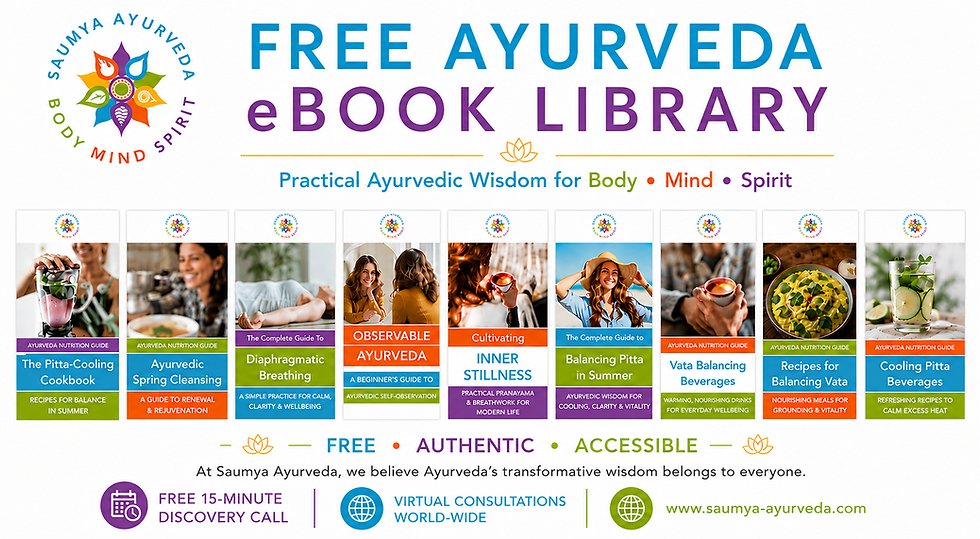
At Saumya Ayurveda, we believe Ayurveda's transformative ancient wisdom belongs to everyone—not just those who can afford it. That's why we're committed to making high-quality, authentic Ayurveda education available globally, free of charge.
Through our free eBooks, guides, and educational resources, we offer practical, grounded wisdom to help those seeking greater balance, vitality, and wellbeing integrate Ayurveda into their daily lives.
Accessible. Authentic. Free. Just as it was meant to be.
Free Ayurveda eBooks – Download practical guides, recipes, and wellness resources to support your health journey.
Ayurveda Blog – Enjoy easy-to-read articles, seasonal wellness tips, healthy recipes, and everyday inspiration—always educational, never a sales pitch.
Free Guided Traditional Progressive Meditations – Practice authentic, step-by-step guided meditations to cultivate calm, focus, and inner stillness.
Monthly Educational Newsletter – Receive seasonal Ayurveda insights, new articles, healthy recipes, and free resources delivered to your inbox each month.
Final Thoughts: The Ayurvedic Practice of Garshana
Dry brushing, or garshana, is a simple yet invigorating Ayurvedic practice that brings attention to the skin, the body's largest organ. Traditionally used to exfoliate, stimulate, and prepare the body for abhyanga, garshana can be a valuable part of an Ayurvedic self-care routine.
Its value is not in brushing harder or trying to achieve a particular result. The Ayurvedic approach is individualized: choosing the appropriate brush, pressure, frequency, and timing according to your constitution, current condition, and the season.
Practiced with awareness and ahimsa, garshana can be a refreshing daily ritual that leaves the skin feeling smooth, the body invigorated, and the mind more awake and connected to the body.

Ayurvedic Terms Glossary
Abhyanga — A traditional Ayurvedic oil massage. In this article, abhyanga is recommended after dry brushing, particularly for Vata types because of their tendency toward dry skin.
Ama — In Ayurveda, a term used for accumulated waste associated with incomplete digestion, assimilation, and elimination. The article connects signs of ama with sluggishness, fogginess, dullness, stiffness, and constipation.
Ahimsa — The Ayurvedic principle of non-violence. In the dry-brushing instructions, ahimsa means practicing gently and avoiding excessive pressure or irritation.
Dhatu — The tissue layers of the body described in Ayurveda. The article explains that rasa is the first of these tissue layers and relates to the nourishment of subsequent dhatus.
Dosha — One of the three fundamental Ayurvedic principles of Vata, Pitta, and Kapha. The article describes different approaches to dry brushing according to these three doshas.
Garshana — A traditional Ayurvedic dry-brushing practice, traditionally performed with raw silk gloves or, more commonly today, a natural-fiber brush.
Kapha — One of the three Ayurvedic doshas. In this article, Kapha types and Kapha conditions are described as particularly suited to the invigorating and stimulating qualities of dry brushing.
Pitta — One of the three Ayurvedic doshas. The article recommends a less frequent dry-brushing practice for Pitta types than for Kapha.
Rasa — An Ayurvedic term referring to a nourishing fluid or “juice.” The article associates rasa with plasma, lymph, and interstitial fluids and describes it as the first of the seven dhatus.
Rasa Dhatu — The first of the seven Ayurvedic tissue layers (dhatus), associated in this article with plasma, lymph, and interstitial fluids and with nourishing the subsequent tissues.
Vata — One of the three Ayurvedic doshas. The article notes that Vata types may benefit from less frequent dry brushing and recommends following the practice with abhyanga, particularly because of Vata's tendency toward dry skin.

What Our Clients Say | Saumya Ayurveda Testimonials
Real Transformations Through Ayurveda Consultation
Physician Testimonial (Medical Endorsement)
“As a physician, I have always believed that prevention is better than cure. In today’s healthcare environment, Ayurveda offers a logical and natural approach to long-term health and prevention.
I began working with Veena during a very demanding phase of my life, and she made the process accessible even within my busy schedule. I was encouraged to follow a steady, sustainable approach focused on real lifestyle change.
Over time, I experienced meaningful improvements in balance, energy, and well-being. In my medical practice, I now see many patients with similar stress- and diet-related imbalances, which has further reinforced my trust in Ayurvedic principles.
I have since referred several patients to Saumya Ayurveda and consider Veena a valuable resource in supporting holistic well-being.”
Dr. Gauri Nagargoje
M.D., Oncology & Hematology
Physician Testimonial (Medical Endorsement)
“As a physician, I initially struggled with Ayurveda’s simplicity and depth, but Veena’s guidance made it practical, scientific, and deeply effective.
Veena has transformed my health and perspective on healing. I experienced significant improvements in focus, digestion, stress response, and overall vitality.
Her personalized approach made lifestyle changes easy and sustainable.
This journey not only improved my health but also inspired a lifelong commitment to integrating Ayurveda into holistic healthcare.”
Dr. Jessica Bedi
D.O., & Ayurvedic Doctor


Rachelle R., Denver, Colorado, USA
Explore more client success stories from Saumya Ayurveda and see how Ayurveda supports healing, balance, and transformation.

Discover the Saumya Ayurveda Way
Ayurveda Begins with Seeing the Whole Person
At Saumya Ayurveda, symptoms are not viewed in isolation. Ayurveda looks at the relationship between digestion, elimination, sleep, stress, energy, daily rhythms, mind, stage of life, season, climate, constitution, and current dosha imbalances to understand the patterns that influence how you feel.
When health concerns persist, it can be frustrating to feel that individual symptoms are being addressed without understanding the bigger picture. Ayurveda offers another way—one that asks not only “What is the symptom?” but also “What are the body and mind communicating?”
Personalized Ayurveda, Rooted in Tradition
Saumya Ayurveda combines classical Ayurvedic principles with practical guidance for modern life. Your Ayurveda plan is based on your individual prakriti (natural constitution), vikriti (current doshic imbalances), lifestyle, and circumstances—not a generic dosha checklist or one-size-fits-all protocol.
The goal is not to overwhelm you with rules. It is to help you understand your own body and mind and make sustainable changes that fit naturally into your life.
For those who want ongoing support, concierge-style Ayurveda consultation packages provide personalized guidance, thoughtful follow-up, and practical tools to help turn Ayurvedic principles into everyday habits.
Education First. Personalized Guidance When You Need It.
Veena takes an education-first, client-centered approach. At Saumya Ayurveda, our favorite product is knowledge. You won't find education built around selling a supplement, herb, or wellness product. Instead, you'll find traditional Ayurvedic perspectives, practical guidance, and timeless principles that help you better understand your body, mind, and unique constitution.
When understanding deepens, better choices naturally follow.
Learn. Observe. Understand. Transform.
Begin your Ayurveda journey with a free 15-minute Discovery Call with Veena and explore whether personalized Ayurvedic guidance is right for you.

Meet Veena: Your Trusted Ayurvedic Guide for Clients Worldwide
Veena Blilie is a Certified Ayurvedic Practitioner, Ayurveda teacher, meditation guide, and monk with over three decades of experience helping clients worldwide achieve greater balance and well-being through Ayurveda.
As founder of Saumya Ayurveda and President Emeritus of the Meditation Center, Veena serves clients worldwide through personalized Ayurvedic wellness guidance, meditation, and yoga practices.
Saumya Ayurveda has been recognized as the #1 Ayurveda cooking blog and the #3 Ayurveda website and blog and has received multiple consecutive awards for best wellness practice.
Through her work, Veena shares practical Ayurvedic guidance, nourishing recipes, and wellness education for modern living.
Inspired from an early age by learning herbal remedies, food as medicine, and traditional healing practices at her grandmother’s knee, Veena combines traditional Ayurvedic wisdom with compassionate, accessible guidance that supports mental, physical, and spiritual well-being.
Known for her warmth, humor, intuitive approach, and accessible style, Veena empowers people to create sustainable health through personalized Ayurvedic wellness plans designed to fit naturally into everyday life.
Veena is also the author of several free Ayurveda eBooks and writes the educational articles published on the Saumya Ayurveda blog.
As seen in:
Voice America
Albuquerque The Magazine
Learn more about Veena and her work through Saumya Ayurveda.
Disclaimer: This information is for educational purposes only and is not a substitute for professional medical advice. Ayurveda works best when tailored to your unique doshic profile, so it’s essential to understand your constitution and imbalances before using herbs, foods, or lifestyle practices. Consult a Certified Ayurvedic Practitioner for personalized guidance.