What is Ayurveda? A Beginner’s Guide

Updated: Jul 6
What if your body isn't working against you—but trying to communicate with you? Ayurveda teaches that every symptom, habit, and experience offers valuable information about your health. Learning to understand those messages is the first step toward restoring balance and supporting your body's natural ability to heal.
Ayurveda, often translated as the Science of Life, is one of the world's oldest systems of natural healing, guiding health and well-being for more than 5,000 years. Rather than offering one-size-fits-all solutions, Ayurveda recognizes that every person is unique. It seeks to restore balance by understanding the whole person—body, mind, and spirit—through food as medicine, personalized herbal support, and Ayurvedic lifestyle practices.
Whether you've just taken an online dosha quiz, are curious about natural healing, or simply want to better understand your body, you're in the right place.
This beginner-friendly guide explores the foundational principles of Ayurveda, including the three doshas—Vata, Pitta, and Kapha—and shares practical insights you can begin applying today. Count on Saumya Ayurveda to be your trusted guide as you begin your Ayurveda journey.

Ayurvedic herbs are chosen by evaluating the whole person, not just symptoms or a diagnosis. An Ayurvedic practitioner considers your constitution (Prakriti), current imbalances (Vikriti), digestion (Agni), lifestyle, age, season, and overall health to recommend herbs that support your unique needs and restore balance.
Key Takeaways
Ayurveda is a holistic system of natural healing that originated in India and focuses on complete mind-body balance.
It is based on the principle of maintaining harmony between the three doshas: Vata, Pitta, and Kapha.
Ayurveda uses personalized diet, herbal remedies, and daily lifestyle routines to support prevention and long-term wellness.
Instead of only managing symptoms, Ayurveda aims to identify and address the root cause of imbalance.
Ayurveda is both a traditional healing system and a practical, everyday way of living in alignment with nature.
Table of Contents

What Is Ayurveda?
Ayurveda is a 5,000-year-old system of natural healing that originated in India. Derived from the Sanskrit words Ayu (life) and Veda (knowledge), Ayurveda translates to the "Science of Life." Rather than simply treating disease, Ayurveda seeks to understand the whole person and restore balance through personalized nutrition, herbal support, healthy daily routines, and lifestyle practices that promote long-term health and well-being.
At the heart of Ayurveda is the understanding that every person is unique. Your health is influenced by your natural constitution (Prakriti), current imbalances (Vikriti), digestion (Agni), age, stage of life, diet, lifestyle, environment, emotional well-being, and many other factors. Instead of offering one-size-fits-all solutions, Ayurveda creates personalized recommendations that support your body's natural ability to heal.
The foundation of Ayurvedic care rests on three interconnected pillars:
Food as Medicine – Choosing foods that nourish your body, strengthen digestion, and promote balance.
Individualized Herbal Support – Carefully selecting herbs that match your unique constitution, current imbalances, and health goals.
Ayurvedic Lifestyle Practices – Establishing healthy daily routines (Dinacharya), restorative sleep, movement, meditation, breathwork (Pranayama), and seasonal habits that help maintain balance.
Rather than chasing symptoms, Ayurveda seeks to understand why imbalance developed in the first place. By addressing the root causes of disease and living in harmony with nature's rhythms, Ayurveda offers a timeless, practical approach to cultivating health, resilience, and vitality throughout every stage of life.
Medical Note: The National Center for Complementary and Integrative Health (NCCIH) recognizes Ayurveda as a traditional system of medicine that emphasizes prevention through diet, lifestyle, and daily routines while using individualized approaches to support health and well-being.

What Does Ayurveda Mean?
The word Ayurveda comes from two Sanskrit words: Ayu, meaning life, and Veda, meaning knowledge or science. Together, Ayurveda translates to the "Science of Life." More than simply a system of medicine, Ayurveda is a philosophy of living that seeks to promote health, prevent disease, and help people live long, balanced, and fulfilling lives.
This name reflects Ayurveda's broader purpose. Rather than focusing only on treating illness, Ayurveda is a comprehensive system of natural healing that teaches how to live in harmony with your unique constitution, the rhythms of nature, and the changing seasons. It recognizes that the body, mind, and spirit are deeply interconnected and that lasting well-being depends on maintaining balance in every aspect of life.
Ayurveda is much more than herbal medicine. Its foundation rests on food as medicine, individualized herbal support, and Ayurvedic lifestyle practices that help strengthen digestion, prevent imbalance, and promote long-term health. By understanding your unique constitution and making choices that align with your body's needs, Ayurveda provides a timeless framework for cultivating health, resilience, vitality, and well-being throughout every stage of life.

The History of Ayurveda: A 5,000-Year Tradition
Ayurveda is one of the world's oldest continuously practiced systems of natural healing, with roots stretching back more than 5,000 years in ancient India. Originally passed down through oral tradition, its teachings were later preserved in classical Sanskrit texts that continue to guide Ayurvedic practitioners today.
Unlike many ancient healing systems that have faded over time, Ayurveda has remained a living tradition. Its timeless principles of prevention, individualized care, healthy digestion, and balanced living continue to support people around the world and are increasingly being incorporated into modern integrative healthcare.
A Brief Timeline of Ayurveda
c. 3000–1500 BCE – Ancient Origins
The foundations of Ayurveda develop in ancient India through generations of oral teachings centered on health, nature, and balanced living.
Vedic Period
Ayurvedic knowledge becomes closely associated with the Atharva Veda, one of India's four sacred Vedas, which contains early references to health, healing, and medicinal plants.
Charaka Samhita (c. 1st–2nd century CE)
One of Ayurveda's most influential texts, the Charaka Samhita emphasizes internal medicine, preventive healthcare, digestion (Agni), and individualized treatment based on each person's unique constitution.
Sushruta Samhita (c. 1st millennium BCE–early CE)
The Sushruta Samhita is renowned for its detailed descriptions of anatomy, surgery, and clinical observation, earning Sushruta recognition as one of the pioneers of surgery.
Ashtanga Hridayam (c. 6th–7th century CE)
Written by Vagbhata, this classical text brings together earlier Ayurvedic teachings into a practical guide that remains one of the most widely studied and referenced works in Ayurveda today.
Modern Worldwide Practice
Today, Ayurveda is practiced throughout India and in many countries around the world. Millions of people incorporate Ayurvedic principles into their daily lives through nutrition, herbal support, yoga, meditation, healthy routines, and personalized lifestyle practices that promote long-term health and well-being.
More than five millennia after its origins, Ayurveda continues to offer a timeless, whole-person approach to health—one that emphasizes prevention, balance, and living in harmony with nature.

The Five Elements (Panchamahabhutas)
One of Ayurveda's most fundamental teachings is that everything in the universe—including you—is composed of five basic elements, known as the Panchamahabhutas. These elements are Space (Akasha), Air (Vayu), Fire (Agni), Water (Jala), and Earth (Prithvi). Together, they form the foundation of the natural world and every aspect of the human body and mind.
Rather than viewing these elements as the physical substances themselves, Ayurveda understands them as qualities and energies that influence how your body functions.
Every cell, tissue, organ, and even your thoughts and emotions express these five elements in different proportions. Health depends on maintaining their natural balance, while imbalance can contribute to disease.
The Five Elements at a Glance
Space (Akasha): Represents openness and expansion. It creates the spaces within the body, including the mouth, lungs, digestive tract, blood vessels, and cells.
Air (Vayu): Governs movement, including breathing, circulation, nerve impulses, muscle activity, and the movement of thoughts.
Fire (Agni): Represents transformation. It supports digestion, metabolism, body temperature, vision, and mental clarity.
Water (Jala): Provides lubrication, cohesion, and nourishment. It is present in blood, saliva, lymph, joint fluid, and other bodily fluids.
Earth (Prithvi): Provides structure, stability, and strength. Bones, muscles, teeth, skin, and connective tissues all reflect the Earth element.
From the Five Elements to the Three Doshas
The five elements combine in different ways to create Ayurveda's three doshas:
Vata = Space + Air
Pitta = Fire + Water
Kapha = Earth + Water
These doshas govern every physical and mental process in the body. Understanding the five elements makes it easier to understand your unique constitution, how the doshas influence your health, and why every person responds differently to food, herbs, lifestyle, and environmental changes.
Just as the world around us changes with the seasons, weather, time of day, and stage of life, the balance of these elements within us is constantly changing. Ayurveda teaches that by making thoughtful choices about food, daily routines, herbs, sleep, movement, and other lifestyle practices, we can help maintain harmony among the elements and support long-term health and well-being.

Understanding the Three Doshas
One of Ayurveda's most well-known concepts is the three doshas—Vata, Pitta, and Kapha. These biological energies are created from the five elements (Panchamahabhutas) and govern every physical, mental, and emotional process in the body.
Every person is born with a unique combination of the three doshas, known as their Prakriti, or natural constitution. This combination influences everything from your body type and digestion to your personality, energy levels, sleep patterns, and emotional tendencies. While all three doshas are present in everyone, one or two are usually more dominant.
Health depends on keeping the doshas in balance. When they become excessive, depleted, or disturbed, they can contribute to a wide variety of physical, mental, and emotional symptoms.
Understanding your doshas is one of the first steps toward making personalized choices about food, herbs, daily routines, and lifestyle practices that support lasting health.

Vata Dosha
Vata is composed of the Space and Air elements and governs movement throughout the body. It controls breathing, circulation, nerve impulses, elimination, creativity, communication, and the movement of thoughts.
When Vata is balanced, people often feel energetic, creative, enthusiastic, adaptable, and mentally alert.
When Vata becomes imbalanced, however, symptoms may include:
Dry skin, hair, or lips
Constipation and gas
Bloating and irregular digestion
Cold hands and feet
Difficulty falling asleep
Anxiety, worry, or feeling overwhelmed
Restlessness or a racing mind
Fatigue with difficulty slowing down
Joint cracking or stiffness
Because Vata is naturally light, dry, cold, rough, and mobile, it is often balanced by warmth, nourishment, routine, grounding foods, adequate rest, and calming daily practices.
Continue reading: The Wild List of Vata Imbalances →

Pitta Dosha
Pitta is composed primarily of the Fire and Water elements and governs transformation. It regulates digestion, metabolism, body temperature, hormones, vision, and intellectual processing.
When Pitta is balanced, people often feel focused, motivated, courageous, organized, and confident.
When Pitta becomes imbalanced, symptoms may include:
Heartburn or acid reflux
Loose stools
Excessive body heat
Inflammation
Skin rashes or acne
Irritability or frustration
Impatience
Perfectionism
Feeling overheated easily
Because Pitta is naturally hot, sharp, and intense, it is balanced through cooling foods, moderation, relaxation, restorative sleep, and practices that reduce excess heat in both body and mind.
Continue reading: The Hot List of Common Pitta Imbalances →
Kapha Dosha
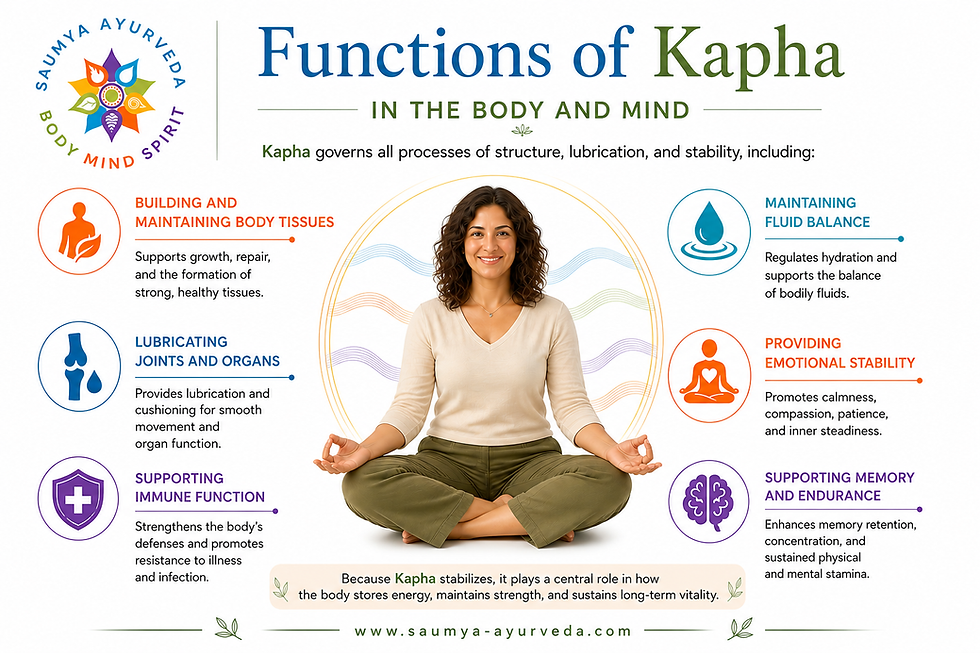
Kapha is composed of the Earth and Water elements and provides the body with structure, stability, lubrication, and endurance. It supports healthy joints, immunity, emotional steadiness, and long-lasting energy.
When Kapha is balanced, people often feel calm, patient, compassionate, dependable, and resilient.
When Kapha becomes imbalanced, symptoms may include:
Sluggish digestion
Weight gain
Water retention
Congestion
Excess mucus
Feeling heavy or tired
Difficulty getting motivated
Oversleeping
Mental fog
Because Kapha is naturally heavy, cool, slow, and stable, it is balanced by movement, lighter foods, stimulating spices, variety, and regular physical activity.
Continue reading: The Sturdy List of Kapha Imbalances →

Prakriti vs. Vikriti: Understanding Balance and Imbalance
One of Ayurveda's most important concepts is understanding the difference between Prakriti and Vikriti. These two terms help explain why Ayurveda takes such a personalized approach to health and why recommendations are never based on symptoms alone.
What Is Prakriti?
Prakriti is your natural constitution—the unique combination of Vata, Pitta, and Kapha you were born with. It is established at conception and remains relatively stable throughout your life.
Your Prakriti influences many aspects of who you are, including your:
Body build and physical characteristics
Digestion and metabolism
Energy levels
Sleep patterns
Emotional tendencies
Personality traits
Natural strengths and vulnerabilities
Your constitution is not something that needs to be changed. Instead, it serves as your body's blueprint for health. Understanding your Prakriti helps you make choices about food, lifestyle, exercise, and daily routines that best support your unique needs.
What Is Vikriti?
While Prakriti describes your natural state, Vikriti reflects your current state of balance or imbalance. Unlike your constitution, Vikriti is constantly changing in response to your diet, lifestyle, stress, sleep, climate, season, age, and many other influences.
For example, someone with a naturally balanced Pitta constitution may temporarily develop excess Vata from chronic stress and lack of sleep or excess Kapha from a sedentary lifestyle and poor dietary habits. Ayurveda focuses on identifying these changing patterns of imbalance so they can be corrected before they contribute to disease.
Why the Difference Matters
One of the reasons Ayurveda is so individualized is that your Prakriti and Vikriti are not always the same.
Imagine someone whose natural constitution is predominantly Pitta. If they currently have a Vata imbalance, recommendations based only on their constitution could overlook what their body needs most right now.
Instead, an Ayurvedic practitioner considers both your Prakriti and your Vikriti, along with your digestion (Agni), the presence of Ama (metabolic toxins), age, stage of life, diet, lifestyle, season, environment, and overall health.
This comprehensive assessment allows Ayurveda to create recommendations that address your current needs while honoring your natural constitution.
The Goal Is Balance
Ayurveda does not seek to change who you are—it seeks to help you return to your natural state of balance. By understanding both your Prakriti and your Vikriti, you can make informed choices about food, herbs, daily routines, sleep, movement, and other lifestyle practices that support your body's natural ability to heal and thrive.

The Foundations of Ayurvedic Health
At the heart of Ayurveda are three foundational concepts that influence nearly every aspect of health: Agni (digestive fire), Ama (metabolic toxins), and Ojas (vital essence). Together, they help explain why Ayurveda places such a strong emphasis on digestion, nutrition, lifestyle, and prevention rather than simply treating symptoms.
When Agni is strong, digestion and metabolism function efficiently. This helps prevent the accumulation of Ama, supports the formation of healthy tissues, and ultimately nourishes Ojas, the body's reserve of vitality, resilience, and immunity. These three concepts are closely connected and provide the foundation for lasting health and well-being.
Agni (Digestive Fire)
Agni is one of Ayurveda's most important concepts. Often translated as digestive fire, Agni represents the body's ability to digest food, absorb nutrients, transform experiences, and support healthy metabolism. Strong Agni helps provide steady energy, healthy digestion, clear thinking, and robust overall health.
When Agni becomes weakened or imbalanced, food may not be properly digested, increasing the likelihood that Ama (metabolic toxins) will accumulate. Over time, impaired Agni can contribute to digestive discomfort and many other health concerns.
Ayurveda places great emphasis on protecting and strengthening Agni through mindful eating, nourishing foods, healthy daily routines, and lifestyle practices that support efficient digestion.
Continue reading: Improve Agni: Your Digestive Fire Is Key To Good Health →
Ama (Metabolic Toxins)
In Ayurveda, Ama refers to sticky, poorly processed metabolic waste that can develop when digestion and metabolism are impaired. Rather than being a single substance, Ama describes a state in which food, waste products, or even experiences are not fully processed by the body.
As Ama accumulates, it may interfere with normal physiological function and contribute to imbalance. Ayurveda therefore focuses on preventing Ama from forming by supporting healthy digestion and making appropriate choices about food, lifestyle, sleep, and daily habits.
Reducing Ama is not about extreme cleanses or quick detoxes. Instead, Ayurveda emphasizes restoring healthy digestion and creating habits that naturally support the body's ability to eliminate waste efficiently.
Continue reading: Understanding Ama in Ayurveda: Is the Key to Good Health →
Ojas (Vital Essence)
Ojas is considered the body's vital essence—the refined product of healthy digestion, balanced living, and well-nourished tissues. It represents resilience, vitality, strength, immunity, emotional stability, and the body's capacity to adapt to life's challenges.
When Ojas is abundant, people often experience steady energy, mental clarity, healthy immunity, restful sleep, and a sense of calm and well-being. Chronic stress, poor digestion, inadequate sleep, excessive activity, and long-term illness can gradually deplete Ojas.
Ayurveda seeks to protect and nourish Ojas through wholesome nutrition, restorative sleep, balanced daily routines, meaningful relationships, stress management, meditation, and other healthy lifestyle practices. Strong Ojas is one of Ayurveda's hallmarks of vibrant, lasting health.
Bringing It All Together
These three principles work together in a continuous cycle:
Strong Agni supports healthy digestion and metabolism.
Healthy digestion helps prevent the accumulation of Ama.
Balanced digestion and reduced Ama allow the body to build and preserve Ojas, supporting vitality, resilience, and long-term well-being.
Understanding the relationship between Agni, Ama, and Ojas provides a foundation for many of Ayurveda's recommendations regarding food, herbs, daily routines, and lifestyle practices. Rather than focusing on symptoms alone, Ayurveda seeks to strengthen these foundational processes so the body can maintain balance naturally.


The Three Pillars of Ayurveda
At its core, Ayurveda is built upon three interconnected pillars that work together to support lasting health: food as medicine, Ayurvedic lifestyle practices, and individualized herbal support. Rather than relying on a single remedy or supplement, Ayurveda recognizes that true healing comes from addressing the whole person and restoring balance through personalized care.
While each pillar plays an important role, they are most effective when used together. Nourishing food supports healthy digestion and tissue formation, lifestyle practices help maintain balance and prevent disease, and carefully selected herbs provide additional support when appropriate. Together, they create a comprehensive approach that promotes resilience, vitality, and long-term well-being.
Food as Medicine
In Ayurveda, food is one of the most powerful forms of medicine. Every meal has the potential to nourish the body, strengthen digestion (Agni), build healthy tissues, and support overall health.
Rather than recommending the same diet for everyone, Ayurveda considers your Prakriti (constitution), Vikriti (current imbalances), digestive strength, age, stage of life, season, climate, and health goals when making dietary recommendations. Foods that support one person may not be appropriate for another, which is why Ayurveda emphasizes individualized nutrition over one-size-fits-all diets.
The goal is not simply to eat healthy foods—it is to eat the right foods for your unique needs while supporting healthy digestion and balanced living.
Ayurvedic Lifestyle Practices
Ayurveda teaches that how you live each day is just as important as what you eat. Daily habits influence digestion, sleep, energy, emotional well-being, resilience, and overall health.
Simple lifestyle practices such as maintaining a regular daily routine (Dinacharya), eating mindfully, prioritizing restorative sleep, managing stress, practicing meditation and Pranayama (breathing techniques), exercising appropriately, and living in harmony with the seasons all help support balance.
These consistent daily choices often have a greater impact on long-term health than any single herb or supplement.
Individualized Herbal Support
Herbs are one of Ayurveda's most recognized tools, but they are never viewed as a stand-alone solution. Instead, they are carefully selected to complement nutrition and lifestyle while addressing each person's unique needs.
Before recommending herbs, an Ayurvedic practitioner evaluates many factors, including your Prakriti, Vikriti, Agni, Ama (metabolic toxins), Ojas (vital essence), doshic balance, age, stage of life, diet, lifestyle, medications, climate, season, and overall health. This comprehensive assessment helps determine which herbs, in what form, at what dose, and for how long they are most appropriate.
Rather than asking, "What is the best herb for this condition?" Ayurveda asks, "What does this person need to restore balance?" This individualized approach is one of Ayurveda's greatest strengths.
Working Together
These three pillars are designed to work together—not independently. Food provides nourishment. Lifestyle creates the conditions for health. Herbs offer individualized support when appropriate. Together, they help strengthen digestion, reduce imbalance, support the body's natural healing processes, and cultivate long-term vitality and well-being.
This whole-person approach is one of the defining characteristics of Ayurveda and one of the reasons it has remained a trusted system of natural healing for more than 5,000 years.

What Happens During an Ayurvedic Consultation?
If you've never experienced an Ayurvedic consultation, you may wonder what makes it different from a conventional healthcare appointment. Rather than focusing on a diagnosis or a single symptom, Ayurveda seeks to understand you as a whole person. The goal is to discover not only what is happening, but also why it is happening and what your body needs to restore balance.
At Saumya Ayurveda, every consultation begins by listening to your story. Your health is shaped by many interconnected factors, and understanding those pieces helps create recommendations that are as unique as you are. There is no one-size-fits-all protocol because no two people have the same constitution, life experiences, or current state of health.
During your consultation, your Ayurvedic practitioner may evaluate:
Prakriti (your natural constitution)
Vikriti (your current imbalances)
The balance of your doshas (Vata, Pitta, and Kapha)
Agni (digestive fire)
Ama (metabolic toxins)
Ojas (vital essence)
Digestion and elimination
Diet and eating habits
Daily routines (Dinacharya)
Sleep quality and energy levels
Stress and emotional well-being
Exercise and physical activity
Climate, season, and environment
Age and stage of life
Current medications and supplements
Your personal health goals
Rather than viewing these factors individually, Ayurveda considers how they interact to influence your health. This whole-person perspective helps identify patterns of imbalance that may not be apparent when looking at symptoms alone.
Based on this comprehensive assessment, your personalized recommendations may include food as medicine, individualized herbal support, and Ayurvedic lifestyle practices that work together to restore balance.
Depending on your needs, your plan may also include guidance on mindful eating, healthy daily routines, restorative sleep, stress management, meditation, Pranayama (breathing practices), yoga, seasonal self-care, and other practical tools that support your body's natural ability to heal.
Perhaps most importantly, an Ayurvedic consultation is an opportunity to better understand your own body. As you learn how your constitution, digestion, lifestyle, and daily habits influence your health, you become an active participant in your healing journey.
This knowledge empowers you to make informed choices that support lasting balance, resilience, and well-being—not just today, but throughout every stage of life.

Who Can Benefit from Ayurveda?
The simple answer is: everyone. One of Ayurveda's greatest strengths is that it recognizes every person is unique. Whether you're feeling healthy and want to stay that way, looking to improve your overall well-being, or seeking support for a specific health concern, Ayurveda offers practical, personalized guidance that can benefit people of all ages and every stage of life.
People often turn to Ayurveda to help:
Support healthy digestion and gut health
Increase energy and vitality
Improve sleep quality
Better manage stress
Support hormonal balance
Strengthen immunity and resilience
Promote healthy aging
Develop healthier daily habits
Better understand their unique constitution
Create a more balanced and sustainable lifestyle
Ayurveda is also valuable for people who simply want to take a more proactive approach to health. Rather than waiting for illness to develop, Ayurveda emphasizes prevention by making small, consistent choices that support balance every day.
Through food as medicine, healthy daily routines, individualized herbal support, and lifestyle practices, Ayurveda helps create the foundation for long-term health and well-being.
Whether your goal is to feel more energized, improve digestion, sleep more soundly, manage stress, or simply live in greater harmony with your body's natural rhythms, Ayurveda provides practical tools that can be adapted to your unique needs. It isn't about becoming someone else—it's about helping you become the healthiest, most balanced version of yourself.
I especially like opening with "The simple answer is: everyone." It's warm, immediately answers the question posed by the heading, and invites readers to see themselves in Ayurveda, whether they're seeking relief from a health concern or simply wanting to optimize their well-being.

Ayurveda in Modern Life
Although Ayurveda originated more than 5,000 years ago, its principles remain remarkably relevant today. As one of the world's oldest continuously practiced systems of natural healing, Ayurveda continues to help people support digestion, sleep, stress management, healthy aging, resilience, and overall well-being through personalized, preventive care.
Today's fast-paced lifestyles often involve chronic stress, irregular meals, inadequate sleep, long hours of sitting, and constant digital stimulation. Ayurveda offers practical, time-tested strategies that help restore balance through food as medicine, healthy daily routines, individualized herbal support, mindful movement, restorative sleep, and living in harmony with nature's rhythms.
Rather than waiting for illness to develop, Ayurveda emphasizes prevention through small, sustainable daily habits that support long-term health. This proactive, whole-person approach makes Ayurveda valuable not only for those experiencing health concerns, but also for anyone who wants to cultivate greater vitality, resilience, and well-being.
Many people also choose to incorporate Ayurveda alongside conventional medical care as part of an integrative approach to health. According to Johns Hopkins Medicine, Ayurveda is one of the world's oldest medical systems and is considered a complementary approach to healthcare in the United States.
Likewise, the World Health Organization (WHO) recognizes traditional medicine systems, including Ayurveda, as important contributors to global health and supports their safe, effective, and evidence-informed integration into healthcare systems.
More than five millennia after its origins, Ayurveda continues to offer something many people are seeking today: a personalized, person-centered approach to health that emphasizes prevention, balance, and lifelong well-being.

Frequently Asked Questions About Ayurveda
What is Ayurveda?
Ayurveda is a 5,000-year-old system of natural healing that originated in India. It promotes health by restoring balance through food as medicine, individualized herbal support, and Ayurvedic lifestyle practices tailored to each person's unique constitution and current needs.
What does Ayurveda mean?
The word Ayurveda comes from the Sanskrit words Ayu (life) and Veda (knowledge or science). Together, Ayurveda translates to the "Science of Life," reflecting its focus on promoting health, preventing disease, and supporting lifelong well-being.
What are the three doshas?
The three doshas—Vata, Pitta, and Kapha—are the primary biological energies that govern every physical, mental, and emotional function in the body. Every person has all three doshas, although one or two are usually more dominant and help shape their unique constitution.
Is Ayurveda only about herbs?
No. Ayurveda is much more than herbal medicine. Its foundation rests on food as medicine, individualized herbal support, and Ayurvedic lifestyle practices that work together to restore balance and support long-term health.
Can I determine my dosha with an online quiz?
Online dosha quizzes can be a helpful starting point, but they cannot replace a comprehensive Ayurvedic assessment. An Ayurvedic practitioner also evaluates your Prakriti (natural constitution), Vikriti (current imbalances), Agni (digestive fire), Ama (metabolic toxins), lifestyle, age, stage of life, season, and many other factors before making personalized recommendations.
Is Ayurveda personalized?
Yes. Personalization is one of Ayurveda's defining principles. Rather than following a one-size-fits-all approach, Ayurveda considers your Prakriti (natural constitution), Vikriti (current imbalances), Agni (digestive fire), Ama (metabolic toxins), lifestyle, age, stage of life, environment, season, and many other factors when making recommendations. This individualized approach helps support balance, resilience, and long-term well-being.
Who can benefit from Ayurveda?
Everyone can benefit from Ayurveda. Whether your goal is to improve digestion, increase energy, sleep better, manage stress, support healthy aging, or simply maintain good health, Ayurveda offers practical, personalized guidance for people of all ages and every stage of life.
What happens during an Ayurvedic consultation?
An Ayurvedic consultation focuses on understanding you as a whole person. Your practitioner evaluates factors such as your Prakriti, Vikriti, doshas, Agni, Ama, Ojas, diet, lifestyle, sleep, stress, environment, and health goals before developing personalized recommendations that may include food as medicine, individualized herbal support, and Ayurvedic lifestyle practices.
How long does it take for Ayurveda to work?
The answer depends on your individual situation. Some people notice improvements in digestion, energy, or sleep within a few weeks, while more complex or long-standing imbalances may require several months of consistent dietary, lifestyle, and herbal support. Ayurveda focuses on creating sustainable, long-term improvements rather than quick fixes.
Can Ayurveda be used alongside conventional medicine?
Yes. Many people choose to incorporate Ayurveda alongside conventional medical care as part of an integrative approach to health. Ayurveda is intended to complement—not replace—appropriate medical evaluation and treatment, allowing many people to combine the strengths of both approaches to support their overall well-being.
Is Ayurveda supported by scientific research?
Interest in Ayurveda continues to grow worldwide, and research is expanding in areas such as nutrition, herbal medicine, stress management, and integrative health. While more high-quality research is still needed in many areas, organizations such as the World Health Organization (WHO) and NIH recognize traditional medicine systems, including Ayurveda, as important contributors to global health.

Final Thoughts: What is Ayurveda? A Beginner’s Guide
Ayurveda is far more than an ancient healing system—it is a timeless philosophy for living with greater awareness, balance, and vitality. For more than 5,000 years, it has helped people understand that health is not simply the absence of disease, but a dynamic state of harmony between the body, mind, spirit, and the natural world.
One of Ayurveda's greatest strengths is its recognition that every person is unique. Rather than offering one-size-fits-all solutions, Ayurveda encourages you to understand your individual constitution, recognize the early signs of imbalance, and make thoughtful choices that support your body's natural ability to heal and thrive.
Perhaps the most empowering lesson Ayurveda offers is that your daily choices matter. The foods you eat, the way you sleep, how you manage stress, the rhythms you follow, and the habits you cultivate all influence your long-term health. Small, consistent changes practiced over time often create the greatest and most lasting transformation.
Whether you're taking your first steps into Ayurveda or continuing a lifelong journey, remember that balance is not a destination—it's an ongoing process of learning, observing, and adapting as your life changes. Ayurveda provides a practical framework for making those adjustments with greater awareness, intention, and confidence.
Ultimately, Ayurveda is not about becoming someone else—it is about understanding yourself more deeply and making choices that help you live with greater health, resilience, balance, and vitality throughout every stage of life.

Continue Exploring Ayurveda
Every step you take in learning about Ayurveda helps you better understand your body, mind, and the choices that support lasting health. Continue your journey with these in-depth guides from Saumya Ayurveda, designed to help you put Ayurvedic wisdom into practice every day.
The Three Pillars of Ayurvedic Healing: A Simple Framework for a Balanced Life
Discover how food as medicine, Ayurvedic lifestyle practices, and individualized herbal support work together to create a strong foundation for lifelong health and well-being.
Understanding Ayurvedic Body Types for Optimal Health and Well-Being
Learn how your unique Prakriti (constitution) influences your body, digestion, energy, personality, and overall health—and why personalized care is at the heart of Ayurveda.
How to Recognize Dosha Imbalance (Vata, Pitta & Kapha)
Explore the common signs of Vata, Pitta, and Kapha imbalances and learn how Ayurveda identifies patterns of imbalance before they progress.
Food as Medicine 101: Ayurvedic Nutrition for Body, Mind, & Spirit
Discover how personalized nutrition and healthy digestion support vitality, balance, and long-term wellness through one of Ayurveda's most powerful healing tools—food.
Ayurvedic Lifestyle Practices: How to Build an Ayurvedic Morning Routine
Start your day with simple Ayurvedic practices that support healthy digestion, balanced energy, mental clarity, and emotional well-being.
Ayurvedic Facial Analysis: What Your Face Reflects About Your Health
Learn how Ayurveda uses facial observations to better understand your constitution, identify patterns of imbalance, and gain deeper insight into your overall health.
The more you understand Ayurveda, the more empowered you become to make choices that support lasting balance, resilience, and well-being—one step at a time.
Our Commitment to Accessible Ayurveda Education
At Saumya Ayurveda, we believe Ayurveda's transformative ancient wisdom belongs to everyone—not just those who can afford it. That's why we're committed to making high-quality, authentic Ayurveda education available globally, free of charge.
Through our free eBooks, guides, and educational resources, we offer practical, grounded wisdom to help those seeking greater balance, vitality, and wellbeing integrate Ayurveda into their daily lives.
Accessible. Authentic. Free. Just as it was meant to be.
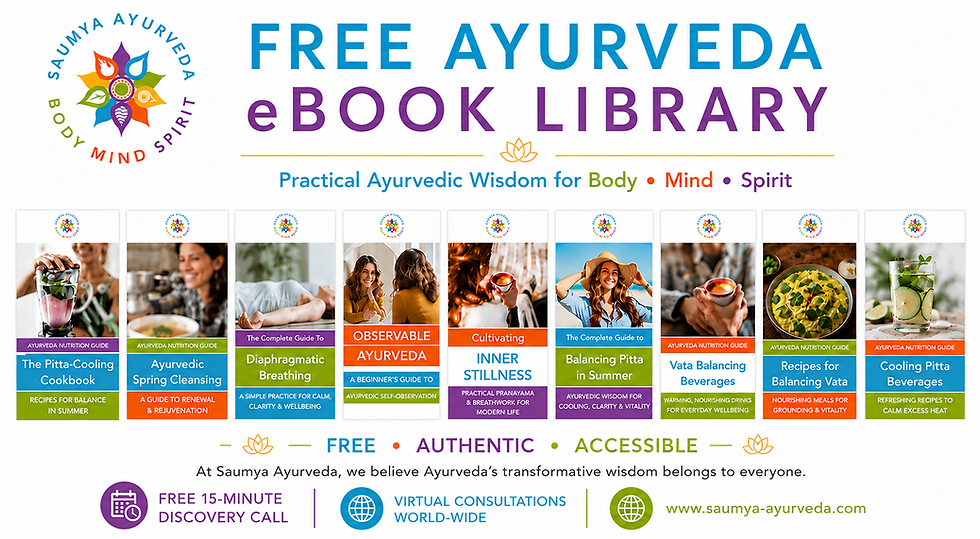
Free Ayurveda eBooks – Download practical guides, recipes, and wellness resources to support your health journey.
Ayurveda Blog – Enjoy easy-to-read articles, seasonal wellness tips, healthy recipes, and everyday inspiration—always educational, never a sales pitch.
Free Guided Traditional Progressive Meditations – Practice authentic, step-by-step guided meditations to cultivate calm, focus, and inner stillness.
Monthly Educational Newsletter – Receive seasonal Ayurveda insights, new articles, healthy recipes, and free resources delivered to your inbox each month.

"Ayurveda is that which teaches us what is beneficial and harmful for life, what brings happiness and sorrow, and what promotes or diminishes longevity."
— Charaka Samhita, Sutra Sthana 1:41 (paraphrased)

What Our Clients Say | Saumya Ayurveda Testimonials
Real Transformations Through Ayurveda Consultation
Physician Testimonial (Medical Endorsement)
“As a physician, I have always believed that prevention is better than cure. In today’s healthcare environment, Ayurveda offers a logical and natural approach to long-term health and prevention.
I began working with Veena during a very demanding phase of my life, and she made the process accessible even within my busy schedule. I was encouraged to follow a steady, sustainable approach focused on real lifestyle change.
Over time, I experienced meaningful improvements in balance, energy, and well-being. In my medical practice, I now see many patients with similar stress- and diet-related imbalances, which has further reinforced my trust in Ayurvedic principles.
I have since referred several patients to Saumya Ayurveda and consider Veena a valuable resource in supporting holistic well-being.”
Dr. Gauri Nagargoje
M.D., Oncology & Hematology
Physician Testimonial (Medical Endorsement)
“As a physician, I initially struggled with Ayurveda’s simplicity and depth, but Veena’s guidance made it practical, scientific, and deeply effective.
Veena has transformed my health and perspective on healing. I experienced significant improvements in focus, digestion, stress response, and overall vitality.
Her personalized approach made lifestyle changes easy and sustainable.
This journey not only improved my health but also inspired a lifelong commitment to integrating Ayurveda into holistic healthcare.”
Dr. Jessica Bedi
D.O., & Ayurvedic Doctor


Anne R., Minneapolis, Minnesota, USA
Explore more client success stories from Saumya Ayurveda and see how Ayurveda supports healing, balance, and transformation.

Discover the Saumya Ayurveda Way
At Saumya Ayurveda, we see you as a whole being—not just a collection of symptoms. True health is more than the absence of disease; it is a state of balance between body, mind, and awareness.
Many people today feel unheard or only partially supported in conventional health systems, especially when symptoms persist without clear answers.
This is where Ayurveda offers a different path.
If you are seeking a holistic approach to health and balanced living, you are in the right place. Saumya Ayurveda provides personalized Ayurvedic guidance designed to support physical, mental, and emotional harmony—helping you move toward a more vibrant and aligned life.
Our approach is rooted in classical Ayurveda and adapted for modern life, with a focus on understanding your unique dosha and prakriti (your natural constitution ) so recommendations are truly individualized—not generic.
Saumya Ayurveda offers concierge-style, client-centered care, meaning your experience is personal, supportive, and free from retail or product pressure. The focus is entirely on education, clarity, and sustainable lifestyle transformation.
Through structured Ayurveda consultation packages, you receive ongoing guidance, thoughtful coaching, and practical tools to help you create lasting change—not temporary fixes.
Begin your Ayurveda journey and book a free 15-minute discovery call.

Meet Veena: Your Trusted Ayurvedic Guide for Clients Worldwide
Veena Blilie is a Certified Ayurvedic Practitioner, Ayurveda teacher, meditation guide, and monk with over three decades of experience helping clients worldwide achieve greater balance and well-being through Ayurveda.
As founder of Saumya Ayurveda and President Emeritus of the Meditation Center, Veena serves clients worldwide through personalized Ayurvedic wellness guidance, meditation, and yoga practices.
Saumya Ayurveda has been recognized as the #1 Ayurveda cooking blog and the #3 Ayurveda website and blog and has received multiple consecutive awards for best wellness practice.
Through her work, Veena shares practical Ayurvedic guidance, nourishing recipes, and wellness education for modern living.
Inspired from an early age by learning herbal remedies, food as medicine, and traditional healing practices at her grandmother’s knee, Veena combines traditional Ayurvedic wisdom with compassionate, accessible guidance that supports mental, physical, and spiritual well-being.
Known for her warmth, humor, intuitive approach, and accessible style, Veena empowers people to create sustainable health through personalized Ayurvedic wellness plans designed to fit naturally into everyday life.
Veena is also the author of several free Ayurveda eBooks and writes the educational articles published on the Saumya Ayurveda blog.
As seen in:
Voice America
Albuquerque The Magazine
Learn more about Veena and her work through Saumya Ayurveda.
Disclaimer: This information is for educational purposes only and is not a substitute for professional medical advice. Ayurveda works best when tailored to your unique doshic profile, so it’s essential to understand your constitution and imbalances before using herbs, foods, or lifestyle practices. Consult a Certified Ayurvedic Practitioner for personalized guidance.