


Stress, Anxiety, Sleep Deprivation, and Inflammation

Updated: Jul 31
Have you ever noticed that your joint pain, digestive symptoms, headaches, skin flare-ups, or fatigue seem worse during periods of stress or anxiety? While inflammation is often associated with injury or illness, growing research suggests that chronic stress, poor sleep, and emotional strain can also influence the body's inflammatory response.
According to Harvard Medical School, insufficient sleep is associated with markers of inflammation, highlighting the close relationship between stress, rest, and overall health. Ayurveda has recognized this connection for thousands of years, teaching that prolonged stress can disturb the body's natural balance, weaken digestion, and contribute to the accumulation of Ama (metabolic waste), creating conditions that may promote inflammation.
In this article, you'll discover how Vata and Pitta doshas influence inflammation, why digestion and the nervous system play such important roles, and practical Ayurvedic strategies to help restore balance naturally. You'll also receive a complimentary Ayurveda recipe eBook to support your wellness journey.

Explore more on the Saumya Blog, selected top Ayurveda blogs and websites to watch.
Stress and anxiety may contribute to inflammation by disrupting sleep, digestion, and the body's natural balance. Ayurveda explains that chronic stress can aggravate Vata and Pitta doshas, weaken Agni (digestive fire), and promote the accumulation of Ama (metabolic waste). Supporting digestion, managing stress, and restoring balance may help reduce inflammation naturally.
Key Takeaways
Stress and anxiety can contribute to inflammation. Chronic stress may affect the body's inflammatory response by disrupting the nervous system, sleep, digestion, and immune function.
Ayurveda views inflammation as more than a physical problem. Imbalances in Vata, Pitta, weakened Agni (digestive fire), and the accumulation of Ama (metabolic waste) may all play a role in chronic inflammation.
Sleep and stress management matter. Research suggests that insufficient sleep is associated with markers of inflammation, reinforcing Ayurveda's emphasis on rest and balanced daily routines.
Healthy digestion is essential. Supporting Agni through nourishing foods, mindful eating, and appropriate lifestyle habits helps promote efficient digestion, healthy elimination, and overall well-being.
Simple daily practices can make a difference. Meditation, diaphragmatic breathing, gentle movement, restorative sleep, and an anti-inflammatory Ayurvedic diet can help calm the nervous system and support the body's natural healing processes.
Ayurveda emphasizes individualized care. Because inflammation has many possible causes, recommendations should be tailored to your unique constitution (Prakriti) and current imbalances (Vikriti) for the most effective long-term support.
Table of Contents

Stress, Anxiety, Sleep Deprivation, and Inflammation
Do your joint pain, digestive discomfort, headaches, skin flare-ups, or fatigue seem to worsen during stressful periods? Have you noticed that a few restless nights leave your body feeling more inflamed or less resilient? If so, you're not imagining it.
While stress and anxiety are not the only causes of inflammation, growing research suggests they can influence the body's inflammatory response. Chronic stress, poor sleep, and ongoing nervous system activation may all contribute to inflammation and make existing symptoms more difficult to manage.
Research published through the National Institutes of Health (NIH) suggests that both chronic stress and insufficient sleep are associated with increased systemic inflammation, reinforcing the close relationship between emotional well-being, restorative sleep, and physical health.
Ayurveda has recognized the connection between the mind and body for thousands of years. It teaches that chronic stress can weaken Agni (digestive fire), contribute to the accumulation of Ama (metabolic waste), and disturb the body's natural balance. As Ama accumulates, it may interfere with healthy function and create conditions that promote inflammation.
Rather than focusing only on symptoms, Ayurveda seeks to understand and address the underlying patterns contributing to imbalance. Through personalized nutrition, lifestyle guidance, stress management, and, when appropriate, gentle cleansing practices, Ayurveda supports the body's natural ability to restore balance and resilience.
The mind and body are deeply interconnected. By calming the nervous system, strengthening digestion, improving sleep, and cultivating healthy daily habits, you create the conditions for a healthier inflammatory response and lasting well-being.
Related Reading: Ayurvedic Tips for Good Sleep


Signs of Pitta Inflammation In the Body
Inflammation is one of the body's natural protective responses, helping to repair injury and fight infection. However, when inflammation becomes chronic, it can contribute to ongoing discomfort and affect overall health.
In Ayurveda, chronic inflammation is most commonly associated with an aggravated Pitta dosha. Because Pitta embodies the qualities of heat, sharpness, and intensity, excess Pitta often appears as signs of inflammation throughout the body.
According to the Charaka Samhita, aggravated Pitta is characterized by qualities such as heat, burning, redness, and inflammation, while the Sushruta Samhita describes emotional stress, anger, excessive heat, and heating foods as factors that may aggravate Pitta.
Common signs of inflammation include:
Redness: Persistent redness may indicate increased heat and inflammation in the affected tissues.
Swelling: Inflammation often increases blood flow to an area, leading to swelling and tenderness.
Pain: Pain is one way the body signals that something needs attention. Inflamed tissues are often more sensitive and uncomfortable.
Heat: Inflamed areas may feel warm or hot to the touch because of increased circulation.
Loss of Function: Significant inflammation can reduce flexibility, strength, or range of motion, making everyday activities more difficult.
While Pitta provides the heat that drives inflammation, Ayurveda teaches that Vata often influences how that inflammation spreads throughout the body. Think of a campfire: Pitta is the fire, and Vata is the wind. A gentle breeze can quickly turn a small flame into a larger fire.
"Think of it this way: fire naturally spreads. What happens when wind (Vata) blows on fire? The flames grow stronger. Vata can fan aggravated Pitta, which is why bringing both doshas back into balance is often an important part of reducing inflammation."— Veena Blilie
Understanding how Vata and Pitta work together helps explain why Ayurveda focuses on restoring balance throughout the whole person rather than treating inflammation as an isolated symptom.

Common Signs of Pitta Imbalance
This transition feels more natural than "Hot List of Common Pitta Imbalances" while keeping the focus on education rather than simply listing symptoms.

Can Stress and Anxiety Cause Inflammation?
Have you ever noticed that your symptoms seem to flare after a stressful week or several nights of poor sleep? Whether it's joint discomfort, digestive issues, headaches, skin irritation, or overwhelming fatigue, many people find that emotional stress affects their physical health.
Research suggests that chronic stress and anxiety can influence the body's inflammatory response. During times of stress, the body releases hormones such as cortisol and adrenaline, activating the familiar fight-or-flight response.
While this response is essential during true emergencies, remaining in this heightened state for long periods may affect sleep, digestion, immune function, and overall well-being.
The fight-or-flight response is automatic—it is designed to protect us. What often requires intentional practice is activating the body's rest, relax, and restore response. Ayurveda has emphasized this principle for thousands of years, recognizing that calming the nervous system is essential for supporting digestion, restoring balance, and promoting long-term health.
Through practices such as diaphragmatic breathing, meditation, mindful movement, and guided relaxation, we can gradually retrain our response to everyday stress. With consistent practice, these habits become more natural, helping the body shift from constant reactivity toward greater resilience, ease, and balance.
When your body perceives a threat, it naturally activates protective responses, including inflammation. While occasional stress is a normal part of life, chronic stress can keep the body in a prolonged state of alertness, affecting sleep, digestion, immune function, and overall well-being. Although it's impossible to eliminate stress completely, developing healthy daily habits can help calm the nervous system, build resilience, and support a healthy inflammatory response.
"One of the most consistent patterns I've observed over the years is that when people learn to calm their nervous system, improvements often extend far beyond stress itself. As anxiety begins to settle, many notice better sleep, steadier energy, clearer thinking, and a greater sense of well-being.
Breath is the bridge between body and mind. It may sound almost too simple, but diaphragmatic breathing and guided relaxation help retrain the body's response to stress. Simple practices, repeated consistently, often become the foundation for lasting change."— Veena Blilie
🌿 Saumya Self-Observation™ ExerciseBefore changing your diet or routine, spend the next three days simply observing. Ayurveda teaches that awareness is the first step toward lasting balance. Notice:
There are no right or wrong answers—only observations. By paying attention with curiosity rather than judgment, you begin to recognize how stress, digestion, sleep, and inflammation are connected. Sometimes the first step toward healing isn't changing your routine—it's learning to notice what your body is already telling you. |

Ayurveda Tips for Reducing Pitta
Because Pitta is associated with heat, intensity, and transformation, the goal is not to eliminate Pitta but to restore it to its natural balance. Simple, consistent daily habits can help cool excess heat, support healthy digestion, and promote a balanced inflammatory response.
Choose cooling, nourishing foods such as lime, ghee, coconut water, coconut oil, cilantro, cucumber, coriander, fennel, bitter greens (including dandelion greens, spinach, and kale), mango, and aloe vera. The Ultimate Guide to Cooling Foods in Ayurveda
Limit foods that increase heat such as coffee (including decaffeinated coffee), spicy foods, fermented foods, fried foods, refined sugar, ultra-processed foods, and alcohol.
Practice daily Abhyanga (Ayurvedic self-massage) using Pitta-balancing oils to help calm the nervous system, nourish the skin, and support relaxation.
Calm the nervous system every day. Regular diaphragmatic breathing, meditation, and guided relaxation can help reduce stress and support a healthier inflammatory response.
Follow a Pitta-balancing lifestyle. Daily routines that emphasize cooling foods, adequate rest, mindful movement, and stress management can help maintain balance throughout the year.
How to Reduce Pitta and Body Heat with Ayurveda and Keep Your Cool
These practices work best when combined and tailored to your individual needs. Ayurveda emphasizes small, consistent changes that support long-term balance rather than relying on quick fixes or restrictive approaches.

Pitta-Balancing Recipes
Discover cooling, nourishing recipes inspired by Ayurveda that help balance Pitta, support healthy digestion, and promote overall well-being. Choosing foods that are appropriate for your unique constitution can help strengthen Agni (digestive fire), reduce the accumulation of Ama (metabolic waste), and encourage lasting balance through the healing power of food.

List of Cooling Ayurvedic Foods
Choosing naturally cooling foods can help balance Pitta, support healthy digestion, and encourage the body's natural ability to maintain balance. While individual needs vary, the following foods are traditionally recommended in Ayurveda to help reduce excess heat.
Water-rich vegetables: Cucumber, asparagus, squash, zucchini, celery, and similar hydrating vegetables.
Cooling vegetables: Beets, broccoli, cabbage, cauliflower, cilantro, green beans, okra, parsnips, peas, potatoes, and rutabaga.
Bitter greens: Dandelion greens, kale, spinach, Swiss chard, and beet greens. (Mustard greens are generally considered heating and are best limited when Pitta is aggravated.)
Juicy fruits: Mango, papaya, grapes, pears, and other naturally sweet, hydrating fruits.
Berries: Strawberries, raspberries, cherries, blueberries, and blackberries.
Melons: Watermelon, cantaloupe, honeydew, and muskmelon.
Whole grains: Rice, quinoa, oats, barley, and other easy-to-digest whole grains.
Dairy (if well tolerated): Milk, butter, and ghee.
Coconut: Fresh coconut, coconut water, and coconut oil are traditionally valued for their cooling qualities.
Almonds: Soaked and peeled almonds are easier to digest and are considered balancing for Pitta.
Moong dal: Whole green moong (especially sprouted) and yellow moong dal are nourishing, easy to digest, and naturally cooling.
Flaxseed: A source of healthy fats that may also support comfortable elimination.
Cooling herbs: Dill, cilantro, coriander, fennel, mint, and rose.
Ayurveda recognizes that no single food is right for everyone. The best dietary choices depend on your unique constitution, current imbalances, digestive strength, season, and overall health.

List of Cooling Ayurvedic Recipes

Frequently Asked Questions
Can stress and anxiety really cause inflammation?
Chronic stress and anxiety can influence the body's inflammatory response by affecting the nervous system, sleep quality, digestion, and immune function. While inflammation has many possible causes, prolonged stress may contribute to persistent, low-grade inflammation. Ayurveda recognizes that chronic stress can disturb the body's natural balance, particularly by aggravating Vata and Pitta.
How does Ayurveda explain inflammation?
Ayurveda views inflammation as the result of underlying imbalances rather than a condition itself. Weakened Agni (digestive fire), the accumulation of Ama (metabolic waste), and aggravated Pitta may all contribute to inflammation. The goal is to restore balance and support the body's natural healing processes.
Can poor sleep make inflammation worse?
Research suggests that insufficient sleep is associated with markers of inflammation. Ayurveda has long emphasized restorative sleep as an essential pillar of health because quality sleep supports healthy digestion, immune function, emotional resilience, and overall well-being.
Which doshas are most commonly associated with inflammation?
Inflammation is most commonly associated with aggravated Pitta, which governs heat and metabolism. However, chronic stress may also aggravate Vata, affecting the nervous system, digestion, and sleep. Ayurveda considers the whole person when evaluating imbalance.
Which Ayurvedic lifestyle practices may help support a healthy inflammatory response?
Ayurveda emphasizes consistent daily habits such as eating nourishing meals, supporting healthy digestion, managing stress, prioritizing restorative sleep, practicing meditation or diaphragmatic breathing, engaging in gentle movement, and incorporating calming practices like Abhyanga (warm oil massage).
Can diet influence inflammation according to Ayurveda?
Yes. Ayurveda teaches that food plays a central role in maintaining balance. Fresh, whole foods prepared according to your individual needs help support healthy digestion and reduce the accumulation of Ama. Cooling foods may be especially beneficial when Pitta is aggravated.
When should I consider an Ayurvedic consultation?
If you experience persistent inflammation, chronic stress, recurring digestive concerns, or symptoms that continue despite healthy lifestyle habits, an Ayurvedic consultation can help identify the underlying patterns contributing to imbalance and provide personalized recommendations to support long-term wellness.

Glossary of Ayurvedic Terms
Abhyanga A traditional Ayurvedic self-massage using warm herbal oils. Abhyanga is commonly practiced to calm the nervous system, support circulation, nourish the skin, and promote relaxation. It is often recommended to help balance Vata.
Agni (Digestive Fire) The body's digestive and metabolic fire. Healthy Agni supports efficient digestion, nutrient absorption, and elimination. When weakened, digestion may become impaired and contribute to imbalance.
Ama (Metabolic Waste) A toxic byproduct that forms when digestion is incomplete. In Ayurveda, Ama can accumulate in the body and may contribute to inflammation, fatigue, sluggishness, and other health concerns.
Ayurveda A traditional system of health and wellness originating in India more than 5,000 years ago. Ayurveda emphasizes individualized care through nutrition, lifestyle, daily routines, herbal support, and mind-body balance.
Pitta One of Ayurveda's three doshas, composed of the Fire and Water elements. Pitta governs digestion, metabolism, and transformation. When aggravated, it may contribute to excess heat, irritation, inflammation, skin flare-ups, and acidity.
Vata One of Ayurveda's three doshas, composed of the Air and Space elements. Vata governs movement, communication, and the nervous system. Stress, anxiety, and insufficient sleep may aggravate Vata, contributing to restlessness, digestive irregularity, and difficulty relaxing.

Continue Your Ayurveda Knowledge Journey
Understanding the connection between stress, digestion, inflammation, and the doshas is just one part of Ayurveda's timeless approach to health. Continue exploring the interconnected principles that strengthen Agni, reduce Ama, calm the mind, and support lasting balance through nourishing food, daily routines, and mindful living.
1. Learn the Foundations of Ayurveda
2. Build a Strong Foundation
3. Better Understand Your Unique Constitution
4. Support Your Vitality Naturally
How to Do Abhyanga Massage at Home: Benefits, Oils, and Step-by-Step Guide
Why Seasonal Transitions Matter for Ojas: An Ayurveda Guide to Immunity and Resilience (Coming Septemner 2026)
5. Explore Common Health Challenges Through an Ayurvedic Lens
7 Ayurvedic Remedies for Maintaining Healthy Blood Pressure Naturally
Gut-Brain Connection in Ayurveda: Reduce Anxiety Through Digestion
Leaky Gut Syndrome in Ayurveda: Causes, Symptoms, Diet, and Natural Healing
Histamine Intolerance: Symptoms, Causes, Diet, and Ayurvedic Treatment for Natural Relief
MCAS Natural Treatment: Ayurvedic Diet, Herbs, and Root Causes

Our Commitment to Accessible Ayurveda Education
At Saumya Ayurveda, we believe Ayurveda's transformative ancient wisdom belongs to everyone—not just those who can afford it. That's why we're committed to making high-quality, authentic Ayurveda education available globally, free of charge.
Through our free eBooks, guides, and educational resources, we offer practical, grounded wisdom to help those seeking greater balance, vitality, and wellbeing integrate Ayurveda into their daily lives.
Accessible. Authentic. Free. Just as it was meant to be.
Free Ayurveda eBooks – Download practical guides, recipes, and wellness resources to support your health journey.
Ayurveda Blog – Enjoy easy-to-read articles, seasonal wellness tips, healthy recipes, and everyday inspiration—always educational, never a sales pitch.
Free Guided Traditional Progressive Meditations – Practice authentic, step-by-step guided meditations to cultivate calm, focus, and inner stillness.
Monthly Educational Newsletter – Receive seasonal Ayurveda insights, new articles, healthy recipes, and free resources delivered to your inbox each month.

Final Thoughts: Restoring Balance from the Inside Out
Stress and anxiety affect far more than our thoughts—they influence our sleep, digestion, immune function, and overall well-being. Ayurveda reminds us that lasting health is not achieved by addressing symptoms alone, but by understanding the underlying patterns that contribute to imbalance.
When Vata and Pitta are supported, Agni remains strong, digestion functions more efficiently, and the accumulation of Ama is less likely to interfere with the body's natural healing processes. Over time, simple daily practices such as nourishing meals, restorative sleep, mindful movement, meditation, and stress management can help restore resilience and support a healthy inflammatory response.
Healing is rarely the result of one dramatic change. More often, it grows from the small choices we make each day and our willingness to listen to the body's signals with patience and compassion.
Ayurveda teaches that balance is not something we find—it is something we cultivate. By caring for the mind and body together, we create the conditions for lasting health, resilience, and well-being.
🌿 Start Today: Three Simple Ways to Calm Stress and Support a Healthy Inflammatory ResponseYou don't have to change everything at once. Begin with one or two small habits and simply notice how your body responds. ✔ Pause and take three slow diaphragmatic breaths. Allow your exhale to be slightly longer than your inhale to help calm your nervous system. ✔ Choose one cooling, nourishing meal today. Include fresh, whole foods that help support healthy digestion and balance Pitta. ✔ Create a calming evening routine. Turn off screens, dim the lights, and give yourself time to unwind before bed to support restful sleep. Small, consistent daily habits can strengthen resilience over time. By caring for your mind, digestion, and nervous system, you create the conditions for lasting balance and well-being. |

What Our Clients Say | Saumya Ayurveda Testimonials
Real Transformations Through Ayurveda Consultation
Physician Testimonial (Medical Endorsement)
“As a physician, I have always believed that prevention is better than cure. In today’s healthcare environment, Ayurveda offers a logical and natural approach to long-term health and prevention.
I began working with Veena during a very demanding phase of my life, and she made the process accessible even within my busy schedule. I was encouraged to follow a steady, sustainable approach focused on real lifestyle change.
Over time, I experienced meaningful improvements in balance, energy, and well-being. In my medical practice, I now see many patients with similar stress- and diet-related imbalances, which has further reinforced my trust in Ayurvedic principles.
I have since referred several patients to Saumya Ayurveda and consider Veena a valuable resource in supporting holistic well-being.”
Dr. Gauri Nagargoje
M.D., Oncology & Hematology
Physician Testimonial (Medical Endorsement)
“As a physician, I initially struggled with Ayurveda’s simplicity and depth, but Veena’s guidance made it practical, scientific, and deeply effective.
Veena has transformed my health and perspective on healing. I experienced significant improvements in focus, digestion, stress response, and overall vitality.
Her personalized approach made lifestyle changes easy and sustainable.
This journey not only improved my health but also inspired a lifelong commitment to integrating Ayurveda into holistic healthcare.”
Dr. Jessica Bedi
D.O., & Ayurvedic Doctor
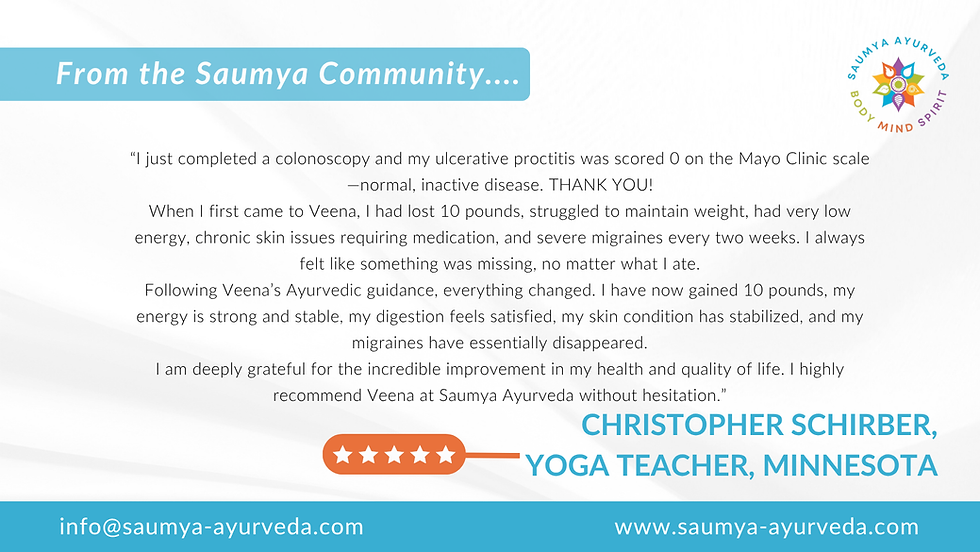


Anne R., Minneapolis, Minnesota, USA
Explore more client success stories from Saumya Ayurveda and see how Ayurveda supports healing, balance, and transformation.

Discover the Saumya Ayurveda Way
At Saumya Ayurveda, we see you as a whole being—not just a collection of symptoms. True health is more than the absence of disease; it is a state of balance between body, mind, and awareness.
Many people today feel unheard or only partially supported in conventional health systems, especially when symptoms persist without clear answers.
This is where Ayurveda offers a different path.
If you are seeking a holistic approach to health and balanced living, you are in the right place. Saumya Ayurveda provides personalized Ayurvedic guidance designed to support physical, mental, and emotional harmony—helping you move toward a more vibrant and aligned life.
Our approach is rooted in classical Ayurveda and adapted for modern life, with a focus on understanding your unique dosha and prakriti (your natural constitution ) so recommendations are truly individualized—not generic.
Saumya Ayurveda offers concierge-style, client-centered care, meaning your experience is personal, supportive, and free from retail or product pressure. The focus is entirely on education, clarity, and sustainable lifestyle transformation.
Through structured Ayurveda consultation packages, you receive ongoing guidance, thoughtful coaching, and practical tools to help you create lasting change—not temporary fixes.
Begin your Ayurveda journey and book a free 15-minute discovery call.

Meet Veena: Your Trusted Ayurvedic Guide for Clients Worldwide
Veena Blilie is a Certified Ayurvedic Practitioner, Ayurveda teacher, meditation guide, and monk with over three decades of experience helping clients worldwide achieve greater balance and well-being through Ayurveda.
As founder of Saumya Ayurveda and President Emeritus of the Meditation Center, Veena serves clients worldwide through personalized Ayurvedic wellness guidance, meditation, and yoga practices.
Saumya Ayurveda has been recognized as the #1 Ayurveda cooking blog and the #3 Ayurveda website and blog and has received multiple consecutive awards for best wellness practice.
Through her work, Veena shares practical Ayurvedic guidance, nourishing recipes, and wellness education for modern living.
Inspired from an early age by learning herbal remedies, food as medicine, and traditional healing practices at her grandmother’s knee, Veena combines traditional Ayurvedic wisdom with compassionate, accessible guidance that supports mental, physical, and spiritual well-being.
Known for her warmth, humor, intuitive approach, and accessible style, Veena empowers people to create sustainable health through personalized Ayurvedic wellness plans designed to fit naturally into everyday life.
Veena is also the author of several free Ayurveda eBooks and writes the educational articles published on the Saumya Ayurveda blog.
As seen in:
Voice America
Albuquerque The Magazine
Learn more about Veena and her work through Saumya Ayurveda.
Disclaimer: This information is for educational purposes only and is not a substitute for professional medical advice. Ayurveda works best when tailored to your unique doshic profile, so it’s essential to understand your constitution and imbalances before using herbs, foods, or lifestyle practices. Consult a Certified Ayurvedic Practitioner for personalized guidance.


