


The Ultimate Guide to Cooling Foods in Ayurveda

Updated: Sep 5
If you constantly feel overheated, inflamed, irritable, sensitive, or mentally “on edge,” Ayurveda views these signs as more than isolated symptoms. They often point to an excess of Pitta dosha — the force of heat, digestion, metabolism, and transformation within the body and mind.
When Pitta becomes aggravated, the effects rarely stay confined to one area. The heat can show up everywhere: in the stomach as acidity and indigestion, on the skin as redness and sensitivity, and in the mind as frustration, restlessness, or emotional intensity. Over time, this internal excess can leave the body feeling depleted, reactive, and out of balance.
One of Ayurveda’s most trusted approaches for calming excess Pitta is through food. Naturally cooling foods, hydrating drinks, and soothing herbs help counter internal heat while supporting smoother digestion, steadier energy, clearer skin, and a calmer emotional state.
In this guide, you’ll discover the most effective Ayurvedic cooling foods, the ingredients that may unknowingly aggravate Pitta, and simple daily practices that help bring the body back to a state of calm, balance, and ease.

Keep your Pitta cool and your curiosity engaged. 🌿 Explore the Saumya Blog for practical Ayurvedic insights, cooling lifestyle guidance, and thoughtfully curated wisdom from trusted Ayurveda sources.
Discover the best cooling foods for Pitta and learn how Ayurveda uses food to help reduce excess heat and support balance. Explore cooling fruits, vegetables, grains, dairy, spices, herbs, Ayurvedic drinks, and nourishing recipes, plus foods to limit when Pitta is elevated.
Table of Contents
The Ultimate Guide to Cooling Foods in Ayurveda
From inflammation, heartburn, and headaches to irritability, hot flashes, and emotional reactivity, excess Pitta can manifest both physically and mentally. The good news is that balance can often begin with something simple: your daily food choices.
In this guide, you will learn how to:
Recognize the key signs of Pitta imbalance
Choose cooling Ayurvedic foods that naturally help reduce internal heat
Identify foods and habits that aggravate Pitta
Understand when dietary changes alone may not be enough for lasting balance
Begin here, and explore how to restore calm, clarity, and internal coolness through Ayurvedic nutrition.
👉 Begin here. Jump to the full list of cooling foods in Ayurveda

What Kinds of Foods Reduce Body Heat in Ayurveda?
Ayurveda teaches that foods with sweet, bitter, and astringent tastes help cool the body, while sour, salty, and pungent foods tend to increase internal heat.
Focus on:
Juicy fruits (like melons, grapes, and ripe mango)
Water-rich vegetables (like cucumber, zucchini, and celery)
Light grains (like white rice, quinoa, and oats)
Cooling herbs (like cilantro, coriander, mint, and rose)
Mild dairy (such as ghee, milk, and homemade yogurt)
These foods are traditionally used in Ayurveda to help calm excess heat, support healthy digestion, and restore balance.
To cool the system more deeply, it’s important to understand what creates excess (Pitta) heat in the first place. In Ayurveda, every food carries an energetic quality that can either calm or intensify the inner fire.
Foods that increase internal heat tend to aggravate Pitta dosha. By learning to recognize these patterns and choose foods with awareness, you can begin to restore a more balanced, steady state.

What Is Pitta, and How Does It Show Up?
Pitta is the Ayurvedic dosha responsible for digestion, metabolism, and transformation. It is characterized by qualities that are hot, sharp, oily, and intense—supporting focus and clarity when balanced, but becoming disruptive when in excess.
Physical Symptoms of Excess Pitta:
Burning indigestion or acid reflux
Rashes, acne, or skin inflammation
Loose stools or urgent digestion
Excessive sweating or strong body odor
Migraines, red eyes, or heat intolerance
Hot, heavy, or clotty menstrual cycles

Mental and Emotional Symptoms:
Irritability, impatience, or anger
Perfectionism or work-driven intensity
Judgmental or critical thinking
Jealousy, frustration, or burnout
When intensity builds—whether from overwork, heat, or overstimulation—Pitta can accumulate quickly. Incorporating cooling foods and calming practices is an essential step in restoring balance and reducing excess heat in both body and mind.

The Best Cooling Foods in Ayurveda (By Category)
In Ayurveda, diet is one of the most important ways to help reduce excess internal heat. When Pitta is elevated, favor foods that are light, hydrating, and naturally sweet, bitter, or astringent. These qualities help calm excess heat and restore balance.
🍌 Juicy Fruits
Watermelon, melons, pears, apples, mango
Grapes (red, purple, black), figs, raisins, berries
Coconut, pomegranate, honeydew
Note: Ripe mango may be enjoyed in moderation, but unripe or excessive mango is heating.
🌿 Cooling Vegetables
Cucumber, zucchini, asparagus, celery, squash
Kale, spinach, broccoli, cauliflower, green beans
Beets, cabbage, lettuce
Note: Raw spinach is especially cooling and beneficial for pacifying Pitta. Cooked spinach may be less cooling, especially when prepared with salt or heating spices.
🥚 Cooling Grains, Seeds, & Legumes
White rice, oats, barley, quinoa, amaranth, farro, whole wheat
Mung beans/Moong dal (most cooling), azuki beans, black-eyed peas
Red and brown lentils, chickpeas (in moderation)
Chia seeds, sunflower seeds, pumpkin seeds, coconut
🌿 Cooling Herbs & Spices
Cilantro, dill, coriander, mint, fennel,
Hibiscus, rose, cardamom
🧀 Cooling Dairy
Cow's milk (warm, spiced if needed), ghee
Soft cheeses, fresh homemade yogurt (sparingly)
🥤 Cooling Drinks
Coconut water
Melon juice
Fennel sharbat
Herbal teas (rose, hibiscus)
Room temperature water or fresh juices (avoid ice-cold drinks)
👉 Pro tip: Eat your largest meal midday, when digestion is strongest. Avoid skipping meals or eating late at night—both aggravate Pitta.

Foods to Limit – Heating Foods in Ayurveda
When Pitta is elevated, it’s important to reduce foods that increase internal heat and intensity.
The following are best limited or avoided to help restore balance:
Spicy foods (chilies, hot peppers, garlic, onion)
Sour or fermented foods (vinegar, tomatoes, citrus, aged cheeses)
Fried, oily, salty, or processed foods
Alcohol, caffeine, red meat, and hard cheeses
To support a smoother transition, incorporate cooling swaps—easy ingredient substitutions that help calm the system without sacrificing flavor.

Cooling Ayurvedic Recipes from the Saumya Kitchen
Ready to bring the cooling principles of Ayurveda into your kitchen? These Saumya-inspired recipes are designed to help balance Pitta dosha, nourish the body, and soothe internal heat through seasonal, easy-to-digest ingredients.
Cooling Ayurvedic Dishes
Roasted Beetroot with Cooling Spices
Beet, Carrot, Daikon Dish

Cooling Ayurvedic Drinks
Fresh Melon Juice
Coconut Water with Fresh Lime
Herbal Teas (Hibiscus, Fennel, and Rose)


Why Cooling Foods Alone Might Not Be Enough
Eating cooling foods is one of the most effective first steps in reducing internal heat. For many people, this shift alone can bring noticeable relief and greater comfort.
However, in Ayurveda, why the heat is present matters just as much as how to cool it. Pitta imbalance can arise from emotional intensity, a demanding lifestyle, hormonal changes, or may exist alongside deeper imbalances such as weakened digestion or aggravated Vata.
To achieve lasting balance, it is important to address the root cause—not just the symptoms. This is where personalized Ayurvedic guidance becomes essential.
If you experience persistent overheating, frequent hot flashes, migraines, skin sensitivity, or emotional irritability, a more individualized approach may be helpful. A short consultation can be the first step toward understanding your unique constitution and restoring long-term balance.


Bonus Practices to Cool Body and Mind
Cooling the system is not only about diet—it is also about daily lifestyle choices. Ayurveda emphasizes aligning habits with nature to cool excess heat, support the nervous system, and bring balance to both body and mind.
Small, consistent shifts can make a meaningful difference.
Gentle Practices to Support Cooling
Cooling Abhyanga (self-oil massage)
Nasya oil therapy for clarity and balance
Rose or hibiscus herbal tea
Early bedtime with reduced evening screen time
Light movement in the early morning or cooler hours of the day
Related Reads:

Deepen Your Ayurvedic Journey with Three Free Resources
How to Keep Your Cool is an invitation to transform your menstrual cycle—and, in doing so, support a more balanced and harmonious life. From menses to menopause, this guide offers practical Ayurvedic wisdom to help you stay steady, cool, and supported through every stage.
A note: Ayurvedic care becomes especially important during perimenopause and menopause. This transformative phase—often spanning many years—is marked by significant hormonal and doshic shifts that benefit from thoughtful, personalized support.
““Oh my gosh this is an amazing book! The WORLD NEEDS THIS! BOOK!!” -- Dr. Melissa Persons, Minnesota

A quiet revolution begins with the breath. As the breath steadies, the mind softens, and the body returns to a state of calm and safety.
This free eBook explores pranayama—the Ayurvedic science of breath—as a practical and effective way to cool Pitta, calm anxiety, and reconnect with your natural rhythm.
You’ll learn diaphragmatic breathing (the foundation of all breathwork), discover techniques to soothe Vata and Pitta, and receive guided tools to help you build a steady, nourishing daily practice.

You were born knowing how to breathe. Deeply. Fully. Without effort. It was your body’s first language. But somewhere along the way—through stress, urgency, and the habits of modern life—that breath became shallow. Higher in the chest. Faster. Tighter.
When the breath changes, the whole body follows. The nervous system stays on guard. The mind keeps moving. Digestion weakens. Sleep becomes lighter. Even in quiet moments, it can feel difficult to truly settle.
The breath that calms all of this is already within you. You simply need to reconnect with it.
Inside this free guide, you’ll learn:
→ Why shallow breathing keeps the body in low-grade stress→ How diaphragmatic breathing signals safety to the nervous system→ Simple traditional practices to restore your natural breath→ How this shift can improve sleep, digestion, clarity, and resilience→ How to build a daily breath practice that feels sustainable and grounding
You only need to begin.

Saumya Ayurveda: 3 Steps to Transform Your Life
"The mind is more in the body than the body is in the mind. Breath connects mind and body; by training it, we become calm, focused, and grounded, reducing stress and supporting long-term vitality."
— Veena, Saumya Ayurveda
The Saumya 3-Step Meditation Process is designed to help shift the body and mind from fight-flight-freeze into a state of rest, restore, and relax. Practiced consistently for 40 days, these simple yet powerful techniques may help cultivate greater calm, clarity, resilience, and ease in daily life.
1. Learn Diaphragmatic Breathing
Begin by re-learning diaphragmatic breathing, one of the most effective ways to support the transition from stress response to a calmer, more regulated state. Certain pranayama practices may also help balance Pitta dosha and naturally cool the body and mind. Guidance from an experienced teacher is recommended.
Download our free ebook, Diaphragmatic Breathing: The Essential Guide, to get started.
2. Commit to Daily Guided Practice
Practice for 11 minutes each morning and evening as part of your daily Ayurvedic routine. Consistency is the key to transformation. Small daily practices, repeated over time, can help support nervous system regulation, emotional balance, and greater inner stability.
Access our free progressing guided practices.
3. Establish Ayurvedic Daily Routines
Support your meditation practice with foundational Ayurvedic lifestyle rhythms that help create steadiness throughout the day.
The Power of Small Daily Changes
Choose the practices that feel most supportive and begin where you are. Lasting transformation rarely comes from dramatic change—it grows through small, intentional actions practiced day after day. Even simple mindful awareness during everyday activities can become a form of meditation when approached with presence and consistency.
Over time, diaphragmatic breathing, meditation, and Ayurvedic daily routines can help cultivate greater calm, focus, resilience, and vitality. As the nervous system becomes more regulated and balanced, many people find it easier to respond to life's challenges with clarity, steadiness, and self-awareness.
The journey toward well-being is not about perfection. It is about returning, again and again, to the practices that nourish the body, calm the mind, and support a more conscious, balanced, and vital way of life.

FAQ: Cooling Foods in Ayurveda
1. What are cooling foods in Ayurveda?
Cooling foods in Ayurveda are foods that help reduce excess heat in the body and balance Pitta dosha. They are typically sweet, bitter, and astringent in taste and support cooling, calming effects in both body and mind.
2. Which foods are best for balancing Pitta?
The best foods for balancing Pitta include naturally cooling, hydrating, and lightly prepared foods. These include juicy fruits (melons, grapes, pears), water-rich vegetables (cucumber, zucchini, leafy greens), light grains (rice, oats), and cooling herbs such as cilantro, mint, and fennel.
3. What foods should be avoided when Pitta is high?
When Pitta is elevated, it is best to avoid foods that increase heat and inflammation. These include spicy foods, sour and fermented foods, fried or oily foods, alcohol, caffeine, red meat, and aged cheeses.
4. Can cooling foods alone fix a Pitta imbalance?
Cooling foods are an important first step in balancing Pitta, but they are usually not enough on their own. Lifestyle factors such as stress, sleep, digestion strength, and emotional intensity also play a major role in Pitta balance.
5. Are raw foods always cooling in Ayurveda?
Not always. While many raw foods like cucumber and leafy greens are cooling, Ayurveda also considers digestibility and digestive strength (Agni). Some individuals may benefit more from lightly cooked foods depending on their constitution.
6. What drinks help reduce body heat in Ayurveda?
Cooling Ayurvedic drinks include coconut water, rosewater lemonade, fennel sharbat, hibiscus or mint tea, and fresh fruit juices such as melon juice. These help hydrate the body and reduce internal heat.
7. How quickly do cooling foods work?
Some people notice improvements such as reduced acidity, irritability, or overheating within a few days. However, lasting Pitta balance typically requires consistent dietary and lifestyle changes over time.
8. Do cooling foods help with skin and inflammation?
Yes. Cooling foods may help support clearer skin and reduced inflammation because excess Pitta is linked to heat, redness, and inflammatory conditions. Results improve with consistent long-term use.

Glossary of Ayurvedic Terms
Abhyanga The Ayurvedic practice of self-massage with oil, traditionally used to nourish the body and support balance.
Agni The Ayurvedic principle of digestive fire. Balanced Agni supports healthy digestion and metabolism.
Ayurveda An ancient system of health and wellness that emphasizes balance among the body, mind, digestion, lifestyle, and environment.
Dosha One of three fundamental patterns in Ayurveda—Vata, Pitta, and Kapha—that influence how the body and mind function.
Nasya An Ayurvedic oil therapy traditionally practiced through the nasal passages and used to support clarity and balance.
Pitta One of the three doshas, associated with digestion, metabolism, transformation, and heat.
Pranayama Traditional Ayurvedic and yogic breath practices used to regulate the breath and support balance in the body and mind.
Vata One of the three doshas, associated with movement, circulation, and activity within the body and mind.

Continue Learning About Ayurveda
Now that you understand how cooling foods can help balance Pitta, continue exploring Ayurveda’s approach to food, digestion, and daily habits for maintaining balance through the seasons.
1. Learn the Foundations of Ayurveda
2. Build a Strong Foundation
3. Better Understand Your Unique Constitution
4. Support Your Vitality Naturally
How to Do Abhyanga Massage at Home: Benefits, Oils, and Step-by-Step Guide
Why Seasonal Transitions Matter for Ojas: An Ayurveda Guide to Immunity and Resilience (Coming September 2026)
5. Explore Common Health Challenges Through an Ayurvedic Lens
7 Ayurvedic Remedies for Maintaining Healthy Blood Pressure Naturally
Gut-Brain Connection in Ayurveda: Reduce Anxiety Through Digestion
Leaky Gut Syndrome in Ayurveda: Causes, Symptoms, Diet, and Natural Healing
Histamine Intolerance: Symptoms, Causes, Diet, and Ayurvedic Treatment for Natural Relief
MCAS Natural Treatment: Ayurvedic Diet, Herbs, and Root Causes
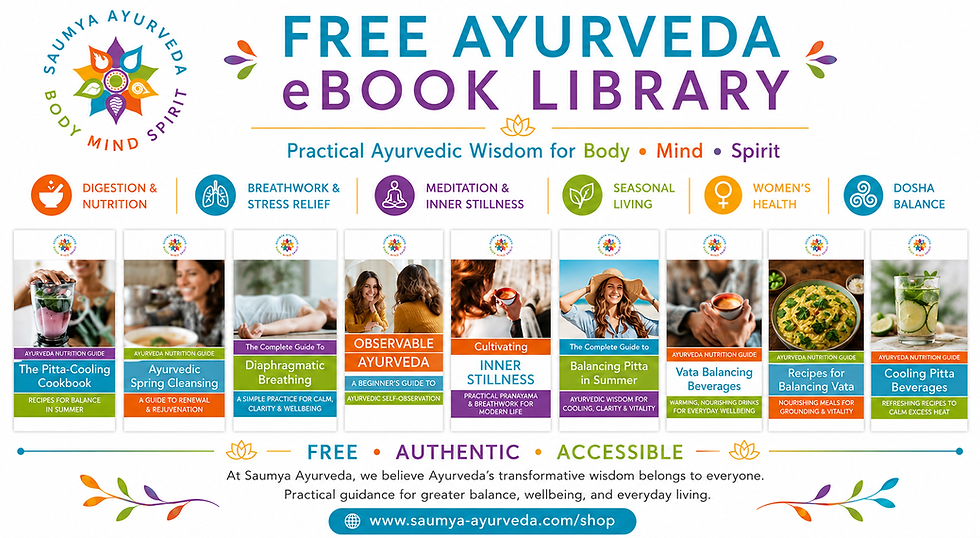
Our Commitment to Accessible Ayurveda Education
At Saumya Ayurveda, we believe Ayurveda's transformative ancient wisdom belongs to everyone—not just those who can afford it. That's why we're committed to making high-quality, authentic Ayurveda education available globally, free of charge.
Through our free eBooks, guides, and educational resources, we offer practical, grounded wisdom to help those seeking greater balance, vitality, and wellbeing integrate Ayurveda into their daily lives.
Accessible. Authentic. Free. Just as it was meant to be.
Free Ayurveda eBooks – Download practical guides, recipes, and wellness resources to support your health journey.
Ayurveda Blog – Enjoy easy-to-read articles, seasonal wellness tips, healthy recipes, and everyday inspiration—always educational, never a sales pitch.
Free Guided Traditional Progressive Meditations – Practice authentic, step-by-step guided meditations to cultivate calm, focus, and inner stillness.
Monthly Educational Newsletter – Receive seasonal Ayurveda insights, new articles, healthy recipes, and free resources delivered to your inbox each month.

Final Thoughts: Cooling Foods Are About Balance, Not Temperature
One of the most common misconceptions in Ayurveda is that cooling foods are simply cold foods. In reality, Ayurveda evaluates foods by their energetic effects on the body. Some foods help calm excess heat, inflammation, heartburn, and acid reflux, while others may aggravate Pitta dosha—even if they are served cold.
The goal is not to eliminate heat altogether. Healthy digestion depends on balanced digestive fire (Agni). Ayurveda seeks to reduce excess Pitta while preserving the strength of digestion, creating a state of balance rather than suppression.
By understanding which cooling foods are most appropriate for your constitution and current state of health, you can support healthy digestion, reduce digestive heat, and promote greater comfort throughout the body and mind.
If you struggle with symptoms such as heartburn, acid reflux, GERD, inflammatory skin conditions, irritability, or digestive heat, Ayurveda offers a personalized approach that goes beyond symptom management to address the underlying imbalance.
At Saumya Ayurveda, we provide individualized Ayurvedic consultations for clients worldwide. Schedule a free discovery call to learn how Ayurvedic nutrition, lifestyle practices, and personalized guidance can help you create lasting balance and well-being.

What Our Clients Say | Saumya Ayurveda Testimonials Real Transformations Through Ayurveda Consultation
Physician Testimonial (Medical Endorsement)
“As a physician, I have always believed that prevention is better than cure. In today’s healthcare environment, Ayurveda offers a logical and natural approach to long-term health and prevention.
I began working with Veena during a very demanding phase of my life, and she made the process accessible even within my busy schedule. I was encouraged to follow a steady, sustainable approach focused on real lifestyle change.
Over time, I experienced meaningful improvements in balance, energy, and well-being. In my medical practice, I now see many patients with similar stress- and diet-related imbalances, which has further reinforced my trust in Ayurvedic principles.
I have since referred several patients to Saumya Ayurveda and consider Veena a valuable resource in supporting holistic well-being.”
Dr. Gauri Nagargoje
M.D., Oncology & Hematology
Physician Testimonial (Medical Endorsement)
“As a physician, I initially struggled with Ayurveda’s simplicity and depth, but Veena’s guidance made it practical, scientific, and deeply effective.
Veena has transformed my health and perspective on healing. I experienced significant improvements in focus, digestion, stress response, and overall vitality.
Her personalized approach made lifestyle changes easy and sustainable.
This journey not only improved my health but also inspired a lifelong commitment to integrating Ayurveda into holistic healthcare.”
Dr. Jessica Bedi
D.O., & Ayurvedic Doctor


Anne R., Minneapolis, Minnesota USA
Explore more client success stories from Saumya Ayurveda and see how Ayurveda supports healing, balance, and transformation.

Discover the Saumya Ayurveda Way
Ayurveda begins with seeing the whole person.
At Saumya Ayurveda, symptoms are not viewed in isolation. Ayurveda looks at the relationship between digestion, elimination, sleep, stress, energy, daily rhythms, mind, stage of life, season, climate, constitution, and current dosha imbalances to understand the patterns that influence how you feel.
When health concerns persist, it can be frustrating to feel that individual symptoms are being addressed without understanding the bigger picture. Ayurveda offers another way—one that asks not only “What is the symptom?” but also “What are the body and mind communicating?”
Personalized Ayurveda, Rooted in Tradition
Saumya Ayurveda combines classical Ayurvedic principles with practical guidance for modern life. Your Ayurveda plan is based on your individual prakriti (natural constitution), virkriti (current imbalances of the doshas), lifestyle, and circumstances—not a generic dosha checklist or one-size-fits-all protocol.
The goal is not to overwhelm you with rules. It is to help you understand your own body and mind, and make sustainable changes that fit naturally into your life, informed by the wisdom of Ayurveda.
For those who want ongoing support, concierge-style Ayurveda consultation packages provide personalized guidance, thoughtful follow-up, and practical tools to help turn Ayurvedic principles into everyday habits.
Education First. Personalized Guidance When You Need It.
Veena takes an education-first, client-centered approach. At Saumya Ayurveda, our favorite product is knowledge.
You won’t find education built around selling a supplement, herb, or wellness product. Instead, you’ll find traditional Ayurvedic perspectives, practical guidance, and timeless principles that help you better understand your body, mind, and unique constitution.
When understanding deepens, better choices naturally follow.
For those who want ongoing support, Saumya Ayurveda consultation packages provide personalized guidance, thoughtful follow-up, and practical tools to help turn Ayurvedic principles into everyday habits.
Learn. Observe. Understand. Transform.
Begin your Ayurveda journey with a free 15-minute Discovery Call with Veena and explore whether personalized Ayurvedic guidance is right for you.

MEET VEENA: YOUR TRUSTED AYURVEDIC GUIDE FOR CLIENTS WORLDWIDE
Veena Blilie is a Certified Ayurvedic Practitioner, Ayurveda teacher, meditation guide, and monk with over three decades of experience helping clients worldwide achieve greater balance and well-being through Ayurveda.
As founder of Saumya Ayurveda and President Emeritus of the Meditation Center, Veena serves clients worldwide through personalized Ayurvedic wellness guidance, meditation, and yoga practices.
Saumya Ayurveda has been recognized as the #1 Ayurveda cooking blog and the #3 Ayurveda website and blog and has received multiple consecutive awards for best wellness practice.
Through her work, Veena shares practical Ayurvedic guidance, nourishing recipes, and wellness education for modern living.
Inspired from an early age by learning herbal remedies, food as medicine, and traditional healing practices at her grandmother’s knee, Veena combines traditional Ayurvedic wisdom with compassionate, accessible guidance that supports mental, physical, and spiritual well-being.
Known for her warmth, humor, intuitive approach, and accessible style, Veena empowers people to create sustainable health through personalized Ayurvedic wellness plans designed to fit naturally into everyday life.
Veena is also the author of several free Ayurveda eBooks and writes the educational articles published on the Saumya Ayurveda blog.
As seen in:
Voice America
Albuquerque The Magazine
Learn more about Veena and her work through Saumya Ayurveda.
Disclaimer: This information is for educational purposes only and is not a substitute for professional medical advice. Ayurveda works best when tailored to your unique doshic profile, so it’s essential to understand your constitution and imbalances before using herbs, foods, or lifestyle practices. Consult a Certified Ayurvedic Practitioner for personalized guidance.


