


How to Create an Ayurvedic Skincare Routine for Vata, Pitta, and Kapha

Updated: Oct 1
We all want to look our best. But healthy skin is about more than appearance. We want skin that looks radiant, healthy, nourished, and alive—and we want to understand why our skin sometimes changes.
According to Ayurveda, the skin can reflect what is happening inside the body. Digestion, nourishment, elimination, stress, sleep, lifestyle, the seasons, and imbalances of the doshas can all influence the way the skin looks and feels. Ayurveda therefore approaches skincare from both the inside and the outside.
The skin is also one of the body's most observable tissues. Changes in dryness, oiliness, color, texture, sensitivity, redness, or congestion can provide valuable information to observe. This is an important part of Saumya Self-Observation™—learning to notice what your body may be communicating.
In Ayurveda, skin is considered a Pitta organ, but Vata and Kapha can also influence its health and appearance. In this guide, discover how to create an Ayurvedic skincare routine for Vata, Pitta, and Kapha and support skin that is healthy, balanced, and naturally radiant.

Explore more on the Saumya Blog, selected top Ayurveda blogs and websites to watch.
Learn how to create the best Ayurveda skincare routine for Vata, Pitta, and Kapha, including dosha-specific cleansing, oils, nourishment, facial massage, seasonal care, and Ayurvedic tips for healthy, radiant skin.
Key Takeaways
Ayurvedic skincare is personalized according to your constitution, current doshic imbalance, season, lifestyle, and skin needs.
Vata skin generally benefits from gentle cleansing, nourishment, hydration, and protection from dryness.
Pitta skin generally benefits from gentle, cooling, soothing care and protection from heat and sun.
Kapha skin generally benefits from cleansing, gentle exfoliation, lighter nourishment, and appropriate stimulation.
Your Prakriti and Vikriti are not always the same—your current skin condition may reflect a doshic imbalance different from your underlying constitution.
Ayurveda also considers Agni, digestion, nutrition, stress, sleep, and daily routine when supporting healthy skin.
An effective skincare routine should be simple, consistent, and adjusted to your individual needs and the seasons.
Table of Contents
What Is Ayurvedic Skincare?
Ayurvedic skincare is more than applying herbs, oils, or natural products to the skin. Ayurveda takes a personalized approach that considers your Prakriti (constitution), Vikriti (current state of balance), doshic qualities, digestion, lifestyle, environment, and the season when considering what your skin needs.
Prakriti is your natural Ayurvedic constitution—the unique balance of Vata, Pitta, and Kapha established at conception. It provides a foundation for understanding your natural tendencies, including characteristics of your skin. Vikriti describes your current state of balance or imbalance and can change in response to diet, stress, sleep, lifestyle, climate, seasons, and other influences.
Learn more about Prakriti and Vikriti.
This distinction is important because your natural constitution and your current skin condition are not always the same. Ayurveda does not define you by a single body type or symptom. Instead, it considers the whole person and how different factors are interacting at any given time.
Ayurvedic skincare therefore considers both internal health and appropriate external care. Gentle cleansing, nourishment, facial massage, and protection from environmental factors can support the skin from the outside, while healthy digestion, nutrition, hydration, restful sleep, stress management, and a supportive daily routine help support the body from within.
The goal is not simply to make the skin look better temporarily. It is to develop a skincare routine that respects your individual constitution, responds to your current needs, and supports healthy, balanced, naturally radiant skin.

How Ayurveda Understands Healthy Skin
In Ayurveda, healthy skin is connected to what is happening within the body. The skin is considered a Pitta organ, reflecting Pitta's connection with heat, transformation, metabolism, and sensitivity. At the same time, Vata and Kapha can also influence the skin, contributing to different qualities and changes in its appearance.
Skin and Agni
Agni, the Ayurvedic principle of digestion and metabolism, plays an important role in how the body processes food and transforms it into nourishment. When Agni is functioning well, the body can properly process and utilize nutrients. Ayurveda therefore considers healthy Agni an important foundation for healthy skin.
Learn more about The Power of Agni in Ayurveda: Understanding the Fire Within.
Ama and Skin Health
When Agni is impaired, Ayurveda describes the formation of Ama, referring to material that has not been properly digested or metabolized. Ayurveda considers Ama relevant to overall health and may look at signs such as dullness, congestion, or changes in the skin as part of a broader assessment.
This is why Ayurvedic skincare considers more than what is applied to the skin. Digestion, elimination, nutrition, hydration, sleep, and daily habits are all part of the larger picture.
Learn more about Understanding Ama in Ayurveda: Causes, Symptoms, and Natural Ways to Remove Toxins.
Lifestyle and Skin
Sleep, stress, hydration, nutrition, and daily routine can all influence how the skin looks and feels.
The skin is one of the body's most observable tissues. Changes in dryness, oiliness, redness, sensitivity, texture, or congestion can offer valuable information to observe. This is an important part of Saumya Self-Observation™.
Want to learn more about observing what your body is communicating? Explore the free Observable Ayurveda eBook for practical guidance on developing greater body awareness.

Understanding Vata, Pitta, and Kapha Skin
Ayurveda recognizes three fundamental doshas—Vata, Pitta, and Kapha—each associated with different qualities that can influence the skin. Understanding these qualities can help you choose skincare that is appropriate for your constitution and current state of balance.
Vata Skin
Vata is associated with the qualities of dryness, lightness, coolness, and roughness. When Vata qualities are prominent, the skin may tend to be:
Dry or dehydrated
Thin or delicate
Rough or uneven in texture
More sensitive to cold, wind, and dry environments
Prone to fine lines when lacking moisture
Pitta Skin
Pitta is associated with heat, sharpness, and sensitivity. Pitta skin may tend to be:
Warm or sensitive
Prone to redness or flushing
More reactive to heat and sun
Soft with a tendency toward sensitivity
Prone to irritation and rashes
Because skin is considered a Pitta organ in Ayurveda, Pitta qualities can be particularly noticeable in the skin.
Kapha Skin
Kapha is associated with heaviness, softness, smoothness, and moisture. Kapha skin may tend to be:
Thicker and well hydrated
Soft and smooth
Naturally moisturized
More oily, especially in the T-zone
Prone to congestion when excess oil and heaviness accumulate
Your Skin May Not Fit One Category
These descriptions are useful guidelines, but your skin does not have to fit neatly into one dosha.
Your Prakriti describes your underlying constitution, while Vikriti describes your current state of balance. A person with a Vata constitution, for example, may experience temporary Pitta qualities such as redness or heat, or Kapha qualities such as increased oiliness or congestion.
This distinction is important when creating an Ayurvedic skincare routine. The goal is to recognize the qualities your skin is showing now and choose care that supports balance.
Want to explore Ayurvedic facial observation more deeply? Read Ayurvedic Facial Analysis: What Your Face Reflects About Your Health.

Ayurvedic Skincare Routine for Vata
When Vata qualities are prominent, skincare should focus on moisture, nourishment, protection, and gentleness. A simple, consistent routine can help support skin that feels dry, delicate, or easily affected by cold, wind, and dry environments.
Morning Routine
1. Cleanse gently Use a mild, non-stripping cleanser with lukewarm water. Avoid aggressive scrubbing or very hot water.
2. Moisturize Apply a hydrating product while the skin is slightly damp, followed by a nourishing moisturizer as needed.
3. Protect Finish with broad-spectrum sunscreen, particularly when spending time outdoors.
Evening Routine
1. Remove makeup and sunscreen Gently remove makeup and sunscreen without excessive rubbing.
2. Cleanse Use a gentle cleanser, adjusting the frequency if cleansing leaves the skin feeling tight.
3. Moisturize Apply a nourishing moisturizer or an appropriate facial oil while the skin is slightly damp.
4. Optional facial massage A few minutes of gentle massage can be incorporated when comfortable. Keep the pressure light and avoid excessive friction.
Vata Skin: What to Emphasize
Moisturizing and nourishing products
Gentle cleansing
Lukewarm water
Protection from cold, wind, and dry air
Consistent, gentle care
Light facial massage
What to Minimize
Harsh or stripping cleansers
Frequent exfoliation
Very hot water
Excessive rubbing or friction
Products that leave the skin feeling tight or dry
The goal is a simple, nourishing routine that supports moisture and comfort without overwhelming delicate skin.
For a deeper look at Ayurvedic approaches to dry skin, explore Ayurvedic Dry Skin Solutions.
Ayurvedic Skincare Routine for Pitta
When Pitta qualities are prominent, skincare should emphasize cooling, soothing, calming, and protection. The routine should be gentle enough for skin that may become warm, red, or reactive, particularly with heat and sun exposure.
Morning Routine
1. Cleanse gently Use a mild cleanser with cool to lukewarm water. Avoid harsh cleansing that can leave sensitive skin feeling irritated.
2. Soothe and hydrate Apply a lightweight hydrating product that leaves the skin comfortable without creating excess heat or heaviness.
3. Protect from the sun Finish with a broad-spectrum sunscreen. Sun protection is especially important when the skin is sensitive to heat or tends to become red.
Evening Routine
1. Remove makeup and sunscreen Gently remove the day's products without vigorous rubbing.
2. Cleanse Use a gentle cleanser and lukewarm water. Avoid repeated cleansing if the skin already feels sensitive.
3. Apply calming moisture Follow with a lightweight moisturizer or another appropriate soothing product.
4. Keep facial massage gentle If massage is comfortable, use light pressure and avoid vigorous techniques that create friction or warmth.
Pitta Skin: What to Emphasize
Cooling and soothing skincare
Gentle cleansing
Lightweight moisture
Sun protection
Protection from excessive heat
Gentle application without friction
What to Minimize
Harsh exfoliation
Excessive heat
Very hot water
Vigorous facial massage
Irritating or strongly stimulating products
Prolonged unprotected sun exposure
The goal is a calm, gentle routine that supports skin comfort while minimizing unnecessary heat and irritation.
For a deeper understanding of Pitta’s qualities and how to support balance, explore the Pitta Dosha Guide: How to Balance Pitta in Summer.

Ayurvedic Skincare Routine for Kapha
When Kapha qualities are prominent, skincare should focus on cleansing, lightness, and gentle stimulation. The goal is to keep the skin fresh and clear while maintaining its natural moisture.
Morning Routine
1. Cleanse gently Use a gentle cleanser to remove excess oil and overnight buildup. Lukewarm water is ideal.
2. Hydrate lightly Choose a lightweight hydrating product that provides moisture without leaving a heavy or greasy finish.
3. Protect Finish with broad-spectrum sunscreen.
Evening Routine
1. Remove makeup and sunscreen Gently remove the day's products before cleansing.
2. Cleanse Cleanse thoroughly enough to remove oil, makeup, sunscreen, and buildup without stripping the skin.
3. Apply lightweight moisture Use a light moisturizer or appropriate facial product as needed. Avoid unnecessary layers of heavy skincare.
4. Optional facial massage Gentle massage can be incorporated when appropriate, using light pressure and minimal oil.
Kapha Skin: What to Emphasize
Thorough but gentle cleansing
Lightweight moisturizers
Gentle exfoliation as appropriate
Light facial massage
Simple, non-heavy skincare
What to Minimize
Heavy or overly occlusive products
Excessive facial oils
Over-layering skincare products
Aggressive scrubbing
Leaving makeup or sunscreen on overnight
The goal is a fresh, balanced routine that supports clarity without over-drying the skin.
For more on Kapha skin and Ayurvedic skincare approaches for maintaining balance and vitality, read The Anti-Aging Secrets of Pitta Stage in Ayurveda.

Ayurvedic Facial Oils, Herbs, and Ingredients
Ayurvedic skincare uses facial oils, herbs, botanicals, and natural ingredients according to the qualities of the skin, the doshic picture, the season, and the individual's needs. The right ingredient is not simply the one that is considered natural; it should be appropriate for what the skin is experiencing.
Ayurvedic Facial Oils
Facial oils can provide nourishment and help support the skin's natural moisture barrier. Different oils have different qualities and may be more appropriate for particular doshic needs.
Sesame oil is traditionally warming, grounding, and nourishing, making it especially suitable for Vata-oriented skincare.
Coconut oil has cooling qualities and is commonly used in Pitta-oriented skincare.
Almond oil is rich and nourishing and may be appropriate when the skin needs additional softness and moisture.
Jojoba oil provides a lighter option when a less rich facial oil is preferred.
Ayurvedic Herbs and Botanicals
Ayurvedic skincare incorporates herbs and botanicals with different traditional qualities.
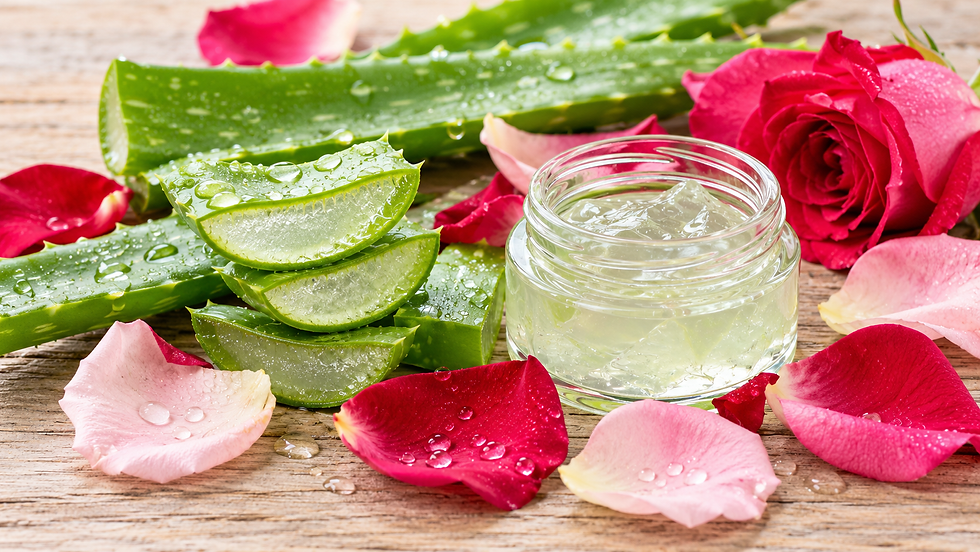
Aloe vera is cooling and soothing and is commonly used when the skin feels warm or sensitive.
Rosewater has traditionally cooling and refreshing qualities and can be used in gentle facial preparations.
Sandalwood is traditionally cooling and is often included in preparations intended to calm and refresh the skin.
Saffron has a long history of use in Ayurvedic beauty preparations and is traditionally included in facial oils and other skin-care formulas.
Turmeric and neem are also traditional Ayurvedic ingredients used in cleansing and facial preparations.
Cleansing and Exfoliating Ingredients
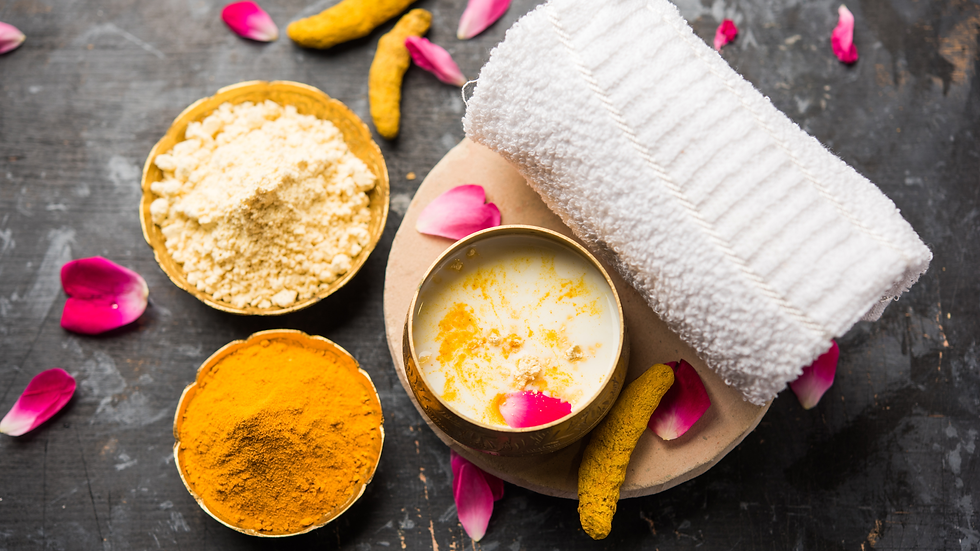
Chickpea flour (besan) is a traditional Ayurvedic cleansing ingredient that can also provide gentle exfoliation.
Other ingredients traditionally used in Ayurvedic facial preparations include turmeric, orange peel, apricot, cinnamon, and honey. Their appropriateness depends on the individual's skin qualities and current needs.
The important principle is appropriateness. An ingredient is not automatically right for every person simply because it is natural or traditionally Ayurvedic. Skin qualities, doshic imbalance, season, environment, and individual response all matter.
Thoughtful ingredient selection is more important than having a complicated collection of natural products.

Facial Massage and Marma Chikitsa (Treatments)
Facial massage can bring an Ayurvedic quality of nourishment, awareness, and intentional touch to a skincare routine. Ayurveda traditionally values oil massage as a way to nourish the skin, encourage relaxation, and cultivate greater connection with the body.
Ayurvedic Facial Massage
Facial massage can be performed with a small amount of an appropriate facial oil. Use slow, gentle movements and avoid excessive pressure or friction, particularly when the skin is sensitive, irritated, or reactive.
A simple facial massage may include:
Gentle circular movements across the forehead
Soft strokes along the cheeks
Light movements around the jaw and chin
Gentle massage at the temples
Soft strokes along the neck
The intention is not vigorous manipulation. Slow, attentive touch allows facial massage to become part of the self-care experience while also encouraging greater awareness of how the skin feels.
Ayurvedic self-massage, known as Abhyanga, traditionally uses warm oil and rhythmic massage strokes. While full-body Abhyanga is a distinct practice, its principles of nourishing oil, rhythmic touch, and mindful self-care can inform a simple facial massage. Saumya's Abhyanga guidance also emphasizes choosing oil according to the dosha, season, and current state of balance.
Marma Chikitsa
Marma Chikitsa is a traditional Ayurvedic practice involving intentional attention to marma points, important areas of the body associated with physical structures and subtle pathways. Ayurveda describes 108 marma points throughout the body.
One important marma point is Adhipati Marma, located at the crown of the head. Traditional Ayurvedic guidance emphasizes very gentle, feather-light touch when working with this sensitive area.
Marma Chikitsa is traditionally practiced with awareness and precision. Specific therapeutic marma treatments are best learned from a qualified Ayurvedic practitioner, particularly when working with multiple points or specialized techniques.
Facial Massage as Self-Observation
Facial massage also creates an opportunity to practice Saumya Self-Observation™.
As you massage, simply notice:
Does the skin feel dry, oily, warm, cool, tight, or comfortable?
Are there areas of facial tension?
Does the skin feel different from yesterday?
How does your skin respond to the oil or touch?
There is no need to analyze every sensation. The practice is simply to notice and become more familiar with your own skin.
For a deeper look at Ayurvedic head massage and the role of Marma points, explore Experience Bliss: Benefits of Ayurvedic Head Massage.
Make It a Mindful Practice
A few minutes of facial massage can become a natural transition into stillness. After applying your skincare, pause for a few breaths and notice your face, body, breath, and overall experience.
For additional guided support, explore Guided Ayurveda Practices, including the Two-Minute Meditation and longer morning and evening practices.
Facial massage does not need to be complicated. A few intentional minutes of gentle touch can transform skincare into a daily practice of nourishment, awareness, and connection with the body.

Ayurvedic Skincare Through the Seasons
In Ayurveda, skincare is part of seasonal living. Ritucharya, the Ayurvedic concept of living in alignment with the seasons, encourages us to adjust our food, herbs, lifestyle, daily routines, and self-care practices as the qualities of nature change. What happens in the environment can influence what happens within the body—and the skin can reflect those changes.
The same skincare routine may not be appropriate year-round. Cold, dry conditions can increase Vata qualities, while heat and intensity can increase Pitta qualities. Humidity and seasonal transitions can bring their own influences. Your skincare routine can respond accordingly.
Living in Alignment With the Season
Ritucharya is about more than changing the products on your bathroom shelf. It considers the whole way you live:
Food: Choose seasonal foods that support digestion and balance the qualities of the season.
Herbs: Select herbs according to the season and your individual doshic picture.
Lifestyle: Adjust movement, sleep, daily rhythms, activity, and self-care as the environment changes.
Skincare: Modify cleansing, moisturizing, facial oils, hydration, and sun protection according to what your skin is experiencing.
Ayurveda does not ask you to follow a rigid seasonal checklist. Observe the season, observe yourself, and make thoughtful adjustments. The same season can affect different people differently depending on Prakriti, Vikriti, climate, age, lifestyle, and other factors.
Learn more about Ritucharya: Ayurveda Seasonal Tips for Enhanced Wellbeing.
Seasonal Changes and Your Skin
Season | How Skin May Feel | Ayurvedic Skincare Focus |
Winter | Dry, rough, tight | Nourishing oils, moisture, warmth, hydration |
Spring | Variable, oily, congested | Gentle cleansing, lighter products, seasonal foods |
Summer | Warm, sensitive, dehydrated | Cooling care, hydration, sun protection |
Autumn | Dry, cool, sensitive | Nourishment, oil massage, consistency, protection |
For more guidance on balancing Pitta during the warmer months, explore the free Complete Guide to Balancing Pitta in Summer.
These are general Ayurvedic considerations, not fixed rules. Your skin may respond differently depending on your current doshic imbalance, constitution, climate, and individual needs. Existing Ayurvedic skincare guidance also emphasizes adapting skincare as seasonal conditions change, including lighter care during warmer months and greater nourishment during colder, drier periods.
Seasonal Skincare Is Part of a Larger Practice
In summer, for example, skincare may become lighter and more cooling, while food and lifestyle choices can also support the body's ability to stay comfortable in the heat. Sun protection, hydration, and avoiding excessive heat are important parts of seasonal care.
As autumn and winter bring cooler and often drier conditions, the skin may benefit from greater nourishment, regular oil massage, warm and nourishing foods, consistent routines, and protection from cold and wind.
Spring can be a natural time to simplify heavier winter routines and emphasize lighter skincare, seasonal foods, gentle cleansing, and support for healthy digestion.
The goal is not to change everything every time the weather changes. Small, thoughtful adjustments can help your skincare routine stay responsive to the season and to your own changing needs.
Explore 6 Essential Ayurvedic Seasonal Skincare Rituals for additional seasonal skincare practices.
This is the essence of Ritucharya: living in alignment with nature while paying attention to what your body and skin are communicating.

Skin Health From the Inside Out
Healthy skin is supported by more than what you apply to the surface. In Ayurveda, food, herbs, and lifestyle practices work together to nourish the body from within. The goal is not to follow a universal “skin diet” or choose an herb simply because it is associated with skin health. Ayurveda considers what is appropriate for your constitution, current doshic imbalance, digestion, lifestyle, environment, season, and stage of life.
Food as Medicine for Healthy Skin
Ayurveda views food as one of the most accessible forms of daily nourishment. When food is appropriate for your individual doshic picture, it can support nourishment, balance, and healthy digestion.
This means there is no single Ayurvedic diet for healthy skin. A food that feels balancing for one person may not be appropriate for another. Vata may benefit from warm, moist, grounding foods, while Pitta may benefit from cooling, soothing foods. Kapha may benefit from lighter, warming foods that support balance.
The goal is to understand which foods nourish you well and support your current needs.
Bring Food as Medicine Into Your Kitchen
Understanding Ayurvedic nutrition becomes much more practical when you can apply it to everyday meals. Free recipe eBooks can help you explore dosha-aligned foods and beverages while learning how Ayurvedic qualities translate into real food.
Explore these free resources:
The Pitta Cooling Cookbook & Ayurveda Nutrition Guide — cooling recipes and practical nutrition guidance for Pitta.
Ayurveda Recipes for Balancing Vata Dosha — nourishing recipes designed around grounding and warming Vata-balancing qualities.
Vata Balancing Ayurveda Beverages — warm, grounding Ayurvedic beverages.
Ayurveda Beverages for Cooling Pitta Dosha — cooling beverages for incorporating Pitta-balancing principles into daily life.
These recipes are educational resources, not a universal prescription. The same Ayurvedic principle applies to food as it does to skincare: what is appropriate depends on the individual.
Personalized Herbal Support
Ayurvedic herbs can also be part of an inside-out approach to health, but herbs are not one-size-fits-all.
Ayurveda considers an individual's constitution, current doshic imbalance, digestion, lifestyle, environment, season, and overall health when selecting herbal support. An herb traditionally associated with healthy skin may therefore be appropriate for one person and unnecessary or unsuitable for another.
Herbs work within the larger Ayurvedic approach of food, herbal support, and lifestyle. They are one part of a personalized plan, not a replacement for nourishing food and supportive daily habits.
Lifestyle and Daily Habits
The way you live each day also contributes to the environment in which the body maintains healthy tissues.
Sleep, movement, stress management, hydration, regular meals, mindful eating, and consistent daily routines all contribute to overall well-being. Ayurveda considers these everyday choices part of maintaining balance.
Dinacharya, the Ayurvedic approach to daily routine, can provide a supportive framework for creating consistent rhythms around nourishment, rest, movement, and self-care.
Your skincare routine can therefore become one small part of a larger daily practice:
Nourish the body. Support balance. Care for the skin. Pay attention to how you feel.
For practical guidance on creating supportive daily rhythms, explore Ayurvedic Morning Routine: 6 Rituals for a Calm and Centered Day and 10 Ayurvedic Evening Rituals for a Calming Night.
Nourishment Is Personal
The Ayurvedic approach to skin health ultimately comes back to individualization.
Your skin may provide information about what is happening within, but the answer is not always another product or supplement. Sometimes the more useful question is: What does my body need right now?
That may mean adjusting the way you eat, choosing herbs appropriate to your needs, changing your daily routine, improving sleep, creating more balance in your lifestyle, or simply becoming more attentive to how your body responds.
Healthy, radiant skin is supported from the inside out when food, herbs, lifestyle, and skincare are thoughtfully aligned with the individual.
🌿Saumya Self-Observation™ ExercisePause and observe. Take a few quiet minutes when your skin is clean and free of makeup or heavy products. In natural light, look at your face in a mirror and simply notice what you see and feel. Notice your skin. Ask yourself:
Ask what has changed. Compare your skin with your usual baseline. Consider recent changes in food, digestion, sleep, stress, daily routine, environment, season, or skincare products. Look at the whole picture. Consider what has been happening in your life and how your skin may be responding. Observe before you adjust. Give yourself time to notice before adding a new product, herb, supplement, or treatment. If you notice a meaningful change, keep a simple journal for several days, noting your skin alongside food, sleep, digestion, stress, lifestyle, and skincare. Over time, this can help you recognize how your skin responds to changes in your life. |
Saumya Self-Observation™ is not about diagnosing yourself or assigning your skin to a single dosha. It is about becoming more aware of your skin’s qualities—such as dryness, oiliness, warmth, coolness, roughness, softness, sensitivity, or heaviness—and noticing how those qualities change over time.

Frequently Asked Questions
What is Ayurvedic skincare?
Ayurvedic skincare is a personalized approach that considers Prakriti, Vikriti, doshic qualities, digestion, lifestyle, environment, and the season when determining what the skin may need. It combines appropriate external care with nourishment and supportive daily habits.
How do I know whether my skin is Vata, Pitta, or Kapha?
Ayurveda looks at qualities such as dryness, oiliness, warmth, coolness, roughness, softness, sensitivity, and congestion. Your skin may show qualities associated with more than one dosha, and your current skin qualities may differ from your underlying Prakriti. Observing what your skin is showing now is an important part of an individualized approach.
What is the best facial oil for Ayurvedic skincare?
There is no single facial oil that is best for everyone. The appropriate oil depends on your skin's qualities, doshic picture, the season, and your current needs. Traditionally, sesame oil is warming and nourishing, coconut oil is cooling, and almond oil is nourishing. Jojoba provides a lighter option.
Can Ayurveda help support healthy, radiant skin?
Ayurveda approaches skin health from both the inside and outside. Nourishing food, appropriate herbs, supportive lifestyle habits, healthy digestion, seasonal awareness, and an appropriate skincare routine can all contribute to healthy-looking skin. Individual results vary.
What foods are best for healthy skin according to Ayurveda?
There is no universal Ayurvedic list of foods for healthy skin. Food should be appropriate for your constitution, current doshic imbalance, digestion, season, and individual needs. When food is balancing for your doshic picture, it can become an important form of nourishment.
Should I change my skincare routine with the seasons?
Your skincare routine may need to change as the qualities of the environment change. Ritucharya, the Ayurvedic approach to seasonal living, encourages adapting food, lifestyle, herbs, and self-care to the season. Cold and dry conditions may call for more nourishment and moisture, while hot conditions may call for lighter, cooling care and greater attention to sun protection.
Can I use Ayurvedic herbs directly on my skin?
Ayurvedic herbs and botanicals are traditionally used in many skincare preparations, but natural does not automatically mean appropriate for every person or every skin type. Consider the qualities of the ingredient and your individual skin needs. If a product causes significant irritation or an unexpected reaction, discontinue use and seek appropriate medical guidance.
Can Ayurvedic skincare be used with modern skincare products?
Yes. Ayurvedic principles can be incorporated into a modern skincare routine. Focus on appropriate ingredients, a simple routine, and observing how your skin responds. Ayurveda does not require abandoning every modern skincare product; the emphasis is on choosing care that is appropriate for the individual.
How do I create an Ayurvedic skincare routine?
Begin with a simple routine of gentle cleansing, appropriate moisture, and protection from environmental factors. Then consider your Prakriti, current skin qualities, season, lifestyle, and individual needs. Introduce changes thoughtfully and observe how your skin responds before adding additional products or practices.
Is Ayurvedic skincare suitable for everyone?
Ayurvedic skincare is individualized, so there is no single routine that is appropriate for everyone. Your Prakriti, current doshic imbalance, skin qualities, season, lifestyle, and individual response all matter. Persistent, severe, painful, or changing skin concerns should be evaluated by an appropriate healthcare professional.

Our Commitment to Accessible Ayurveda Education
At Saumya Ayurveda, we believe Ayurveda's transformative ancient wisdom belongs to everyone—not just those who can afford it. That's why we're committed to making high-quality, authentic Ayurveda education available globally, free of charge.
Through our free eBooks, guides, and educational resources, we offer practical, grounded wisdom to help those seeking greater balance, vitality, and wellbeing integrate Ayurveda into their daily lives.
Accessible. Authentic. Free. Just as it was meant to be.
Free Ayurveda eBooks – Download practical guides, recipes, and wellness resources to support your health journey.
Ayurveda Blog – Enjoy easy-to-read articles, seasonal wellness tips, healthy recipes, and everyday inspiration—always educational, never a sales pitch.
Free Guided Traditional Progressive Meditations – Practice authentic, step-by-step guided meditations to cultivate calm, focus, and inner stillness.
Monthly Educational Newsletter – Receive seasonal Ayurveda insights, new articles, healthy recipes, and free resources delivered to your inbox each month.

Glossary of Ayurvedic Terms
Agni — The Ayurvedic principle of digestion and metabolism responsible for transforming food and supporting nourishment.
Ama — A traditional Ayurvedic term for material that has not been properly digested or metabolized. Ayurveda considers Ama in the context of impaired digestion and overall balance.
Abhyanga — Ayurvedic self-massage traditionally performed with oil using rhythmic, intentional strokes. The oil and approach may be selected according to the individual, season, and doshic needs.
Dinacharya — The Ayurvedic approach to daily routine and living in supportive, consistent rhythms.
Dosha — One of three fundamental Ayurvedic principles—Vata, Pitta, and Kapha—associated with different qualities and functions in the body.
Kapha — A dosha associated with qualities such as heaviness, stability, softness, smoothness, and moisture.
Marma Chikitsa — A traditional Ayurvedic practice involving focused attention and gentle stimulation of marma points, important areas of the body described in Ayurveda.
Pitta — A dosha associated with qualities such as heat, sharpness, transformation, and sensitivity.
Prakriti — An individual's underlying Ayurvedic constitution, representing the unique balance of Vata, Pitta, and Kapha established at conception.
Ritucharya — The Ayurvedic approach to living in alignment with the seasons, including adjustments to food, lifestyle, daily routine, herbs, and self-care.
Vata — A dosha associated with qualities such as dryness, lightness, coolness, mobility, and roughness.
Vikriti — An individual's current state of balance or imbalance, which can change in response to factors such as diet, lifestyle, stress, environment, and the seasons.

Final Thoughts
Ayurvedic skincare begins with understanding that healthy skin is not one-size-fits-all. Your skincare routine should be informed by your Prakriti, current doshic picture, the qualities your skin is showing, the season, and your individual needs.
It is also important to remember that more than one dosha may be involved. A person may have naturally Vata-oriented skin while experiencing Pitta qualities such as warmth or redness, or Kapha qualities such as oiliness or congestion. The goal is to recognize what is present now and choose care accordingly.
This individualized approach extends beyond skincare products. Food as medicine, herbs, lifestyle, daily routine, seasonal living, and external skincare all contribute to the larger picture of health. Each should be considered in relation to the individual's doshic picture rather than applied as a universal formula.
Ayurveda also encourages us to observe before we adjust. By paying attention to changes in your skin and the qualities associated with those changes, you can become more aware of what supports your own balance.
Healthy, radiant skin is supported by thoughtful care from the inside out—when skincare, nourishment, herbs, lifestyle, and seasonal living are aligned with the individual.

What Our Clients Say | Saumya Ayurveda Testimonials
Real Transformations Through Ayurveda Consultation
Physician Testimonial (Medical Endorsement)
“As a physician, I have always believed that prevention is better than cure. In today’s healthcare environment, Ayurveda offers a logical and natural approach to long-term health and prevention.
I began working with Veena during a very demanding phase of my life, and she made the process accessible even within my busy schedule. I was encouraged to follow a steady, sustainable approach focused on real lifestyle change.
Over time, I experienced meaningful improvements in balance, energy, and well-being. In my medical practice, I now see many patients with similar stress- and diet-related imbalances, which has further reinforced my trust in Ayurvedic principles.
I have since referred several patients to Saumya Ayurveda and consider Veena a valuable resource in supporting holistic well-being.”
Dr. Gauri Nagargoje
M.D., Oncology & Hematology
Physician Testimonial (Medical Endorsement)
“As a physician, I initially struggled with Ayurveda’s simplicity and depth, but Veena’s guidance made it practical, scientific, and deeply effective.
Veena has transformed my health and perspective on healing. I experienced significant improvements in focus, digestion, stress response, and overall vitality.
Her personalized approach made lifestyle changes easy and sustainable.
This journey not only improved my health but also inspired a lifelong commitment to integrating Ayurveda into holistic healthcare.”
Dr. Jessica Bedi
D.O., & Ayurvedic Doctor


Rachel R., Denver, Colorado USA
Explore more client success stories from Saumya Ayurveda and see how Ayurveda supports healing, balance, and transformation.

Discover the Saumya Ayurveda Way
Ayurveda Begins With Seeing the Whole Person
At Saumya Ayurveda, symptoms are not viewed in isolation. Ayurveda looks at the relationship between digestion, elimination, sleep, stress, energy, daily rhythms, mind, stage of life, season, climate, constitution, and current doshic imbalances to understand the patterns that influence how you feel.
When health concerns persist, it can be frustrating to feel that individual symptoms are being addressed without understanding the bigger picture. Ayurveda offers another way—one that asks not only “What is the symptom?” but also “What are the body and mind communicating?”
Personalized Ayurveda, Rooted in Tradition
Saumya Ayurveda combines classical Ayurvedic principles with practical guidance for modern life. Your Ayurvedic plan is based on your individual prakriti (natural constitution), vikriti (current state of doshic imbalance), lifestyle, and circumstances—not a generic dosha checklist or one-size-fits-all protocol.
The goal is not to overwhelm you with rules. It is to help you understand your own body and mind and make sustainable changes that fit naturally into your life, informed by the wisdom of Ayurveda.
For those who want ongoing support, concierge-style Ayurveda consultation packages provide personalized guidance, thoughtful follow-up, and practical tools to help turn Ayurvedic principles into everyday habits.
Education First. Personalized Guidance When You Need It.
Veena takes an education-first, client-centered approach. At Saumya Ayurveda, our favorite product is knowledge.
You won't find education built around selling a supplement, herb, or wellness product. Instead, you'll find traditional Ayurvedic perspectives, practical guidance, and timeless principles that help you better understand your body, mind, and unique constitution.
When understanding deepens, better choices naturally follow.
Learn. Observe. Understand. Transform.
Begin your Ayurveda journey with a free 15-minute Discovery Call with Veena and explore whether personalized Ayurvedic guidance is right for you.

Meet Veena: Your Trusted Ayurvedic Guide for Clients Worldwide
Veena Haasl-Blilie is a Certified Ayurvedic Practitioner, Ayurveda teacher, meditation guide, and monk with over three decades of experience helping clients worldwide achieve greater balance and well-being through Ayurveda.
As founder of Saumya Ayurveda and President Emeritus of the Meditation Center, Veena serves clients worldwide through personalized Ayurvedic wellness guidance, meditation, and yoga practices.
Saumya Ayurveda has been recognized as the #1 Ayurveda cooking blog and the #3 Ayurveda website and blog and has received multiple consecutive awards for best wellness practice.
Through her work, Veena shares practical Ayurvedic guidance, nourishing recipes, and wellness education for modern living.
Inspired from an early age by learning herbal remedies, food as medicine, and traditional healing practices at her grandmother’s knee, Veena combines traditional Ayurvedic wisdom with compassionate, accessible guidance that supports mental, physical, and spiritual well-being.
Known for her warmth, humor, intuitive approach, and accessible style, Veena empowers people to create sustainable health through personalized Ayurvedic wellness plans designed to fit naturally into everyday life.
Veena is also the author of several free Ayurveda eBooks and writes the educational articles published on the Saumya Ayurveda blog.
As seen in:
Voice America
Albuquerque The Magazine
Learn more about Veena and her work through Saumya Ayurveda.
Disclaimer: This information is for educational purposes only and is not a substitute for professional medical advice. Ayurveda works best when tailored to your unique doshic profile, so it’s essential to understand your constitution and imbalances before using herbs, foods, or lifestyle practices. Consult a Certified Ayurvedic Practitioner for personalized guidance.


