


Ayurveda for Depression in Men: Causes, Symptoms, and Natural Support

Updated: Jul 8
Depression in men is often misunderstood. It doesn't always look like sadness. For many men, it may appear as fatigue, irritability, anger, emotional numbness, low motivation, poor concentration, digestive problems, disrupted sleep, or simply feeling like you've lost your sense of purpose and vitality. Too often, these symptoms are dismissed as stress, burnout, or just part of getting older.
According to Ayurveda, these experiences are not viewed as isolated symptoms but as signs that the body, mind, and spirit have fallen out of balance. Rather than focusing solely on relieving symptoms, Ayurveda seeks to understand and address the underlying patterns contributing to poor physical, mental, and emotional wellbeing.
From an Ayurvedic perspective, factors such as weakened Agni (digestive fire), the accumulation of Ama (toxins), depleted Ojas (vital essence), chronic stress, poor sleep, and doshic imbalances may all influence mood, energy, resilience, and overall vitality.
While Ayurveda is not a replacement for professional mental health care, it offers a holistic approach that supports overall wellbeing through food as medicine, individualized herbs, healthy daily routines (Dinacharya), restorative sleep, breathwork, meditation, movement, and stress management. Together, these practices help strengthen the body's natural capacity for healing, resilience, and balance.
In this comprehensive guide, you'll learn how Ayurveda understands depression in men, explore common symptoms and contributing factors, and discover practical, evidence-informed strategies to support greater vitality, emotional wellbeing, and long-term health.
No matter where you are on your journey, meaningful healing often begins with small, consistent steps.

We’re honored to be ranked the #1 Ayurveda cooking blog and #3 Ayurveda site globally—a reflection of the trust and support of our growing international community. Thank you, Feedspot!
What is Ayurveda's approach to depression in men?
Ayurveda views depression in men as an imbalance affecting the body, mind, and spirit rather than an isolated condition. Treatment focuses on restoring balance through individualized nutrition, lifestyle practices, healthy digestion (Agni), restorative sleep, stress management, meditation, movement, and personalized herbal support as part of a comprehensive approach to wellbeing.
Key Takeaways
Depression in men often looks different than many people expect and may appear as fatigue, irritability, anger, low motivation, poor concentration, digestive issues, disrupted sleep, or emotional numbness.
Ayurveda views depression holistically, seeking to understand the underlying imbalances affecting the body, mind, and spirit rather than focusing only on symptoms.
Healthy digestion (Agni), balanced doshas, strong Ojas, quality sleep, and effective stress management all play important roles in supporting emotional wellbeing.
Food as medicine, individualized herbs, Dinacharya (daily routine), breathwork, meditation, movement, and restorative sleep are foundational Ayurvedic approaches to supporting overall mental and physical health.
Ayurveda complements—but does not replace—professional mental health care. It works best as part of a comprehensive approach to wellbeing.
Small, consistent lifestyle changes can make a meaningful difference in building resilience, restoring vitality, and supporting long-term emotional health.
Table of Contents

Understanding Depression Through the Ayurvedic Lens
Many men believe they should simply push through fatigue, stress, low motivation, or emotional pain. They continue showing up for work, caring for their families, meeting responsibilities, and putting one foot in front of the other—even when something inside no longer feels right.
Over time, life can begin to feel heavy. Activities that once brought joy lose their appeal, energy steadily declines, and simply making it through the day can feel exhausting.
Not every man experiencing depression appears visibly distressed. In fact, many continue going to work, paying the bills, caring for their families, and meeting responsibilities while silently struggling inside. From the outside, they may appear successful and dependable. Inside, they may feel exhausted, emotionally numb, irritable, burned out, or increasingly disconnected from themselves and the people around them.
What many people refer to as high-functioning depression or hidden depression can be especially difficult to recognize because these symptoms are often mistaken for stress, overwork, burnout, or simply getting older. As a result, depression in men may go unrecognized—not only by those around them, but by the individual experiencing it.
Depression in men often looks different than many people expect. Rather than sadness alone, it may appear as irritability, anger, emotional withdrawal, burnout, digestive problems, disrupted sleep, low motivation, or simply feeling disconnected from yourself and the people around you. Recognizing these signs is an important first step toward seeking appropriate support and care.
Depression can affect far more than your mood. Many men experience a combination of emotional, mental, physical, and behavioral changes that may go unrecognized or be mistaken for stress, burnout, or simply getting older. Recognizing these signs is an important first step toward seeking appropriate support and care.

Ayurveda recognizes that the body and mind are deeply interconnected. Emotional wellbeing cannot be separated from digestion, sleep, nutrition, stress, movement, relationships, or daily habits. When one area becomes imbalanced, the effects often ripple throughout the entire person.
Rather than viewing depression as an isolated condition, Ayurveda seeks to understand the root causes contributing to imbalance. Factors such as weakened Agni (digestive fire), the accumulation of Ama (toxins), depleted Ojas (vital essence), chronic stress, poor sleep, and doshic imbalances may all influence mood, resilience, vitality, and overall wellbeing.
This whole-person perspective is one of Ayurveda's greatest strengths. Instead of asking, "How do we silence these symptoms?" Ayurveda asks, "What does your body, mind, and spirit need to return to balance?" The answer is unique for each individual, which is why Ayurvedic care is always personalized.
In the following sections, we'll explore how the three doshas (Vata, Pitta, and Kapha), along with Agni, Ama, Ojas, and the three mental qualities—Sattva, Rajas, and Tamas—provide a deeper understanding of emotional health and offer practical guidance for supporting resilience, vitality, and lasting wellbeing.

The Role of the Three Doshas (Vata, Pitta & Kapha)
In Ayurveda, every person is born with a unique combination of the three doshas—Vata, Pitta, and Kapha. These biological energies influence not only your physical health but also your thoughts, emotions, resilience, and how you respond to life's challenges.
When the doshas are in balance, they help support clarity, emotional stability, healthy relationships, sound sleep, steady energy, and a positive outlook on life. However, when one or more doshas become significantly imbalanced, emotional wellbeing may also be affected.
Importantly, depression is not considered a "Vata disease," "Pitta disease," or "Kapha disease." Every individual is different, and many people experience imbalances involving more than one dosha. This is why Ayurvedic care is always personalized rather than based on a one-size-fits-all approach.
Vata Imbalance
When Vata becomes aggravated, a person may experience anxiety, excessive worry, fear, overwhelm, racing thoughts, insomnia, emotional instability, poor concentration, and a feeling of being ungrounded. Over time, constant nervous system activation can leave a person mentally and physically exhausted.
Pitta Imbalance
An imbalanced Pitta dosha may present quite differently. Rather than sadness, some men experience irritability, frustration, anger, perfectionism, impatience, self-criticism, burnout, or feeling like they are constantly under pressure. Because these emotions are often viewed as personality traits rather than warning signs, underlying emotional distress may go unnoticed.
Kapha Imbalance
When Kapha becomes excessive, emotional imbalance may appear as low motivation, persistent fatigue, emotional heaviness, withdrawal, oversleeping, lack of enthusiasm, mental fog, or difficulty finding joy in activities that once felt meaningful. This presentation is often the one most people associate with depression.
While these descriptions can be helpful, they are only part of the picture. Your current doshic balance is influenced by your constitution, age, lifestyle, diet, relationships, climate, season, stress levels, sleep quality, and many other factors. Two people with similar symptoms may have very different underlying imbalances—and therefore require different Ayurvedic recommendations.
Understanding your unique doshic picture is one of the reasons Ayurveda emphasizes individualized care rather than treating everyone with the same herbs, foods, or lifestyle advice.
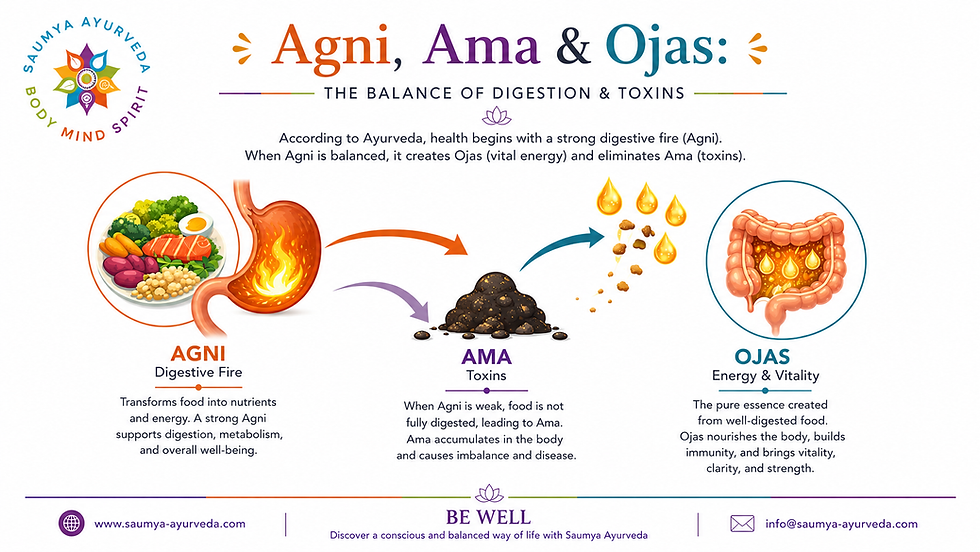
Agni: Why Healthy Digestion Matters
Have you ever noticed that during periods of chronic stress, anxiety, or emotional exhaustion, your digestion often changes too? You may lose your appetite, experience bloating, constipation, diarrhea, indigestion, or simply feel that your stomach is "off." Ayurveda has recognized this connection between the gut and the mind for thousands of years.
In Ayurveda, Agni, or the digestive fire, is considered one of the foundations of good health. Agni is responsible not only for digesting food but also for helping the body efficiently absorb nutrients and maintain strength, vitality, and resilience. The Charaka Samhita describes Agni as the root of health, explaining that balanced digestion supports strength, longevity, vitality, and overall wellbeing.
When Agni becomes weakened, digestion may become less efficient, and the body may struggle to maintain optimal balance. From an Ayurvedic perspective, this can contribute to fatigue, low energy, reduced vitality, and the accumulation of Ama (toxins)—a concept we'll explore in the next section.
Ayurveda therefore places great emphasis on supporting healthy digestion as part of a comprehensive approach to wellbeing. Eating nourishing foods, following a consistent daily routine (Dinacharya), managing stress, getting adequate sleep, and eating mindfully all help support healthy Agni and the body's natural capacity for balance.
While healthy digestion alone is not a treatment for depression, it is an important part of supporting overall physical, mental, and emotional health. When the digestive system is functioning well, the body is better equipped to nourish itself, adapt to stress, and maintain resilience.
Ama: How Toxins May Contribute to Imbalance
Have you ever gone through a period when you simply didn't feel like yourself? You may have felt sluggish, mentally foggy, unmotivated, heavy, or as though your body and mind were both running at half speed. Ayurveda recognizes these experiences as possible signs that the body's natural balance has been disrupted.
One concept Ayurveda uses to explain this is Ama, often described as the accumulation of undigested metabolic waste or toxins. According to Ayurvedic philosophy, Ama may develop when Agni (digestive fire) is weakened, making it more difficult for the body to efficiently digest food, process experiences, and maintain optimal balance.
Ama is believed to interfere with the healthy functioning of the body's tissues and channels, potentially contributing to feelings of heaviness, fatigue, sluggish digestion, mental fog, low energy, and reduced vitality. While these symptoms do not necessarily indicate depression, they can influence how a person feels physically and emotionally.
Rather than focusing solely on eliminating Ama, Ayurveda emphasizes restoring healthy digestion and supporting the body's natural ability to maintain balance. Nourishing foods, regular meals, restorative sleep, healthy daily routines (Dinacharya), appropriate movement, stress management, and individualized herbal support all work together to strengthen Agni, helping reduce the conditions that allow Ama to accumulate.
Because emotional wellbeing is influenced by many interconnected factors, Ayurveda views reducing Ama as one part of a comprehensive approach to supporting overall health, resilience, and vitality—not as a standalone solution.

Ojas: Rebuilding Vitality and Emotional Resilience
Have you ever wondered why two people can experience the same stressful event, yet respond so differently? One person feels overwhelmed for weeks, while another gradually recovers, adapts, and moves forward. Ayurveda explains this difference through the concept of Ojas.
Often translated as vital essence, Ojas is considered the body's deepest reserve of vitality, resilience, immunity, and inner strength. It develops gradually through healthy digestion (Agni), nourishing food, restorative sleep, balanced emotions, meaningful relationships, and a lifestyle that supports the whole person. Rather than something you can build overnight, Ojas is cultivated through consistent daily habits over time.
When Ojas is abundant, people often feel grounded, emotionally resilient, mentally clear, optimistic, energetic, and better able to adapt to life's inevitable challenges. They still experience stress, disappointment, and loss, but they recover more readily because their internal reserves remain strong.
Conversely, chronic stress, overwork, unresolved emotional strain, inadequate sleep, poor nutrition, weakened digestion, illness, and prolonged periods of exhaustion are believed to gradually deplete Ojas. As these reserves diminish, even everyday challenges may begin to feel overwhelming.
A person may notice persistent fatigue, low motivation, emotional fragility, reduced resilience, difficulty recovering from stress, or a sense that they simply don't have much left to give.
One of Ayurveda's primary goals is not merely to relieve symptoms—it is to rebuild the foundations of health. Through food as medicine, individualized herbs, healthy digestion, restorative sleep, daily routines (Dinacharya), meditation, breathwork, appropriate movement, time in nature, and meaningful connection with others, Ayurveda seeks to gradually replenish Ojas and strengthen the body's natural capacity for healing and resilience.
Perhaps one of the most encouraging aspects of Ojas is that it reminds us healing is rarely about becoming stronger overnight. It is about consistently nourishing yourself in ways that restore your inner reserves. As Ojas is gradually rebuilt, many people experience greater vitality, steadier emotions, clearer thinking, and an increased capacity to meet life's challenges with calmness and resilience. Coming Soon: Want to learn more about Ojas? We're putting the finishing touches on our comprehensive guide to Ayurveda's Vital Essence, where you'll discover how Ojas supports energy, resilience, immunity, emotional wellbeing, and long-term health.

Sattva, Rajas & Tamas: The Ayurvedic Psychology of Mental Health
While the three doshas help explain how the body functions, Ayurveda also describes three mental qualities, known as the gunas: Sattva, Rajas, and Tamas. These qualities influence how we think, feel, respond to stress, and experience the world around us. Every person possesses all three gunas, but their balance continually shifts throughout life.
Sattva: The State of Balance and Clarity
Sattva represents clarity, wisdom, peace, compassion, resilience, and emotional stability. When Sattva predominates, we tend to think clearly, respond thoughtfully rather than react impulsively, sleep more soundly, and experience a greater sense of purpose and contentment. Sattva doesn't mean life is free from challenges—it means we have the inner resources to navigate those challenges with greater calm and perspective.
Rajas: The Mind in Constant Motion
Rajas is the quality of activity, ambition, passion, and movement. In healthy amounts, it motivates us to learn, create, achieve goals, and take action. However, when Rajas becomes excessive, the mind may feel as though it never slows down. A person may experience restlessness, irritability, impatience, frustration, racing thoughts, difficulty relaxing, chronic stress, or emotional reactivity. Many men living with constant deadlines, work pressure, and high expectations spend much of their day in an overly Rajasic state.
Tamas: When the Mind Becomes Heavy
Tamas provides stability, rest, and the ability to slow down when needed. Yet when it becomes excessive, it may contribute to mental fog, emotional heaviness, low motivation, withdrawal, oversleeping, hopelessness, difficulty concentrating, and a loss of enthusiasm for life. These qualities can resemble experiences commonly associated with depression, which is why Ayurveda seeks to gently reduce excess Tamas while cultivating greater balance.
Rather than trying to eliminate Rajas or Tamas altogether, Ayurveda aims to cultivate Sattva while keeping all three gunas in healthy balance. This is supported through nourishing foods, healthy digestion (Agni), restorative sleep, meditation, breathwork, meaningful relationships, time in nature, regular movement, gratitude, and a daily routine that aligns with your unique constitution.
Perhaps one of Ayurveda's most hopeful teachings is that the mind is not fixed. Just as the body continually changes, our mental and emotional patterns can also change. Through consistent daily choices, it is possible to cultivate greater clarity, resilience, and inner peace—one small step at a time.

Common Causes and Contributing Factors of Depression in Men
Depression rarely develops because of a single event or single cause. More often, it results from the cumulative effects of physical, emotional, environmental, and lifestyle factors that gradually deplete resilience over time. From an Ayurvedic perspective, these influences may weaken Agni (digestive fire), disturb the doshas, deplete Ojas (vital essence), and reduce the mind's natural state of balance (Sattva).
While every person's experience is unique, the following factors commonly contribute to emotional imbalance.
Chronic Stress
Ongoing stress places continuous demands on both the body and mind. Over time, chronic stress can disrupt digestion, impair sleep, increase mental and emotional fatigue, and gradually reduce the body's ability to recover and adapt.
Burnout
Burnout often develops after months or years of prolonged stress without adequate rest and recovery. Many men continue pushing through exhaustion, believing they simply need to work harder. Ayurveda recognizes that rest is just as essential as effort, and long-term depletion can affect both physical vitality and emotional wellbeing.
Related Reading: Burnout in Men: Causes, Symptoms, and Ayurvedic Support
Poor Sleep
Restorative sleep is one of Ayurveda's three pillars of health. Inadequate or poor-quality sleep can impair mood, concentration, energy, stress resilience, and overall health. Prioritizing consistent, restorative sleep is one of the most important ways to support both body and mind.
Digestive Imbalance
Ayurveda teaches that healthy digestion (Agni) is central to overall wellbeing. Digestive discomfort, irregular eating habits, poor nutrition, and weakened digestion may reduce the body's ability to efficiently nourish itself, contributing to fatigue, reduced vitality, and diminished resilience.
Hormonal Changes
As men age, natural hormonal changes may influence energy levels, motivation, mood, sleep quality, muscle mass, and overall vitality. While hormones are only one part of the picture, supporting healthy lifestyle habits can help promote overall hormonal health.
Social Isolation
Meaningful relationships are an important part of emotional wellbeing. Men who feel isolated or disconnected from family, friends, or community often carry life's challenges alone, making stress and emotional difficulties more difficult to navigate.
Emotional Trauma
Past experiences, unresolved grief, significant life changes, or ongoing emotional challenges may continue to affect wellbeing long after the original event has passed. Ayurveda recognizes that healing often involves caring for both the mind and body, allowing space for recovery with patience and compassion.
Related Reading: How to Detox Emotionally|10 Ayurvedic Practices for Emotional Cleansing
Poor Nutrition
Food nourishes far more than the body. A diet centered on highly processed foods, irregular meals, or inadequate nourishment may gradually reduce energy, weaken digestion, and affect overall health. Ayurveda encourages food as medicine, emphasizing fresh, wholesome, nourishing meals prepared with care.
Lack of Movement
Regular movement supports circulation, digestion, healthy sleep, stress management, and emotional wellbeing. Whether through walking, yoga, strength training, or time spent outdoors, gentle daily movement helps restore balance and build resilience over time.
Although these factors are common, no two people experience depression in exactly the same way. One person may struggle primarily with chronic stress and poor sleep, while another may be affected more by grief, digestive imbalance, hormonal changes, or social isolation.
This is why Ayurveda emphasizes a personalized approach, addressing the unique combination of factors contributing to each individual's health.

Ayurveda's Holistic Approach to Supporting Depression
After exploring how Ayurveda understands emotional wellbeing through the doshas, Agni, Ama, Ojas, and the three gunas, an important question naturally follows:
How does Ayurveda help support someone experiencing depression?
Rather than searching for a single cause or a single solution, Ayurveda recognizes that physical, mental, emotional, and spiritual health are deeply interconnected. Digestion influences energy. Sleep affects emotional resilience. Chronic stress impacts both the mind and body. Food, movement, relationships, daily habits, and even the seasons all play important roles in overall wellbeing.
Because each person's life experiences, constitution, health history, and current imbalances are different, Ayurveda does not believe there is one treatment that works for everyone.
Instead, it develops a personalized plan designed to strengthen the body's natural capacity for balance, resilience, and vitality.
At Saumya Ayurveda, we often organize this personalized approach around three foundational pillars of Ayurvedic support.
1. Food as Medicine
In Ayurveda, every meal is an opportunity to nourish both the body and the mind. Rather than counting calories or following restrictive diets, Ayurveda emphasizes eating fresh, wholesome, seasonal foods that support Agni (digestive fire) and are appropriate for your unique constitution, digestive capacity, and current state of balance.
When digestion is healthy and nourishment is optimized, the body is better able to build strength, maintain energy, and support emotional resilience over time.
Among these contributing factors, nutrition and healthy digestion (Agni) play especially important roles in supporting emotional wellbeing. In the next section, we'll explore how food as medicine can help nourish the body, strengthen resilience, and support long-term mental and emotional health.
2. Individualized Herbal Support
Ayurvedic herbs have been used for thousands of years to help support the body's natural ability to adapt to stress, maintain balance, and promote overall wellbeing. However, Ayurveda does not recommend the same herbs for everyone.
A skilled Certified Ayurvedic Practitioner carefully considers your doshas, Agni, Ama, Ojas, lifestyle, medications, health history, and personal goals before making individualized herbal recommendations. This personalized approach helps ensure that herbs complement the unique needs of the individual rather than simply addressing symptoms.
3. Ayurvedic Lifestyle Practices
One of Ayurveda's greatest strengths is its emphasis on daily habits. The small choices you make each day—how you sleep, eat, move, manage stress, breathe, and care for yourself—gradually shape your physical, mental, and emotional health.
Practices such as Dinacharya (daily routine), restorative sleep, meditation, breathwork, regular movement, time in nature, meaningful relationships, and healthy stress management help cultivate resilience while supporting the body's innate capacity to heal and maintain balance.
Perhaps the most encouraging aspect of Ayurveda is that lasting change doesn't require perfection. Small, consistent improvements practiced day after day often create the greatest transformation. By strengthening these three pillars—nourishing food, personalized herbal support, and healthy lifestyle practices—Ayurveda provides a comprehensive framework for supporting emotional wellbeing and long-term vitality.
In the following sections, we'll take a closer look at each of these pillars and explore practical ways to begin incorporating them into your daily life.

Ayurvedic Lifestyle Practices That Support Emotional Wellbeing
While nutrition and herbal support are important, Ayurveda teaches that your daily habits often have the greatest influence on long-term health. The way you sleep, eat, move, breathe, manage stress, and care for yourself gradually shapes your physical, mental, and emotional wellbeing.
Rather than relying on quick fixes, Ayurveda encourages small, sustainable lifestyle practices that strengthen Agni (digestive fire), nourish Ojas (vital essence), cultivate Sattva (mental clarity and emotional balance), and improve the body's natural capacity to adapt to life's challenges.
You don't need to change everything overnight. Begin with one or two practices that feel achievable. Over time, these simple habits work together to build greater resilience, vitality, and emotional wellbeing.
Dinacharya (Daily Routine)
One of Ayurveda's most powerful tools for supporting emotional health is Dinacharya, a daily routine that aligns your lifestyle with your body's natural circadian rhythms. Waking at a consistent time, eating regular meals, practicing self-care, moving your body, and maintaining healthy sleep habits all help support digestion, hormonal balance, energy, emotional resilience, and overall wellbeing.
Consistency matters far more than perfection. Even a few intentional minutes of self-care each day can create meaningful change over time.
Continue Learning: Explore our complete guide, The Best Ayurvedic Daily Routine (Dinacharya) for Men's Health, for a step-by-step approach to building a sustainable daily routine.
Restorative Sleep
According to Ayurveda, sleep (Nidra) is one of the three pillars of health, alongside nourishing food and the balanced use of physical, mental, and reproductive energy. During sleep, the body restores tissues, balances hormones, consolidates memory, replenishes Ojas, and prepares both the body and mind for the day ahead.
A calming evening routine, reduced evening screen time, and a consistent bedtime all help create the conditions for deeper, more restorative sleep.
Continue Learning: Read Ayurvedic Tips for Better Sleep to discover practical ways to improve sleep quality naturally.
Meditation & Guided Relaxation
Modern life often keeps the nervous system locked in fight-or-flight. Meditation and guided relaxation gently shift the body toward rest, recovery, and restoration, allowing the mind and body to recover from the effects of chronic stress.
Regular meditation helps cultivate Sattva, the Ayurvedic quality associated with clarity, inner peace, emotional stability, and resilience. Even five to ten minutes each day can make a meaningful difference.
Continue Learning: Practice with our Free Progressive Guided Meditation & Relaxation Series, designed to help calm the nervous system and cultivate lasting inner peace.
Pranayama (Breathwork)
Your breath is one of the few body functions you can consciously influence, making it a powerful tool for supporting emotional wellbeing. Slow, diaphragmatic breathing and traditional Pranayama practices help quiet the mind, reduce stress, improve focus, and promote relaxation.
Because your breath is always available, Pranayama is one of the simplest and most effective practices for managing everyday stress.
Continue Learning: Discover Learn Diaphragmatic Breathing and Change Your Life, our step-by-step guide to breathing more efficiently and calming the nervous system.

Yoga & Regular Movement
Movement benefits both physical and emotional health. Walking, yoga, strength training, and other enjoyable forms of exercise improve circulation, support healthy digestion, enhance sleep, reduce stress, and increase overall vitality.
Ayurveda encourages choosing movement that is appropriate for your constitution, current energy level, and stage of life. The goal is to nourish the body—not exhaust it.
Continue Learning: Read The Best Asana and Pranayama for Your Dosha to learn which yoga and breathing practices best support your unique constitution.
Time in Nature
Nature has a remarkable ability to calm the mind and restore perspective. Whether you enjoy walking through a forest, hiking, gardening, sitting beside a lake, or simply spending time outdoors, regular contact with nature helps reduce stress while fostering a greater sense of peace, gratitude, and connection.
Living in harmony with nature is one of Ayurveda's most enduring principles, reminding us that we, too, are part of the natural world.
Continue Learning: Explore our Seasonal Ayurveda Guides to learn how aligning your lifestyle with the changing seasons supports year-round health and emotional balance.
Building Healthy Relationships & Community
No one is meant to navigate life's challenges alone. Supportive relationships with family, friends, mentors, or community members provide encouragement, perspective, accountability, and connection during difficult times.
Ayurveda recognizes that emotional wellbeing extends beyond caring for the individual body. Compassion, meaningful relationships, service, and a sense of belonging all help cultivate Sattva while strengthening resilience during life's inevitable challenges.
Remember, you don't need to embrace every Ayurvedic practice at once. Choose one habit that resonates with you and practice it consistently. As one healthy habit becomes established, add another. Over time, these small daily choices become the foundation for greater vitality, emotional resilience, and lifelong wellbeing.

Ayurvedic Herbs Traditionally Used to Support Emotional Wellbeing
Throughout this guide, you've seen that Ayurveda approaches emotional wellbeing by supporting the whole person—not simply addressing individual symptoms. Herbs are one valuable part of that approach, but they are most effective when combined with nourishing food, healthy digestion (Agni), restorative sleep, balanced daily routines (Dinacharya), meditation, breathwork, regular movement, and healthy relationships.
In Ayurveda, herbs are selected based on the individual—not the diagnosis. Two men experiencing similar symptoms may have very different doshic imbalances, digestive strength, constitutions, health histories, medications, and lifestyles. For this reason, there is no single "best Ayurvedic herb" for depression. Herbal recommendations should always be personalized.
The following herbs have a long history of traditional use in Ayurveda for supporting the body's natural capacity for balance, resilience, and emotional wellbeing.
Ashwagandha (Withania somnifera)
Often referred to as one of Ayurveda's premier Rasayana (rejuvenative) herbs, Ashwagandha has traditionally been used to help the body adapt to stress while supporting healthy energy levels, restful sleep, nervous system balance, and overall vitality. It is also valued for its role in helping nourish Ojas, the body's reserve of resilience and vitality.
Brahmi (Bacopa monnieri)
Brahmi is one of Ayurveda's most respected herbs for supporting the mind. Traditionally classified as a Medhya Rasayana, it has long been used to promote mental clarity, concentration, memory, learning, and emotional balance, while helping cultivate a calm, focused state of mind.
Tulsi (Holy Basil)
Known as the "Queen of Herbs," Tulsi has been treasured in Ayurveda for centuries as a plant that supports resilience during periods of physical and emotional stress. In addition to promoting respiratory and immune health, Tulsi is traditionally used to encourage mental clarity, emotional steadiness, and overall wellbeing.
Jatamansi (Nardostachys jatamansi)
Jatamansi is traditionally valued for its calming influence on the mind and nervous system. Ayurveda has long used this herb to help promote relaxation, healthy sleep, emotional steadiness, and a balanced response to stress, particularly when the mind feels overactive or overstimulated.

Personalized Herbal Care Matters
One of the defining principles of Ayurveda is that the right herb depends on the right person. The same herb may be appropriate for one individual yet unsuitable for another, depending on their constitution (Prakriti), current imbalance (Vikriti), Agni, Ama, Ojas, age, medications, existing health conditions, and stage of life.
For this reason, experienced Ayurvedic Practitioners look beyond symptoms alone. They develop a personalized plan that integrates nutrition, herbs, lifestyle practices, and daily routines to support the whole person rather than relying on herbs in isolation.
Herbs are powerful allies, but they are most effective when they become part of a comprehensive Ayurvedic approach—one that nourishes the body, calms the mind, strengthens resilience, and supports long-term emotional wellbeing.
Continue Learning: Explore our comprehensive guide, Natural Ayurvedic Herbs to Alleviate Symptoms of Depression, where you'll learn more about these traditional herbs, how they have been used in Ayurveda, and why personalized herbal recommendations are central to authentic Ayurvedic care.

Food as Medicine for Emotional Wellbeing
One of Ayurveda's most enduring teachings is that food is medicine. Every meal is an opportunity to nourish not only the body but also the mind.
The foods you eat each day become the building blocks for healthy tissues, balanced hormones, strong digestion (Agni), resilient immunity, and Ojas (vital essence)—all of which influence your physical, mental, and emotional wellbeing.
Rather than promoting restrictive diets or counting calories, Ayurveda emphasizes fresh, wholesome, seasonal foods chosen according to your constitution (Prakriti), current imbalances (Vikriti), digestive capacity, age, lifestyle, and the season.
Small, consistent dietary choices often have a greater long-term impact than dramatic changes that are difficult to maintain.
Just as importantly, Ayurveda teaches that how you eat is as important as what you eat. Sitting down without distractions, expressing gratitude for your meal, eating slowly, chewing thoroughly, and allowing your body to digest before the next meal all help support healthy Agni and improve nourishment.

Foods to Favor
While every Ayurvedic nutrition plan is individualized, many people benefit from emphasizing foods that are fresh, nourishing, and easy to digest, including:
Seasonal vegetables prepared in ways that support healthy digestion.
Fresh fruits appropriate for your constitution and the time of year.
Whole grains such as rice, quinoa, oats, and barley.
Legumes, including mung beans and lentils, prepared with digestive spices.
Healthy fats, including ghee, olive oil, avocado, nuts, and seeds.
High-quality proteins suited to your individual dietary preferences and nutritional needs.
Digestive spices such as ginger, cumin, coriander, fennel, turmeric, cinnamon, and cardamom to naturally support Agni.
Warm, freshly prepared meals, which Ayurveda generally considers easier to digest than highly processed or packaged foods.
Warm water and herbal teas, enjoyed throughout the day as appropriate for your constitution and the season.
These nourishing foods provide the body with the resources it needs to build energy, vitality, resilience, and long-term wellbeing.
Foods to Reduce
Ayurveda does not classify foods as completely "good" or "bad." Instead, it recognizes that some foods may be more difficult to digest or may contribute to imbalance when consumed frequently or in excess.
Depending on your constitution and current state of health, you may benefit from limiting:
Ultra-processed foods containing artificial ingredients.
Refined sugars and sugar-sweetened beverages.
Deep-fried and heavily processed foods.
Highly refined carbohydrates.
Excess alcohol, which may interfere with digestion, sleep, and emotional wellbeing.
Large late-evening meals, which can weaken digestion and impair restorative sleep.
Mindless eating, such as eating while working, driving, watching television, or scrolling on your phone.
Excess caffeine, particularly if it contributes to anxiety, poor sleep, or nervous system overstimulation.
Ayurveda encourages progress over perfection. Rather than trying to overhaul your diet overnight, begin by making one nourishing choice at a time. Over weeks and months, those small decisions become the foundation for healthier digestion, greater vitality, and improved emotional resilience.
Mindful Eating: A Simple Practice with Lasting Benefits
One of the simplest ways to support emotional wellbeing is to make every meal a moment of mindfulness. Pause before eating. Take a few slow breaths. Eat without rushing. Notice the flavors, aromas, and textures of your food, and allow yourself to be fully present.
These simple practices help calm the nervous system, improve digestion, and remind us that nourishment involves both the body and the mind.
If you're new to mindful eating, our free 2-Minute Guided Mindful Eating Meditation offers a simple way to slow down, become present, and bring greater awareness to your meals. It's a gentle practice you can use daily to support healthy digestion, emotional wellbeing, and a more balanced relationship with food.
Continue Learning
If you'd like to explore Ayurvedic nutrition in greater depth, you may also enjoy:
You can also explore our collection of free Ayurveda eBooks, including nourishing Ayurvedic recipe books, seasonal wellness guides, and practical resources designed to help you bring Ayurveda into your everyday life. Download your complimentary copies and continue your journey toward greater balance, vitality, and wellbeing.
Together, these resources will help you build a nourishing way of eating that supports healthy digestion, sustained energy, emotional balance, and lifelong wellbeing.

When to Seek Professional Mental Health Care
Depression is a real and treatable medical condition, and seeking help is a sign of strength, self-awareness, and self-care—not weakness. While Ayurveda offers valuable support through nutrition, lifestyle practices, individualized herbal care, stress management, and other holistic approaches, it is not a replacement for professional mental health care, particularly when symptoms are severe, persistent, or significantly affecting daily life.
If you've been feeling persistently sad, emotionally numb, hopeless, overwhelmed, or unable to enjoy activities you once loved—and these feelings are affecting your work, relationships, sleep, or ability to care for yourself—it is important to speak with a qualified healthcare professional. Early support can make a meaningful difference and often leads to better long-term outcomes.
Seeking Help Is a Sign of Strength
One of the greatest misconceptions surrounding depression is that asking for help is a sign of weakness. The opposite is true. Recognizing when you need support—and having the courage to reach out—is a sign of strength, resilience, and self-care.
You do not have to navigate depression alone. Whether that support comes from a trusted friend, family member, physician, psychologist, psychiatrist, licensed therapist, counselor, or another qualified healthcare professional, reaching out is often the first and most important step toward healing.
Strength is not measured by how much you can carry alone—it is measured by your willingness to care for yourself when you need it most. Seeking support is not giving up; it is taking an active step toward healing, resilience, and a healthier future. -Veena Blilie, Saumya Ayurveda
Seek Immediate Help If...
Seek immediate medical attention or contact emergency services if you or someone you know is experiencing any of the following:
Thoughts of suicide or self-harm.
Making a plan or preparing to harm yourself.
Feeling unable to keep yourself safe.
Talking about feeling hopeless or believing others would be better off without you.
Severe emotional distress, confusion, or sudden changes in behavior that are causing immediate concern.
These situations require immediate evaluation by a qualified medical or mental health professional.
The Value of Professional Mental Health Care
Depression often responds best to a personalized treatment plan. Depending on your needs, this may include working with a primary care physician, psychologist, psychiatrist, licensed therapist, counselor, or other qualified mental health professional. Treatment may involve counseling, psychotherapy, medication, lifestyle changes, or a combination of evidence-based approaches tailored to your individual circumstances.
There is no single "right" path to recovery. What matters most is finding compassionate, individualized care that supports your unique needs and helps you move toward lasting wellbeing.
How Ayurveda Complements Conventional Care
Ayurveda is best understood as a complementary system of health. Rather than replacing conventional medical or mental health treatment, Ayurveda seeks to strengthen the foundations of health through food as medicine, healthy digestion (Agni), restorative sleep, daily routines (Dinacharya), meditation, breathwork (pranayama), movement, stress management, and individualized herbal support when appropriate.
When integrated thoughtfully with conventional care, these practices may help improve overall wellbeing, strengthen resilience, and support long-term physical, mental, and emotional health.
Above all, remember this: depression is treatable, healing is possible, and you do not have to face it alone. Reaching out for help may feel difficult, but it is one of the most courageous and important steps you can take toward recovery.
When to Seek an Experienced Certified Ayurvedic Practitioner
While many Ayurvedic lifestyle practices can be safely incorporated into everyday life, there are times when personalized guidance can make a meaningful difference. If you've been struggling with persistent emotional challenges, digestive concerns, low energy, poor sleep, chronic stress, or recurring health issues, a comprehensive Ayurvedic assessment can help identify the underlying patterns contributing to imbalance.
One of Ayurveda's greatest strengths is that it treats the whole person—not simply the symptoms. Rather than following a one-size-fits-all approach, an experienced Certified Ayurvedic Practitioner develops recommendations based on your unique constitution, current imbalances, health history, lifestyle, environment, and personal goals.
A Comprehensive Doshic Assessment
Many people begin learning about Ayurveda by taking an online dosha quiz. While these quizzes can provide a general introduction to Ayurvedic concepts, they cannot replace a comprehensive doshic assessment.
Every individual possesses all three doshas—Vata, Pitta, and Kapha. Your current state of balance is continually influenced by factors such as age, season, climate, diet, stress, sleep, medications, lifestyle, and existing health conditions. It is also common for more than one dosha to be out of balance at the same time.
For this reason, experienced Ayurvedic Practitioners look far beyond a questionnaire. They carefully evaluate your health history, digestion, elimination, sleep, energy, emotional patterns, physical characteristics, lifestyle, and many other observations before developing personalized recommendations.
If you're interested in learning more about the common signs of doshic imbalance, these educational guides are an excellent place to begin:
These resources provide a more comprehensive understanding of how doshic imbalances may present while reinforcing that Ayurveda is always individualized.
Personalized Food as Medicine
Food is one of Ayurveda's most powerful therapeutic tools. A personalized nutrition plan considers your constitution (Prakriti), current imbalance (Vikriti), digestive strength (Agni), age, activity level, season, climate, and health goals. Rather than following restrictive diets, Ayurveda seeks to identify foods that best nourish your unique body and mind.
Individualized Herbal Recommendations
Herbal recommendations are never based on symptoms alone. A qualified Ayurvedic Practitioner carefully considers your doshas, digestive capacity, medications, existing health conditions, and overall vitality before recommending herbs. This individualized approach helps ensure that herbal support is both appropriate and aligned with your specific needs.
Personalized Lifestyle Recommendations
Ayurveda recognizes that lasting health is built through daily habits. Your practitioner may recommend adjustments to your daily routine (Dinacharya), sleep habits, exercise, yoga, meditation, breathwork, stress management, work-life balance, and self-care practices based on your unique constitution and current state of balance.
The goal of an Ayurvedic consultation is not simply to relieve symptoms—it is to help you better understand your body, restore balance, and create a sustainable path toward greater vitality, resilience, and lifelong wellbeing.
Ready to discover what your body truly needs? Schedule a complimentary 15-minute discovery call to learn how a personalized Ayurvedic consultation can help you build a practical wellness plan designed specifically for you.

Continue Your Men's Ayurveda Journey
Whether you're looking to build strength, increase energy, support healthy testosterone, improve digestion, reduce stress, strengthen emotional well-being, or age with vitality, these evidence-informed Ayurveda guides can help you take the next step.
The Best Ayurvedic Daily Routine (Dinacharya) for Men's Health — Learn daily habits that support energy, focus, digestion, resilience, and long-term vitality.
8 Steps to Boost Energy, Build Strength & Improve Vitality Naturally — Practical strategies to restore strength, stamina, and overall well-being.
Best Foods to Support Healthy Testosterone Naturally: An Ayurvedic Guide — Discover foods that nourish healthy hormone production and men's vitality.
Raising Testosterone Levels with Ayurveda's Natural Testosterone Support — Explore how nutrition, lifestyle, digestion, and personalized herbal care support healthy testosterone naturally.
Ayurveda Approach to a Better Sex Life | Tips for Vata, Pitta, and Kapha — Understand how dosha balance influences intimacy, vitality, and reproductive health
Burnout in Men: Causes, Symptoms, and Ayurvedic Support --Feeling constantly exhausted? Learn how Ayurveda addresses the root causes in our guide.

Our Commitment to Accessible Ayurveda Education
At Saumya Ayurveda, we believe Ayurveda's timeless wisdom belongs to everyone—not just those who can afford it. That's why we're committed to making authentic, practical, and evidence-informed Ayurvedic education freely available to people around the world.
Whether you're just beginning your Ayurvedic journey or looking to deepen your understanding, we invite you to explore our growing collection of free educational resources, including:
Free Ayurvedic eBooks covering a wide range of health and wellness topics.
Our expansive Ayurveda blog, featuring hundreds of educational articles on digestion, hormones, stress management, sleep, men's and women's health, recipes, seasonal living, and much more.
A monthly educational newsletter filled with practical Ayurvedic insights, seasonal guidance, healthy recipes, and wellness tips.
Free progressive traditional guided meditation and relaxation practices, designed to help calm the nervous system, cultivate inner stillness, and support lasting physical, mental, and emotional wellbeing.
Together, these resources provide practical, grounded guidance to help you integrate Ayurveda into everyday life—one small, sustainable step at a time.
Accessible. Authentic. Free. Just as it was meant to be. Explore and download.

Glossary of Ayurvedic Terms
Understanding these foundational Ayurvedic concepts can help you better understand how Ayurveda supports emotional wellbeing, resilience, and long-term mental health.
Agni (Digestive Fire)
Agni is your body's digestive and metabolic fire. It governs how efficiently you digest food, absorb nutrients, and transform nourishment into healthy body tissues. Ayurveda teaches that strong Agni supports not only physical health but also mental clarity, emotional resilience, and balanced energy.
Related Reading: Improve Your Agni (Digestive Fire)
Ama
Ama refers to incompletely digested food and metabolic waste that accumulates when digestion is impaired. Ayurveda teaches that excess Ama may contribute to physical and mental imbalance. Supporting healthy digestion helps the body utilize nutrients more efficiently while promoting overall wellbeing.
Related Reading: What Is Ama?
Doshas
The three doshas—Vata, Pitta, and Kapha— are the biological energies that govern every function of the body and mind. Each person has a unique balance of these doshas, influencing digestion, sleep, emotions, energy, and overall health. Emotional imbalances often involve more than one dosha, which is why Ayurvedic care is always individualized.
Prakruti (Your Constitution)
Prakruti is your unique constitutional blueprint established at conception. It reflects your natural balance of Vata, Pitta, and Kapha and serves as the foundation for personalized Ayurvedic recommendations.
Vikruti (Current Imbalance)
Vikruti refers to your current state of imbalance. Unlike your constitution, Vikruti changes throughout life and is influenced by stress, diet, sleep, illness, medications, age, environment, and the seasons. Ayurvedic recommendations are based on both your Prakruti and your current Vikruti.
Related Reading: How to Recognize Dosha Imbalance
Ojas
Ojas is considered the body's vital essence and the foundation of resilience, immunity, emotional stability, healthy aging, and overall vitality. Ayurveda teaches that nourishing foods, restorative sleep, healthy digestion, meditation, and balanced daily routines all help build and preserve Ojas.
Rasayana
Rasayana refers to Ayurveda's rejuvenative therapies and herbs that help nourish the body's tissues, promote healthy aging, strengthen resilience, and support long-term vitality. Many traditional Rasayana herbs are valued for their role in supporting the body's natural response to physical and emotional stress.
Medhya Rasayana
Medhya Rasayana is a category of Ayurvedic rejuvenative herbs traditionally used to support the mind. These herbs are valued for promoting mental clarity, memory, concentration, learning, and emotional balance while helping maintain a calm, focused state of mind.
Dinacharya (Daily Routine)
Dinacharya is Ayurveda's daily routine. Consistent habits—including regular meals, movement, breathwork, meditation, self-care, adequate sleep, and stress management—help support balanced digestion, emotional wellbeing, and long-term health.
Related Reading: Ayurveda Daily Routine (Dinacharya): Step-by-Step Guide
Pranayama (Yogic Breathwork)
Pranayama refers to yogic breathing practices that help regulate the nervous system by working with the breath. Ayurveda frequently recommends diaphragmatic breathing and other pranayama techniques to support relaxation, improve focus, reduce stress, and cultivate emotional balance.
Free Resource: Cultivating Inner Stillness | Pranayama Breathwork Guide
Continue Exploring Men's Health with Ayurveda
Healthy testosterone is just one aspect of men's health. Ayurveda offers a comprehensive approach to supporting energy, strength, resilience, healthy aging, digestion, stress management, and long-term vitality. Continue your learning with these in-depth guides from Saumya Ayurveda.
Best Foods to Support Healthy Testosterone Naturally: An Ayurvedic Guide
Ayurveda Guide for Men: 8 Steps to Boost Energy, Build Strength & Improve Vitality Naturally
The Best Ayurvedic Daily Routine (Dinacharya) for Men's Health
Ayurveda for Men's Energy & Stamina: A Holistic Guide to Natural Strength, Endurance, and Vitality
Best Foods to Support Healthy Testosterone Naturally: An Ayurvedic Guide
Missing Your Zzzing Because of Night Time Peeing? Ayurvedic Insights
Ayurvedic Barley Soup for Enhanced Libido | A Nourishing Recipe for Vata, Pitta & Kapha

Frequently Asked Questions
Can Ayurveda help support men experiencing depression?
Ayurveda offers a holistic approach that supports overall physical, mental, and emotional wellbeing through personalized nutrition, healthy digestion (Agni), restorative sleep, daily routines (Dinacharya), individualized herbs, meditation, breathwork (pranayama), movement, and stress management. Ayurveda works best as a complement to professional mental health care, not a replacement for it.
How does Ayurveda explain depression?
Rather than viewing depression as an isolated condition, Ayurveda seeks to understand the underlying imbalances affecting the body, mind, and spirit. Factors such as weakened digestion (Agni), the accumulation of Ama, depleted Ojas, chronic stress, poor sleep, and doshic imbalances may all contribute to diminished vitality and emotional wellbeing.
Which dosha is associated with depression?
Depression is not caused by one dosha alone. Excess Vata may contribute to anxiety, fear, and overwhelm. Imbalanced Pitta may present as irritability, anger, perfectionism, or burnout. Increased Kapha may contribute to emotional heaviness, low motivation, and fatigue. Because many people experience multiple doshic imbalances, Ayurvedic recommendations should always be individualized.
What are the best Ayurvedic herbs for emotional wellbeing?
There is no single "best" herb. Herbs such as Ashwagandha, Brahmi, Tulsi, and Jatamansi have traditionally been used in Ayurveda to support emotional wellbeing, but the most appropriate herbs depend on your constitution, digestion, current imbalances, medications, and overall health. Herbal recommendations should always be personalized.
Why is digestion so important in Ayurveda?
Ayurveda considers Agni (digestive fire) to be one of the foundations of good health. Healthy digestion helps the body efficiently transform food into nourishment while supporting energy, vitality, healthy tissues, and Ojas. Because the body and mind are deeply interconnected, Ayurveda places great importance on supporting digestion as part of overall wellbeing.
Can food really affect emotional wellbeing?
Ayurveda teaches that food is medicine. Fresh, nourishing, seasonal foods support healthy digestion, balanced energy, and long-term vitality. Rather than focusing on restrictive diets, Ayurveda encourages choosing foods that are appropriate for your unique constitution, digestive capacity, and current state of balance.
How do I know which dosha is out of balance?
This is one of the most common questions people ask. While online dosha quizzes can provide a helpful introduction to Ayurveda, they cannot fully evaluate your individual constitution or current state of balance.
Every person has all three doshas, and their balance continually changes based on age, season, lifestyle, stress, digestion, climate, and overall health. A comprehensive assessment by an experienced Certified Ayurvedic Practitioner provides a much more complete understanding of your unique needs.
When should I seek professional mental health care?
If symptoms are persistent, worsening, interfering with daily life, or accompanied by thoughts of self-harm or suicide, seek help from a qualified healthcare professional immediately. Depression is a treatable medical condition, and early support often leads to better outcomes. Ayurveda complements—but does not replace—appropriate medical and mental health care.
How long does it take to see results with Ayurveda?
Every person is different. Your constitution, current health, lifestyle, and consistency all influence your progress. Many people first notice improvements in sleep, digestion, stress resilience, and energy, followed by gradual improvements in overall wellbeing. Ayurveda emphasizes steady, lasting progress rather than quick fixes.
What's the best way to begin?
Start with one healthy habit. A consistent bedtime, nourishing meals, a daily walk, a few minutes of meditation, or practicing diaphragmatic breathing each day are all excellent places to begin. As one habit becomes established, add another. Small, consistent changes often lead to the greatest long-term transformation.

Final Thoughts
Depression can leave you feeling disconnected from yourself—physically, mentally, emotionally, and spiritually. Yet one of Ayurveda's most hopeful teachings is that balance can be restored. While healing is rarely immediate, it is often built through small, consistent choices that nourish the body, calm the mind, and strengthen the spirit over time.
Rather than searching for a quick fix, Ayurveda encourages us to care for the foundations of health. Nourishing food, healthy digestion, restorative sleep, mindful movement, meditation, breathwork, meaningful relationships, and daily routines all work together to support greater resilience, vitality, and emotional wellbeing.
Perhaps the most important message is this: you are not alone, and there is hope. Whether your next step is speaking with a mental health professional, reaching out to someone you trust, improving one daily habit, or learning more about Ayurveda, every positive step forward matters.
Healing is not about becoming a different person—it is about gradually returning to the healthiest, strongest, and most balanced version of yourself.
At Saumya Ayurveda, we believe extraordinary health isn't created overnight—it is cultivated one day, one choice, and one act of self-care at a time.

What Our Clients Say | Saumya Ayurveda Testimonials
Real Transformations Through Ayurveda Consultation
Physician Testimonial (Medical Endorsement)
“As a physician, I have always believed that prevention is better than cure. In today’s healthcare environment, Ayurveda offers a logical and natural approach to long-term health and prevention.
I began working with Veena during a very demanding phase of my life, and she made the process accessible even within my busy schedule. I was encouraged to follow a steady, sustainable approach focused on real lifestyle change.
Over time, I experienced meaningful improvements in balance, energy, and well-being. In my medical practice, I now see many patients with similar stress- and diet-related imbalances, which has further reinforced my trust in Ayurvedic principles.
I have since referred several patients to Saumya Ayurveda and consider Veena a valuable resource in supporting holistic well-being.”
Dr. Gauri Nagargoje
M.D., Oncology & Hematology
Physician Testimonial (Medical Endorsement)
“As a physician, I initially struggled with Ayurveda’s simplicity and depth, but Veena’s guidance made it practical, scientific, and deeply effective.
Veena has transformed my health and perspective on healing. I experienced significant improvements in focus, digestion, stress response, and overall vitality.
Her personalized approach made lifestyle changes easy and sustainable.
This journey not only improved my health but also inspired a lifelong commitment to integrating Ayurveda into holistic healthcare.”
Dr. Jessica Bedi
D.O., & Ayurvedic Doctor


Explore more client success stories from Saumya Ayurveda and see how Ayurveda supports healing, balance, and transformation.

Discover the Saumya Ayurveda Way
At Saumya Ayurveda, we see you as a whole being—not just a collection of symptoms. True health is more than the absence of disease; it is a state of balance between body, mind, and awareness.
Many people today feel unheard or only partially supported in conventional health systems, especially when symptoms persist without clear answers.
This is where Ayurveda offers a different path.
If you are seeking a holistic approach to health and balanced living, you are in the right place. Saumya Ayurveda provides personalized Ayurvedic guidance designed to support physical, mental, and emotional harmony—helping you move toward a more vibrant and aligned life.
Our approach is rooted in classical Ayurveda and adapted for modern life, with a focus on understanding your unique dosha and prakriti (your natural constitution ) so recommendations are truly individualized—not generic.
Saumya Ayurveda offers concierge-style, client-centered care, meaning your experience is personal, supportive, and free from retail or product pressure. The focus is entirely on education, clarity, and sustainable lifestyle transformation.
Through structured Ayurveda consultation packages, you receive ongoing guidance, thoughtful coaching, and practical tools to help you create lasting change—not temporary fixes.
Begin your Ayurveda journey and book a free 15-minute discovery call.

Meet Veena: Your Trusted Ayurvedic Guide for Clients Worldwide
Veena Blilie is a Certified Ayurvedic Practitioner, Ayurveda teacher, meditation guide, and monk with over three decades of experience helping clients worldwide achieve greater balance and well-being through Ayurveda.
As founder of Saumya Ayurveda and President Emeritus of the Meditation Center, Veena serves clients worldwide through personalized Ayurvedic wellness guidance, meditation, and yoga practices.
Saumya Ayurveda has been recognized as the #1 Ayurveda cooking blog and the #3 Ayurveda website and blog and has received multiple consecutive awards for best wellness practice.
Through her work, Veena shares practical Ayurvedic guidance, nourishing recipes, and wellness education for modern living.
Inspired from an early age by learning herbal remedies, food as medicine, and traditional healing practices at her grandmother’s knee, Veena combines traditional Ayurvedic wisdom with compassionate, accessible guidance that supports mental, physical, and spiritual well-being.
Known for her warmth, humor, intuitive approach, and accessible style, Veena empowers people to create sustainable health through personalized Ayurvedic wellness plans designed to fit naturally into everyday life.
Veena is also the author of several free Ayurveda eBooks and writes the educational articles published on the Saumya Ayurveda blog.
As seen in:
Voice America
Albuquerque The Magazine
Learn more about Veena and her work through Saumya Ayurveda.
Disclaimer: This information is for educational purposes only and is not a substitute for professional medical advice. Ayurveda works best when tailored to your unique doshic profile, so it’s essential to understand your constitution and imbalances before using herbs, foods, or lifestyle practices. Consult a Certified Ayurvedic Practitioner for personalized guidance.


