


Pitta Dosha: The 5 Sub-Doshas, GERD, Acid Reflux & Digestive Heat

Updated: Jun 4
You eat carefully. You avoid obvious trigger foods. Yet the burning sensation keeps returning.
Perhaps it's acid reflux after meals, heartburn that worsens at night, an intense appetite that leaves you irritable if you miss a meal, or a feeling of heat and inflammation that seems to show up throughout your body.
You may have been told it's GERD, stress, or something you'll need to manage indefinitely.
From an Ayurvedic perspective, these symptoms may be signs of aggravated Pitta dosha.
Pitta governs digestion, metabolism, and transformation within the body. When balanced, it supports healthy digestion, clear thinking, and vitality.
When excessive, however, Pitta's heat can contribute to symptoms such as acid reflux, heartburn, hyperacidity, loose stools, irritability, inflammation, skin eruptions, and other conditions associated with excess heat.
What many people don't realize is that Pitta is not a single force. Ayurveda describes five distinct Pitta sub-doshas, each responsible for specific functions throughout the body. Understanding these sub-doshas—especially Pachaka Pitta, the primary digestive Pitta—can provide valuable insight into why heated digestion develops and how to address it at its root.
This guide explores Pitta Dosha and its five sub-doshas, examining how excess digestive heat can influence digestion, metabolism, vision, complexion, emotional processing, and conditions such as GERD, acid reflux, and heartburn—while offering Ayurvedic strategies to cool Pitta and restore balance.

We’re honored to be ranked the #1 Ayurveda cooking blog and #3 Ayurveda site globally—a reflection of the trust and support of our growing international community. Thank you, Feedspot!
Key Takeaways
Pitta dosha governs digestion, metabolism, transformation, and heat within the body.
Ayurveda recognizes five Pitta sub-doshas: Pachaka, Ranjaka, Sadhaka, Alochaka, and Bhrajaka Pitta.
Pachaka Pitta is the primary digestive sub-dosha and plays a central role in digestion, nutrient absorption, and digestive fire (Agni).
Excess Pitta may contribute to acid reflux, heartburn, GERD, hyperacidity, burning indigestion, loose stools, and inflammation.
Digestive imbalances rarely stay confined to the digestive tract—aggravated Pitta can also affect the skin, blood, eyes, and emotional well-being.
Common causes of excess Pitta include stress, spicy foods, alcohol, caffeine, overwork, and summer heat.
Ayurveda addresses acid reflux and heartburn by identifying and treating the underlying patterns contributing to excess heat and digestive imbalance.
Understanding the five Pitta sub-doshas can help you recognize early signs of imbalance and take steps to support healthier digestion and overall well-being.
Did You Know?
According to the GI Society, the number of people suffering from GERD has increased significantly over the past decade. While many people associate GERD with heartburn, symptoms can also include chronic throat clearing, hoarseness, coughing, and a sore throat. In Ayurveda, these patterns may be linked to aggravated Pitta dosha, particularly Pachaka Pitta, the sub-dosha that governs digestion.
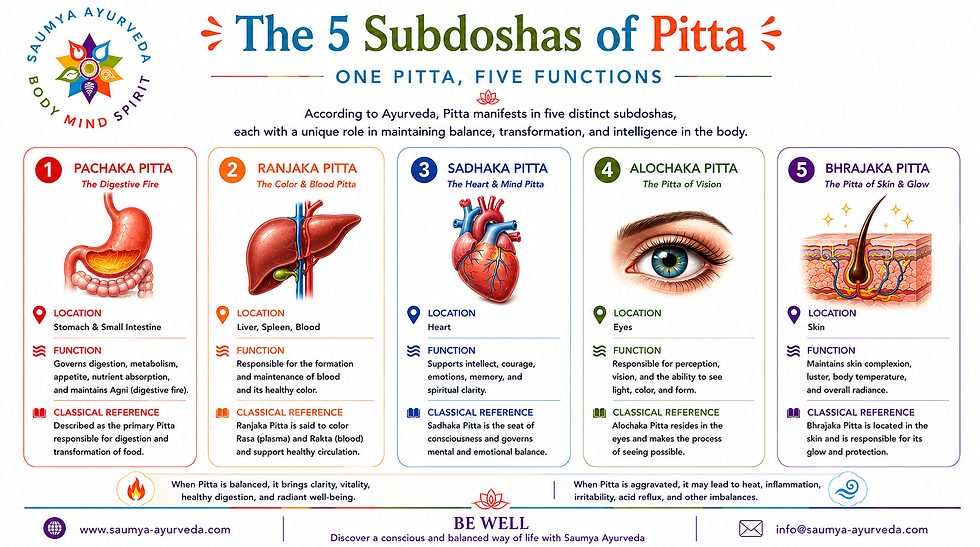
Pitta Dosha: The 5 Sub-Doshas and Cooling Heated Digestion | GERD
According to the American Gastroenterological Association, 40% of Americans report that digestive problems disrupt their daily lives, highlighting just how common digestive discomfort has become.
From an Ayurvedic perspective, symptoms such as GERD, acid reflux, hyperacidity, burning indigestion, and inflammation are often associated with aggravated Pitta dosha. Pitta is the force of transformation within the body.
It governs digestion, metabolism, body temperature, intelligence, and our ability to process both food and life experiences. When balanced, Pitta supports healthy digestion, vitality, sharp intellect, and clear perception.
When excessive, its fiery nature can contribute to digestive discomfort, irritability, inflammation, and feeling overheated.
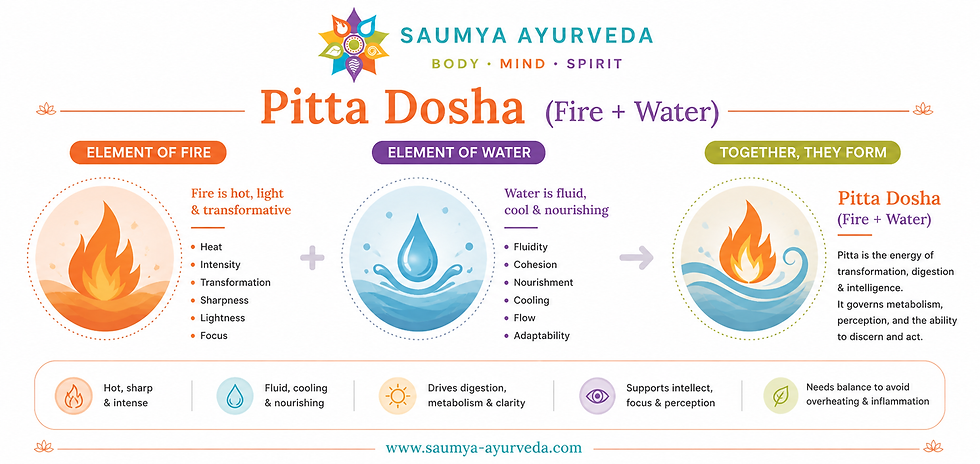
In Ayurveda, every individual is born with a unique combination of Vata, Pitta, and Kapha, the three doshas that govern the body and mind. As the dosha associated with fire and water, Pitta becomes especially important during the warmer months of the year when heat naturally accumulates in the body.
What many people don't realize is that Pitta is not a single force. Ayurveda describes five Pitta sub-doshas, each with a specialized role in maintaining health and balance. While Pachaka Pitta governs digestion and is often at the root of heartburn, acid reflux, and heated digestion, the other four Pitta sub-doshas influence the blood, skin, eyes, emotions, and mind.
Understanding these five sub-doshas offers a deeper perspective on why digestive symptoms develop and how excess heat can affect far more than the digestive tract.
By recognizing the early signs of aggravated Pitta, you can begin addressing the root causes of imbalance and support healthier digestion, greater comfort, and improved well-being.
Let's explore the five Pitta sub-doshas and discover how Ayurveda approaches acid reflux, heartburn, GERD, and heated digestion from the perspective of whole-body balance.
What Are the Five Pitta Sub-Doshas?
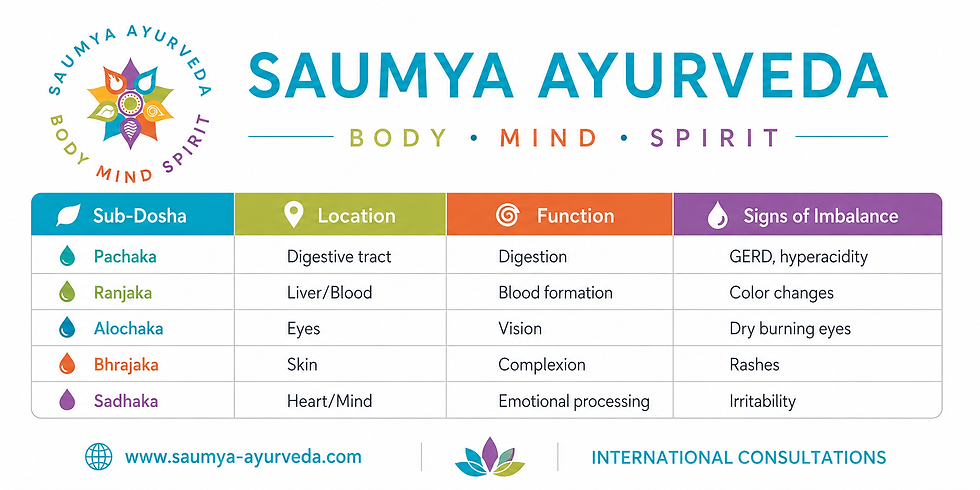
Each Pitta sub-dosha governs a specific aspect of transformation in the body and mind. This quick-reference chart summarizes their locations, functions, and common signs of imbalance.

Alochaka Pitta: Vision and Discernment
Alochaka Pitta influences how we see the world, both physically and psychologically. It governs visual functions, including the eyes and retina, while also supporting our inner vision, perception, and discernment.
Balanced Alochaka Pitta contributes to Pitta dosha's keen awareness and clarity. It helps us accurately perceive the external world, distinguish right from wrong, and make sense of both our inner and outer experiences.
When Alochaka Pitta is in balance, we are better able to see situations clearly and respond with insight and understanding.
When Alochaka Pitta becomes aggravated, our perception may become distorted. We may have difficulty analyzing or interpreting people and situations, experience poor judgment, or struggle to see the bigger picture.
Physical signs of imbalance can include eye strain, dry or irritated eyes, eye infections, light sensitivity, and declining vision.

Sadhaka Pitta: Heart and Consciousness
Another important Pitta sub-dosha, Sadhaka Pitta, governs the heart, mind, and our ability to process emotions and stress. It acts as a direct line to our inner consciousness, influencing how we experience meaning, purpose, and emotional fulfillment.
The saying, "She's all heart," describes someone with a kind, generous, and compassionate nature—qualities often associated with balanced Sadhaka Pitta.
Balanced Sadhaka Pitta keeps our minds alert, connected, and emotionally resilient. It helps us process life's experiences with clarity and wisdom while supporting mental focus, emotional balance, and spiritual awareness.
Ayurveda teaches that balanced Sadhaka Pitta helps clear tamas, or the darkness of the heart and mind, allowing us to express our most awakened, radiant, and authentic selves.
When Sadhaka Pitta becomes aggravated, we may have difficulty letting go of the past, become trapped in negative thought patterns, or experience irritability, frustration, and mood swings.
We may struggle to find emotional balance, feel disconnected from our purpose, or have difficulty responding to life's challenges with clarity and compassion.
If you're carrying old hurts, unresolved stress, or emotional heaviness, explore How to Detox Emotionally: 10 Ayurvedic Practices for Emotional Cleansing.

Bhrajaka Pitta: Skin and Touch
Bhrajaka Pitta governs the skin, our largest organ, and our sense of touch. While we don't often think of the skin as a digestive organ, Ayurveda teaches that it metabolizes experiences such as touch, sunlight, and exposure to the environment.
The skin covers and protects the entire body, serving as a vital interface between our inner world and the world around us.
Have you ever experienced goosebumps during a powerful moment, or felt the hair stand up on the back of your neck in response to fear, excitement, awe, or delight?
Through Bhrajaka Pitta, we take in, process, and assimilate these sensory experiences. This sub-dosha helps us interact with and respond to the physical world through the skin.
Like Pitta dosha, Bhrajaka Pitta is closely associated with the regulation of heat and moisture. When in balance, the skin appears supple, hydrated, radiant, and healthy.
When aggravated, Bhrajaka Pitta may contribute to rashes, redness, inflammation, discoloration, increased sensitivity, and other skin disorders.
Because the skin often reflects what's happening internally, imbalances in digestion and excess Pitta can frequently manifest through the skin.

Ranjaka Pitta: Blood and Circulation
Ranjaka Pitta governs the formation, nourishment, and circulation of blood throughout the body. In Sanskrit, the word Ranjaka means "that which colors" or "coloring agent."
Appropriately, this Pitta sub-dosha is responsible for giving color and vitality to both our inner and outer physiology.
Located primarily in the liver, spleen, and blood, Ranjaka Pitta plays an important role in transforming nutrients into healthy blood and supporting the delivery of oxygen and nourishment to the tissues.
It also contributes to healthy complexion, hair color, and the normal coloration of bodily substances.
When Ranjaka Pitta is in balance, it supports healthy blood function, circulation, and pigmentation, helping maintain vibrant skin tone, healthy hair, and normal color in the urine and stool. When aggravated,
Ranjaka Pitta may contribute to issues involving the blood and liver, including inflammation, anemia, skin discoloration, and other disturbances in pigmentation.
Changes in the color of the skin, hair, urine, or bowel movements can sometimes reflect an imbalance in this important Pitta sub-dosha.
Discover Ayurvedic foods that support liver health in Liver Cleanse with Ayurvedic Food.

Pachaka Pitta: Stomach and Digestion
Pachaka Pitta is the primary digestive sub-dosha and resides primarily in the stomach and small intestine.
In Ayurveda, digestion is considered the foundation of health, and Pachaka Pitta is responsible for maintaining the digestive fire, or Agni, that transforms food into nourishment for the body.
Because Pitta dosha is closely associated with heat, metabolism, and transformation, Pachaka Pitta has a profound influence on all the other Pitta sub-doshas.
It governs the digestion, absorption, and assimilation of nutrients that support every tissue, organ, and system within the body.
As a foundational sub-dosha, imbalances in Pachaka Pitta are often first noticed through digestive symptoms. Early signs may include a sensation of heat in the stomach, excessive hunger, sour burping, occasional heartburn, or loose stools.
These symptoms are easy to dismiss as something we ate or drank, but they may be early signals that excess Pitta is accumulating in the digestive tract.
When aggravated Pitta continues to build in the stomach and small intestine, symptoms may progress to hyperacidity, acid reflux, heartburn, burning indigestion, digestive inflammation, and loose stools.
Because Pachaka Pitta influences the other Pitta sub-doshas, excess digestive heat can eventually affect other areas of the body, including the skin, blood, eyes, and emotions.
Thanks to modern dietary habits, chronic stress, irregular eating schedules, alcohol, caffeine, and highly stimulating lifestyles, Pitta dosha is especially prone to overheating.
Symptoms often become more noticeable during the summer months, when the external environment naturally increases heat within the body.
One of the most common manifestations of aggravated Pachaka Pitta is gastroesophageal reflux disease (GERD), also known as acid reflux or heartburn.
While many people associate GERD only with a burning sensation in the chest, symptoms can also include a chronic sore throat, hoarseness, frequent throat clearing, coughing, and a bitter or sour taste in the mouth.
If you find yourself hoarse without having a cold, reflux may be worth considering. According to Harvard Medical School, GERD occurs when the lower esophageal sphincter does not close properly, allowing stomach contents to flow back into the esophagus.
Understanding the role of Pachaka Pitta can provide a valuable Ayurvedic perspective on why these symptoms develop and how excess digestive heat may be contributing to them.
Digestive symptoms can offer important clues about overall health. Discover why heartburn may signal a deeper imbalance in Ayurveda Treatment for Heartburn, Acid Reflux and GERD, and learn what yo ur digestion might be telling you in Ayurveda Stool Analysis: What Your Poop Says About Your Health.

Why Pachaka Pitta Matters: The Source of Digestive Heat
Of the five Pitta sub-doshas, Pachaka Pitta is considered the most influential because it governs digestion and metabolism. Ayurveda teaches that when digestive fire is balanced, the other Pitta sub-doshas are more likely to function properly as well.
When Pachaka Pitta becomes excessive, the resulting heat may extend beyond the digestive tract. This is why digestive imbalances such as acid reflux, heartburn, GERD, and hyperacidity are often accompanied by other signs of excess Pitta, including:
Skin irritation, redness, and rashes (Bhrajaka Pitta)
Burning, dry, or sensitive eyes (Alochaka Pitta)
Irritability, frustration, and emotional intensity (Sadhaka Pitta)
Excess heat affecting the liver and blood (Ranjaka Pitta)
This interconnected relationship is one reason Ayurveda focuses on addressing digestive imbalance at its source. By cooling and balancing Pachaka Pitta, it may be possible to support the health of all five Pitta sub-doshas.

Cooling Heated Pitta Dosha for Digestive Relief
As we've seen, Pachaka Pitta plays a central role in digestion and influences all of the other Pitta sub-doshas.
When digestive heat becomes excessive, the effects may extend far beyond the stomach, impacting the skin, blood, eyes, emotions, and overall well-being.
If something you eat seems to return with a fiery vengeance, you may be experiencing symptoms of acid reflux, heartburn, or GERD. These common digestive complaints affect millions of people each year.
In fact, more than 20% of Americans experience heartburn at least once a week. While occasional symptoms may be merely uncomfortable, chronic reflux can significantly impact quality of life and may lead to more serious complications over time.
From an Ayurvedic perspective, symptoms such as heartburn, acid reflux, hyperacidity, burning indigestion, and digestive inflammation are often signs of aggravated Pitta dosha, particularly Pachaka Pitta, the sub-dosha responsible for digestion.
When excess heat accumulates in the stomach and small intestine, digestive discomfort can develop and eventually influence other areas of the body.
The good news is that Ayurveda offers practical ways to cool excess Pitta and support healthier digestion. Through a combination of diet, lifestyle practices, stress management, and seasonal awareness, it is possible to reduce digestive heat and help restore balance.
The following Ayurvedic recommendations may help cool aggravated Pitta dosha and provide relief from symptoms of GERD, acid reflux, and heartburn.

There's Rarely Just One Symptom of High Pitta
You may think that heartburn, acid reflux, loose stools, migraines, skin rashes, and liver concerns are unrelated health issues. From an Ayurvedic perspective, however, these seemingly separate symptoms may share a common root cause: aggravated Pitta dosha.
One of Ayurveda's greatest strengths is its ability to connect the dots between symptoms and identify underlying patterns of imbalance. Because Pachaka Pitta, the digestive sub-dosha, influences the other Pitta sub-doshas, excess heat in the digestive tract can eventually affect the skin, blood, eyes, emotions, and overall well-being.
What begins as occasional digestive discomfort may later manifest as inflammation elsewhere in the body.
Conditions commonly associated with excess Pitta may include GERD, acid reflux, heartburn, ulcerative colitis, irritable bowel syndrome (IBS), inflammatory skin conditions, migraines, and certain liver-related concerns.
While every individual is unique, Ayurveda recognizes that digestion often plays a central role in many of these patterns.
The encouraging news is that many Pitta-related imbalances respond well to changes in diet, lifestyle, stress management, and appropriately selected herbal support.
By addressing the underlying causes of excess heat rather than focusing solely on symptoms, Ayurveda seeks to restore balance throughout the body.
Wondering whether excess Pitta may be affecting you? Explore Hot List of Common Pitta Imbalances.

Signs of Pitta Imbalance
Excess Pitta dosha can manifest in many ways throughout the body and mind. Common signs include:
Pachaka Pitta (Digestion)
Heated digestive symptoms such as heartburn, acid reflux, GERD, inflammatory bowel conditions, and flare-ups
Feeling nauseous or hangry when meals are delayed
Ranjaka Pitta (Blood and Circulation)
Inflammation or any of the "-itis" conditions
Bhrajaka Pitta (Skin and Touch)
Red, burning, irritated, or sensitive skin
Rashes
Strong reactions to insect bites
Alochaka Pitta (Vision and Perception)
Light sensitivity
Sadhaka Pitta (Heart and Consciousness)
When Pitta runs high, both body and mind can feel the effects. Learn more in How to Cool Pitta and Reduce Body Heat with Ayurveda.

Food as Medicine for Pitta Dosha Digestion
One of the simplest ways to help calm aggravated Pitta dosha is through proper hydration. Because Pitta is associated with heat, staying well hydrated can help support healthy digestion and reduce excess heat within the body.
Drinking plenty of room-temperature water throughout the day may help soothe heated Pachaka Pitta, the digestive sub-dosha responsible for digestion and metabolism.
Many people with excess Pitta experience symptoms such as heartburn, acid reflux, GERD, loose stools, and a general feeling of heat or irritation in the digestive tract.
For additional support, consider sipping Pitta-pacifying herbal teas that are appropriate for your constitution and current imbalance. Cooling herbs can help support digestion while gently reducing excess heat.
At the same time, it may be helpful to reduce substances that commonly aggravate Pitta, including coffee, alcohol, sugary soft drinks, and other highly stimulating beverages.
These can increase digestive heat and may worsen symptoms of acid reflux, heartburn, and digestive irritation in susceptible individuals.
Small daily choices can have a profound impact on digestive health. By choosing cooling, nourishing foods and beverages, you can help support balanced Pitta digestion and greater overall well-being.

Ayurvedic Diet for Acid Reflux
Diet plays a central role in balancing Pitta dosha and supporting healthy digestion. From an Ayurvedic perspective, highly processed foods, excessive caffeine, alcohol, fried foods, and spicy meals can increase digestive heat and aggravate symptoms such as acid reflux, heartburn, GERD, and digestive inflammation.
To help cool excess Pitta, emphasize fresh, whole foods that are naturally cooling, nourishing, and easy to digest. Foods such as coconut, cilantro, cucumber, sweet fruits, leafy greens, and well-cooked vegetables can help support balanced digestion.
Eating meals in a calm environment and at regular times each day may also strengthen digestion and help establish a healthy digestive rhythm.
Client Favorite Recipes for Cooling Pitta
A Must-Read Resource
This comprehensive guide explores the best foods, herbs, and dietary strategies for calming excess Pitta and supporting healthy digestion throughout the year.

Herbs for Pitta Dosha Digestion
In Ayurveda, herbs are often used to help balance Pitta dosha, support healthy digestion, and soothe excess heat in the digestive tract.
When selected appropriately, certain herbs may help support individuals experiencing symptoms such as acid reflux, heartburn, GERD, loose stools, digestive irritation, and other signs of aggravated Pitta.
Licorice and Neem
Licorice and Neem are traditionally valued for their cooling and soothing qualities. These herbs are often used to support healthy digestive tissues, help calm excess heat, and promote balance when Pitta-related digestive symptoms are present.
Shatavari and Vidari
Shatavari and Vidari are nourishing, mucilaginous herbs that are traditionally used to pacify Pitta dosha. Their soothing qualities may help support healthy digestion, calm irritation in the digestive tract, and promote balance when excess heat contributes to symptoms such as heartburn, acid reflux, and digestive discomfort.
A Personalized Ayurvedic Approach
Please note that Saumya Ayurveda does not recommend using herbs as though they were over-the-counter medications. In Ayurveda, herbs are only one part of a comprehensive healing approach that may also include diet, lifestyle practices, daily routines, breathwork, and other individualized recommendations.
An herb is not Ayurvedic simply because it originates from India or is labeled organic. Herbs become truly Ayurvedic when they are selected as part of a personalized plan designed for your unique constitution, imbalances, goals, and circumstances. An herb that is beneficial for one person may not be appropriate for another.
For this reason, working with an experienced Certified Ayurvedic Practitioner can help ensure that herbal recommendations are tailored specifically to your needs.



Continue Learning About Ayurveda
If you're curious about the deeper principles behind Ayurvedic healing, explore our Free Resources to Learn Authentic Ayurveda and gain access to educational articles, eBooks, guided practices, and practical tools that can help you better understand your body, your doshas, and the path toward greater balance and well-being.

Frequently Asked Questions About Pitta Dosha and Acid Reflux
What is Pitta dosha in digestion?
Pitta dosha is the Ayurvedic principle responsible for digestion, metabolism, and transformation within the body. The primary digestive sub-dosha, Pachaka Pitta, helps break down food, absorb nutrients, regulate appetite, and support healthy metabolism.
When Pitta is balanced, digestion tends to be strong and efficient. When aggravated, excess heat can accumulate in the digestive tract, contributing to symptoms such as heartburn, acid reflux, burning sensations, loose stools, and digestive inflammation.
Can Pitta dosha cause acid reflux?
In Ayurveda, acid reflux, heartburn, hyperacidity, and burning digestion are often associated with aggravated Pitta dosha. Excess heat accumulates in the digestive tract and may contribute to symptoms such as burning sensations, sour burping, loose stools, irritability, and inflammation.
Pachaka Pitta, the sub-dosha responsible for digestion, is often the primary Pitta imbalance involved in acid reflux and heartburn.
What are the symptoms of high Pitta in digestion?
Common signs of aggravated Pitta in the digestive system include heartburn, acid reflux, burning sensations in the stomach, sour burping, excessive hunger, loose stools, digestive inflammation, irritability, and feeling overheated. Symptoms often worsen during hot weather, periods of stress, or after consuming spicy, fried, or acidic foods.
Which Pitta sub-dosha controls digestion?
Pachaka Pitta is the Pitta sub-dosha responsible for digestion. Located primarily in the stomach and small intestine, it governs digestive fire, nutrient absorption, digestive enzymes, and metabolic transformation. When Pachaka Pitta becomes excessive, symptoms such as heartburn, acid reflux, and hyperacidity may develop.
What causes excess Pitta in the stomach?
Excess Pitta in the stomach may be aggravated by hot, spicy, fried, or acidic foods, excessive caffeine, alcohol, skipping meals, chronic stress, overwork, and prolonged exposure to summer heat. Over time, these factors can increase digestive heat and contribute to symptoms associated with Pitta imbalance.
What foods help cool Pitta digestion?
Foods that are naturally cooling, hydrating, and easy to digest may help balance excess Pitta. Examples include cucumbers, zucchini, asparagus, cilantro, mint, coconut, sweet fruits, basmati rice, oats, and well-cooked vegetables. Ayurveda emphasizes choosing foods that reduce excess heat while supporting healthy digestion.
What foods aggravate Pitta digestion?
Foods that commonly aggravate Pitta include hot peppers, spicy foods, excessive garlic, onions, alcohol, coffee, fried foods, vinegar, fermented foods, and highly acidic foods. These foods may increase digestive heat and contribute to heartburn, acid reflux, and irritation in individuals prone to Pitta imbalance.
Why is acid reflux often worse in summer?
Summer is considered Pitta season in Ayurveda because it shares the qualities of heat, intensity, and sharpness. As heat accumulates in the body during summer, individuals with a Pitta tendency may experience worsening symptoms such as heartburn, acid reflux, inflammation, skin irritation, and irritability.
Can stress increase Pitta and acid reflux?
Yes. Stress, perfectionism, overwork, and constant mental activity can aggravate Pitta dosha. Increased internal heat from stress may contribute to digestive symptoms such as acid reflux, hyperacidity, excessive hunger, heartburn, and digestive discomfort.
How do you balance Pitta naturally?
Ayurveda balances Pitta by reducing excess heat through diet, lifestyle, stress management, and individualized herbal support.
Eating cooling foods, avoiding overheating, maintaining regular meal times, practicing calming breathwork, spending time in nature, and following a Pitta-pacifying lifestyle may help support healthy digestion and overall balance.
Why is Pachaka Pitta considered the most important of the five Pitta sub-doshas?
Pachaka Pitta is often considered the primary Pitta sub-dosha because it regulates digestive fire (agni) and metabolism. Ayurveda teaches that when digestion is balanced, the other Pitta sub-doshas are more likely to function harmoniously. When digestive heat becomes excessive, signs of Pitta imbalance may appear throughout the body.


Final Thoughts: Pitta Dosha: The 5 Sub-Doshas, GERD, Acid Reflux & Digestive Heat
Understanding the five sub-doshas of Pitta dosha provides a deeper understanding of how digestion influences health throughout the body.
While Pachaka Pitta is the primary sub-dosha responsible for digestion, an imbalance in this digestive fire can contribute to symptoms such as GERD, acid reflux, heartburn, hyperacidity, burning indigestion, loose stools, and digestive inflammation.
According to Ayurveda, these symptoms are not isolated problems but signs that excess heat has accumulated within the digestive system. If left unaddressed, aggravated Pitta may eventually affect other areas of the body, including the skin, blood, eyes, and emotional well-being.
This is why Ayurveda emphasizes treating the root cause of imbalance rather than simply managing symptoms.
Supporting healthy Pitta digestion involves more than avoiding trigger foods. A balanced approach may include eating a Pitta-pacifying diet, managing stress, honoring seasonal rhythms, and making lifestyle choices that help cool excess heat.
As explored in Pitta Dosha: The 5 Sub-Doshas, GERD, Acid Reflux & Digestive Heat, understanding the unique functions of each Pitta sub-dosha can help you recognize early signs of imbalance and take meaningful steps toward healthier digestion, reduced digestive discomfort, and greater overall well-being.
If you experience recurring GERD, acid reflux, heartburn, or other signs of excess Pitta, working with a qualified Ayurvedic practitioner can help you identify the underlying pattern and create a personalized plan to restore balance naturally.

What Our Clients Say | Saumya Ayurveda Testimonials
Real Transformations Through Ayurveda Consultation
Physician Testimonial (Medical Endorsement)
“As a physician, I have always believed that prevention is better than cure. In today’s healthcare environment, Ayurveda offers a logical and natural approach to long-term health and prevention.
I began working with Veena during a very demanding phase of my life, and she made the process accessible even within my busy schedule. I was encouraged to follow a steady, sustainable approach focused on real lifestyle change.
Over time, I experienced meaningful improvements in balance, energy, and well-being. In my medical practice, I now see many patients with similar stress- and diet-related imbalances, which has further reinforced my trust in Ayurvedic principles.
I have since referred several patients to Saumya Ayurveda and consider Veena a valuable resource in supporting holistic well-being.”
Dr. Gauri Nagargoje
M.D., Oncology & Hematology
Physician Testimonial (Medical Endorsement)
“As a physician, I initially struggled with Ayurveda’s simplicity and depth, but Veena’s guidance made it practical, scientific, and deeply effective.
Veena has transformed my health and perspective on healing. I experienced significant improvements in focus, digestion, stress response, and overall vitality.
Her personalized approach made lifestyle changes easy and sustainable.
This journey not only improved my health but also inspired a lifelong commitment to integrating Ayurveda into holistic healthcare.”
Dr. Jessica Bedi
D.O., & Ayurvedic Doctor
Rachel, Denver Colorado USA


Explore more client success stories from Saumya Ayurveda and see how Ayurveda supports healing, balance, and transformation.

Discover the Saumya Ayurveda Way
At Saumya Ayurveda, we see you as a whole being—not just a collection of symptoms. True health is more than the absence of disease; it is a state of balance between body, mind, and awareness.
Many people today feel unheard or only partially supported in conventional health systems, especially when symptoms persist without clear answers.
This is where Ayurveda offers a different path.
If you are seeking a holistic approach to health and balanced living, you are in the right place. Saumya Ayurveda provides personalized Ayurvedic guidance designed to support physical, mental, and emotional harmony—helping you move toward a more vibrant and aligned life.
Our approach is rooted in classical Ayurveda and adapted for modern life, with a focus on understanding your unique dosha and prakriti (your natural constitution) so recommendations are truly individualized—not generic.
If reading Pitta Dosha: The 5 Sub-Doshas, GERD, Acid Reflux & Digestive Heat has helped you recognize patterns of excess heat, digestive imbalance, or recurring symptoms, Ayurveda offers a personalized framework for understanding and addressing the root causes of those concerns.
Saumya Ayurveda offers concierge-style, client-centered care, meaning your experience is personal, supportive, and free from retail or product pressure. The focus is entirely on education, clarity, and sustainable lifestyle transformation.
Through structured Ayurveda consultation packages, you receive ongoing guidance, thoughtful coaching, and practical tools to help you create lasting change—not temporary fixes.

Meet Veena: Your Trusted Ayurvedic Guide for Clients Worldwide
Veena Blilie is a Certified Ayurvedic Practitioner, Ayurveda teacher, meditation guide, and monk with over three decades of experience helping clients worldwide achieve greater balance and well-being through Ayurveda.
As founder of Saumya Ayurveda and President Emeritus of the Meditation Center, Veena serves clients worldwide through personalized Ayurvedic wellness guidance, meditation, and yoga practices.
Saumya Ayurveda has been recognized as the #1 Ayurveda cooking blog and the #3 Ayurveda website and blog and has received multiple consecutive awards for best wellness practice.
Through her work, Veena shares practical Ayurvedic guidance, nourishing recipes, and wellness education for modern living.
Inspired from an early age by learning herbal remedies, food as medicine, and traditional healing practices at her grandmother's knee, Veena combines traditional Ayurvedic wisdom with compassionate, accessible guidance that supports mental, physical, and spiritual well-being.
Known for her warmth, humor, intuitive approach, and accessible style, Veena empowers people to create sustainable health through personalized Ayurvedic wellness plans designed to fit naturally into everyday life.
Veena is also the author of several free Ayurveda eBooks and writes the educational articles published on the Saumya Ayurveda blog.
As seen in:
Voice America
Albuquerque The Magazine
Learn more about Veena and her work through Saumya Ayurveda.
Disclaimer: This information is for educational purposes only and is not a substitute for professional medical advice. Ayurveda works best when tailored to your unique doshic profile, so it’s essential to understand your constitution and imbalances before using herbs, foods, or lifestyle practices. Consult a Certified Ayurvedic Practitioner for personalized guidance.


