Ayurvedic Facial Analysis: What Your Face Reflects About Your Health

Updated: Aug 28
Have you ever wondered what your face may reveal about your health? According to Ayurveda, your skin, eyes, lips, facial lines, complexion, and facial features may reflect patterns of balance or imbalance throughout the body.
Ayurvedic facial analysis, sometimes called Ayurvedic face mapping, is a traditional observational assessment that helps practitioners evaluate dosha balance, digestive strength (Agni), Ama (metabolic waste), and overall vitality. It is not a medical diagnosis, but rather one part of Ayurveda's comprehensive approach to understanding health.
For example:
Dark circles may reflect poor sleep, stress, depleted vitality, or Vata imbalance.
Facial redness may suggest excess heat or aggravated Pitta.
Dry skin and premature wrinkles are often associated with Vata imbalance and tissue dryness.
Puffiness or congestion may indicate excess Kapha or sluggish elimination.
These observations are never interpreted in isolation. At Saumya Ayurveda, facial analysis is combined with your health history, constitution (Prakriti), current imbalances (Vikriti), digestive fire (Agni), lifestyle, and other traditional assessment methods to develop a personalized understanding of your health.
In this guide, you'll discover how Ayurveda interprets different facial features, what they may reveal about your overall well-being, and how personalized food, herbs, and lifestyle practices can help restore dosha balance naturally.

What Is Ayurvedic Face Mapping?
Ayurvedic face mapping, more accurately called Ayurvedic facial analysis, is an observational method used during an Ayurvedic assessment. Practitioners examine the face for changes in color, texture, swelling, lines, expression, and symmetry to gather clues about dosha balance, digestion (Agni), tissue health (Dhatus), and overall well-being. Facial observations are always interpreted alongside the tongue, eyes, voice, speech, stool, urine, and other aspects of a complete multipoint Ayurvedic evaluation.
Key Takeaways
Your face can offer valuable clues about your health. In Ayurveda, changes in skin tone, texture, puffiness, facial lines, and facial features may reflect imbalances in the doshas, digestion (Agni), emotional well-being, and overall health.
Ayurvedic facial analysis is a holistic assessment—not a diagnosis. Practitioners observe your face alongside your constitution (Prakriti), current imbalances (Vikriti), tongue, eyes, lifestyle, health history, and other traditional assessment methods to understand the whole person.
The face often reflects patterns before symptoms become more noticeable. Dark circles, puffiness, dryness, redness, acne, or premature lines may provide early insights into underlying imbalances that can be addressed through personalized Ayurvedic care.
Healthy digestion is reflected in a healthy complexion. Ayurveda teaches that supporting Agni (digestive fire) and reducing Ama (metabolic waste) can promote clearer skin, brighter eyes, and improved overall vitality.
Lifestyle, nutrition, stress, and sleep all influence facial appearance. Consistent daily routines (Dinacharya), nourishing foods, quality sleep, stress management, and proper hydration support both inner balance and outer radiance.
Ayurveda treats the root cause—not just the appearance. Rather than focusing solely on cosmetic concerns, Ayurvedic facial analysis seeks to understand the underlying patterns contributing to changes in the face and develops a personalized plan to restore balance and support long-term well-being.
Table of Contents

What Is Ayurvedic Face Mapping?
Many people search for Ayurvedic face mapping to understand what changes in their complexion, facial lines, wrinkles, or skin may reveal about their health. In classical Ayurveda, however, practitioners use a broader observational method known as Ayurvedic facial analysis, one component of Ashtavidha Pariksha, the traditional Eightfold Examination.
Rather than linking individual areas of the face to specific organs, Ayurvedic practitioners observe facial color, texture, lines, swelling, dryness, expression, and symmetry alongside your health history, digestion (Agni), Ama (metabolic toxins), tongue, eyes, lifestyle, elimination, and other clinical observations.
Together, these findings help practitioners understand your current state of balance (Vikriti) and develop personalized recommendations that support long-term health.
Your face may reveal important clues, but it is only one piece of the puzzle. The face mapping chart below summarizes some of the facial observations Ayurvedic practitioners consider during an assessment. These observations are never interpreted in isolation but contribute to a broader understanding of your health when combined with a traditional multipoint Ayurvedic assessment.
Classical Ayurvedic texts such as the Yogaratnakara describe Ashtavidha Pariksha (the Eightfold Examination), which includes evaluation of the pulse, urine, stool, tongue, voice, touch, eyes, and Akriti (general appearance). Modern Ayurvedic practitioners often include careful observation of the face as part of this broader assessment of Akriti, recognizing that facial color, expression, texture, and other visible features can provide valuable insights when interpreted alongside the complete clinical picture.
Before You Continue: A One-Minute Self-Check
Before looking at the Ayurvedic Facial Analysis Chart take a moment to observe your face in a mirror or a well-lit photo. Don't try to diagnose yourself—simply notice what you see.
Ask yourself:
What is your overall complexion? Is it bright, dull, red, pale, or uneven?
What do your eyes look like? Are there dark circles, puffiness, redness, or signs of fatigue?
How does your skin feel? Is it dry, oily, sensitive, rough, or well hydrated?
What facial lines or wrinkles stand out? Where are they most noticeable?
Do you notice swelling, puffiness, acne, or changes in facial symmetry?
Now compare your observations with the Ayurvedic Face Mapping Chart below to begin understanding what these patterns may suggest from an Ayurvedic perspective.
Skin Type and Dosha Connection in Ayurveda
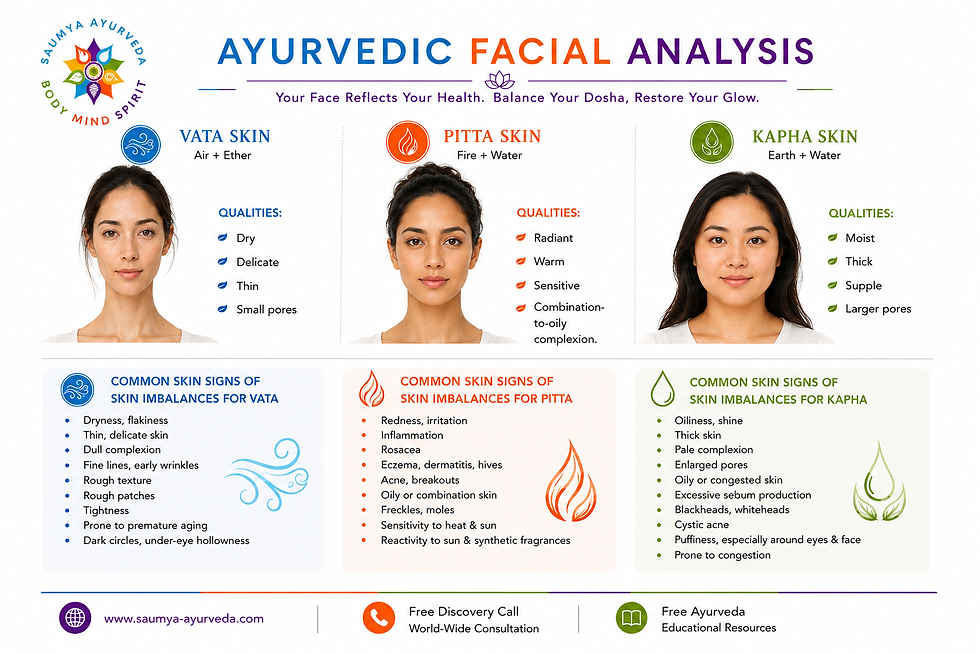
Your skin reflects both your natural constitution (Prakriti) and your current state of balance (Vikriti). Each dosha expresses itself through characteristic qualities of the skin, and when a dosha becomes aggravated, those qualities often change in recognizable ways.
Learning to recognize these patterns can help you better understand your body's tendencies. However, no single skin characteristic is enough to determine your dosha or diagnose an imbalance. Ayurvedic practitioners always consider skin observations within the context of your overall health
Vata Skin Type
Balanced: Thin, cool, clear, and naturally luminous, though typically on the dry side.
Imbalanced: Excessive dryness, flakiness, roughness, premature wrinkles, dark patches, sensitivity to wind and cold, or cracked lips. More significant imbalances may contribute to conditions such as eczema or psoriasis.
Pitta Skin Type
Balanced: Soft, warm, smooth, and evenly toned with a healthy glow.
Imbalanced: Redness, inflammation, acne, increased oiliness, rashes, rosacea, hyperpigmentation, sun sensitivity, or reactive skin.
Kapha Skin Type
Balanced: Thick, smooth, cool, well-hydrated, and resilient with a natural luster.
Imbalanced: Excess oiliness, congestion, puffiness, enlarged pores, cystic acne, sluggish circulation, or a dull complexion.
Related Reading: Say Goodbye to Aging with This Ultimate Ayurvedic Skincare Routine

How Skin Reflects Inner Balance
Healthy skin begins from within. In Ayurveda, changes in your complexion often reflect the combined influence of digestion (Agni), Ama (metabolic toxins), nutrition, hydration, sleep, stress, circulation, hormonal balance, and daily lifestyle habits.
Rather than viewing skin concerns as isolated problems, Ayurveda considers them part of a broader picture of health. Facial and skin observations are combined with information gathered through a comprehensive assessment to better understand the underlying factors contributing to imbalance.
The goal is not simply to improve the appearance of the skin, but to restore balance throughout the body. Through personalized Ayurvedic nutrition, appropriate herbal support, daily routines (Dinacharya), stress management, and other individualized lifestyle recommendations, Ayurveda helps support healthy skin from the inside out. As overall balance improves, many people notice clearer skin, healthier texture, and a more natural, vibrant complexion.


Ayurvedic Facial Analysis: What Common Symptoms May Indicate
Dark Circles & Puffy Eyes in Ayurveda: Kidney and Adrenal Health
In Ayurveda, the under-eye area is often associated with the kidneys and adrenal glands. Dark circles or puffy eyes may reflect chronic stress, poor sleep, dehydration, weak digestion (Agni), or doshic imbalance.
In today's fast-paced world, many people continue to push through fatigue instead of honoring the body's need for rest and recovery. Over time, the cumulative effects of stress, irregular routines, insufficient sleep, and constantly running on empty can take a toll on overall vitality. The delicate skin beneath the eyes is often one of the first places these patterns become visible.

What Do Dark Under-Eye Circles Mean in Ayurveda?
Vata Imbalance
Stress, depletion, and poor sleep can thin the delicate skin beneath the eyes, creating hollowness or dark shadowing. Common triggers include dehydration, cold or dry foods, irregular routines, excessive travel, and chronic stress.
Pitta Imbalance
Excess heat and inflammation may appear as darker pigmentation accompanied by burning, redness, or sensitivity around the eyes. Common triggers include emotional stress, excess screen time, spicy foods, acidic foods, and excessive sun exposure.
Lifestyle Factors
Poor nutrition, chronic stress, seasonal allergies, aging, and inadequate recovery can intensify doshic imbalances and place additional demands on the adrenal glands, contributing to persistent dark circles. Related Readings: Hot List of Common Pitta Imbalances Wild List of Vata Imbalances

What Do Puffy Eyes Mean in Ayurveda?
Kapha Imbalance
Puffy eyes often reflect increased Kapha dosha, which may contribute to water retention, heaviness, and fluid accumulation around the eyes. Common triggers include heavy meals, salty foods, sedentary habits, and sluggish digestion.
Ama and Lymphatic Congestion
Puffiness may also suggest the accumulation of Ama (metabolic waste) and reduced lymphatic circulation, particularly when Agni is weak. Supporting healthy digestion and natural lymphatic movement is often an important part of restoring balance.
Dark circles and puffiness are frequently linked with stress, poor sleep, dehydration, and digestive imbalance. Rather than focusing only on cosmetic treatments, Ayurveda addresses the underlying patterns through nutrition, hydration, rest, stress management, daily routines, and, when appropriate, individualized herbal support.
Gentle remedies such as rose water or cucumber slices may soothe the skin temporarily, but lasting improvement comes from restoring internal balance.
Related Readings:
Sturdy List of Kapha Imbalances
Ayurvedic Solutions for Hormonal & Menstrual Health — Support Lymph Flow
What Do Puffy Upper Eyelids Mean in Ayurveda?
In Ayurveda, the upper eyelids are often observed in relation to the liver and its role in supporting digestion, metabolism, hormonal balance, and natural detoxification. Persistent puffiness or swelling may suggest that these functions need additional support.
Gentle approaches such as incorporating bitter greens, cooling foods, appropriate Ayurvedic herbs, regular movement, and a balanced daily routine may help promote healthy liver function. Rather than relying on harsh detoxification programs, Ayurveda emphasizes addressing the root cause through an individualized plan that supports the whole person.
Related Readings: The Ultimate Guide to Cooling Foods in Ayurveda

What Do Missing Outer Eyebrows Mean in Ayurveda?
In Ayurveda, healthy hair reflects the strength of the Dhatus (body tissues), balanced Agni (digestive fire), and overall vitality (Ojas). When the outer edges of the eyebrows begin to thin, it may be a sign that the body is not receiving or utilizing nourishment as efficiently as it should.
One common medical condition associated with thinning of the outer eyebrows is hypothyroidism, particularly when it occurs alongside symptoms such as fatigue, weight gain, constipation, dry skin, cold intolerance, or low mood.
From an Ayurvedic perspective, these patterns are often associated with Vata imbalance, low Agni, depleted tissues, and reduced nourishment reaching the hair and skin.
Other factors that may contribute include chronic stress, poor nutrition, blood sugar imbalance, hormonal changes, aging, and prolonged sleep deprivation. Over time, these influences can weaken the body's ability to maintain healthy hair growth and tissue vitality.
Rather than focusing only on the eyebrows themselves, Ayurveda seeks to identify and address the root cause of the imbalance. Supporting healthy digestion, eating a nutrient-dense diet, managing stress, maintaining a consistent daily routine (Dinacharya), and using individualized lifestyle and herbal recommendations may help restore balance and support long-term health.
Note: Thinning of the outer eyebrows can sometimes be associated with underlying medical conditions, including thyroid disorders. If you experience persistent eyebrow thinning or other concerning symptoms, it's important to consult your healthcare provider for appropriate evaluation and testing.

What Do Facial Lines Mean in Ayurveda?
In Ayurveda, facial lines are viewed as more than natural signs of aging or repeated facial expressions. Their location, depth, symmetry, and the surrounding skin quality may offer valuable clues about dosha balance, digestive strength (Agni), tissue nourishment (Dhatus), emotional well-being, and the body's ability to adapt to stress.
Facial lines are never interpreted in isolation or used to diagnose disease. Instead, they are one of many observations considered during a comprehensive Ayurvedic assessment, helping practitioners recognize long-standing patterns of imbalance and identify opportunities to restore health before symptoms become more significant.
What Do Forehead Lines Mean in Ayurveda?
Horizontal forehead lines are commonly associated with Vata dosha and are sometimes referred to as "worry lines." They are frequently seen in people who tend toward overthinking, anxiety, chronic stress, or irregular daily routines.
What They May Reflect
Chronic worry, fear, and prolonged emotional stress
Increased Vata imbalance
Strain on the nervous system
Weakened digestion (Agni) and possible digestive irregularity
Common Contributing Factors
Anxiety and chronic stress
Poor-quality sleep
Irregular meals and daily routines
Excess sugar, processed foods, or incompatible food combinations
Dehydration and inadequate self-care
The Ayurvedic Perspective
The depth and prominence of forehead lines may suggest that an imbalance has been present for an extended period. Rather than treating the lines themselves, Ayurveda focuses on addressing the underlying pattern through grounding daily routines (Dinacharya), nourishing foods, healthy Agni, diaphragmatic breathing, meditation, Abhyanga (warm oil massage), restorative sleep, and other practices that calm the nervous system and promote long-term balance.

What Do the "11" Lines Between the Eyebrows Mean in Ayurveda?
The vertical lines between the eyebrows, often called the "11 lines" or frown lines, are commonly associated with Pitta dosha in Ayurveda. They may develop over time in people experiencing chronic stress, intense focus, frustration, or emotional tension.
What They May Reflect
Pitta imbalance
Long-standing stress or emotional strain
A tendency toward irritability, perfectionism, or suppressed emotions
The body's response to repeated facial expressions over time
Traditional Ayurvedic Associations
Ayurvedic practitioners associate:
A centered vertical line with chronic mental tension, skepticism, or habitual worry.
A line that is more prominent on the right side with patterns involving liver function and suppressed anger.
A line that is more prominent on the left side with patterns related to the spleen, immune resilience, or long-standing worry.
These observations are considered as part of a complete Ayurvedic assessment and are never interpreted on their own.
The Ayurvedic Perspective
Rather than treating the facial line itself, Ayurveda focuses on restoring balance by cooling excess Pitta, supporting healthy digestion (Agni), managing stress, and encouraging healthy emotional expression. Practices such as meditation, pranayama, time in nature, adequate sleep, and an individualized diet and lifestyle may help reduce the underlying patterns contributing to these lines.
Related Reading: Keep Your Cool: Top Yoga Tips for Pitta Dosha

What Do Nasolabial Lines Mean in Ayurveda?
The nasolabial folds—often called laugh lines or smile lines—extend from the sides of the nose to the corners of the mouth. In Ayurveda, these lines may reflect the body's ability to digest, absorb, and utilize nutrients, especially when they appear prematurely or become unusually pronounced.
What They May Reflect
Low Agni (digestive fire)
Poor nutrient absorption
Accumulation of Ama (metabolic waste)
Long-standing digestive imbalance
Common Contributing Factors
Chronic stress
Dehydration
A diet high in processed foods
Irregular eating habits
Vata dryness
Pitta inflammation
Associated Observations
Nasolabial lines may appear alongside other signs of digestive imbalance, such as:
Teeth marks on the tongue
Dry skin
Brittle hair or nails
Vertical nail ridges
Low energy after meals
These observations are evaluated together rather than independently.

What Does Jawline Acne or Puffiness Mean in Ayurveda?
The jawline is an important area of observation in Ayurvedic facial analysis because it may reflect patterns involving hormonal balance, lymphatic circulation, digestion (Agni), and dosha imbalance. Persistent jawline acne or puffiness can offer clues that the body may benefit from additional support, especially when these changes occur repeatedly.
What Does Jawline Acne Mean in Ayurveda?
Pitta Imbalance
In Ayurveda, jawline acne is often associated with aggravated Pitta dosha, particularly when accompanied by redness, inflammation, or painful breakouts. Hormonal fluctuations may also contribute to increased oil production and skin irritation.
Common Contributing Factors
Chronic stress
Poor-quality sleep
Diets high in sugar, dairy, or processed foods
Excess spicy, fried, or heating foods
Hormonal changes associated with the menstrual cycle
For many people, jawline breakouts become more noticeable during PMS or other periods of hormonal fluctuation.
Related Reading: Ayurveda and Menstruation – Creating a Healthy Flow Hot List of Common Pitta Imbalances

What Does Jawline Puffiness Mean in Ayurveda?
Kapha Imbalance
Puffiness or swelling along the jawline and neck is commonly associated with increased Kapha dosha and may reflect sluggish lymphatic circulation, fluid retention, or reduced movement of bodily tissues.
Common Contributing Factors
Weak digestion (Mandagni)
Accumulation of Ama (metabolic waste)
Sedentary lifestyle
Chronic stress
Poor circulation and sluggish lymphatic flow
Because digestion and lymphatic function are closely connected in Ayurveda, supporting Agni is often an important part of reducing congestion.
Related Resource: The Compelte Guide to Ayurvedic Spring Cleansing (Kapha)
What Do the Temples and Cheeks Mean in Ayurveda?
In Ayurveda, the temples and cheeks are important areas of observation during Ayurvedic facial analysis. Changes in skin color, texture, dryness, redness, acne, or fullness may provide clues about dosha balance and overall health.
Traditionally, the temples are associated with Pitta dosha and may reflect patterns involving the liver, gallbladder, and the body's ability to process heat and maintain healthy digestion (Agni). The cheeks are often observed in relation to Kapha dosha, the lungs, and respiratory health, particularly when evaluating circulation, hydration, and the movement of fluids throughout the body.

Temple Breakouts: The Liver–Gallbladder Connection
In Ayurveda, breakouts on the temples are often associated with aggravated Pitta dosha, particularly when accompanied by redness, inflammation, or sensitivity. Traditional Ayurvedic practitioners may also observe this area in relation to the liver, gallbladder, and the body's ability to regulate heat, support healthy digestion (Agni), and maintain balanced Rakta Dhatu (blood tissue).
What They May Reflect
Pitta imbalance
Excess internal heat and inflammation
Reduced digestive efficiency
Long-standing stress or emotional tension
Common Contributing Factors
Spicy, fried, or highly processed foods
Excess alcohol or caffeine
Chronic stress
Inadequate sleep
A fast-paced, high-pressure lifestyle

Cheek Issues: The Lung–Kapha Connection
In Ayurveda, the cheeks are often observed in relation to Kapha dosha, the lungs, and respiratory health. Changes such as acne, redness, dryness, or puffiness may reflect patterns of imbalance involving digestion (Agni), lymphatic circulation, and the body's natural defense systems.
What They May Reflect
Kapha imbalance
Sluggish lymphatic circulation
Respiratory congestion
Reduced digestive efficiency
Seasonal or environmental stressors
Common Contributing Factors
Seasonal allergies
Exposure to pollution or environmental irritants
Diets that promote excess mucus, including heavy or highly processed foods
Weak digestion (Mandagni) and the accumulation of Ama (metabolic waste)
What Does the Chin and Mouth Mean in Ayurveda?
In Ayurveda, the chin and mouth are important areas of observation during Ayurvedic facial analysis. Changes in skin tone, facial lines, fullness, dryness, and muscle tone may offer clues about dosha balance, digestion (Agni), tissue nourishment (Dhatus), emotional well-being, and overall vitality when considered alongside a complete Ayurvedic assessment.
Marionette Lines: Emotional Well-Being and Vata Balance
The vertical lines extending from the corners of the mouth, commonly known as marionette lines, naturally become more noticeable with age as the skin loses elasticity. In Ayurveda, they may also reflect long-standing Vata imbalance, tissue depletion, and periods of prolonged emotional stress, grief, or sadness.
What They May Reflect
Vata imbalance
Tissue depletion
Chronic emotional stress
Natural aging and reduced skin elasticity
Double Chin: Kapha Balance and Metabolism
A double chin may be associated with increased Kapha dosha, which governs structure, stability, and fluid balance. When Kapha becomes aggravated, fluid retention, sluggish metabolism, and excess tissue accumulation may become more noticeable.
Common Contributing Factors
Kapha imbalance
Fluid retention
Sedentary lifestyle
Weak Agni (digestive fire)
A double chin can also result from genetics, aging, changes in body composition, and certain medical conditions. In Ayurveda, it is considered one observation among many, not a diagnosis.
The Philtrum and Vitality
The philtrum—the vertical groove between the nose and upper lip—is one of the facial features observed during Ayurvedic facial analysis. Practitioners may consider its shape, depth, symmetry, and overall appearance alongside other facial observations when evaluating a person's energy, nourishment, and overall vitality.
In Ayurveda, the philtrum is traditionally associated with the Shukra Dhatu (reproductive tissue), the final and most refined of the body's seven tissues. Because Shukra Dhatu represents the culmination of healthy digestion and tissue nourishment, this area is traditionally viewed as reflecting the body's long-term vitality, resilience, and reproductive potential.
I think this reads much more naturally as a single section. It introduces what practitioners observe and immediately explains why it matters in Ayurvedic theory without repeating ideas or interrupting the flow.
What Does an Earlobe Crease Mean in Ayurveda?
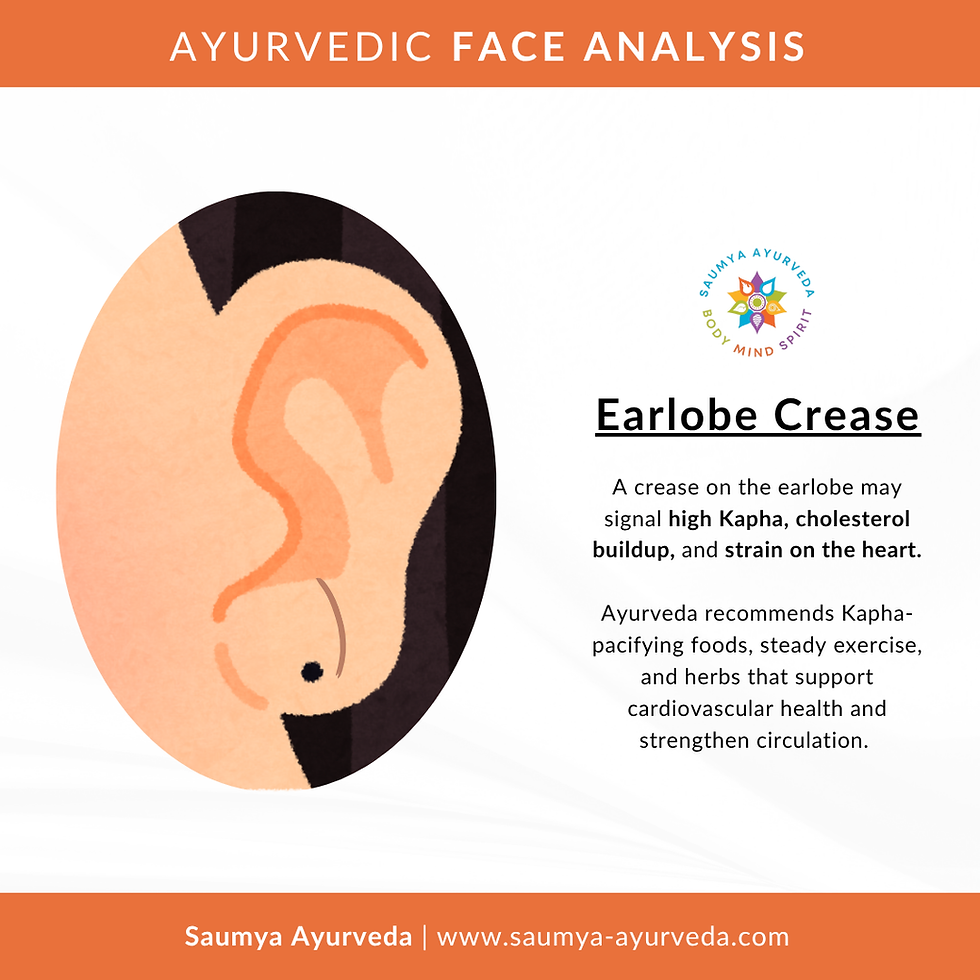
A diagonal earlobe crease, sometimes called Frank's sign, has been studied as a possible marker associated with cardiovascular health. While some research has found an association between earlobe creases and an increased risk of heart disease, the evidence remains mixed, and an earlobe crease does not diagnose high cholesterol or cardiovascular disease.
From an Ayurvedic perspective, changes in the ears and surrounding tissues are considered alongside many other observations when evaluating overall health. A practitioner may explore whether signs of Kapha imbalance, sluggish circulation, Ama (metabolic waste), or impaired Agni (digestive fire) are contributing to broader patterns affecting the cardiovascular system.
What They May Reflect
Kapha imbalance
Sluggish circulation
Reduced metabolic efficiency
Long-standing lifestyle patterns that may influence cardiovascular health
Important: An earlobe crease should never be used to diagnose high cholesterol or heart disease. If you have risk factors for cardiovascular disease or concerns about your heart health, consult your healthcare provider for appropriate evaluation and screening,

Learn More About Ayurvedic Assessment
Facial analysis is one component of Ashtavidha Pariksha, Ayurveda's traditional system of observation. Learn how practitioners evaluate other important signs of health:
Ayurvedic Facial Analysis Is Just the Beginning
At Saumya Ayurveda, Ayurvedic facial analysis is just one part of a comprehensive, personalized assessment. During your consultation, Veena Blilie, Certified Ayurvedic Practitioner, combines facial observations with other traditional Ayurvedic assessment methods—including your health history,
digestion, tongue, pulse, lifestyle, constitution (Prakriti), and current imbalances (Vikriti)—to better understand what is happening beneath the surface.
Using these insights, she creates a personalized healing plan designed specifically for you. Your recommendations may include individualized nutrition, carefully selected herbal support, daily routines, stress-management practices, and other lifestyle changes that address the root cause of imbalance while supporting your body's natural ability to heal.
Healing is a journey, not a one-time event. As your health changes, your personalized recommendations evolve with you. Through ongoing guidance and follow-up consultations, your plan is refined to reflect your progress, helping you build lasting habits that support long-term health, resilience, and vitality. Many clients notice improvements not only in their symptoms, but also in their energy, digestion, emotional well-being, and natural radiance.
In a world where healthcare visits can sometimes leave people feeling rushed or reduced to a list of symptoms, Saumya Ayurveda offers something different: compassionate, whole-person care that honors your unique constitution, empowers you with practical knowledge, and supports you every step of your healing journey.

Frequently Asked Questions
What is Ayurvedic face mapping?
Ayurvedic face mapping, traditionally known as Ayurvedic facial analysis, is an observational method used during a comprehensive Ayurvedic assessment. Practitioners evaluate facial color, texture, lines, puffiness, acne, and expression alongside the tongue, pulse, digestion (Agni), Ama (metabolic waste), lifestyle, and health history to identify patterns of dosha imbalance and overall well-being. Facial observations help guide personalized recommendations—they are not used to diagnose disease.
Is Ayurvedic face mapping the same as Chinese face mapping?
No. While both systems observe the face for clues about health, they are based on different healing traditions. Ayurvedic face mapping takes a holistic approach, evaluating patterns involving Vata, Pitta, Kapha, Agni, Ama, and the body's tissues (Dhatus). Rather than assigning each facial area to a single organ, Ayurveda considers facial observations alongside the tongue, pulse, digestion, lifestyle, and overall health to understand the whole person.
What does your face reveal about your health in Ayurveda?
Your face may reflect changes occurring throughout the body. Variations in skin tone, texture, facial lines, swelling, dryness, acne, and expression can provide clues about dosha balance, digestion, hydration, circulation, and emotional well-being. Ayurveda views these as patterns to explore—not as diagnostic signs—and always evaluates them within the context of a complete health assessment.
Can Ayurveda diagnose disease from the face?
No. Facial analysis is an observational tool, not a diagnostic test. An Ayurvedic practitioner combines facial observations with other traditional assessment methods—including the tongue, pulse, eyes, digestion, elimination, health history, and lifestyle—to understand patterns of imbalance and develop individualized recommendations. Persistent or concerning symptoms should always be evaluated by your healthcare provider.
What do dark circles and puffy eyes mean in Ayurveda?
Dark circles may reflect Vata imbalance, stress, poor sleep, dehydration, or depleted vitality (Ojas). Puffy eyes are more commonly associated with Kapha imbalance, fluid retention, sluggish digestion (Agni), or the accumulation of Ama (metabolic waste). Because many factors can contribute to these changes, Ayurveda considers them alongside your overall health and lifestyle.
What do forehead lines mean in Ayurveda?
Horizontal forehead lines are commonly associated with Vata imbalance and may reflect chronic stress, overthinking, poor sleep, irregular routines, or weakened Agni (digestive fire). Ayurveda focuses on calming the nervous system, improving digestion, and restoring balance rather than treating the lines themselves.
What do the "11" lines between the eyebrows mean in Ayurveda?
The vertical lines between the eyebrows, often called the "11 lines," are commonly associated with Pitta imbalance. They may reflect chronic stress, frustration, intensity, or long-standing emotional tension. Rather than viewing these lines as a diagnosis, Ayurveda considers them one observation among many when evaluating your overall state of health.
What does jawline acne mean in Ayurveda?
Jawline acne is often associated with Pitta imbalance and may become more noticeable during hormonal fluctuations, periods of stress, or after consuming foods that increase heat and inflammation. Ayurveda addresses the underlying causes through individualized nutrition, lifestyle changes, stress management, and support for healthy digestion.
What does an earlobe crease mean in Ayurveda?
A diagonal earlobe crease has been studied as a possible marker associated with cardiovascular health, but it does not diagnose high cholesterol or heart disease. From an Ayurvedic perspective, it may encourage a practitioner to explore patterns involving Kapha imbalance, circulation, Agni, and overall cardiovascular wellness as part of a complete assessment.
Is Ayurvedic face mapping accurate?
Ayurvedic face mapping is one valuable component of a comprehensive Ayurvedic assessment. Its strength comes from evaluating patterns rather than isolated symptoms. When facial observations are combined with the tongue, pulse, eyes, digestion, lifestyle, and health history, they provide meaningful insights that help guide personalized recommendations for restoring balance and supporting long-term health.

What Our Clients Say | Saumya Ayurveda Testimonials
Real Transformations Through Ayurveda Consultation
Physician Testimonial (Medical Endorsement)
“As a physician, I have always believed that prevention is better than cure. In today’s healthcare environment, Ayurveda offers a logical and natural approach to long-term health and prevention.
I began working with Veena during a very demanding phase of my life, and she made the process accessible even within my busy schedule. I was encouraged to follow a steady, sustainable approach focused on real lifestyle change.
Over time, I experienced meaningful improvements in balance, energy, and well-being. In my medical practice, I now see many patients with similar stress- and diet-related imbalances, which has further reinforced my trust in Ayurvedic principles.
I have since referred several patients to Saumya Ayurveda and consider Veena a valuable resource in supporting holistic well-being.”
Dr. Gauri Nagargoje
M.D., Oncology & Hematology
Physician Testimonial (Medical Endorsement)
“As a physician, I initially struggled with Ayurveda’s simplicity and depth, but Veena’s guidance made it practical, scientific, and deeply effective.
Veena has transformed my health and perspective on healing. I experienced significant improvements in focus, digestion, stress response, and overall vitality.
Her personalized approach made lifestyle changes easy and sustainable.
This journey not only improved my health but also inspired a lifelong commitment to integrating Ayurveda into holistic healthcare.”
Dr. Jessica Bedi
D.O., & Ayurvedic Doctor


Anne R., Minneapolis, Minnesota, USA
Explore more client success stories from Saumya Ayurveda and see how Ayurveda supports healing, balance, and transformation.

Discover the Saumya Ayurveda Way
At Saumya Ayurveda, we see you as a whole being—not just a collection of symptoms. True health is more than the absence of disease; it is a state of balance between body, mind, and awareness.
Many people today feel unheard or only partially supported in conventional health systems, especially when symptoms persist without clear answers.
This is where Ayurveda offers a different path.
If you are seeking a holistic approach to health and balanced living, you are in the right place. Saumya Ayurveda provides personalized Ayurvedic guidance designed to support physical, mental, and emotional harmony—helping you move toward a more vibrant and aligned life.
Our approach is rooted in classical Ayurveda and adapted for modern life, with a focus on understanding your unique dosha and prakriti (your natural constitution) so recommendations are truly individualized—not generic.
Saumya Ayurveda offers concierge-style, client-centered care, meaning your experience is personal, supportive, and free from retail or product pressure. The focus is entirely on education, clarity, and sustainable lifestyle transformation.
Through structured Ayurveda consultation packages, you receive ongoing guidance, thoughtful coaching, and practical tools to help you create lasting change—not temporary fixes.

Meet Veena: Your Trusted Ayurvedic Guide for Clients Worldwide
Veena Blilie is a Certified Ayurvedic Practitioner, Ayurveda teacher, meditation guide, and monk with over three decades of experience helping clients worldwide achieve greater balance and well-being through Ayurveda.
As founder of Saumya Ayurveda and President Emeritus of the Meditation Center, Veena serves clients worldwide through personalized Ayurvedic wellness guidance, meditation, and yoga practices.
Saumya Ayurveda has been recognized as the #1 Ayurveda cooking blog and the #3 Ayurveda website and blog and has received multiple consecutive awards for best wellness practice.
Through her work, Veena shares practical Ayurvedic guidance, nourishing recipes, and wellness education for modern living.
Inspired from an early age by learning herbal remedies, food as medicine, and traditional healing practices at her grandmother’s knee, Veena combines traditional Ayurvedic wisdom with compassionate, accessible guidance that supports mental, physical, and spiritual well-being.
Known for her warmth, humor, intuitive approach, and accessible style, Veena empowers people to create sustainable health through personalized Ayurvedic wellness plans designed to fit naturally into everyday life.
Veena is also the author of several free Ayurveda eBooks and writes the educational articles published on the Saumya Ayurveda blog.
As seen in:
Voice America
Albuquerque The Magazine
Learn more about Veena and her work through Saumya Ayurveda.
Disclaimer: This information is for educational purposes only and is not a substitute for professional medical advice. Ayurveda works best when tailored to your unique doshic profile, so it’s essential to understand your constitution and imbalances before using herbs, foods, or lifestyle practices. Consult a Certified Ayurvedic Practitioner for personalized guidance.