The Seven Dhatus Explained: How Ayurveda Builds Strength, Immunity & Vitality

Updated: Sep 3
Many people think of health in terms of individual organs or isolated symptoms. Ayurveda offers a different perspective. It teaches that lasting vitality is built from within through the continual nourishment of the body's tissues.
These tissues are known as the seven dhatus. Working together, they provide the foundation for strength, immunity, healthy aging, balanced hormones, and resilience. When they are well nourished, the body has the resources it needs to thrive.
In this guide, you'll discover what the seven dhatus are, how they are formed, and why healthy digestion plays such an important role in nourishing every tissue. You'll also learn practical Ayurvedic ways to support your body's natural ability to build vitality from the inside out.
The seven dhatus are the seven primary tissues of the body described in Ayurveda: Rasa, Rakta, Mamsa, Meda, Asthi, Majja, and Shukra (Artava in women). Formed through healthy digestion, these tissues nourish every part of the body and ultimately give rise to Ojas, the essence of vitality, immunity, and resilience.
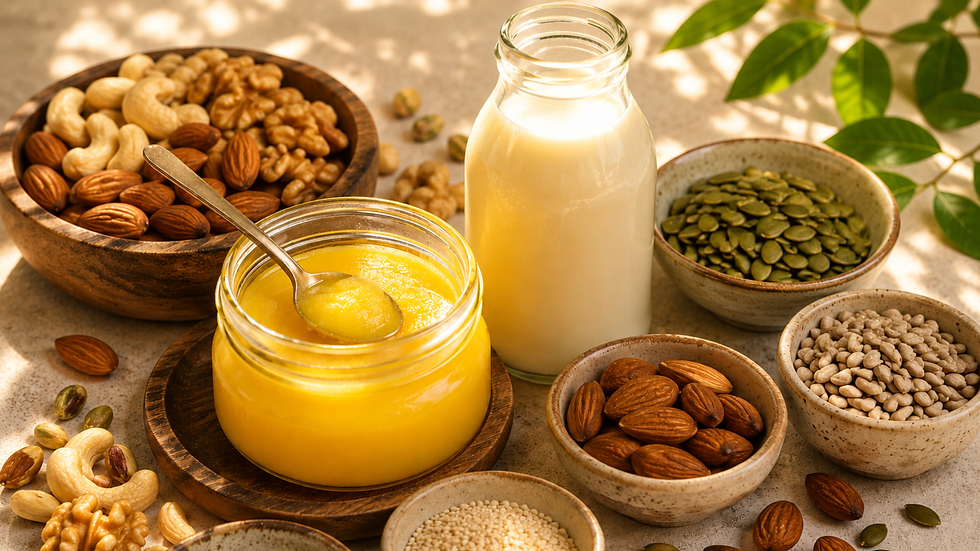
The seven dhatus are Ayurveda's seven foundational tissues that support strength, immunity, healthy aging, balanced hormones, and lasting vitality. Learn how they are formed, what each one does, and practical Ayurvedic ways to nourish them naturally.
Key Takeaways
The seven dhatus are the body's seven tissues that provide structure, nourishment, protection, and vitality.
Each dhatu is nourished in a specific sequence, beginning with healthy digestion.
Strong Agni supports healthy tissue formation, while Ama interferes with nourishment.
Healthy dhatus ultimately give rise to Ojas, Ayurveda's deepest reserve of vitality, immunity, and resilience.
Lifestyle habits, stress management, nourishing foods, quality sleep, and individualized Ayurvedic care all contribute to healthy tissue development.
Table of Contents

What Are the Seven Dhatus?
In Ayurveda, health is about much more than the absence of disease. It is the ongoing process of transforming the food we eat, the air we breathe, our daily experiences, and even our emotions into nourishment that supports every part of who we are.
This nourishment occurs through the seven dhatus, the body's seven primary tissues. The Sanskrit word dhatu means "that which supports" or "that which sustains." Together, the dhatus provide the physical foundation for growth, strength, immunity, reproduction, and longevity.
Rather than viewing the body as a collection of separate organs, Ayurveda recognizes that every tissue depends upon the health of the tissues before it. Each dhatu receives nourishment from the previous one, creating a beautiful chain of transformation that ultimately produces Ojas—the essence of vitality and resilience.
When this process flows smoothly, we often experience steady energy, healthy digestion, strong immunity, balanced hormones, clear skin, restorative sleep, and a greater ability to adapt to life's challenges.
How the Seven Dhatus Are Formed
One of the most unique aspects of Ayurveda is its emphasis on digestion.
The journey begins every time we eat. Healthy Agni, or digestive fire, breaks food down into nutrients that the body can absorb and transform. When digestion is strong, each dhatu receives the nourishment it needs before passing refined nutrition to the next tissue.
The sequence looks like this:
Food → Agni → Rasa → Rakta → Mamsa → Meda → Asthi → Majja → Shukra (Artava) → Ojas
Each tissue depends on the health of the one before it.
This is one reason Ayurveda focuses so much attention on strengthening digestion before introducing herbs or supplements. Even the most nourishing foods cannot build healthy tissues if digestion is impaired.

1. Rasa Dhatu – The Tissue of Nourishment
Rasa is the first tissue formed after healthy digestion. It provides the nourishment and hydration that every other dhatu depends upon. It is often compared to plasma and lymph because it carries nutrients throughout the body.
Primary role: Hydration, nourishment, and circulation
Healthy Rasa supports:
Hydration
Healthy skin
Emotional stability
Energy
Healthy circulation
Breast milk production
When Rasa becomes depleted, people may experience dryness, fatigue, poor hydration, or a general feeling of being undernourished.
2. Rakta Dhatu – The Tissue of Vitality
Rakta is often associated with blood, although its function extends beyond blood itself. It carries oxygen and nourishment throughout the body while supporting a healthy complexion, warmth, and vitality.
Primary role: Oxygenation and life force
Healthy Rakta supports:
Healthy circulation
Skin radiance
Physical stamina
Mental clarity
Healthy liver function
When Rakta becomes imbalanced, symptoms may include inflammation, skin concerns, overheating, or fatigue.
3. Mamsa Dhatu – The Tissue of Strength
Mamsa provides the body's strength, stability, and physical protection. Healthy muscles help support movement, posture, and the protection of vital organs.
Primary role: Muscles and structural support
Healthy Mamsa supports:
Muscle tone
Healthy posture
Joint stability
Physical endurance
Organ protection
Mamsa is nourished through healthy digestion, nourishing foods, appropriate movement, and adequate protein. Together, these support strength, stability, and resilience.
4. Meda Dhatu – The Tissue of Lubrication and Energy Storage
Meda is frequently misunderstood. Ayurveda does not view healthy body fat as something to be feared. Instead, Meda provides insulation, cushioning, lubrication, hormone production, and valuable energy reserves.
Primary role: Healthy fat tissue
Healthy Meda supports:
Joint lubrication
Hormone production
Healthy skin
Sustained energy
Protection of internal organs
Both excess and deficiency may contribute to imbalance, highlighting Ayurveda's emphasis on moderation rather than extremes.
5. Asthi Dhatu – The Tissue of Structure
Asthi provides the body's framework, giving strength and support to the skeletal system and connective tissues.
Primary role: Bones, teeth, and connective support
Healthy Asthi supports:
Strong bones
Healthy teeth
Healthy nails
Healthy hair
Structural stability
Throughout life, Asthi benefits from healthy digestion, nourishing foods, regular movement, and lifestyle habits that support strong bones and connective tissues.
6. Majja Dhatu – The Tissue of Communication
Majja nourishes both the nervous system and bone marrow, supporting communication throughout the body as well as healthy immune function.
Primary role: Bone marrow and nervous system
Healthy Majja supports:
Cognitive function
Memory
Emotional resilience
Healthy nerves
Immune function
Modern life places tremendous demands on Majja through chronic stress, inadequate sleep, overstimulation, and constant busyness.
This is one reason Ayurveda places such a strong emphasis on rest, meditation, diaphragmatic breathing, and consistent daily routines.
7. Shukra (Artava) Dhatu – The Tissue of Reproduction and Creativity
The final dhatu represents the body's reproductive tissue and its remarkable capacity for regeneration. In men, this tissue is known as Shukra. In women, Ayurveda recognizes the female reproductive tissue as Artava.
Primary role: Reproductive health and regeneration
Healthy reproductive tissue supports:
Fertility
Healthy hormones
Regeneration
Creativity
Longevity
Vitality
Ayurveda recognizes that reproductive health reflects the health of the entire body—not simply the reproductive organs themselves.
Together, the seven dhatus illustrate one of Ayurveda's most profound teachings: vibrant health is built layer by layer. As each tissue is properly nourished, it provides the foundation for the next, ultimately giving rise to Ojas—the refined essence of well-nourished tissues and Ayurveda's deepest expression of vitality and resilience.
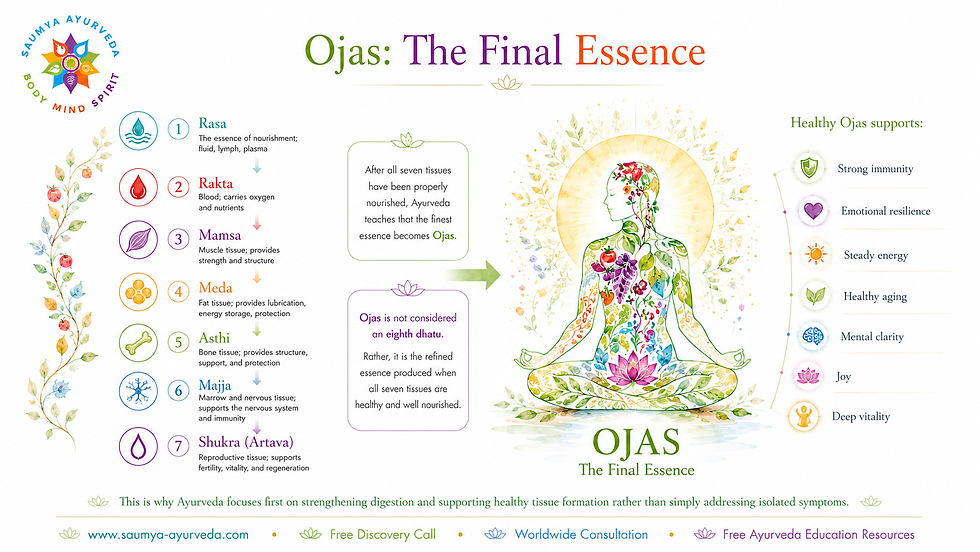
Ojas: The Final Essence
After all seven dhatus have been properly nourished, Ayurveda teaches that their finest essence becomes Ojas.
Ojas is not considered an eighth dhatu. Rather, it is the refined essence that develops when each tissue has been well nourished over time. In many ways, Ojas reflects the health of the entire body. It is the quiet reserve of vitality that supports your ability to adapt, recover, and thrive throughout life's changing seasons.
Healthy Ojas supports:
Strong immunity
Emotional resilience
Steady energy
Healthy aging
Mental clarity
Joy
Deep vitality
This beautifully illustrates one of Ayurveda's most profound teachings: lasting health is not created by chasing symptoms. It is cultivated by supporting the body's natural intelligence every day. When digestion is strong, nourishment is complete, and the seven dhatus are healthy, Ojas naturally develops as the body's deepest reserve of strength and resilience.
If you'd like to explore this remarkable concept more deeply, read Understanding Ojas: Ayurveda's Guide to Lasting Vitality, Energy & Resilience. In that guide, you'll learn how food, sleep, daily routines, stress management, and mindful living work together to protect and build Ojas so you can enjoy greater vitality, resilience, and well-being throughout every stage of life.

What Weakens the Dhatus?
Healthy tissue formation depends on much more than the food you eat. Every meal, thought, habit, daily routine, and even your environment influences your body's ability to digest, absorb, and transform nourishment into healthy tissues. When these natural processes are disrupted, the dhatus may not receive the nourishment they need to fully support your health.
Common contributors include:
Poor digestion, state of Agni
Irregular eating habits
An irregular daily schedule
Nutrient-poor or inadequate nutrition
Chronic stress
Inadequate sleep
Highly processed foods
Overwork
Excessive exercise
Emotional depletion
Long-term inflammation
Suppressing natural urges (such as hunger, thirst, or the need for rest)
Environmental toxins and pollutants
Living out of harmony with the seasons
Accumulation of Ama
Illness or chronic disease
Aging
Over time, these factors can interfere with healthy tissue formation, leaving the body with fewer resources to build strength, resilience, immunity, and vitality. The encouraging news is that the opposite is also true.
As digestion improves and nourishing foods, consistent daily routines, restorative sleep, stress management, and seasonal living become part of your life, the dhatus receive the support they need to flourish .
This is one of Ayurveda's most hopeful teachings: small, consistent choices made day after day have the power to strengthen your tissues and support vibrant health throughout every stage of life.
🌿 Saumya Self-Observation Exercise 🌿Observe Before You Change After your next meal, pause and ask yourself:
Simply notice your body's response without judgment. Ayurveda teaches that awareness is the first step toward making choices that nourish your seven dhatus and support lasting vitality. |

How to Nourish the Seven Dhatus
Fortunately, Ayurveda offers practical, time-tested ways to support healthy tissue formation every day. Although the body is continually renewing itself, the quality of that renewal depends on the choices you make day after day. Every nourishing meal, restful night of sleep, calming breath, and balanced routine becomes an investment in the health of your tissues.
Prioritize Healthy Digestion
Healthy tissues begin with healthy Agni. When digestion is strong, your body can efficiently digest food, absorb nutrients, and transform nourishment into each of the seven dhatus.
Choose Nourishing Foods
Freshly prepared, whole foods provide the building blocks for healthy tissues. Ayurveda also recognizes that there is no single diet for everyone. The most nourishing foods are those that are appropriate for your unique constitution, the season, and your digestive capacity.
Create a Consistent Daily Rhythm
The body thrives on consistency. Eating meals at regular times, maintaining a steady sleep schedule, and following a balanced daily routine help support healthy digestion, tissue repair, and natural renewal.
Protect Your Sleep
Many of the body's most important restorative processes occur during deep, restful sleep. Giving yourself adequate time to rest allows the dhatus to repair, replenish, and renew.
Reduce the Effects of Stress
Chronic stress can interfere with digestion and healthy tissue formation. Ayurveda encourages practices that calm the nervous system and help the body return to balance. Meditation, diaphragmatic breathing, spending time in nature, meaningful relationships, and quiet moments of reflection all help support the health of the dhatus.
Enjoy Regular Movement
Regular movement supports healthy circulation and helps deliver nourishment throughout the body. Choose activities that leave you feeling refreshed and energized rather than exhausted. Ayurveda reminds us that exercise should build vitality, not deplete it..
Live in Harmony with the Seasons
Your body's needs naturally change throughout the year. Adjusting your food, routines, and self-care practices with the seasons helps support balance and provides the nourishment your tissues need as the environment changes.
Honor Your Individuality
No two people have the same Prakriti (constitution) or current state of balance. Ayurveda recognizes that true healing is never one-size-fits-all. Personalized guidance can help identify which tissues may need additional support and provide recommendations tailored to your unique needs.
One of Ayurveda's greatest gifts is the reminder that vibrant health is built through consistency rather than perfection. Every nourishing meal, restful night of sleep, calming breath, and balanced daily routine supports your body's natural ability to renew itself.
Over time, these small daily choices strengthen the seven dhatus, creating the foundation for resilience, healthy aging, and the development of Ojas—Ayurveda's deepest expression of vitality.

Why the Seven Dhatus Matter
One of the greatest gifts Ayurveda offers is a broader perspective on health.
Rather than asking, "How do I get rid of this symptom?" Ayurveda invites us to ask a different question:
How well is my body being nourished?
When Agni is healthy, the body can properly digest, absorb, and transform nourishment into each of the seven dhatus. As these tissues become well nourished, they provide the foundation for strength, resilience, healthy aging, balanced hormones, steady energy, and vibrant health.
Perhaps one of Ayurveda's most hopeful teachings is that healing rarely happens overnight. It unfolds gradually through the small choices we make every day.
Every nourishing meal, calming breath, restful night's sleep, and balanced daily routine supports your body's natural ability to renew itself. Over time, these daily investments strengthen the seven dhatus, creating the foundation for lasting vitality and the development of Ojas—Ayurveda's deepest expression of health and resilience.

Frequently Asked Questions
What are the seven dhatus in Ayurveda?
The seven dhatus are the body's seven primary tissues: Rasa, Rakta, Mamsa, Meda, Asthi, Majja, and Shukra (Artava in women). Together they provide nourishment, structure, strength, immunity, reproduction, and vitality.
Why are the seven dhatus important?
The seven dhatus form the foundation of health in Ayurveda. Each tissue depends on the healthy nourishment of the one before it, ultimately supporting every aspect of physical, mental, and reproductive well-being.
Which dhatu is most important?
Each dhatu depends on the health of the previous one, so Ayurveda views all seven as essential. Healthy digestion allows each tissue to be properly nourished, creating the foundation for lasting vitality.
How are the seven dhatus formed?
The seven dhatus are formed through healthy digestion. Ayurveda teaches that properly digested food is gradually transformed into each tissue in sequence—from Rasa through Shukra (Artava)—eventually producing Ojas, the essence of vitality and resilience.
Is Ojas one of the seven dhatus?
No. Ojas is not considered a dhatu. It is the refined essence produced when all seven dhatus are healthy and well nourished.
What weakens the seven dhatus?
Poor digestion, irregular eating habits, chronic stress, inadequate sleep, highly processed foods, overwork, and the accumulation of Ama can interfere with healthy tissue formation and nourishment.
Can the dhatus be strengthened naturally?
Yes. Ayurveda emphasizes strengthening digestion, eating nourishing foods, maintaining consistent daily routines, managing stress, getting restorative sleep, and following an individualized approach based on your unique constitution.
How long does it take to nourish the seven dhatus?
Ayurveda views tissue nourishment as a continual process rather than something that happens overnight. Every wholesome meal, restful night of sleep, calming breath, and healthy daily habit contributes to building stronger tissues over time.
Do the seven dhatus relate to modern anatomy?
The dhatus are not direct equivalents to specific organs or tissues recognized in modern medicine. Instead, they are functional Ayurvedic concepts that describe how the body develops, nourishes, and maintains its tissues and overall vitality.
How can I tell if one of my dhatus is out of balance?
Signs of imbalance vary depending on which dhatu is affected and your unique constitution. An Ayurvedic assessment considers your digestion, lifestyle, symptoms, and overall patterns to determine which tissues may need additional support.

Glossary Ayurvedic Terms
Agni: The digestive fire responsible for breaking down food and transforming it into nourishment. Healthy Agni is essential for building strong tissues and maintaining overall health.
Ama: Metabolic waste that forms when digestion is incomplete. Ama can interfere with the nourishment of the tissues and contribute to imbalance and disease.
Artava: The female reproductive tissue in Ayurveda. Often discussed alongside Shukra, Artava supports fertility, menstruation, regeneration, and healthy reproductive function.
Asthi Dhatu: The fifth dhatu, representing the body's bones, teeth, nails, hair, and structural framework. Asthi provides stability, support, and protection.
Dhatu: A Sanskrit word meaning "that which supports" or "that which sustains." The seven dhatus are the body's primary tissues that provide structure, nourishment, protection, and vitality.
Majja Dhatu: The sixth dhatu, associated with the bone marrow and nervous system. Majja supports cognitive function, memory, emotional resilience, healthy nerves, and immune function.
Mamsa Dhatu: The third dhatu, representing the muscles and soft tissues of the body. Mamsa provides strength, posture, endurance, and protection for the internal organs.
Meda Dhatu: The fourth dhatu, representing healthy fat tissue. Meda provides lubrication, insulation, hormone production, energy storage, and protection for the body's organs.
Ojas: The refined essence produced when all seven dhatus are healthy and well nourished. Ojas supports vitality, immunity, resilience, mental clarity, and healthy aging.
Prakriti: Your unique Ayurvedic constitution, established at conception. Prakriti reflects your natural balance of the three doshas and remains constant throughout life.
Rakta Dhatu: The second dhatu, commonly associated with blood and circulation. Rakta carries oxygen and nourishment throughout the body while supporting vitality, complexion, and warmth.
Rasa Dhatu: The first dhatu, formed directly from properly digested food. Rasa nourishes the entire body and is associated with hydration, circulation, lymph, and plasma.
Shukra Dhatu: The seventh dhatu, representing the male reproductive tissue. Shukra supports fertility, regeneration, creativity, vitality, and longevity.
Srotas: The body's network of channels that transport nutrients, waste products, and vital substances throughout the body. Healthy srotas are essential for proper tissue nourishment.
Vikriti: Your current state of balance or imbalance. Unlike Prakriti, Vikriti changes over time in response to diet, lifestyle, stress, environment, and life stage.

Continue Your Ayurveda Knowledge Journey
Understanding the seven dhatus is just one part of Ayurveda's timeless approach to health. Continue exploring the interconnected principles that nourish your body, strengthen your vitality, and support lasting balance.
1. Learn the Foundations of Ayurveda
Understanding Ojas: Ayurveda's Guide to Lasting Vitality, Energy & Resilience
What Is Prakriti vs. Vikriti? Understanding Your Ayurvedic Constitution and Current Imbalance
The Five Elements in Ayurveda: Understanding Yourself Through Nature
The Three Malas: Ayurveda’s Guide to Healthy Elimination, Digestion & Balance
2. Build a Strong Foundation
3. Better Understand Your Unique Constitution
4. Support Your Vitality Naturally
How to Do Abhyanga Massage at Home: Benefits, Oils, and Step-by-Step Guide
Why Seasonal Transitions Matter for Ojas: An Ayurveda Guide to Immunity and Resilience (Coming Septemner 2026)
5. Explore Common Health Challenges Through an Ayurvedic Lens
7 Ayurvedic Remedies for Maintaining Healthy Blood Pressure Naturally
Gut-Brain Connection in Ayurveda: Reduce Anxiety Through Digestion
Leaky Gut Syndrome in Ayurveda: Causes, Symptoms, Diet, and Natural Healing
Histamine Intolerance: Symptoms, Causes, Diet, and Ayurvedic Treatment for Natural Relief
MCAS Natural Treatment: Ayurvedic Diet, Herbs, and Root Causes
Our Commitment to Accessible Ayurveda Education
At Saumya Ayurveda, we believe Ayurveda's transformative ancient wisdom belongs to everyone—not just those who can afford it. That's wsa
hy we're committed to making high-quality, authentic Ayurveda education available globally, free of charge.
Through our free eBooks, guides, and educational resources, we offer practical, grounded wisdom to help those seeking greater balance, vitality, and wellbeing integrate Ayurveda into their daily lives.
Accessible. Authentic. Free. Just as it was meant to be.
Free Ayurveda eBooks – Download practical guides, recipes, and wellness resources to support your health journey.
Ayurveda Blog – Enjoy easy-to-read articles, seasonal wellness tips, healthy recipes, and everyday inspiration—always educational, never a sales pitch.
Free Guided Traditional Progressive Meditations – Practice authentic, step-by-step guided meditations to cultivate calm, focus, and inner stillness.
Monthly Educational Newsletter – Receive seasonal Ayurveda insights, new articles, healthy recipes, and free resources delivered to your inbox each month.

Final Thoughts
The seven dhatus remind us that health is not created by a single superfood, supplement, or quick fix. It is built gradually through countless acts of nourishment that support the body's remarkable ability to heal.
At Saumya Ayurveda, we believe healing begins by understanding your unique constitution and working with your body rather than against it. Whether you're seeking more energy, balanced hormones, stronger immunity, healthier digestion, or greater resilience, Ayurveda offers a time-tested path that begins with the simple question:
How can I better nourish myself today?
If you'd like personalized guidance, we invite you to schedule a complimentary Discovery Call to learn how Ayurveda can support your unique journey toward lasting health.

What Our Clients Say | Saumya Ayurveda Testimonials
Real Transformations Through Ayurveda Consultation
Physician Testimonial (Medical Endorsement)
“As a physician, I have always believed that prevention is better than cure. In today’s healthcare environment, Ayurveda offers a logical and natural approach to long-term health and prevention.
I began working with Veena during a very demanding phase of my life, and she made the process accessible even within my busy schedule. I was encouraged to follow a steady, sustainable approach focused on real lifestyle change.
Over time, I experienced meaningful improvements in balance, energy, and well-being. In my medical practice, I now see many patients with similar stress- and diet-related imbalances, which has further reinforced my trust in Ayurvedic principles.
I have since referred several patients to Saumya Ayurveda and consider Veena a valuable resource in supporting holistic well-being.”
Dr. Gauri Nagargoje
M.D., Oncology & Hematology
Physician Testimonial (Medical Endorsement)
“As a physician, I initially struggled with Ayurveda’s simplicity and depth, but Veena’s guidance made it practical, scientific, and deeply effective.
Veena has transformed my health and perspective on healing. I experienced significant improvements in focus, digestion, stress response, and overall vitality.
Her personalized approach made lifestyle changes easy and sustainable.
This journey not only improved my health but also inspired a lifelong commitment to integrating Ayurveda into holistic healthcare.”
Dr. Jessica Bedi
D.O., & Ayurvedic Doctor


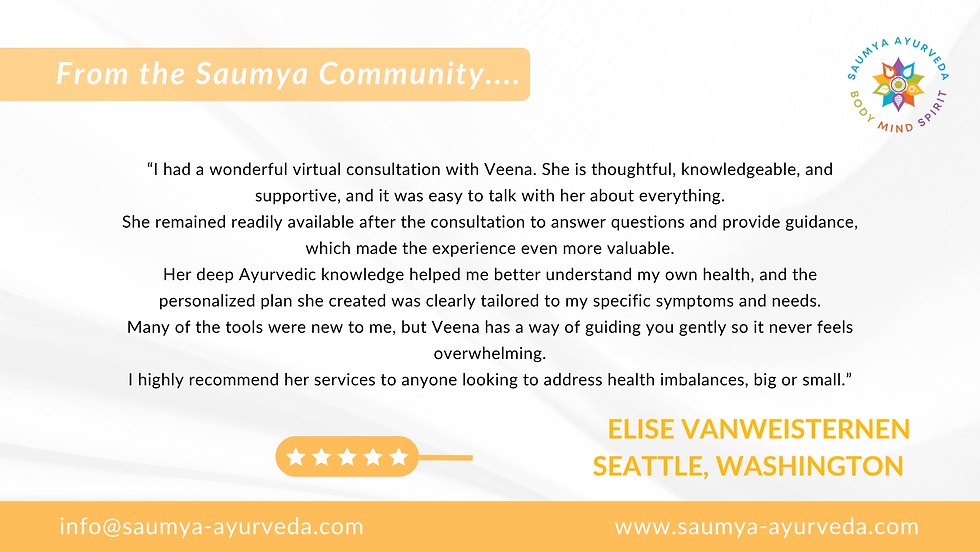
Rachel R., Denver, Colorado, USA
Explore more client success stories from Saumya Ayurveda and see how Ayurveda supports healing, balance, and transformation.

Discover the Saumya Ayurveda Way
Ayurveda begins with seeing the whole person.
At Saumya Ayurveda, symptoms are not viewed in isolation. Ayurveda looks at the relationship between digestion, elimination, sleep, stress, energy, daily rhythms, mind, stage of life, season, climate, constitution, and current dosha imbalances to understand the patterns that influence how you feel.
When health concerns persist, it can be frustrating to feel that individual symptoms are being addressed without understanding the bigger picture. Ayurveda offers another way—one that asks not only “What is the symptom?” but also “What are the body and mind communicating?”
Personalized Ayurveda, Rooted in Tradition
Saumya Ayurveda combines classical Ayurvedic principles with practical guidance for modern life. Your Ayurveda plan is based on your individual prakriti (natural constitution), virkriti (current imbalances of the doshas), lifestyle, and circumstances—not a generic dosha checklist or one-size-fits-all protocol.
The goal is not to overwhelm you with rules. It is to help you understand your own body and mind, and make sustainable changes that fit naturally into your life, informed by the wisdom of Ayurveda.
For those who want ongoing support, concierge-style Ayurveda consultation packages provide personalized guidance, thoughtful follow-up, and practical tools to help turn Ayurvedic principles into everyday habits.
Education First. Personalized Guidance When You Need It.
Veena takes an education-first, client-centered approach. At Saumya Ayurveda, our favorite product is knowledge. You won’t find education built around selling a supplement, herb, or wellness product. Instead, you’ll find traditional Ayurvedic perspectives, practical guidance, and timeless principles that help you better understand your body, mind, and unique constitution.
When understanding deepens, better choices naturally follow.
For those who want ongoing support, Saumya Ayurveda consultation packages provide personalized guidance, thoughtful follow-up, and practical tools to help turn Ayurvedic principles into everyday habits.
Learn. Observe. Understand. Transform.
Begin your Ayurveda journey with a free 15-minute Discovery Call with Veena and explore whether personalized Ayurvedic guidance is right for you.

Meet Veena: Your Trusted Ayurvedic Guide for Clients Worldwide
Veena Blilie is a Certified Ayurvedic Practitioner, Ayurveda teacher, meditation guide, and monk with over three decades of experience helping clients worldwide achieve greater balance and well-being through Ayurveda.
As founder of Saumya Ayurveda and President Emeritus of the Meditation Center, Veena serves clients worldwide through personalized Ayurvedic wellness guidance, meditation, and yoga practices.
Saumya Ayurveda has been recognized as the #1 Ayurveda cooking blog and the #3 Ayurveda website and blog and has received multiple consecutive awards for best wellness practice.
Through her work, Veena shares practical Ayurvedic guidance, nourishing recipes, and wellness education for modern living.
Inspired from an early age by learning herbal remedies, food as medicine, and traditional healing practices at her grandmother’s knee, Veena combines traditional Ayurvedic wisdom with compassionate, accessible guidance that supports mental, physical, and spiritual well-being.
Known for her warmth, humor, intuitive approach, and accessible style, Veena empowers people to create sustainable health through personalized Ayurvedic wellness plans designed to fit naturally into everyday life.
Veena is also the author of several free Ayurveda eBooks and writes the educational articles published on the Saumya Ayurveda blog.
As seen in:
Voice America
Albuquerque The Magazine
Learn more about Veena and her work through Saumya Ayurveda.
Disclaimer: This information is for educational purposes only and is not a substitute for professional medical advice. Ayurveda works best when tailored to your unique doshic profile, so it’s essential to understand your constitution and imbalances before using herbs, foods, or lifestyle practices. Consult a Certified Ayurvedic Practitioner for personalized guidance.