Gut-Brain Connection in Ayurveda: Reduce Anxiety Through Digestion

Updated: Jul 30
Anxiety is closely linked to digestion through the gut-brain axis, a two-way communication system connecting the digestive system and the brain. The enteric nervous system, often called the “second brain,” is located within the walls of the digestive system and plays a major role in this ongoing communication between the gut and the nervous system.
Ayurveda teaches that when digestion (Agni) is strong and the doshas are balanced, the nervous system calms naturally, reducing stress and anxiety.
Simple Ayurvedic practices—like mindful eating, digestive herbs, daily routines, and breathwork—support a healthy gut, nourish the microbiome, and promote emotional balance. In this article, you’ll learn how to harness the power of Ayurveda to restore gut health and reduce anxiety naturally, so your mind and body feel aligned, calm, and resilient.
Try the Saumya two-minute meditation with us—pause right now, breathe along, and feel for yourself how it gently calms your nervous system and draws you into a deeper sense of stillness.

Anxiety and digestion are deeply connected. Discover how the gut-brain connection influences your mood, stress response, and digestive health—and learn practical Ayurvedic strategies to calm the nervous system by strengthening digestion, balancing the doshas, and supporting a healthier gut.
Table of Contents

Understanding the Gut-Brain Connection
The gut-brain connection works through a complex network of neural, hormonal, immune, and microbial pathways that continuously link the digestive system and the brain.
The enteric nervous system, located within the walls of the digestive tract, plays a major role in this communication and is often referred to as the “second brain.”
This is why your mood, stress levels, and emotional wellbeing can be influenced by what you eat, how well you digest food, and the overall health of your gut microbiome.
When digestion is imbalanced, signals traveling between the gut and brain may also become disrupted, potentially contributing to anxiety, tension, brain fog, and digestive discomfort.
Key Pathways:
Vagus Nerve Communication: The vagus nerve connects the gut to the brain. Signals sent along this nerve influence stress, anxiety, and overall mental health. Research indicates that supporting gut function and the vagus nerve can help reduce anxiety naturally (Bonaz et al., 2018).
Gut Microbiome and Neurotransmitters: The microbiome produces neurotransmitters such as serotonin, dopamine, and GABA, which are critical for mood regulation. Dysbiosis—or an imbalance in gut bacteria—has been linked to anxiety and depression (Clarke et al., 2013).
Immune and Inflammatory Pathways: Inflammation in the gut can affect brain function and stress levels. Ayurvedic practices that promote digestion can reduce inflammation, supporting both mental wellness and digestive health.
Hormonal Feedback Loops: Stress hormones like cortisol affect digestion and gut bacteria. This creates a cycle where anxiety worsens digestion, and poor digestion worsens anxiety (Mayer et al., 2015).

How Ayurveda Views Anxiety and Digestion
Ayurveda sees anxiety as a mind-body imbalance closely connected to digestion. Anxiety is often associated with an aggravated Vata dosha, which governs movement, communication, and nervous system activity throughout the body.
Vata influences everything from breathing and circulation to thought patterns, elimination, and the movement of food through the digestive tract.
Modern science also recognizes the powerful relationship between the gut and the nervous system through the enteric nervous system, often called the “second brain.” Located within the walls of the digestive system, the enteric nervous system contains millions of nerve cells that constantly communicate with the brain through the gut-brain axis.
This ongoing communication helps explain why emotional stress can affect digestion—and why digestive imbalance can influence mood, stress, and anxiety.
When Vata becomes aggravated, the nervous system may become overstimulated, contributing to symptoms such as restlessness, overthinking, insomnia, constipation, bloating, and irregular digestion. Ayurveda teaches that calming Vata and strengthening digestion can help support both emotional balance and digestive health simultaneously.

Core Ayurvedic Concepts:
Agni (Digestive Fire): Proper digestion ensures the body absorbs nutrients effectively. Weak Agni produces Ama (toxins), which can disturb both the gut and mind.
Ojas (Vital Essence): Ojas supports immunity and emotional resilience. Strong digestion nourishes Ojas and reduces stress.
Dosha Balance: Harmony between Vata, Pitta, and Kapha is essential for mental and digestive health.
Common Dosha Imbalances Related to Anxiety
An aggravated Vata dosha is most commonly associated with anxiety in Ayurveda. Because Vata governs movement and nervous system activity, imbalance may contribute to overthinking, restlessness, fear, insomnia, bloating, gas, constipation, and irregular digestion.
An aggravated Pitta dosha may create intensity within both the mind and digestive system. Pitta imbalance can contribute to irritability, frustration, anger, acid reflux, excessive hunger, inflammation, loose stools, and feeling “heated” emotionally or physically.
An aggravated Kapha dosha may contribute to emotional heaviness, sluggishness, attachment, lethargy, slow digestion, congestion, water retention, and low motivation. Excess Kapha can also leave the mind feeling dull or emotionally stuck.
Ayurveda teaches that restoring balance to the doshas through personalized nutrition, lifestyle practices, digestion support, herbs, and daily routine can help support both emotional wellbeing and digestive health.

Ayurvedic Remedies for Anxiety and Gut Health
Modern science aligns with Ayurvedic wisdom: supporting gut health improves neurotransmitter production, reduces inflammation, and naturally lowers anxiety.
By incorporating Ayurvedic remedies for anxiety, such as herbal support, dosha-balancing diets, mindful routines, and breathwork, you can strengthen the Gut-Brain Connection in Ayurveda and promote lasting emotional and digestive wellness.

Ayurveda is effective because it provides personalized remedies tailored to your unique body, mind, and spirit, rather than a one-size-fits-all approach. It considers factors like doshas, Prakruti and Vikruti, agni, ama, life stage, and climate to find what supports your balance. Using the wrong herb can cause dosha imbalances. -Veena, Saumya Ayurveda

Ayurvedic Food as Medicine Tips for Anxiety
Prioritize warm, cooked meals to stabilize Vata.
Eat probiotic foods to support the gut microbiome and neurotransmitter balance.
Avoid cold, raw, or overly processed foods that disrupt digestion.
Include warming digestive herbs & spices:
Ajwan, Allspice, Anise, Basil, Bay Leaf, Black Pepper
Caraway, Cardamom, Cinnamon, Cloves, Coriander, Cumin
Dill, Fennel, Garlic, Ginger, Asafoetida (Hing)
Mace, Marjoram, Mint, Mustard Seeds, Nutmeg, Oregano
Paprika, Parsley, Peppermint, Pippali, Poppy Seeds, Rosemary
Saffron, Salt, Savory, Tarragon, Thyme, Turmeric, Vanilla
Ayurveda teaches that when digestion (Agni) is strong and balanced, the nervous system calms naturally.
Download your free eBook: Ayurveda Recipes for Balancing Vata Dosha

Daily Ayurvedic Routine for the Gut-Brain Connection
Creating a consistent daily routine (Dinacharya) helps balance doshas, support digestion, and reduce anxiety naturally. Establishing an Ayurvedic routine is crucial as it shapes the tone of your day, enhancing productivity, happiness, and stress management. A well-crafted routine sets the stage for a positive start each day and provides you with more energy and focus.
Try these Ayurvedic routines for daily gut-brain and stress support:
Ayurvedic Lifestyle Practices: How to Build an Ayurvedic Morning Routine – Start your day with mindful practices that support digestion, balance doshas, and reduce anxiety naturally.
10 Ayurvedic Evening Rituals for a Calming Night – Wind down with evening rituals that promote restful sleep, nervous system balance, and gut-brain wellness.
Follow this Ayurvedic daily routine to support the Gut-Brain Connection in Ayurveda, strengthen digestion, balance the doshas, and reduce anxiety throughout the day. Each activity—from morning warm water to evening meditation—offers specific Ayurvedic benefits and promotes mental and digestive wellness.
Daily Routine Table (Morning to Night)
 | Ayurvedic Daily Routine | |
Time of Day / Activity (Ayurvedic Routine) | Ayurvedic Benefits & Dosha Support | Gut-Brain & Anxiety Impact |
Morning: Warm water with ginger & honey | Stimulates Agni, balances Vata | Supports gut microbiome, aids digestion, improves energy |
Balances Vata, calms nervous system | Reduces stress, improves vagal tone, supports Gut-Brain Connection in Ayurveda | |
Morning: Abhyanga (oil massage) | Grounds Vata, nourishes Ojas | Enhances circulation, supports digestion, reduces anxiety |
Breakfast: Warm porridge with spices | Nourishes Agni & Ojas | Supports nutrient absorption, serotonin production, microbiome balance |
Lunch: Cooked vegetables with rice + digestive spices | Balances Vata & Pitta | Prevents bloating, promotes healthy gut microbes, stabilizes energy |
Afternoon: Vata Beverages and teas | Calms nervous system, balances Vata | Lowers cortisol, reduces stress & anxiety, supports gut-brain signaling |
Evening: Meditation / diaphragmatic breathing | Stabilizes Vata, calms mind | Reduces stress hormones, improves gut motility, enhances emotional balance |
Night: Consistent bedtime with Ayurveda Evening Routine | Supports circadian rhythm | Enhances digestion, nervous system regulation, mental clarity |

Mind-Body Practices to Support Digestion and Anxiety Relief
Yoga: Gentle asanas such as Child Pose, Cat-Cow, and Forward Fold improve digestion and calm the nervous system.
Pranayama: Breathing exercises like Alternate Nostril Breathing stimulate the vagus nerve and reduce anxiety.
Meditation and Mindful Eating: Slows the mind, lowers cortisol, and improves gut motility.
Consistent Routine: Following regular sleep and meal times stabilizes Vata and promotes mental wellness.
Simple Ayurvedic practices—like mindful eating, digestive herbs, daily routines, and diaphragmatic breathing—support a healthy gut, activate the parasympathetic nervous system, and help calm the mind naturally.
Another helpful article: The Best Asana and Pranayama for Your Dosha: A Guide for Vata, Pitta, and Kapha
Try the Saumya two-minute meditation with us—pause right now, breathe along, and feel for yourself how it gently calms your nervous system and draws you into a deeper sense of stillness.

Scientific Evidence Linking Ayurveda and Gut Health
Growing scientific research supports many of Ayurveda's traditional approaches to digestive and emotional well-being.
Ashwagandha: Research suggests it may help reduce cortisol levels and support a healthy response to stress.
Brahmi: Studies indicate it may improve memory, cognitive function, and emotional resilience.
Probiotics: A growing body of research links a healthy gut microbiome with improved mood and reduced anxiety.
Yoga and Meditation: Clinical studies show these practices may lower stress hormones, improve vagal tone, and support healthy digestion.
"Herbs are most effective when personalized. A Certified Ayurvedic Practitioner selects herbs based on your doshas, Prakriti, Vikriti, Agni, Ama, stage of life, and climate. Because the wrong herb can worsen imbalances, individualized guidance is essential."— Veena Blilie
Practical Tips to Reduce Anxiety Naturally Through Digestion
These simple daily habits can help strengthen digestion, support the gut-brain connection, and promote emotional well-being.
Eat warm, freshly prepared meals and limit excessive raw, cold, or highly processed foods.
Cook with digestive spices such as ginger, fennel, cumin, and coriander to support healthy Agni.
Practice mindful eating by slowing down, chewing thoroughly, and minimizing distractions during meals.
Establish a consistent daily routine (Dinacharya) to help balance the doshas and regulate the nervous system.
Practice diaphragmatic breathing before meals or during times of stress to encourage relaxation and healthy digestion.
Include fermented or probiotic-rich foods when appropriate to support a healthy gut microbiome.
Seek personalized Ayurvedic guidance for dietary and herbal recommendations based on your unique constitution and current imbalances.

Frequently Asked Questions
Can poor gut health cause anxiety?
Yes. The gut and brain are connected through a complex communication network known as the gut-brain axis. Ayurveda has recognized this relationship for thousands of years, teaching that impaired digestion (Agni), accumulated Ama (toxins), and dosha imbalances can affect both digestive and emotional health. Modern research also shows that gut microbes, inflammation, and the nervous system influence mood, stress, and anxiety.
What is the gut-brain connection in Ayurveda?
Ayurveda teaches that digestion and mental well-being are inseparable. Healthy Agni transforms food into nourishment for every tissue while supporting a balanced nervous system and a clear, calm mind. When digestion becomes impaired, both physical symptoms and emotional imbalances may develop.
Which dosha is most commonly associated with anxiety?
An aggravated Vata dosha is most commonly linked to anxiety because it governs the nervous system, movement, and the mind. Symptoms may include excessive worry, racing thoughts, nervousness, insomnia, gas, bloating, and irregular digestion. However, Pitta and Kapha imbalances can also contribute to anxiety in different ways.
Can improving digestion help reduce anxiety naturally?
Healthy digestion supports nutrient absorption, reduces inflammation, promotes a balanced gut microbiome, and helps regulate communication between the gut and brain. Ayurveda strengthens this connection through personalized nutrition, daily routine, stress management, breathing practices, and lifestyle recommendations.
What foods support the gut-brain connection?
Ayurveda generally recommends warm, freshly prepared, easy-to-digest meals that strengthen Agni and reduce digestive stress. The best foods depend on your dosha, digestive strength, current imbalances, season, and stage of life, making individualized recommendations important.
Which Ayurvedic herbs support the gut-brain connection?
Common herbs include ashwagandha, brahmi (Bacopa monnieri), triphala, ginger, fennel, and cumin. Each herb serves a different purpose, such as calming the nervous system, supporting healthy digestion, or promoting a balanced gut microbiome. Because Ayurveda is individualized, herbs should be selected by a Certified Ayurvedic Practitioner.
How long does it take to improve the gut-brain connection?
Every person is different. Some people notice improvements in digestion, sleep, or stress within a few weeks of making dietary and lifestyle changes, while deeper healing may take several months. Ayurveda focuses on creating sustainable habits that support long-term digestive and emotional health rather than providing a quick fix.
Can Ayurveda help with chronic stress and anxiety?
Ayurveda offers a comprehensive approach that addresses the root causes of imbalance through nutrition, digestion, daily routine (Dinacharya), stress management, breathing practices, meditation, sleep, and personalized herbal support. It works alongside conventional medical and mental health care when appropriate.
When should I consult a Certified Ayurvedic Practitioner?
If you experience persistent digestive problems, anxiety, chronic stress, or both, a Certified Ayurvedic Practitioner can evaluate your doshas, Prakriti, Vikriti, Agni, Ama, stage of life, and health goals to create a personalized plan. Because Ayurveda is individualized, professional guidance helps ensure recommendations are safe, appropriate, and effective.
Is Ayurveda a substitute for medical or mental health care?
No. Ayurveda is a complementary system of health that supports the body's natural healing processes through personalized nutrition, lifestyle, herbs, and daily practices. It should not replace medical or mental health care. If you have severe anxiety, depression, digestive disease, or other ongoing health concerns, consult a qualified healthcare professional.

Glossary of Ayurvedic Terms
Agni (Digestive Fire) The body's digestive and metabolic power. Strong Agni transforms food into nourishment, supports healthy tissues, and promotes both digestive and mental well-being.
Ama The toxic byproduct of incomplete digestion and metabolism. Ayurveda teaches that Ama accumulates when Agni is weak and can contribute to digestive problems, inflammation, and imbalance throughout the body.
Ashwagandha A traditional Ayurvedic herb classified as a Rasayana. It is commonly used to support a healthy stress response, nourish the nervous system, and promote resilience.
Brahmi (Bacopa monnieri) A revered Ayurvedic herb traditionally used to support memory, concentration, mental clarity, and a calm, balanced mind.
Dinacharya Ayurveda's daily routine that aligns lifestyle habits with the body's natural rhythms to support digestion, balance the doshas, and promote long-term health.
Doshas The three biological energies—Vata, Pitta, and Kapha—that govern all physical, mental, and emotional functions. Every individual has a unique combination of all three doshas.
Kapha The dosha composed of Earth and Water. Kapha provides structure, stability, lubrication, and endurance. When aggravated, it may contribute to sluggish digestion, congestion, lethargy, and emotional heaviness.
Ojas The body's vital essence that supports immunity, vitality, resilience, and emotional stability. Ayurveda teaches that healthy digestion and balanced living help build and protect Ojas.
Pitta The dosha composed primarily of Fire and Water. Pitta governs digestion, metabolism, transformation, and intellect. When out of balance, it may contribute to inflammation, irritability, heartburn, and loose stools.
Prakriti Your unique Ayurvedic constitution established at birth. Prakriti represents your natural balance of the doshas and serves as the foundation for personalized Ayurvedic care.
Pranayama Yogic breathing practices that regulate the breath to calm the nervous system, increase energy, and support mental clarity and emotional balance.
Triphala A traditional Ayurvedic herbal formula made from three fruits that gently supports digestion, elimination, and healthy bowel function.
Vata The dosha composed of Air and Space. Vata governs movement, the nervous system, breathing, circulation, elimination, and communication. When aggravated, it is commonly associated with anxiety, restlessness, bloating, constipation, and irregular digestion.
Vikriti Your current state of balance or imbalance. Unlike Prakriti, Vikriti changes over time in response to diet, lifestyle, stress, the seasons, and stage of life.

Continue Your Ayurveda Knowledge Journey
The gut-brain connection is just one part of Ayurveda's holistic approach to health. Continue exploring the timeless principles that strengthen digestion, calm the nervous system, and support lasting balance throughout your body and mind.
1. Learn the Foundations of Ayurveda
2. Build a Strong Foundation
3. Better Understand Your Unique Constitution
4. Support Your Vitality Naturally
How to Do Abhyanga Massage at Home: Benefits, Oils, and Step-by-Step Guide
Why Seasonal Transitions Matter for Ojas: An Ayurveda Guide to Immunity and Resilience (Coming September 8th, 2026)
5. Explore Common Health Challenges Through an Ayurvedic Lens
7 Ayurvedic Remedies for Maintaining Healthy Blood Pressure Naturally
Gut-Brain Connection in Ayurveda: Reduce Anxiety Through Digestion
Leaky Gut Syndrome in Ayurveda: Causes, Symptoms, Diet, and Natural Healing
Histamine Intolerance: Symptoms, Causes, Diet, and Ayurvedic Treatment for Natural Relief
MCAS Natural Treatment: Ayurvedic Diet, Herbs, and Root Causes
Our Commitment to Accessible Ayurveda Education
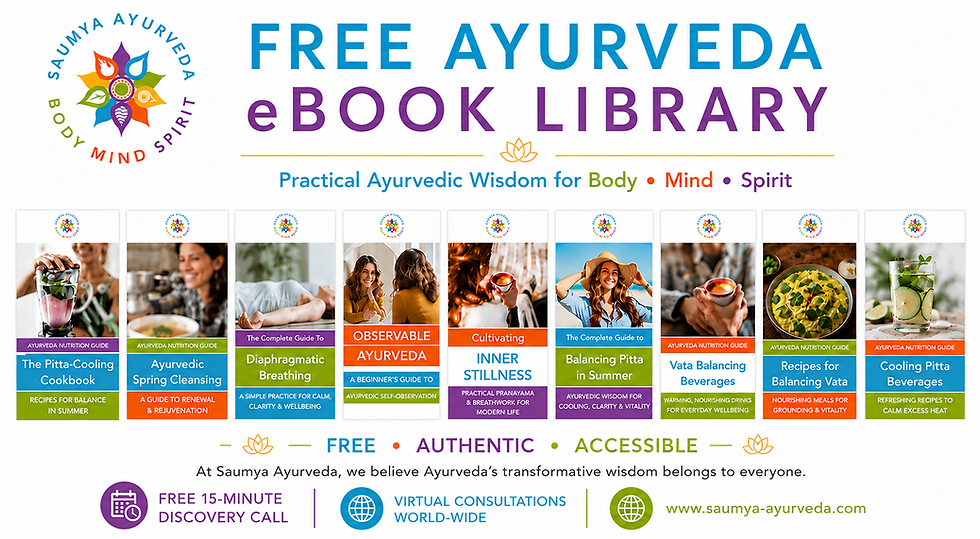
At Saumya Ayurveda, we believe Ayurveda's transformative ancient wisdom belongs to everyone—not just those who can afford it. That's why we're committed to making high-quality, authentic Ayurveda education available globally, free of charge.
Through our free eBooks, guides, and educational resources, we offer practical, grounded wisdom to help those seeking greater balance, vitality, and wellbeing integrate Ayurveda into their daily lives.
Accessible. Authentic. Free. Just as it was meant to be.
Free Ayurveda eBooks – Download practical guides, recipes, and wellness resources to support your health journey.
Ayurveda Blog – Enjoy easy-to-read articles, seasonal wellness tips, healthy recipes, and everyday inspiration—always educational, never a sales pitch.
Free Guided Traditional Progressive Meditations – Practice authentic, step-by-step guided meditations to cultivate calm, focus, and inner stillness.
Monthly Educational Newsletter – Receive seasonal Ayurveda insights, new articles, healthy recipes, and free resources delivered to your inbox each month.

Final Thoughts
The connection between your gut and your brain is far more powerful than many people realize. Ayurveda has long recognized that digestion influences not only how your body is nourished, but also how you think, feel, respond to stress, and experience daily life.
Rather than treating digestive symptoms and anxiety as separate concerns, Ayurveda views them as interconnected expressions of your overall health. By strengthening Agni, reducing Ama, balancing your doshas, and cultivating healthy daily habits, you create the conditions for both your digestive system and nervous system to thrive.
Healing doesn't happen through a single remedy. It grows from the small, consistent choices you make every day. By caring for your digestion, you also nurture your mind, build resilience, and create a stronger foundation for lifelong health.
A healthy gut helps cultivate a calmer mind, and a calmer mind supports healthier digestion. That timeless relationship is one of Ayurveda's greatest teachings—and one of its greatest gifts.

What Our Clients Say | Saumya Ayurveda Testimonials
Real Transformations Through Ayurveda Consultation
Physician Testimonial (Medical Endorsement)
“As a physician, I have always believed that prevention is better than cure. In today’s healthcare environment, Ayurveda offers a logical and natural approach to long-term health and prevention.
I began working with Veena during a very demanding phase of my life, and she made the process accessible even within my busy schedule. I was encouraged to follow a steady, sustainable approach focused on real lifestyle change.
Over time, I experienced meaningful improvements in balance, energy, and well-being. In my medical practice, I now see many patients with similar stress- and diet-related imbalances, which has further reinforced my trust in Ayurvedic principles.
I have since referred several patients to Saumya Ayurveda and consider Veena a valuable resource in supporting holistic well-being.”
Dr. Gauri Nagargoje
M.D., Oncology & Hematology
Physician Testimonial (Medical Endorsement)
“As a physician, I initially struggled with Ayurveda’s simplicity and depth, but Veena’s guidance made it practical, scientific, and deeply effective.
Veena has transformed my health and perspective on healing. I experienced significant improvements in focus, digestion, stress response, and overall vitality.
Her personalized approach made lifestyle changes easy and sustainable.
This journey not only improved my health but also inspired a lifelong commitment to integrating Ayurveda into holistic healthcare.”
Dr. Jessica Bedi
D.O., & Ayurvedic Doctor
Ayurveda for Anxiety Relief and Restoring Energy
Sudha Ayyalasomayajula
“Vaidya Veena has been nothing short of a miracle in my life. I was living in the shadows of dullness, anxiety, and helplessness, where even daily chores felt like mountains to climb. Through her compassionate care and deep understanding of Ayurveda, she helped guide me back into the light.
For more than a year, I searched for answers with many experts. Yet with her Ayurvedic wisdom and intuitive insight, she gently helped uncover the root causes of what I was experiencing. Instead of focusing only on symptoms, she helped restore balance to my body and mind.
Her approach brought clarity, calm, and renewed vitality to my life. Days that once felt lifeless now feel vibrant again. I will always be grateful for her guidance. She didn’t
Holistic Ayurveda for Anxiety, Digestive Health, and Joint Pain
Hannah Thompson Personal Chef
“I have worked with Saumya Ayurveda for several years, and Veena embodies professionalism, kindness, and deep understanding.
I struggled with anxiety, digestive issues, and joint pain that were often overlooked by doctors. I frequently felt unheard and frustrated with my health journey. Veena truly listened and helped me understand the deeper patterns affecting my wellbeing.
She gave me practical Ayurvedic tools and lifestyle guidance that addressed my health holistically. Even five years later, I still use the breathing practices, dietary guidance, and self-care routines she taught me whenever I feel overwhelmed.
Saumya Ayurveda is not about selling a quick fix. It offers a thoughtful, holistic approach to wellness through food, self-care, mindset, and movement tailored to each individual. I cannot recommend Saumya Ayurveda and Veena highly enough.”
Regained Hope and Emotional Balance Through Ayurveda
Mark Hughes Minnesota
“My health and outlook have improved tremendously. Stress seemed to fall away like an old coat. I’m simply not anxious anymore, and the depression I once experienced has decreased greatly.
Anxiety had followed me for most of my life, but now it feels like a weight has lifted. I’ve regained hope and a sense of calm that I didn’t believe was possible.
After a lifetime of searching for answers, I am deeply grateful to have found Veena and her Ayurvedic guidance. Her knowledge and compassion have made a profound difference in my life.”

Discover the Saumya Ayurveda Way
At Saumya Ayurveda, we see you as a whole being—not just a collection of symptoms. True health is more than the absence of disease; it is a state of balance between body, mind, and awareness.
Many people today feel unheard or only partially supported in conventional health systems, especially when symptoms persist without clear answers.
This is where Ayurveda offers a different path.
If you are seeking a holistic approach to health and balanced living, you are in the right place. Saumya Ayurveda provides personalized Ayurvedic guidance designed to support physical, mental, and emotional harmony—helping you move toward a more vibrant and aligned life.
Our approach is rooted in classical Ayurveda and adapted for modern life, with a focus on understanding your unique dosha and prakriti (your natural constitution) so recommendations are truly individualized—not generic.
Saumya Ayurveda offers concierge-style, client-centered care, meaning your experience is personal, supportive, and free from retail or product pressure. The focus is entirely on education, clarity, and sustainable lifestyle transformation.
Through structured Ayurveda consultation packages, you receive ongoing guidance, thoughtful coaching, and practical tools to help you create lasting change—not temporary fixes.
Curious how Ayurveda can help improve both digestion and emotional well-being? Schedule a FREE 15-minute Discovery Call to learn how a personalized approach can support your unique constitution and health goals.

Meet Veena: Your Trusted Ayurvedic Guide for Clients Worldwide
Veena Blilie is a Certified Ayurvedic Practitioner, Ayurveda teacher, meditation guide, and monk with over three decades of experience helping clients worldwide achieve greater balance and well-being through Ayurveda.
As founder of Saumya Ayurveda and President Emeritus of the Meditation Center, Veena serves clients worldwide through personalized Ayurvedic wellness guidance, meditation, and yoga practices.
Saumya Ayurveda has been recognized as the #1 Ayurveda cooking blog and the #3 Ayurveda website and blog and has received multiple consecutive awards for best wellness practice.
Through her work, Veena shares practical Ayurvedic guidance, nourishing recipes, and wellness education for modern living.
Inspired from an early age by learning herbal remedies, food as medicine, and traditional healing practices at her grandmother’s knee, Veena combines traditional Ayurvedic wisdom with compassionate, accessible guidance that supports mental, physical, and spiritual well-being.
Known for her warmth, humor, intuitive approach, and accessible style, Veena empowers people to create sustainable health through personalized Ayurvedic wellness plans designed to fit naturally into everyday life.
Veena is also the author of several free Ayurveda eBooks and writes the educational articles published on the Saumya Ayurveda blog.
As seen in:
Voice America
Albuquerque The Magazine
Learn more about Veena and her work through Saumya Ayurveda.
Disclaimer: This information is for educational purposes only and is not a substitute for professional medical advice. Ayurveda works best when tailored to your unique doshic profile, so it’s essential to understand your constitution and imbalances before using herbs, foods, or lifestyle practices. Consult a Certified Ayurvedic Practitioner for personalized guidance.
References
Bonaz, B., Bazin, T., & Pellissier, S. (2018). The vagus nerve at the interface of the microbiota-gut-brain axis. Frontiers in Neuroscience, 12, 49.
Chandrasekhar, K., Kapoor, J., & Anishetty, S. (2012). A randomized double-blind, placebo-controlled study of Ashwagandha in reducing stress and anxiety. Indian Journal of Psychological Medicine, 34(3), 255–262.
Clarke, G., et al. (2013). The microbiome-gut-brain axis regulates the hippocampal serotonergic system. Molecular Psychiatry, 18, 666–673.
Mayer, E. A., et al. (2015). Gut/brain axis and the microbiota. Journal of Clinical Investigation, 125(3), 926–938.
Messaoudi, M., et al. (2011). Psychotropic-like properties of a probiotic formulation in healthy volunteers. British Journal of Nutrition, 105(5), 755–764.
Pascoe, M. C., Thompson, D. R., & Ski, C. F. (2017). Yoga, mindfulness-based stress reduction and stress-related physiological measures: A meta-analysis. Psychoneuroendocrinology, 86, 152–168.
Stough, C., et al. (2001). Chronic effects of Bacopa monniera (Brahmi) on cognitive function. Psychopharmacology, 156(4), 481–484.
Disclaimer: The information provided on this website is for educational purposes only and is not intended to diagnose, treat, or cure any medical condition. Ayurvedic practices and recommendations are not a substitute for professional medical advice, diagnosis, or treatment. Always consult with a qualified healthcare provider before starting any new health or wellness regimen, especially if you have any existing medical conditions or concerns.