


How to Stay Grounded in Late Autumn: Ayurveda for Vata Anxiety and Uncertain Times

I like to think of autumn as having two distinct versions.
The first is the autumn we all look forward to: apple orchards, warm sunshine on our faces, the first hints of changing leaves. There's a sweetness to it, a sense of beauty and abundance.
And then comes what I call Autumn 2.0. The leaves have dried up and fallen. The air grows colder, the days shorten, and winter's reality creeps in, like frostbite nipping at our toes.
If your thoughts are racing, your sleep is restless, or your nervous system simply cannot settle this time of year, you are not alone. In this post, you'll learn why late autumn and uncertain times unsettle Vata, the signs to watch for, and how Saumya Ayurveda's 3 Step Process to Inner Stillness helps you stay grounded through it all.
Begin finding your stillness today with the free eBook Meditation Essentials: Finding Stillness in a Noisy World, and nourish yourself through the season with Ayurveda Recipes for Balancing Vata Dosha.

Late autumn is the second half of Vata season, when Vata's cold, dry, light, and mobile qualities intensify. Uncertainty in the world can aggravate Vata further, showing up as anxiety, racing thoughts, restless sleep, and constipation. Ayurveda helps you stay grounded through warm, nourishing food, a regular routine, diaphragmatic breathing, and meditation that returns you to inner stillness.
This guide, How to Stay Grounded in Late Autumn: Ayurveda for Vata Anxiety and Uncertain Times, explores why Vata rises as autumn turns toward winter and how to cultivate a lasting sense of inner peace.
Key Takeaways
Autumn has two versions. Early autumn is sweet and abundant. Late autumn, or Autumn 2.0, brings colder, drier, darker days as winter approaches.
Vata intensifies in late autumn. Vata's cold, dry, light, and mobile qualities build through the season, making us more vulnerable to Vata imbalance.
Uncertainty in the world aggravates Vata too. Political tensions, global conflict, and rising costs can stir our deep need for safety and security.
Anxiety and constipation are the two most common signs of Vata imbalance. Racing thoughts, restless sleep, dry skin, and feeling ungrounded often come with them.
Inner stillness is a practice. Saumya Ayurveda's 3 Step Process to Inner Stillness combines diaphragmatic breathing, morning and evening guided practice, and the Two-Minute Meditation.
Warm food, routine, and warm oil ground Vata. Small daily choices bring warmth, moisture, and regularity to a cold, dry, mobile season.
Your stillness reaches beyond you. A grounded presence offers calm to the people around you, in your home, your work, and your community.
Table of Contents
What Is Autumn 2.0 in Ayurveda?
Autumn 2.0 is the second half of autumn, when the warmth and abundance of early fall give way to cold, wind, dryness, and shorter days. In Ayurveda, all of autumn is Vata season, and these qualities grow stronger as winter approaches.
Vata is made of the elements air and ether (space). It is characterized by cold, dry, light, and mobile qualities. As we move into the second half of the season, these qualities intensify in nature, and like increases like: the same qualities build within us, making us increasingly vulnerable to Vata imbalances.
Ayurveda's seasonal routine, ritucharya, teaches us to meet each season with its opposite qualities. In late autumn, that means bringing in warmth, moisture, nourishment, and regularity.`
Why Do I Feel More Anxious in Late Autumn?
You may feel more anxious in late autumn because Vata, the dosha that governs movement and the nervous system, is at its strongest. When cold, dry, light, and mobile qualities build up, the mind tends to speed up and the body feels less settled.
Vata governs all movement in the body and mind, including breath, thought, circulation, and elimination. When Vata is balanced, we feel creative, light, and inspired. When it is aggravated, that same movement becomes restless and scattered.
Signs of Late-Autumn Vata Imbalance
You may notice:
Anxiety, worry, or a sense of unease that is hard to name
Racing thoughts and difficulty focusing
Restless sleep, or waking in the night
Constipation, gas, or bloating
Dry skin, lips, or hair
Cold hands and feet
Feeling ungrounded, overwhelmed, or overstimulated
Fatigue that does not lift with rest
Anxiety and constipation are the two most common signs of Vata imbalance, and they often appear together.
Explore the full range of Vata imbalance signs, from body to mind, in Saumya Ayurveda's signature list: Wild List of Vata Imbalances.

From Veena's Practice
Anxiety is the number one concern I see in clients, wherever in the world they live. In late autumn, I often see Vata become aggravated first, and then Pitta follows: the wind pushes the fire. When this goes back and forth for too long, it leads to depletion, burnout, and low ojas, our vitality bank account. This is why I place so much emphasis on calming the nervous system and protecting ojas as autumn turns toward winter.

How Does Uncertainty in the World Affect Vata?
Uncertainty in the world aggravates Vata because Vata is the dosha most affected by change, instability, and a lack of security. When the outer world feels unpredictable, Vata within us becomes more mobile and unsettled.
The changing season is far from the only external pressure in our lives. We're also navigating a world filled with uncertainty: political tensions, global conflicts, economic instability, and the rising cost of everyday necessities. So much is happening around us, much of it outside our sphere of influence.
When the stakes feel this high, it can stir something very fundamental within us: our need for safety and security.
From an Ayurvedic perspective, these external experiences can further aggravate Vata, contributing to a heightened sense of instability within ourselves. We may notice it in our racing thoughts, restless sleep, increased anxiety, or the feeling that our nervous systems simply cannot settle.
When the winds are blowing strongly around us, how do we remain grounded within ourselves?
How Do You Stay Grounded When the World Feels Uncertain?
You stay grounded by regularly returning to practices that calm the nervous system and quiet the mind, such as diaphragmatic breathing and meditation, supported by warm food and a regular daily routine. Over time, these practices build an inner stillness you can return to, whatever is happening around you.
This question brings us to the deeper wisdom of Ayurveda.
Ayurveda literally means the knowledge of life. And although we often associate it with herbs, nourishing foods, healing oils, and daily routines, these are all part of something much larger.
They are ways of restoring balance and removing the obstacles that stand between us and something every human being longs for: inner peace, stillness, and a sense of security.
Regardless of our backgrounds, beliefs, or circumstances, this is a universal human longing. And in times like these, cultivating that stillness is both an opportunity and a necessity.
Through Ayurveda, we learn to recognize what unsettles us and what helps us return to balance. Practices like diaphragmatic breathing and meditation give us ways to regulate our nervous systems, quiet our minds, and return, again and again, to a place of groundedness.
Saumya Ayurveda's 3 Step Process to Inner Stillness
Saumya Ayurveda's 3 Step Process to Inner Stillness is a simple daily practice for nervous system regulation: breathe diaphragmatically, practice morning and evening, and bring a two-minute meditation into your day. Together, these steps help the body shift out of fight-flight-freeze and into rest-restore-relax.

Step 1: Breathe Diaphragmatically
Diaphragmatic breathing is deep, smooth, even breathing from the diaphragm. It is best learned lying in Crocodile Pose, where you can feel the belly and lower ribs gently expand and release with each breath. With practice, it becomes your natural breath, day and night.
As Cleveland Clinic explains, diaphragmatic breathing helps you relax, lowers heart rate and blood pressure, and can help with anxiety and stress.
Learn diaphragmatic breathing step by step, including Crocodile Pose, in the free eBook The Complete Guide to Diaphragmatic Breathing.
Go deeper with breathing practices for anxiety and overwhelm in the free eBook Cultivating Inner Stillness: A Guide to Pranayama Breathwork.
Step 2: Practice Morning and Evening
Set aside 11 minutes each morning and evening for a guided practice. If you can only do one, choose the evening, when it helps the mind settle before sleep.
Choose from free guided relaxations and meditations, including the Full Moon Guided Progressive Relaxation: Free Guided Practices.
Step 3: Bring It Into Daily Life
Use the two-minute meditation technique every few hours: before meals, at transition points, and whenever you notice yourself becoming unsettled. These short pauses help you stay balanced, grounded, and focused throughout the day.
Try it now with Veena’s free Two-Minute Meditation, a simple practice you can use anywhere, anytime to calm anxiety and return to inner stillness.
Learn how to sit, breathe, and let thoughts be in the free eBook Meditation Essentials: Finding Stillness in a Noisy World.
Practice for 40 days and observe the changes.

What Else Helps Ground Vata in Late Autumn?
Warm, cooked, nourishing food, a regular daily routine, warm oil, and protection from cold and wind all help ground Vata in late autumn. Each brings in the warm, moist, grounded qualities that balance Vata's cold, dry, and mobile nature.
Food as Medicine. Favor warm, cooked, moist, and lightly oily foods such as soups, stews, kitchari, and cooked grains. The sweet, sour, and salty tastes are grounding for Vata. Reduce cold, dry, and raw foods.
Warm drinks. Sip warm water and spiced beverages through the day instead of iced drinks.
A regular rhythm. Eat, sleep, and wake at about the same times each day. Vata settles when life has a predictable rhythm.
Warm oil. A self-massage with warm oil (abhyanga) before your shower brings warmth and moisture to dry skin and soothes the nervous system.
Warmth and protection. Keep your neck, ears, and feet warm, and protect yourself from cold wind.
Less stimulation. Reduce screen time, news, and rushing where you can, especially in the evening.
Explore nine warming, grounding dishes in the free eBook Ayurveda Recipes for Balancing Vata Dosha.
Discover eight warming Vata drinks in the free eBook Vata-Balancing Beverages: Ayurveda Recipe eBook.
Learn the steps, oils, and benefits of warm oil self-massage: How to Do Abhyanga Massage at Home: Benefits, Oils, and Step-by-Step Guide.
Calm a racing mind at night with Vata-friendly habits for the evening and the small hours: Ayurveda Sleep Tips for Vata: How to Calm a Racing Mind and Sleep Through the Night.

How Can Inner Stillness Help the World Around You?
Inner stillness helps the world around you because a grounded, peaceful presence offers calm to everyone you meet. The benefits of cultivating inner stillness extend far beyond ourselves.
Perhaps one of the most meaningful contributions we can make to the world is to become a source of the peace we wish to see in it.
We carry that peace into our conversations with loved ones. Into our workplaces and communities. Even into the briefest encounter with a stranger beside us in the grocery line.
And we don't need to preach, persuade, or even speak. Our presence alone can offer calm instead of anxiety. Groundedness instead of reactivity. Kindness instead of hostility.
This is the deeper mission of Saumya Ayurveda.
Yes, we want to help you improve your digestion, sleep more soundly, manage stress, and feel better in your body. These things matter enormously. But they're also part of a larger journey.
Beyond addressing individual symptoms, Ayurveda offers a path toward understanding ourselves more deeply and cultivating a true and lasting sense of inner peace: an inner stillness we can return to through changing seasons, uncertain circumstances, and the inevitable challenges of life.
Saumya Ayurveda Self-Observation™ Exercise: What Unsettles You and What Brings You BackFor the next week, take a few quiet moments at the end of each day to notice:
There is no need to judge or fix anything. Notice what helps you return to a place of groundedness, and let that guide your next small step. Simply observe. |
Frequently Asked Questions
Why do I feel more anxious in late fall?
Late fall is the peak of Vata season, when cold, dry, light, and mobile qualities are at their strongest. These qualities increase Vata in the body and mind, which can show up as anxiety, racing thoughts, and restless sleep. Shorter days and outside uncertainty can add to this feeling.
What is Vata season in Ayurveda?
Vata season is autumn and early winter, when the weather turns cold, dry, windy, and changeable. Because like increases like, these qualities tend to increase Vata within us. Ayurveda balances them with warmth, moisture, nourishment, and routine.
Can world events really affect my doshas?
Yes. Ayurveda considers everything we take in through the senses, including news, conversations, and a sense of uncertainty, not only food. Ongoing instability and worry tend to aggravate Vata, the dosha connected to the nervous system and our sense of safety and security.
What is the fastest way to calm Vata anxiety?
A few minutes of slow diaphragmatic breathing is one of the quickest ways to calm the nervous system. Follow it with the Two-Minute Meditation, and return to both throughout the day. Warm food and a regular routine help keep Vata calmer over the longer term.
How long does it take to feel more grounded?
It varies from person to person, depending on your constitution, current imbalances, and circumstances. Practice Saumya Ayurveda's 3 Step Process to Inner Stillness for 40 days and observe the changes. Notice how even a few minutes of practice affects your day.

Final Thoughts: Staying Grounded in Late Autumn
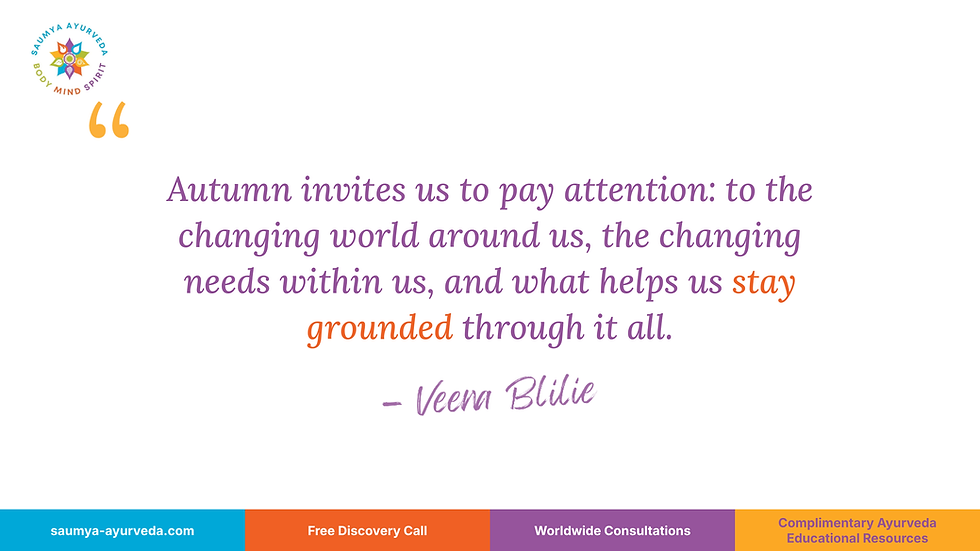
Autumn invites us to pay attention: to the changing world around us, the changing needs within us, and what helps us stay grounded through it all.
The world may be noisy. The winds may be strong. And there will always be circumstances beyond our control. But in the midst of it all, we can learn to find stillness within ourselves.
Begin with one or two small steps: a few diaphragmatic breaths before each meal, a warm and nourishing dinner, an evening guided practice. Cultivating inner peace is a practice, and even small steps can make a meaningful difference.
When the seasons change, so do our needs. Ayurveda considers not only your unique constitution, but also your current imbalances, circumstances, and the changing seasons to determine the foods, routines, and practices that will best support you right now. If you'd like to explore what's happening for you this season, book a free Discovery Call.
Have we worked together before? Late autumn is an ideal time to check in, restore balance, and prepare for winter with follow-up care, including packages with payment plans.
In the midst of a noisy world, stillness is always available within you.
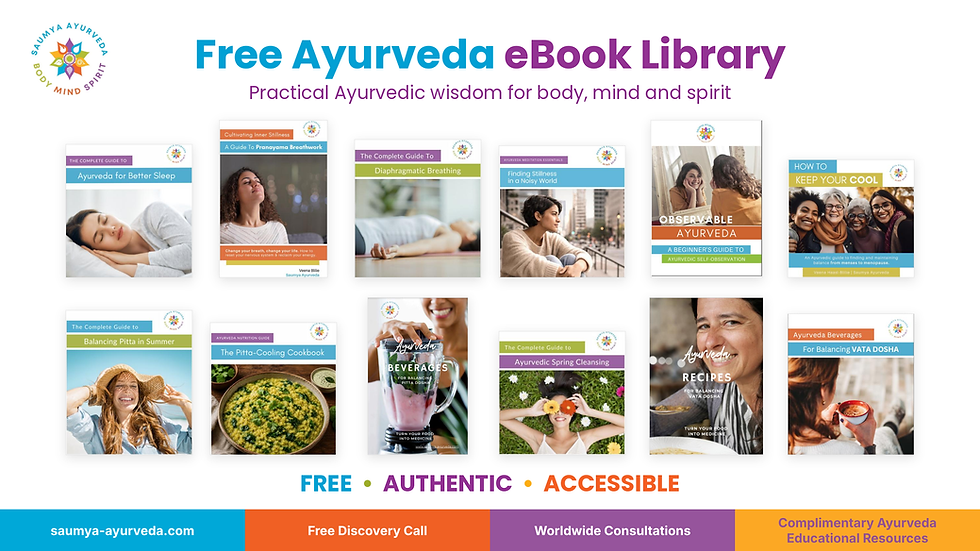
Our Commitment to Accessible Ayurveda Education
At Saumya Ayurveda, we believe Ayurveda's transformative ancient wisdom belongs to everyone—not just those who can afford it. That's why we're committed to making high-quality, authentic Ayurveda education available globally, free of charge.
Through our free eBooks, guides, and educational resources, we offer practical, grounded wisdom to help those seeking greater balance, vitality, and wellbeing integrate Ayurveda into their daily lives.
Accessible. Authentic. Free. Just as it was meant to be.
Free Ayurveda eBooks – Download practical guides, recipes, and wellness resources to support your health journey.
Ayurveda Blog – Enjoy easy-to-read articles, seasonal wellness tips, healthy recipes, and everyday inspiration—always educational, never a sales pitch.
Free Guided Traditional Progressive Meditations – Practice authentic, step-by-step guided meditations to cultivate calm, focus, and inner stillness.
Monthly Educational Newsletter – Receive seasonal Ayurveda insights, new articles, healthy recipes, and free resources delivered to your inbox each month.

Ayurvedic Glossary
Abhyanga: Ayurvedic self-massage with warm oil, used to nourish the skin, calm the nervous system, and ground Vata.
Dosha: One of the three functional principles of Ayurveda, Vata, Pitta, and Kapha, that govern the body and mind.
Ojas: The essence of vitality, immunity, and resilience in Ayurveda, often described as your vitality bank account.
Pitta: The dosha of fire and water, governing transformation, digestion, and metabolism.
Prakriti: Your natural constitution, the unique balance of the doshas you were born with.
Ritucharya: Ayurveda's seasonal routine, adapting food and daily habits to the qualities of each season.
Vata: The dosha of air and ether (space), governing movement, breath, the nervous system, and elimination. Its qualities are cold, dry, light, and mobile.
Vikriti: Your current state of doshic imbalance, which shows how you differ today from your natural constitution.

What Our Clients Say | Saumya Ayurveda Testimonials
Real Transformations Through Ayurveda Consultation
Physician Testimonial (Medical Endorsement)
"As a physician, I have always believed that prevention is better than cure. In today's healthcare environment, Ayurveda offers a logical and natural approach to long-term health and prevention.
I began working with Veena during a very demanding phase of my life, and she made the process accessible even within my busy schedule. I was encouraged to follow a steady, sustainable approach focused on real lifestyle change.
Over time, I experienced meaningful improvements in balance, energy, and well-being. In my medical practice, I now see many patients with similar stress- and diet-related imbalances, which has further reinforced my trust in Ayurvedic principles.
I have since referred several patients to Saumya Ayurveda and consider Veena a valuable resource in supporting holistic well-being."
Dr. Gauri Nagargoje
M.D., Oncology & Hematology
Physician Testimonial (Medical Endorsement)
"As a physician, I initially struggled with Ayurveda's simplicity and depth, but Veena's guidance made it practical, scientific, and deeply effective.
Veena has transformed my health and perspective on healing. I experienced significant improvements in focus, digestion, stress response, and overall vitality.
Her personalized approach made lifestyle changes easy and sustainable.
This journey not only improved my health but also inspired a lifelong commitment to integrating Ayurveda into holistic healthcare."
Dr. Jessica Bedi
D.O., & Ayurvedic Doctor
Erin M., Calgary, Alberta, Canada.


Explore more client success stories from Saumya Ayurveda and see how Ayurveda supports healing, balance, and transformation.

Discover the Saumya Ayurveda Way
Ayurveda Begins With Seeing the Whole Person
I've Tried Everything. Why Isn't Anything Working?
When health concerns persist, it can be frustrating to keep trying one recommendation after another without understanding why nothing seems to change.
More health information isn't always the answer. In fact, when stress is already part of the picture, having more information to sort through can add to that stress. Sometimes what is needed is not another recommendation, but someone who really listens and takes the time to understand you as a whole person.
Ayurveda looks beyond individual symptoms to understand the whole person and the root causes of the dosha imbalances contributing to how you feel. This makes it possible to move beyond simply managing symptoms and understanding what you specifically need.
Why the Same Symptom Can Require a Different Approach
The same symptom does not necessarily call for the same solution. General health advice—and even general Ayurvedic advice—can fall short because most people experience more than one symptom and may have more than one dosha out of balance. Understanding the doshic picture as a whole is essential for providing truly supportive guidance.
Ayurveda looks beyond the symptoms to understand the root cause of each doshic imbalance, the dynamic interplay between the doshas, and how they affect the whole person.
Personalized Ayurveda, Rooted in Tradition
Saumya Ayurveda combines classical Ayurvedic principles with practical guidance for modern life. Your recommendations are based on your individual prakriti (natural constitution), vikriti (current state of doshic imbalance), lifestyle, environment, and circumstances—not a generic dosha checklist or one-size-fits-all protocol.
The goal is not to overwhelm you with more rules or things to try. It is to help you stop searching and start understanding—so you can make sustainable changes that support balance for you.
For those who want ongoing support, concierge-style Ayurveda consultation packages provide personalized guidance, thoughtful follow-up, and practical tools for bringing Ayurvedic principles into everyday life.
Education First. Personalized Guidance When You Need It.
Veena takes an education-first, client-centered approach. Our favorite product is knowledge.
As you work with Veena, you don't simply receive recommendations—you gain knowledge and self-awareness.
With Saumya Ayurveda, you won't find education built around selling a supplement, herb, or wellness product. Instead, you'll find traditional Ayurvedic perspectives, practical guidance, and timeless principles that cultivate self-awareness and help you make choices that are right for you.
When understanding deepens, better choices naturally follow.
Learn. Observe. Understand. Transform.
Whether you're new to Ayurveda, looking for a deeper understanding of yourself and your nature, or have tried many approaches without finding lasting change, personalized Ayurvedic guidance can help you understand your individual needs and make choices that are appropriate for you.
Begin your Ayurveda journey with a free 15-minute Discovery Call with Veena and explore whether personalized Ayurvedic guidance is right for you.
Meet Veena: Your Trusted Ayurvedic Guide for Clients Worldwide

Veena Haasl-Blilie is a Certified Ayurvedic Practitioner, Ayurveda teacher, meditation guide, and monk with over three decades of experience helping clients worldwide achieve greater balance and well-being through Ayurveda.
As founder of Saumya Ayurveda and President Emeritus of the Meditation Center, Veena serves clients worldwide through personalized Ayurvedic wellness guidance, meditation, and yoga practices.
Saumya Ayurveda has been recognized as the #1 Ayurveda cooking blog and the #3 Ayurveda website and blog and has received multiple consecutive awards for best wellness practice.
Through her work, Veena shares practical Ayurvedic guidance, nourishing recipes, and wellness education for modern living.
Inspired from an early age by learning herbal remedies, food as medicine, and traditional healing practices at her grandmother's knee, Veena combines traditional Ayurvedic wisdom with compassionate, accessible guidance that supports mental, physical, and spiritual well-being.
Known for her warmth, humor, intuitive approach, and accessible style, Veena empowers people to create sustainable health through personalized Ayurvedic wellness plans designed to fit naturally into everyday life.
Veena is also the author of several free Ayurveda eBooks and writes the educational articles published on the Saumya Ayurveda blog.
As seen in:
Voice America
Albuquerque The Magazine
Learn more about Veena and her work through Saumya Ayurveda.
Disclaimer: This information is for educational purposes only and is not a substitute for professional medical advice. Ayurveda works best when tailored to your unique doshic profile, so it's essential to understand your constitution and imbalances before using herbs, foods, or lifestyle practices. Consult a Certified Ayurvedic Practitioner for personalized guidance.


