


Could Your Screen Time Be Contributing to Anxiety, Poor Sleep, and Fatigue? How Ayurveda Can Help.

Updated: Jul 31
You wake up to your phone. Hours later, your eyes are tired, your mind feels scattered, and even after the screen goes dark, you can't seem to switch off. If you've ever felt mentally drained, anxious, or "wired but tired," you're not alone.
Ayurveda, the 5,000-year-old science of life, recognized the effects of sensory overload long before smartphones existed. Through simple daily rituals (Dinacharya), it offers practical ways to calm the mind, restore your natural rhythms, and protect your energy in our screen-filled world.
You don't have to give up technology to feel better. By blending timeless Ayurvedic wisdom with modern habits, you can reduce digital overwhelm, improve focus, and rediscover the clarity and calm that may have quietly slipped away.

Modern life keeps us constantly connected, but too much screen time can contribute to stress, mental fatigue, poor sleep, and digital overwhelm. Discover how Ayurveda's daily rituals (Dinacharya), mindful technology habits, breathing practices, and personalized lifestyle recommendations can help restore balance, improve focus, and support lasting well-being in a screen-driven world.
Key Takeaways
Start your day with dosha-aligned rituals – Gentle stretching, meditation, and warm water help balance energy and prepare you for a focused day.
Manage screen time mindfully – Take regular breaks, follow the 20-20-20 rule for eyes, and schedule digital tasks during your peak dosha energy hours.
Evening routines restore calm – Evening abhyanga (self-oil massage), calming teas, and screen-free wind-down support restful sleep and reduce Vata and Pitta stress.
Use Ayurvedic herbs for mental clarity – Ashwagandha, Brahmi, Tulsi, and Shankhapushpi naturally boost focus, calm the mind, and enhance resilience.
Align with your circadian rhythm – Follow dosha-specific activity and rest times to stabilize energy, support sleep, and reduce stress.
Integrate Ayurveda gradually into daily life – Even 5–15 minutes of morning or evening rituals can improve focus, energy, and stress resilience over time.
Mindful diet supports balance – Eat warm, dosha-friendly meals and avoid processed foods or excess caffeine to maintain stable energy and calm the nervous system.
Consistency is key – Daily practice, even in small increments, leads to long-term improvements in mental clarity, emotional balance, and overall well-being.
Shift from fight-flight-freeze to rest-restore-relax – Use free guided Ayurvedic practices to reset the nervous system, reduce stress, and cultivate calm, balanced energy.
Table of Contents
Modern research has shown that excessive screen time can affect attention, memory, sleep quality, emotional regulation, and stress levels. These findings help explain why so many people feel mentally exhausted after spending long hours in front of digital devices.
Ayurveda has recognized the effects of overstimulation on the mind and body for thousands of years, offering a holistic framework for understanding these patterns and restoring balance. Together, modern science and Ayurveda provide complementary perspectives on why screen overload can affect our well-being and how intentional daily habits can support recovery (Stanford University)
Ayurveda emphasizes the senses (indriyas), and screens are fundamentally a form of sensory input.
In Ayurveda, health depends not only on what we eat and how we live, but also on what we continually take in through our senses. Constant digital stimulation can become another form of overload that influences the mind and body.

Understanding the Digital Stress Epidemic
In today’s hyper-connected world, screens are everywhere—from work emails and social media feeds to online shopping and streaming.
While digital devices keep us informed and entertained, prolonged screen time affects far more than just our eyes. Many of us experience mental fatigue, tension, and restlessness without even realizing the connection to our digital habits.
Studies show that excessive use of phones, computers, and tablets can lead to:
Mental overload and scattered attention, making it difficult to focus on work, creative projects, or meaningful conversations
Sleep disturbances, as blue light emitted from screens suppresses melatonin, the hormone responsible for restful sleep
Heightened anxiety and irritability, fueled by constant notifications, multitasking, and information overload
Physical tension, including stiffness and discomfort in the neck, shoulders, and back from prolonged sitting or poor posture
These digital stressors disrupt the body’s internal rhythm, or circadian cycle, which Ayurveda considers essential for optimal health. According to Ayurvedic wisdom, our doshas—Vata, Pitta, and Kapha—function best when aligned with natural daily cycles, regulating energy, digestion, mental clarity, and emotional stability. When screen time throws off this rhythm, it can create imbalances, leaving us more prone to fatigue, irritability, or digestive issues.
Research shows that “digital stress”—psychological strain linked to technology use, including digital overload and problematic social media engagement—has emerged as a significant form of stress in online environments, with measurable associations to mental health outcomes. (NIH)
The good news? Ayurveda offers practical solutions for managing digital stress, helping you reconnect with your body’s natural rhythms. Simple daily rituals, like Ayurvedic morning routine, mindful breaks from screens, and evening wind-down routines, can restore balance, reduce mental clutter, and enhance overall vitality.
By combining modern awareness with timeless Ayurvedic practices, you can transform how you interact with technology—shifting from digital overwhelm to mindful presence, calm focus, and renewed energy.

How Ayurveda Explains Stress and Screen Overload
According to Ayurveda, stress is not just a mental state—it reflects a disturbance in the mind (Manas) and an imbalance in the body’s three doshas: Vata, Pitta, and Kapha.
In our screen-driven world, excessive digital exposure can affect each dosha in unique ways:
Vata becomes aggravated, leading to restlessness, anxiety, scattered thoughts, and difficulty falling asleep. Long hours of scrolling or multitasking can make the mind feel constantly “on.”
Pitta may become overactive, resulting in irritability, impatience, and mental overdrive. Intense focus on emails or news feeds can stoke the inner fire, leaving you mentally drained.
Kapha can be increased by passive screen use, causing lethargy, heaviness, and low motivation. Binge-watching or endless social media scrolling may leave the body feeling sluggish and disconnected.
Ayurveda teaches that aligning daily activities with natural rhythms, through a consistent Dinacharya, helps the body cope with stress and maintain balance—even in a digitally demanding lifestyle. By understanding which dosha is most affected by your screen habits, you can adopt targeted practices to calm the mind, restore energy, and protect your body from the hidden impacts of modern technology.
Saumya Self-Observation ExerciseBefore reaching for a solution, pause and simply observe. After a day of screen time, ask yourself: ☐ Are my eyes dry or strained? ☐ Is my mind calm or racing? ☐ Is my breathing deep or shallow? ☐ Did I skip meals or eat mindlessly? ☐ Am I craving caffeine, sugar, or salty snacks? ☐ Do my neck, jaw, or shoulders feel tense? ☐ Do I feel "wired but tired" at bedtime? ☐ Is it hard to put my phone down? Ayurveda begins with awareness. The more you notice your body's signals, the easier it becomes to make choices that restore balance, clarity, and vitality. |
How Screen Time Affects Your Body and Mind
In today’s digital world, many of us spend hours each day in front of screens—computers, smartphones, tablets, and TVs. While technology keeps us connected and productive, excessive screen time can disrupt both the body and mind. Ayurveda provides unique insights into how these modern habits affect our natural balance.
How Screen Time Affects the Body
Eye Strain and Visual Fatigue
Prolonged screen use can cause dryness, irritation, and blurred vision.
From an Ayurvedic perspective, excessive screen exposure aggravates Pitta dosha, which governs heat and intensity in the body. This can lead to headaches, eye strain, and inflammation.
Discover how Ayurveda can soothe dry, burning eyes and restore balance to Vata and Pitta with simple, natural eye care practices in our guide, Ayurveda for Dry, Burning Eyes | Vata and Pitta and Your Peepers.
Poor Posture and Musculoskeletal Stress
Sitting for long periods while working or scrolling can lead to tight shoulders, neck tension, and lower back pain.
Vata imbalance is often triggered by sedentary behavior, resulting in stiffness, discomfort, and energy fluctuations.
Find the best asanas and pranayama for your dosha—Vata, Pitta, or Kapha—in our comprehensive guide to personalized Ayurvedic practices.
Sleep Disruption
Blue light from screens suppresses melatonin production, delaying sleep onset and reducing sleep quality.
Ayurveda emphasizes the importance of aligning with the circadian rhythm—excessive evening screen use can disrupt Kapha and Vata balance, making restful sleep harder to achieve.
Boost your rest naturally with our Ayurvedic tips for good sleep, designed to calm the mind and balance your doshas
How Screen Time Affects the Mind
Mental Fatigue and Reduced Focus
Constant notifications, multitasking, and social media scrolling can overstimulate the mind, causing stress and mental fatigue.
Vata dosha, which governs movement and mental activity, becomes imbalanced, leading to anxiety, scattered thinking, and difficulty concentrating.
Explore 7 Ayurvedic treatments for anxiety that help calm the mind, balance your doshas, and support emotional wellbeing naturally.
Emotional Imbalance
Overexposure to social media and news can trigger stress, comparison, or emotional overwhelm.
Ayurveda encourages cultivating mindfulness and emotional awareness to counter these effects and restore inner equilibrium.
Learn how to detox emotionally with 10 Ayurvedic practices for emotional cleansing that restore balance, clarity, and inner calm
Related Resource: Concerns about the effects of excessive screen time have also received widespread public attention. A recent 60 Minutes Australia investigation explored how prolonged exposure to smartphones, social media, and digital devices may contribute to symptoms such as brain fog, reduced attention span, mental fatigue, and difficulty concentrating. While the program uses the term digital dementia, that phrase is not an established medical diagnosis. Rather, it reflects growing concern about the cognitive effects of chronic digital overstimulation and the importance of developing healthier relationships with technology. Watch: 60 Minutes Australia – Brain Rot: The Digital Dementia Crisis (Official YouTube video) |
Today’s digital lifestyle often floods the senses with constant alerts, multitasking, blue light, and nonstop information. In Ayurveda, this kind of overload would be considered sensory overstimulation.
Classical Ayurvedic teachings describe excessive or unhealthy use of the senses (asatmyendriyartha samyoga) as a root cause of imbalance and mental strain. Contemporary Ayurvedic researchers have also noted similar stress patterns among technology professionals exposed to high sensory and work demands. (IJAPr)


Morning Rituals: Start Your Day with Intention
How you begin your morning sets the tone for your entire day. Ayurveda emphasizes starting with mindful, grounding practices that energize the body, calm the mind, and prepare you for focus—even in a digitally demanding world.
Modern research increasingly supports the value of intentional technology habits. Studies have found that reducing smartphone screen time can improve stress levels, sleep quality, and overall well-being, while health experts recommend creating screen-free periods and replacing digital stimulation with calming activities that support restoration and balance. (NIH)
Wake during Brahma Muhurta (4:00–6:00 a.m.): Rising early aligns you with natural light cycles, enhancing clarity, calm, and mental alertness. Even 15–30 minutes earlier than usual can make a noticeable difference.
Hydrate with warm water: Sipping warm water first thing flushes overnight toxins and gently awakens digestion (Agni), helping you feel lighter and more energized.
Gentle yoga or stretching: Moves joints, releases tension, and grounds Vata energy, setting a balanced tone for the day ahead.
Meditation or pranayama: Calms a racing mind, balances Pitta and Vata, and cultivates mental clarity, helping you handle work and screen time with ease.
Nourishing breakfast away from screens: Eating mindfully supports digestion and energy levels, while reducing stress and digital distraction.
By honoring your body and mind in the morning, you cultivate focus, patience, and resilience—helping you navigate work, family, and technology with balance and ease. This simple Ayurvedic routine transforms your mornings into a foundation for a healthier, calmer, and more energized day.
Create a grounded, energizing start to your day with Ayurvedic Lifestyle Practices: How to Build an Ayurvedic Morning Routine, and learn how to align your habits with timeless Ayurveda principles for lasting balance and vitality.
Ayurvedic Wake-Up Ritual: Rise Before Sunrise for Health ब्रह्मे मुहूर्त उत्तिष्ठेत् स्वस्थो रक्षार्थमायुषः॥Transliteration: Brahme muhūrte uttiṣṭhet svastho rakṣārtham āyuṣaḥ Meaning:A healthy person should wake during Brahma Muhurta to protect health and promote longevity. --Source: Ashtanga Hridayam, Sutrasthana 2

Managing Screen Time During the Day
In a workday dominated by devices, mindful screen management is essential for protecting mental clarity, energy, and emotional balance. Ayurveda offers practical strategies to prevent digital overstimulation and support your natural rhythms:
Scheduled breaks: Pause for 5–10 minutes every 60–90 minutes to reset your mind. Short breaks reduce mental overload and help Vata stay grounded.
Discover how to use Ayurvedic eye palming to soothe dry, burning eyes, reduce strain, and promote calm and clarity.
20-20-20 eye rule: Every 20 minutes, look at an object 20 feet away for 20 seconds. This simple practice relieves eye strain and calms Pitta from visual overstimulation.
Reduce digital clutter: Close unnecessary apps, mute notifications, and organize your workspace. Limiting distractions helps maintain focus and prevents Pitta burnout.
Grounding activities: Stand, stretch, or take a short walk. Moving the body reconnects you with physical awareness and prevents Kapha stagnation and ama formation.
Screen-free meals: Eat mindfully, away from devices. This supports digestion (Agni), encourages presence, and helps prevent emotional and physical heaviness.
By making these small, consistent adjustments, you can maintain energy, mental clarity, and emotional stability—even during a demanding digital day. Over time, these practices not only reduce stress but also align your work habits with the natural balance of your doshas, promoting lasting vitality.
Sensory Overload as a Cause of Disease असात्म्येन्द्रियार्थसंयोगः प्रज्ञापराधश्च परिणामश्च ।त्रयो रोगहेतवः ॥Transliteration:Asātmyendriyārtha saṃyogaḥ prajñāparādhaś ca pariṇāmaś ca |Trayo rogahetavaḥ || Meaning:Improper use of the senses, mistakes of the intellect, and the effects of time are the three primary causes of disease. Why it matters today:This is one of the best classical references for screen overload, constant notifications, digital overstimulation, and unhealthy media habits. --Source: Charaka Samhita, Sutrasthana 1
Is Your Nervous System Asking for a Digital Reset?
Excessive screen time doesn't affect everyone the same way. Ayurveda teaches that your body often sends subtle signals before a deeper imbalance develops. Rather than ignoring these messages, pause and notice what your body is telling you.
Saumya Self-Observation Check-In
After a day of screen time, ask yourself:
☐ Do I reach for my phone without thinking?
☐ Are my eyes dry, strained, or tired?
☐ Is my mind calm or constantly racing?
☐ Is my breathing deep or shallow?
☐ Did I skip meals or eat without paying attention?
☐ Am I craving caffeine, sugar, or salty snacks this afternoon?
☐ Do my neck, jaw, or shoulders feel tense?
☐ Do I feel mentally busy but physically exhausted?
☐ Is it difficult to relax without scrolling?
☐ Do I feel "wired but tired" when it's time for bed?
Ayurveda begins with awareness. These aren't problems to judge—they're invitations to observe. The more you notice your body's signals, the easier it becomes to choose daily habits that restore balance, clarity, and vitality.
Dosha-Specific Tips for Digital Wellness
Ayurveda emphasizes personalization: understanding your dosha helps you manage modern screen challenges more effectively. Here’s how Vata, Pitta, and Kapha types can maintain balance, focus, and energy in a digital-heavy lifestyle:

Vata Types
Take frequent grounding breaks: Short pauses help stabilize scattered energy and reduce mental restlessness.
Avoid multitasking across devices: Focus on one task at a time to prevent overwhelm.
Incorporate warm, nourishing foods and teas: These help anchor energy and support digestion (Agni).
Pitta Types
Limit competitive or heated online interactions: Avoid over-stimulating content that triggers irritability.
Practice cooling techniques: Slow breathing, meditation, or a brief walk helps calm overactive Pitta energy.
Set clear boundaries for work and screen use: Structured schedules prevent burnout and mental overdrive.
Kapha Types
Avoid passive scrolling: Engage with content that inspires and energizes instead of promoting lethargy.
Take brisk walks or light exercise: Movement counteracts heaviness and inertia.
Schedule demanding tasks in the morning: Leverage natural energy peaks for productivity.
By tailoring these practices to your dosha, you can reduce stress, enhance productivity, and maintain balance—all while navigating a modern, screen-filled world with ease.
Discover how to restore harmony in your body and mind with our beginner-friendly guide, How to Balance Your Doshas for Optimal Health, and start applying practical Ayurveda principles to your daily routine.
Midday Rituals: Recharge Your Mind and Body
Midday is often when screen fatigue and mental overwhelm hit hardest.
Ayurveda encourages mindful pauses and resets to maintain energy, balance, and clarity throughout the day:
Mindful lunch: Enjoy a nourishing, dosha-appropriate meal without digital distractions. Focusing on your food supports digestion (Agni) and prevents Kapha stagnation.
Short meditation or pranayama: Even 5 minutes of deep breathing or mindfulness helps re-center the mind, lower stress hormones, and calm overactive Vata or Pitta energy.
Outdoor exposure: Natural sunlight regulates your circadian rhythm, boosts mood, and energizes the body, helping counter mid-afternoon lethargy.
Herbal hydration: Sipping teas cools Pitta, and provides a gentle energy lift without caffeine crashes.
Even brief midday resets can prevent the cumulative effects of digital stress, support mental clarity, improve digestion, and maintain emotional equilibrium.
Over time, these small practices become a powerful tool for navigating modern screen-heavy days while staying grounded, focused, and balanced.
Feeling mentally scattered or physically drained in the middle of the day? Try our simple two-minute meditation to reset your body and mind.
Sensory Calm = Mental Restoration सत्त्वावजयः पुनरहितेभ्यो अर्थेभ्यो मनोनिग्रहः ॥ Transliteration:Sattvavajayaḥ punar ahitebhyo arthebhyo mano nigrahaḥ Meaning:Mental well-being is achieved by withdrawing the mind from harmful or excessive sensory input and gaining control over it. --Source: Charaka Samhita

Ayurvedic Evening Rituals: Transitioning into Rest
The evening is a sacred time for winding down, restoration, and letting go of the day’s digital demands.
Modern research supports the importance of this transition. The NIH's MedlinePlus Magazine notes that excessive screen use—particularly before bedtime—can interfere with healthy sleep and recommends creating screen-free time before bed to support the body's natural sleep-wake cycle. By reducing digital stimulation in the evening and replacing it with calming rituals, we create conditions that support deeper rest, recovery, and overall well-being.
Ayurveda offers practical strategies to help you transition from screen-heavy days to restful, rejuvenating nights:
Dim lighting and reduce screen brightness: At least an hour before bed, lower light exposure to signal your body that it’s time to slow down. This helps Pitta and Vata settle and prevents circadian disruption.
Evening self-care rituals: Gentle oil massage (Abhyanga), a warm bath, or sipping calming herbal teas supports relaxation, eases tension, and prepares the body for deep sleep.
Journaling or gratitude practice: Writing down thoughts or noting what you’re grateful for helps Vata and Pitta quiet the mind, reducing overthinking and mental agitation.
Sleep during Kapha-dominant hours: Aim for an early bedtime between 9:00–10:00 p.m. to align with natural rhythms and optimize deep restorative sleep.
By consistently practicing these evening rituals, you strengthen the mind-body connection, improve sleep quality, and minimize the negative effects of screen exposure.
Gradually, these habits cultivate a sense of calm, balance, and renewed energy, so you can wake refreshed and ready for the day ahead.
Unwind deeply and support restful sleep with 10 Ayurvedic Evening Rituals for a Calming Night, and discover how aligning your nighttime habits with Ayurveda principles can reduce stress and restore natural balance.

The Deeper Benefits of an Ayurvedic Daily Rhythm
Aligning your daily routines with natural rhythms has profound benefits for both body and mind.
Ayurveda has long emphasized the power of Dinacharya—a structured, consistent routine—to maintain balance and vitality in modern life:
Enhanced digestion and metabolism: Eating meals at consistent times supports Agni, improving nutrient absorption and reducing bloating or lethargy.
Improved sleep quality: Following natural circadian rhythms and winding down in the evening promotes restorative, deep sleep.
Reduced stress and anxiety: Predictable routines prevent dosha imbalance, helping you stay grounded even during busy, screen-heavy days.
Greater mental clarity and focus: Structured habits reduce cognitive overload, making it easier to concentrate and make mindful decisions.
Emotional resilience: A balanced daily rhythm stabilizes mood, energy, and emotional responses, supporting overall well-being.
Scientific research confirms that consistent daily rhythms improve physical, mental, and emotional health, echoing the wisdom of Ayurveda (NIH).
By honoring your body’s natural cycles, you not only reduce stress but also cultivate sustained energy, focus, and inner calm—foundations for thriving in today’s fast-paced, digital world.

Practical Tips to Integrate Ayurveda in Modern Life
Integrating Ayurveda into your modern routine doesn’t have to feel overwhelming. Small, consistent steps can transform your day, supporting energy, focus, and overall well-being:
Start small: Add one ritual at a time—like morning hydration or a 5-minute meditation—to build consistency without feeling overwhelmed.
Be consistent: Even brief daily practices accumulate into lasting benefits for digestion, mental clarity, and emotional balance.
Schedule digital detox periods: Unplug for at least an hour daily to reset the mind, calm overstimulated senses, and allow your body to realign with natural rhythms.
Use reminders: Set alarms or calendar prompts for breaks, meditation, hydration, or mindful meals. This helps you stay on track even during busy days.
Observe and adjust: Track your energy, mood, and digestion. Fine-tuning your routine according to your dosha and lifestyle ensures it remains effective and sustainable.
By gradually incorporating these practices, you create a personalized Ayurvedic rhythm that supports balance, reduces stress, and enhances vitality—making modern life more harmonious, even amidst screens and digital demands.

Yoga, Pranayama/Breathwork, and Meditation for Digital Stress
Modern life often keeps us glued to screens, which can lead to tension, mental fatigue, and scattered energy. Ayurveda emphasizes the connection between body, breath, and mind, offering simple practices to restore balance and reduce digital stress.
Incorporating yoga, pranayama, and meditation into your daily routine can calm Vata imbalances, soothe Pitta intensity, and energize Kapha sluggishness.
Simple Yoga Asanas to Counter Tension
Practicing gentle yoga stretches helps release physical stress accumulated from long hours at desks or on devices. Some effective asanas include:
Cat-Cow (Marjaryasana-Bitilasana): Mobilizes the spine, relieves neck and back stiffness, and improves circulation.
Seated Forward Fold (Paschimottanasana): Calms the nervous system and stretches the hamstrings to release tension from prolonged sitting.
Legs-Up-the-Wall Pose (Viparita Karani): Supports relaxation, reduces fatigue, and eases stress after screen-intensive work.
Child’s Pose (Balasana): Gently relaxes the back, shoulders, and mind, creating a sense of grounding.
These poses can be done in 5–10 minutes during breaks or as part of your evening wind-down routine.
Get your free eBook: Cultivating Inner Stillness — A Guide to Pranayama for Better Focus, Deep Relaxation, and Stress Relief

Pranayama Techniques for Focus and Relaxation
Breathwork (Pranayama) is a powerful tool to regulate the nervous system and mental clarity:
Nadi Shodhana (Alternate Nostril Breathing): Balances the mind, reduces stress, and improves concentration.
Bhramari (Bee Breath): Releases tension and promotes deep relaxation; especially helpful after long periods of screen exposure.
Kapalabhati (Skull-Shining Breath): Energizes the body, clears mental fog, and boosts focus (best in the morning).
Deep Diaphragmatic Breathing: Reduces Vata-induced anxiety and stabilizes emotional fluctuations.
Meditation for Digital Detox and Mindful Focus
Even 5–10 minutes of daily meditation can dramatically reduce stress and restore mental balance. Try:
Guided Meditation: Focus on breath or body sensations to release digital overwhelm.
Visualization Techniques: Imagine your screen stress melting away and your body aligning with natural rhythms.
Download your free eBook, The Essential Guide to Diaphragmatic Breathing, and learn simple breathing techniques to boost energy, reduce stress, and support digestion naturally

Frequently Asked Questions (FAQ) – Ayurveda for Modern Life
1. What is Ayurveda, and how can it help manage modern stress?
Ayurveda is an ancient Indian system of medicine focused on balancing the mind, body, and spirit. By understanding your dosha type—Vata, Pitta, or Kapha—you can adopt daily rituals, diet, and lifestyle practices that reduce stress, improve focus, and support overall well-being.
Modern stressors, like screen time overload and irregular routines, can disrupt your natural rhythm, and Ayurveda offers practical ways to restore balance.
Learn how your unique dosha influences digestion, energy, and food choices in our guide to Understanding Ayurvedic Body Types for Optimal Health and Wellbeing, and discover how personalized wellness begins with knowing your constitution.
2. How can Ayurveda help with too much screen time?
Excessive screen exposure can aggravate Vata, Pitta, Kapha doshas, leading to mental fatigue, eye strain, sleep disruption, and lethargy. Ayurvedic strategies include:
Taking regular breaks using the 20-20-20 rule for eyes.
Practicing abhyanga (self-oil massage) in the evening to calm the nervous system.
Drinking herbal teas like chamomile or peppermint to support mental clarity and reduce stress.
Move. Qi Gong, Surya Namaskar, a short walk provides relief from screens and sitting.
Aligning work and digital activity with your dosha-specific optimal times.
3. What are the best daily rituals to reduce stress according to Ayurveda?
Some simple yet powerful daily rituals include:
Morning practices: Gentle stretching, meditation, tongue scraping, and warm water with lemon.
Daytime rituals: Mindful eating, short walks, and screen breaks to prevent burnout and overstimulation of the senses and mind.
Evening rituals: Abhyanga, calming teas, digital detox, and early winding down to support circadian rhythms.
4. How do I know my dosha, and why does it matter for stress management?
Your dosha—Vata, Pitta, or Kapha—reflects your unique mind-body constitution. Knowing your dosha helps you:
Choose foods and routines that promote calm and focus.
Select stress-reducing practices that align with your natural rhythm.
Reduce the negative effects of modern lifestyle challenges, like irregular sleep or screen overuse.
You can determine your dosha with a Certified Ayurvedic Practitioner for personalized guidance.
5. Can Ayurveda improve sleep disrupted by screen use?
Yes! Ayurveda emphasizes aligning with your body’s natural circadian rhythm. Key strategies include:
Avoiding screens at least 2 hours before bedtime and preferrably before the sunsets.
Practicing evening abhyanga and gentle stretches to calm the nervous system.
Drinking calming herbal teas, such as Chamomile or Ashwagandha.
Keeping a consistent sleep schedule that matches your dosha’s natural peak and rest times.
6. Are there Ayurvedic herbs that help with mental fatigue from modern life?
Several herbs support focus, memory, and stress relief:
Ashwagandha – Reduces stress and improves resilience.
Brahmi (Gotu Kola) – Enhances mental clarity and cognitive function.
Tulsi (Holy Basil) – Supports immune function and eases mental tension.
Which herbs are balancing for you depend on your unique doshic picture. Don't go to AI for guidance. Your prakruti, vikruti, agni, ama, climate, stage or life, season, and several other factors need to be carefully determined by an Ayurvedic Practitioner.
7. How can I integrate Ayurveda without completely changing my lifestyle?
Even small daily adjustments can make a big difference:
Start with morning or evening rituals for 5–15 minutes.
Take mini digital detox breaks throughout the day.
Add one herbal tea to your routine.
Prioritize sleep hygiene and mindful meals to balance energy naturally.

Glossary of Ayurvedic Terms
Abhyanga A traditional Ayurvedic warm oil self-massage that helps calm the nervous system, nourish the skin, improve circulation, and promote relaxation. It is often practiced in the evening to help ease stress and prepare the body for restful sleep.
Agni (Digestive Fire) The body's digestive and metabolic intelligence. Strong Agni supports healthy digestion, energy, mental clarity, and overall well-being.
Ama A sticky, toxic byproduct of incomplete digestion and metabolism. Ayurveda teaches that supporting healthy Agni helps prevent the accumulation of Ama and promotes better health.
Ayurveda A traditional system of medicine from India that emphasizes balance through personalized nutrition, daily routines, lifestyle practices, herbs, and mind-body therapies to support long-term health.
Brahma Muhurta The peaceful period approximately 1½ hours before sunrise. Ayurveda considers this an ideal time for meditation, reflection, gentle movement, and beginning the day with clarity and intention.
Dinacharya Ayurveda's daily routine that aligns eating, movement, sleep, and self-care with the body's natural rhythms. A consistent Dinacharya supports balanced energy, digestion, and emotional well-being.
Doshas The three primary mind-body energies—Vata, Pitta, and Kapha—that govern physical, mental, and emotional functions. Every person has a unique balance of all three doshas.
Kapha The dosha composed of Earth and Water. Kapha provides stability, structure, and endurance. When out of balance, it may contribute to sluggishness, lethargy, and mental heaviness.
Pitta The dosha composed primarily of Fire and Water. Pitta governs digestion, metabolism, focus, and transformation. Excess Pitta may contribute to irritability, frustration, overheating, and burnout.
Pranayama Traditional yogic breathing techniques that regulate the breath to calm the nervous system, improve focus, and support physical and emotional balance.
Vata The dosha composed of Air and Space. Vata governs movement, the nervous system, breathing, and communication. When aggravated, it may contribute to anxiety, restlessness, scattered thinking, and difficulty sleeping.
Start Your Ayurvveda Journey. Book A Discovery with Veena.

Continue Your Ayurveda Knowledge Journey
Managing screen time is just one part of creating a healthier, more balanced life. Continue exploring these Ayurvedic resources to strengthen your daily routine, support your nervous system, improve digestion, and cultivate lasting well-being in our modern world.
1. Learn the Foundations of Ayurveda
2. Build a Strong Foundation
3. Better Understand Your Unique Constitution
4. Support Your Vitality Naturally
How to Do Abhyanga Massage at Home: Benefits, Oils, and Step-by-Step Guide
Why Seasonal Transitions Matter for Ojas: An Ayurveda Guide to Immunity and Resilience (Coming Septemner 2026)
5. Explore Common Health Challenges Through an Ayurvedic Lens
7 Ayurvedic Remedies for Maintaining Healthy Blood Pressure Naturally
Gut-Brain Connection in Ayurveda: Reduce Anxiety Through Digestion
Leaky Gut Syndrome in Ayurveda: Causes, Symptoms, Diet, and Natural Healing
Histamine Intolerance: Symptoms, Causes, Diet, and Ayurvedic Treatment for Natural Relief
MCAS Natural Treatment: Ayurvedic Diet, Herbs, and Root Causes
Our Commitment to Accessible Ayurveda Education
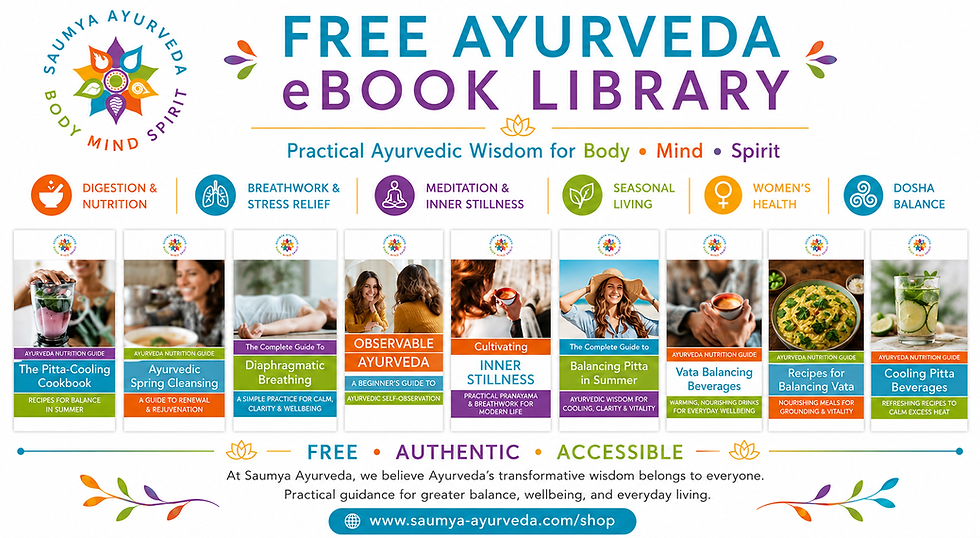
At Saumya Ayurveda, we believe Ayurveda's transformative ancient wisdom belongs to everyone—not just those who can afford it. That's wsa
hy we're committed to making high-quality, authentic Ayurveda education available globally, free of charge.
Through our free eBooks, guides, and educational resources, we offer practical, grounded wisdom to help those seeking greater balance, vitality, and wellbeing integrate Ayurveda into their daily lives.
Accessible. Authentic. Free. Just as it was meant to be.
Free Ayurveda eBooks – Download practical guides, recipes, and wellness resources to support your health journey.
Ayurveda Blog – Enjoy easy-to-read articles, seasonal wellness tips, healthy recipes, and everyday inspiration—always educational, never a sales pitch.
Free Guided Traditional Progressive Meditations – Practice authentic, step-by-step guided meditations to cultivate calm, focus, and inner stillness.
Monthly Educational Newsletter – Receive seasonal Ayurveda insights, new articles, healthy recipes, and free resources delivered to your inbox each month.
Herb Note: The right herb for you isn’t one-size-fits-all—it depends on key factors such as your prakruti (constitution), vikruti (current imbalance), stage of life, season, and climate, all of which are central to personalized care in Ayurveda.


Final Thoughts: Screen Time Anxiety, Poor Sleep, and Fatigue?
In today's hyper-connected world, screens are everywhere—from morning emails to late-night scrolling. While technology keeps us productive and informed, it can quietly contribute to stress, mental fatigue, and a disrupted daily rhythm.
If you’ve ever felt drained, unfocused, or out of sync with your own body, you are not alone.
Ayurveda, the 5,000-year-old science of life, offers timeless guidance for modern challenges. By incorporating simple daily rituals (Dinacharya) into your routine, you can:
Reduce digital overwhelm and mental fatigue — mindful breaks, screen-free periods, and grounding routines help calm Vata and Pitta imbalances.
Support your body’s natural rhythms and energy levels — aligning with your circadian rhythm ensures optimal digestion, sleep, and vitality.
Protect your mental clarity, focus, and emotional balance — structured habits reduce cognitive overload and stabilize mood.
Restore a sense of calm — evening rituals, self-care practices, and gentle herbal support allow you to unwind even in a busy, tech-driven life.
By blending ancient Ayurvedic wisdom with modern habits, you can transform screen time from a source of stress into an opportunity for mindful living, balance, and lasting vitality. Following these principles doesn’t mean giving up your devices—it means learning to engage with them in a way that supports your mind, body, and natural rhythms.
Start small, stay consistent, and honor your body’s cycles. With daily attention to your routines, even the busiest modern life can become calm, focused, and deeply aligned with your natural rhythm.
"Ayurveda doesn't ask us to reject technology—it invites us to observe how it affects us. When we pay attention to the signals of the body and mind, we naturally begin making choices that restore balance instead of draining our vitality." — Veena Blilie
Three Things to Try Today ✓ Take one five-minute screen break. ✓ Practice three slow diaphragmatic breaths before checking your phone. ✓ Notice how your eyes, mind, and energy feel after reducing screen time for one evening. |

What Our Clients Say | Saumya Ayurveda Testimonials
Real Transformations Through Ayurveda Consultation
Physician Testimonial (Medical Endorsement)
“As a physician, I have always believed that prevention is better than cure. In today’s healthcare environment, Ayurveda offers a logical and natural approach to long-term health and prevention.
I began working with Veena during a very demanding phase of my life, and she made the process accessible even within my busy schedule. I was encouraged to follow a steady, sustainable approach focused on real lifestyle change.
Over time, I experienced meaningful improvements in balance, energy, and well-being. In my medical practice, I now see many patients with similar stress- and diet-related imbalances, which has further reinforced my trust in Ayurvedic principles.
I have since referred several patients to Saumya Ayurveda and consider Veena a valuable resource in supporting holistic well-being.”
Dr. Gauri Nagargoje
M.D., Oncology & Hematology
Physician Testimonial (Medical Endorsement)
“As a physician, I initially struggled with Ayurveda’s simplicity and depth, but Veena’s guidance made it practical, scientific, and deeply effective.
Veena has transformed my health and perspective on healing. I experienced significant improvements in focus, digestion, stress response, and overall vitality.
Her personalized approach made lifestyle changes easy and sustainable.
This journey not only improved my health but also inspired a lifelong commitment to integrating Ayurveda into holistic healthcare.”
Dr. Jessica Bedi
D.O., & Ayurvedic Doctor


Rachel R., Boulder, Colorado, USA
Explore more client success stories from Saumya Ayurveda and see how Ayurveda supports healing, balance, and transformation.

Discover the Saumya Ayurveda Way
At Saumya Ayurveda, we see you as a whole being—not just a collection of symptoms. True health is more than the absence of disease; it is a state of balance between body, mind, and awareness.
Many people today struggle with persistent concerns such as screen time anxiety, poor sleep, mental fatigue, digestive imbalance, or chronic stress, yet often feel unheard or only partially supported when symptoms persist without clear answers.
This is where Ayurveda offers a different path.
If you are seeking a holistic approach to health and balanced living, you are in the right place. Saumya Ayurveda provides personalized Ayurvedic guidance designed to support physical, mental, and emotional harmony—helping you move toward a more vibrant and aligned life.
Our approach is rooted in classical Ayurveda and adapted for modern life, with a focus on understanding your unique dosha and prakriti (your natural constitution) so recommendations are truly individualized—not generic.
Saumya Ayurveda offers concierge-style, client-centered care, meaning your experience is personal, supportive, and free from retail or product pressure. The focus is entirely on education, clarity, and sustainable lifestyle transformation.
Through structured Ayurveda consultation packages, you receive ongoing guidance, thoughtful coaching, and practical tools to help address challenges such as screen time anxiety, digital overwhelm, poor sleep, and stress, while creating lasting change—not temporary fixes.
Curious whether Ayurveda is right for you? Schedule a free 15-minute Discovery Call and discover how personalized Ayurvedic guidance can support your journey toward greater balance and well-being.

Meet Veena: Your Trusted Ayurvedic Guide for Clients Worldwide
Veena Blilie is a Certified Ayurvedic Practitioner, Ayurveda teacher, meditation guide, and monk with more than three decades of experience helping clients worldwide cultivate greater balance and well-being through Ayurveda.
As the founder of Saumya Ayurveda and President Emeritus of the Meditation Center, Veena provides personalized Ayurvedic wellness consultations, meditation instruction, and yoga-based practices to clients around the world.
Saumya Ayurveda has been recognized as the #1 Ayurveda cooking blog and the #3 Ayurveda website and blog, while also receiving multiple consecutive awards as a Best Wellness Practice.
Inspired from an early age by learning herbal remedies, food as medicine, and traditional healing practices at her grandmother's knee, Veena blends timeless Ayurvedic wisdom with compassionate, practical guidance for modern life.
Known for her warmth, humor, intuitive approach, and accessible teaching style, Veena empowers people to create sustainable health through personalized Ayurvedic wellness plans that fit naturally into everyday life.
In addition to working with clients, Veena is the author of several free Ayurveda eBooks and writes the educational articles featured on the Saumya Ayurveda Blog, helping thousands of readers discover practical ways to integrate Ayurveda into daily living.
As seen in:
Voice America
Albuquerque The Magazine
Learn more about Veena and her work through Saumya Ayurveda.
Disclaimer: This information is for educational purposes only and is not a substitute for professional medical advice. Ayurveda works best when tailored to your unique doshic profile, so it’s essential to understand your constitution and imbalances before using herbs, foods, or lifestyle practices. Consult a Certified Ayurvedic Practitioner for personalized guidance.


