Signs Your Doshas Are Out of Balance and How Ayurveda Restores Harmony

Updated: May 20
Signs Your Doshas Are Out of Balance can appear in many ways, including digestive issues, anxiety, fatigue, inflammation, poor sleep, brain fog, low energy, emotional imbalance, or difficulty managing stress. According to Ayurveda, these symptoms often reflect imbalances within the body’s core energetic forces known as the doshas.
Ayurveda, the ancient system of medicine originating from India, is a holistic approach to health that focuses on balancing the body, mind, and spirit. Central to Ayurvedic philosophy is the concept of the doshas, three vital energies — Vata, Pitta, and Kapha — that govern all physiological and psychological functions within the body.
Understanding your unique doshic constitution and recognizing when your doshas become imbalanced is an important step toward restoring health and well-being.
In this beginner’s guide, we’ll explore the doshas, common signs of imbalance, and practical Ayurvedic approaches that may help restore balance naturally through diet, lifestyle practices, herbs, daily routines, and food as medicine.

What Are the Doshas?
The doshas are the three primary energies that shape your body, mind, and behavior. Everyone has a unique combination of these energies, though one or two doshas tend to be dominant in a person’s constitution. These doshas influence your physical traits, mental patterns, and health tendencies.
Let’s explore each dosha in detail:

1. Vata: The Energy of Movement
Vata is composed of air and space and is responsible for all bodily functions related to movement. This includes breathing, circulation, nerve impulses, and muscle contraction. Vata also governs mental activities like creativity, quick thinking, and communication. People with a dominant Vata dosha are typically light, active, and dynamic. They may have thin frames, dry skin, and often exhibit creative, lively, or even anxious personalities.
Idioms that describe Vata imbalances: head in the clouds and scatter brained.
Physical Traits of Vata: Thin body, dry skin, cold hands and feet, irregular sleep, and variable digestion.
Emotional and Mental Patterns: Creative, energetic, but prone to worry, anxiety, or nervousness when imbalanced.
Vata Imbalance Symptoms:
Dry skin, brittle nails, and hair.
Digestive issues such as bloating, constipation, or irregular digestion.
Feeling mentally overwhelmed, anxious, or scattered.
Ayurveda Stool Analysis: What Your Poop Says About Your Health
Ayurveda and the Gut-Brain Connection: How to Reduce Anxiety Naturally Through Digestion
Balancing Vata:To balance Vata, you need to focus on warmth, moisture, routine, and grounding. Regular routines are important to stabilize the fluctuating energy of Vata.
Diet Tips for Vata:
Favor warm, nourishing foods such as soups, stews, and cooked grains.
Incorporate healthy fats like avocados, ghee, and sesame oil.
Avoid raw, dry, crunchy-munchy, and cold foods like salads, crackers, and chips.
The Ultimate Guide to Warming Foods in Ayurveda: Benefits, List & How to Use Them

Lifestyle Tips for Vata:
Stick to a consistent routine, especially with sleep, meals, and physical activity.
Practice gentle exercises like yoga, tai chi, or walking.
Use warming oils like sesame for self-massage (Abhyanga).
Ayurvedic Lifestyle Practices: How to Build an Ayurvedic Morning Routine
Herbal Remedies for Vata:
Ashwagandha, a grounding herb, is excellent for Vata types to help reduce stress and anxiety.
Brahmi supports mental clarity and helps calm the nervous system.
Shatavari can help improve digestion and balance hormonal fluctuations.
Note: Herbs are listed for educational purposes only.

2. Pitta: The Energy of Transformation
Pitta is made up of fire and water and is responsible for the transformation and metabolism processes in the body. It governs digestion, metabolism, and body temperature regulation. Pitta also controls intellect, clarity of thought, and concentration. People with a dominant Pitta dosha are usually ambitious, driven, and focused. They have medium builds, sharp minds, and often a strong, assertive presence.
Idioms that describe Pitta imbalances: hot-headed and sharped tongued.
Physical Traits of Pitta: Medium build, oily skin, warm body temperature, and strong digestion.
Emotional and Mental Patterns: Highly intelligent, ambitious, but prone to irritability, frustration, and anger when imbalanced.
Pitta Imbalance Symptoms:
Skin issues such as acne or rashes.
Digestive issues like acid reflux, heartburn, or ulcers.
Irritability, impatience, or anger.
Balancing Pitta:Balancing Pitta involves cooling, soothing, and calming practices. Since Pitta is naturally hot, sharp, and intense, cooling foods and activities are essential to keep it in check.
Diet Tips for Pitta:
Favor cooling, hydrating foods such as cucumbers, coconut, and leafy greens.
Avoid spicy, oily, and fried foods.
Include sweet, bitter, and astringent tastes in your diet (e.g., mint, leafy greens, ghee).

Lifestyle Tips for Pitta:
Engage in relaxing activities like swimming, nature walks, moon bathing, or meditation.
Avoid overworking and take time to rest.
Maintain a slow-paced routine to prevent burnout.
Herbal Remedies for Pitta:
Amla (Indian gooseberry) is excellent for cooling the body and calming inflammation.
Neem is great for detoxification and cooling excess heat in the body.
Turmeric helps reduce inflammation and support healthy digestion.

3. Kapha: The Energy of Structure and Stability
Kapha is composed of earth and water, and it governs all functions related to structure, stability, and lubrication in the body. This dosha is responsible for growth, immune function, and fluid balance. Kapha also gives the body its strength and nourishment, making Kapha-dominant people typically strong, calm, and nurturing. They have larger builds, smooth skin, and an inherent sense of stability.
Idioms that describe Kapha imbalances: slow starter and stuck in a rut.
Physical Traits of Kapha: Strong, heavy body, smooth skin, large eyes, and steady digestion.
Emotional and Mental Patterns: Calm, supportive, but may experience feelings of sluggishness, depression, or attachment when imbalanced.
Kapha Imbalance Symptoms:
Weight gain, sluggish metabolism, and excess mucous.
Feeling emotionally heavy, stagnant, or depressed.
Slow digestion and a tendency to procrastinate.
Balancing Kapha:To balance Kapha, you need to focus on stimulation, activity, invigoration, and cleansing. Encouraging movement and lightness is key for Kapha types.
Diet Tips for Kapha:
Opt for light, warming foods that are spicy and slightly bitter (e.g., ginger, spinach, peppers).
Avoid heavy, oily foods like cheese, milk, and fried foods.
Incorporate more fruits and vegetables in your meals.
Ayurvedic Recipe | Loose Weight While You Eat Kapha Reducing Kitchari
Lifestyle Tips for Kapha:
Stay active with vigorous exercise such as running, cycling, or invigorating yoga.
Engage in mental stimulation, such as puzzles, brain games, or creative activities.
Declutter your home and workspace to avoid stagnation in your environment.
Discover the Best Pranayama Practices for Balancing Kapha Energy
Herbal Remedies for Kapha:
Ginger and Triphala are excellent for boosting digestion and clearing congestion.
Mustard seeds can help stimulate metabolism and reduce excess mucus.
Tulsi (Holy Basil) helps balance Kapha and support the respiratory system.
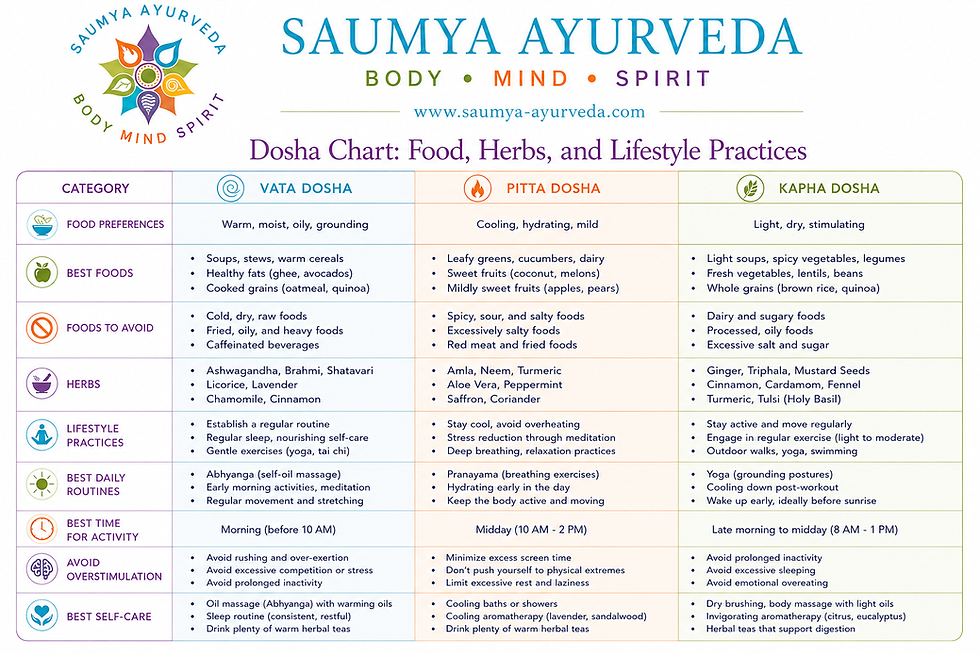
Dosha Chart: Food, Herbs, and Lifestyle Practices

Why Balancing Your Doshas Is Important for Health
Balancing your doshas ensures that your body functions harmoniously, promoting physical health, mental clarity, and emotional well-being. When your doshas are out of balance, you may experience a wide range of issues, from digestive discomfort to emotional instability.
For example:
Vata imbalance can lead to dryness, anxiety, irregular digestion, and mental overwhelm.
Pitta imbalance can cause inflammation, acidity, skin rashes, and irritability.
Kapha imbalance can result in weight gain, sluggish metabolism, and feelings of depression or heaviness.
By balancing the doshas, you can restore harmony and promote optimal health and vitality.
More Articles on The Doshas: Ready to take charge of your health? See if your doshas need a little TLC.
Wild List of Vata Imbalances
Hot List of Common Pitta Imbalances
Sturdy List of Kapha Imbalances

Frequently Asked Questions (FAQ)
What are the three doshas in Ayurveda?
The three doshas are Vata, Pitta, and Kapha. These biological energies govern different functions within the body and mind. Every person has a unique combination of all three doshas, though one or two are often more dominant.
What happens when the doshas become imbalanced?
Dosha imbalances may contribute to symptoms such as:
Digestive issues
Anxiety or stress
Fatigue
Poor sleep
Weight fluctuations
Inflammation
Brain fog
Skin issues
Hormonal imbalance
Ayurveda seeks to restore equilibrium through personalized nutrition, herbs, and lifestyle practices.
How do I know which dosha is dominant?
Your dominant dosha can often be identified through your:
Body type
Energy levels
Digestion
Emotional tendencies
Sleep patterns
Skin and hair qualities
Response to stress
An Ayurvedic practitioner can provide a more detailed doshic assessment.
What foods help balance Vata dosha?
Vata is generally balanced by warm, cooked, grounding, and nourishing foods such as soups, stews, cooked grains, root vegetables, healthy fats, and warming spices. Cold, dry, and raw foods may aggravate Vata in some individuals.
What foods help balance Pitta dosha?
Pitta is often supported by cooling, hydrating, and calming foods such as cucumbers, leafy greens, sweet fruits, coconut, and mild spices. Excessively spicy, fried, salty, or acidic foods may aggravate Pitta.
What foods help balance Kapha dosha?
Kapha tends to benefit from light, warming, and stimulating foods including vegetables, legumes, spices, and lighter grains. Heavy, oily, sugary, and overly processed foods may increase Kapha imbalance.
Can Ayurveda help with stress and anxiety?
Yes. Ayurveda often views stress and anxiety through the lens of Vata imbalance and nervous system dysregulation. Practices such as Abhyanga (oil massage), breathwork, meditation, grounding foods, herbal support, and regular daily routines may help calm the nervous system naturally.
What is Agni in Ayurveda?
Agni refers to the body’s digestive and metabolic “fire.” Strong Agni supports proper digestion, nutrient absorption, energy production, and overall vitality. Weak Agni may contribute to toxin accumulation (Ama) and imbalance.
What is Ama in Ayurveda?
Ama is described as undigested metabolic waste or toxins that accumulate when digestion is impaired. Ayurveda believes Ama may contribute to inflammation, sluggishness, fatigue, digestive issues, and chronic imbalance.
Is Ayurveda only about herbs?
No. Ayurveda is a comprehensive healing system that includes:
Nutrition
Lifestyle practices
Sleep regulation
Breathwork (Pranayama)
Yoga and movement
Meditation
Herbal support
Daily routines
Nervous system balance
The goal is to support long-term health through a personalized and holistic approach.

Final Thoughts: Signs Your Doshas Are Out of Balance
Ayurveda teaches that health is not simply the absence of disease, but a state of balance between the mind, body, spirit, digestion, nervous system, and environment. When the doshas become imbalanced, symptoms such as fatigue, anxiety, digestive issues, inflammation, poor sleep, brain fog, or low energy may begin to appear.
Learning how to balance your Vata, Pitta, and Kapha doshas can help support greater vitality, emotional resilience, digestive strength, and overall well-being. Through simple daily practices like food as medicine, mindful routines, movement, stress reduction, herbal support, and proper rest, Ayurveda offers a holistic framework for creating long-term balance naturally.
Healing does not require perfection. Small, consistent changes that align with your unique constitution can profoundly influence how you feel physically, mentally, and emotionally over time.
By understanding your doshic tendencies and supporting balance through Ayurvedic lifestyle practices, you can cultivate greater harmony, energy, and resilience in everyday life.

Discover the Saumya Ayurveda Approach to Holistic Health
At Saumya Ayurveda, we believe that true health goes beyond the absence of illness—it’s about nurturing the body, mind, and spirit as a whole. Too often, traditional Western medicine isolates symptoms rather than addressing the root cause of imbalance, leaving you feeling unheard and disconnected from your own health.
If you’re seeking more than just a quick fix, you’re not alone. Deep down, you’re searching for a path to a more vibrant, balanced life—one that aligns with your body’s natural rhythms and healing potential. Saumya Ayurveda offers personalized, comprehensive guidance to help you achieve the optimal health you desire.
We provide award-winning, individualized Ayurveda care, tailored to your unique needs. Unlike many practices, our focus is on empowering you with knowledge and support, not just selling products. Our expert practitioners use a holistic approach to help you achieve physical vitality, mental clarity, and emotional balance.
With multi-session consultation packages, you’ll receive continuous support, professional guidance, and tailored Ayurvedic recommendations. We’ll walk you through each step of your journey toward balance and well-being, making Ayurveda accessible and effective for your lifestyle.
Ready to take control of your health and well-being? Explore our personalized services and book your FREE discovery call today to get started on your path to wellness with Saumya Ayurveda.

MEET VEENA: YOUR TRUSTED AYURVEDIC GUIDE FOR CLIENTS WORLDWIDE
Veena Blilie is a Certified Ayurvedic Practitioner, Ayurveda teacher, meditation guide, and monk with over three decades of experience helping clients worldwide achieve greater balance and well-being through Ayurveda.
As founder of Saumya Ayurveda and President Emeritus of the Meditation Center, Veena serves clients worldwide through personalized Ayurvedic wellness guidance, meditation, and yoga practices.
Saumya Ayurveda has been recognized as the #1 Ayurveda cooking blog and the #3 Ayurveda website and blog and has received multiple consecutive awards for best wellness practice.
Through her work, Veena shares practical Ayurvedic guidance, nourishing recipes, and wellness education for modern living.
Inspired from an early age by learning herbal remedies, food as medicine, and traditional healing practices at her grandmother’s knee, Veena combines traditional Ayurvedic wisdom with compassionate, accessible guidance that supports mental, physical, and spiritual well-being.
Known for her warmth, humor, intuitive approach, and accessible style, Veena empowers people to create sustainable health through personalized Ayurvedic wellness plans designed to fit naturally into everyday life.
Veena is also the author of several free Ayurveda eBooks and writes the educational articles published on the Saumya Ayurveda blog.
As seen in:
Voice America
Albuquerque The Magazine
Learn more about Veena and her work through Saumya Ayurveda.
Disclaimer: This information is for educational purposes only and is not a substitute for professional medical advice. Ayurveda works best when tailored to your unique doshic profile, so it’s essential to understand your constitution and imbalances before using herbs, foods, or lifestyle practices. Consult a Certified Ayurvedic Practitioner for personalized guidance.