


Ayurvedic Solutions for Hormonal & Menstrual Health — Support Lymph Flow

Updated: Sep 4
Menstrual health is one of the most revealing indicators of a woman’s overall wellbeing. Painful periods, PMS, irregular cycles, heavy bleeding, and hormonal imbalances are not isolated reproductive issues—they can reflect deeper systemic patterns. From an Ayurvedic perspective, these patterns may include lymph congestion and impaired hormone circulation.
Ayurveda teaches that supporting Rasa dhatu and maintaining smooth menstrual cycle balance may help address these symptoms naturally, while addressing underlying patterns associated with fatigue, bloating, and hormonal fluctuations.
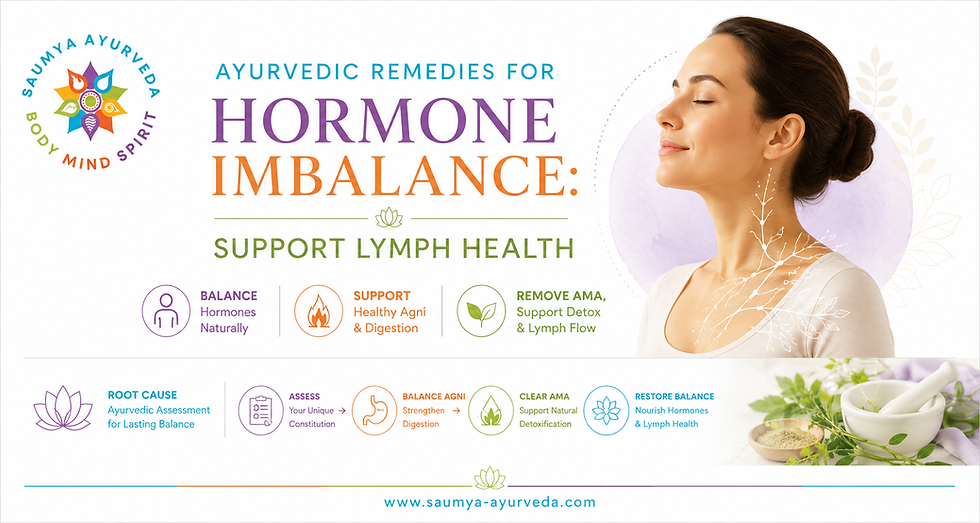
Ayurvedic solutions for hormone health can help improve lymphatic circulation, support regular menstrual cycles, and gently restore hormonal balance.

Before we dive deeper, here’s a quick overview of the most important points and key Ayurvedic terms you’ll encounter in this post. Use this chart as a reference to easily understand concepts like doshas, Agni, and Rasa dhatu, so you can follow along and apply these insights to your own menstrual and lymph health.
Key Takeaways
Key Point | Quick Explanation |
Sluggish lymph flow | Disrupts hormone transport → PMS, painful periods, irregular cycles |
Weak digestion (Agni) | Toxin buildup (Ama) → lymph congestion |
Lifestyle factors | Stress, irregular routines, excessive exercise worsen lymph stagnation |
Ayurvedic solutions | Digestion support, herbs, yoga, stress management |
Personalized dosha care | Tailored treatment ensures lasting results |
Glossary of Ayurvedic Terms
Term | Definition |
Dosha | Body-mind constitution (Vata, Pitta, Kapha) |
Prakruti | Original constitution |
Vikruti | Current imbalances |
Rasa Dhatu | Plasma/lymph equivalent; nourishes tissues |
Agni | Digestive fire |
Ama | Toxins from undigested food or metabolic waste |
Apana Vata | Sub-dosha controlling downward flow, menstruation, elimination |
How Lymphatic System & Hormonal Imbalance Affect Menstrual Health
The lymphatic system is an important part of the immune and circulatory systems, transporting lymph fluid, helping remove cellular waste, regulating immune activity, and supporting the body’s fluid balance.
Unlike the cardiovascular system, the lymphatic system does not have a central pump; it relies on movement, muscle contraction, and diaphragmatic breathing to help keep lymph moving (Harvard Health, 2022).
From an Ayurvedic perspective, PCOS and endometriosis may be understood through patterns involving Ama accumulation, inflammation, impaired circulation, dosha imbalance, and disturbed tissue function. Lymphatic stagnation may be one pattern considered within this broader picture, particularly when there are signs of impaired movement and elimination.
Within this Ayurvedic framework, sluggish lymphatic movement may be viewed as part of a broader pattern of congestion and impaired elimination that can affect how the body maintains balance. This is an Ayurvedic interpretation and does not mean that lymphatic stagnation is an established cause of hormonal imbalance, PCOS, endometriosis, or other menstrual disorders.
Download your free eBook: Diaphragmatic Breathing: The Essential Guide

Menstrual Health and the Lymphatic System: A Modern Medical Overview
The menstrual cycle is governed by a delicate interplay of hormones—primarily estrogen and progesterone—produced by the ovaries and regulated by the brain. Each month, the uterus prepares for pregnancy, and when conception does not occur, the uterine lining sheds as menstruation.
Modern medical sources recognize that menstrual problems such as irregular cycles, amenorrhea, heavy bleeding, clots, and dysmenorrhea often reflect hormonal imbalance, inflammation, stress, or metabolic disruption—all of which are influenced by fluid balance and detoxification systems in the body.
Remember that the gut significantly influences hormone regulation. Known as the Second Brain (ENS), the enteric nervous system (ENS) in the gut communicates with the brain, affecting mood, stress, and anxiety. It functions as the body's largest hormone-producing organ, with more endocrine cells than any other organ. To learn more about the gut-brain-hormone connection, see: Ayurveda and the Gut-Brain Connection: How to Reduce Anxiety Naturally Through Digestion

The Ayurvedic View of the Lymphatic System (Rasa Dhatu)
In Ayurveda, the lymphatic system corresponds to Rasa Dhatu, the first and most foundational body tissue. Rasa is formed immediately after digestion and is responsible for nourishing all other tissues, supporting immunity, and maintaining hormonal flow.
Healthy Rasa dhatu ensures:
Proper circulation of nutrients and hormones
Adequate hydration of tissues
Balanced immune response
Smooth menstrual flow
" Think of Rasa as the body's inner river. When Rasa becomes stagnant or depleted, imbalance spreads to the reproductive system, affecting menstruation and fertility." -Veena Blilie
Discover more about the importance of digestion here: Why Poor Digestion Drains Your Energy.
How Lymph Congestion May Affect Hormones and Menstrual Flow
Ayurveda teaches that lymph stagnation interferes with the body’s ability to transport hormones and eliminate excess hormones. This can lead to inflammation, hormonal dominance, and impaired downward flow governed by Apana Vata—the energy (Vayu) responsible for menstruation.
Lymph congestion may contribute to patterns associated with:
Poor hormone metabolism
Pelvic stagnation
Inflammatory menstrual pain
Irregular or suppressed cycles
PMS
PCOS
PMDD
Water retention / bloating
Fatigue / low energy
Mood swings / irritability
Clotting or heavy flow
Endometriosis or fibroid-related symptoms
Over time, these disruptions may evolve into chronic menstrual or hormonal conditions.
Keep Reading:
Discover Your Menstrual Dosha: An Ayurvedic Guide to Hormonal Balance & Cycle Wellness
Ayurveda for Adolescent Menstrual Health: Holistic Tips for Balanced Cycles

Menstrual Problems Linked to Lymph and Hormone Imbalance
From an Ayurvedic perspective, menstrual symptoms are not isolated reproductive issues. They can reflect how effectively the body manages fluid movement, nourishment, elimination, and dosha balance.
When lymph flow becomes sluggish, the body may have greater difficulty maintaining healthy fluid movement and clearing metabolic waste. Ayurveda considers these patterns alongside Agni, Ama, and hormonal balance when assessing menstrual health.
The lymphatic system and liver are closely connected. The liver produces a significant portion of the body's lymph, while also playing an important role in metabolism and detoxification. Supporting healthy circulation and liver function is therefore an important part of maintaining overall balance.
Modern medicine recognizes that hormonal changes, inflammation, and other physiological factors can contribute to menstrual problems, although the specific role of lymphatic flow varies by condition.
You Might Also Enjoy: Understanding Ama or Toxins in Ayurveda Is the Key to Good Health

Painful Periods and Pelvic Congestion
Painful periods (dysmenorrhea) are commonly associated with inflammation and uterine muscle contractions. From an Ayurvedic perspective, restricted movement and stagnation in the pelvic region may interfere with the smooth downward movement of Apana Vata, which governs menstruation.
When Vata becomes aggravated, cramping, sharp or stabbing pain, lower back discomfort, and irregular flow may occur. Stress, nervous system overload, cold exposure, and dehydration may further aggravate Vata and contribute to discomfort.
Scientific context: The Cleveland Clinic identifies uterine muscle contractions, inflammation, and reduced blood flow as important contributors to dysmenorrhea. Prostaglandins are inflammatory mediators that increase uterine contractions and can contribute to the pain associated with menstrual cramping.
Prostaglandins play an important role in menstrual cramping.
When prostaglandin levels are elevated, stronger uterine contractions can temporarily reduce blood flow to uterine tissue, contributing to pain and cramping, particularly during the first days of menstruation. NIH/PMC: Dysmenorrhea and Prostaglandins.

Heavy or Prolonged Menstrual Bleeding
Heavy menstrual bleeding is often a sign of Pitta-driven inflammation combined with Kapha-related congestion.
In Ayurveda, when lymph stagnates, excess heat may accumulate in reproductive tissues, contributing to patterns of congestion and imbalance.
Symptoms may include:
Heavy flow
Prolonged bleeding
Bright red blood
Clotting
Sensations of heaviness, heat or irritability
Scientific context: According to the Mayo Clinic, heavy menstrual bleeding can have several causes, including hormonal imbalance, problems with ovulation, uterine fibroids, polyps, adenomyosis, thyroid disease, and other medical conditions. Hormonal imbalance can cause the uterine lining to become too thick and result in heavier or unexpected bleeding.
Ayurveda similarly views this as the body's attempt to release excess heat and congestion through menstruation.
Irregular or Absent Periods
Irregular cycles or absent periods (amenorrhea) often reflect depleted or stagnant Rasa dhatu, the Ayurvedic tissue associated with lymph and plasma.
From an Ayurvedic perspective, impaired lymph flow may be viewed as one pattern of stagnation or depletion that can accompany broader imbalances affecting menstrual regularity.
Common contributing factors include:
Chronic stress
Undereating or restrictive diets
Excessive exercise
Digestive weakness (agni)
Emotional depletion
Consuming Vata aggravating foods
Sedentary lifestyle or lack of movement
Poor sleep or irregular daily routines
Dehydration
Highly processed or inflammatory foods
Environmental toxin exposure
Chronic inflammation or immune stress
Expand Your Ayurveda Knowledge:
Improve Agni: Your Digestive Fire Is Key To Good Health
Scientific context: The Mayo Clinic and NIH (NICHD) list stress, low body weight, metabolic imbalance, and hormonal disruption as primary causes or contributors to amenorrhea. These factors also illustrate why Ayurveda takes a systemic view of menstrual health, considering digestion, nourishment, stress, daily rhythms, and overall balance together.

PMS, Bloating, and Breast Tenderness
Premenstrual symptoms such as bloating, breast tenderness, water retention, and emotional sensitivity are classic signs of Kapha-related lymph stagnation. During the luteal phase, progesterone naturally increases fluid retention. If lymphatic drainage is compromised, fluid accumulates rather than circulating efficiently.
Common symptoms may include:
Abdominal bloating
Swollen or tender breasts
Edema in hands or feet
Fatigue and brain fog
Emotional heaviness
Water retention or puffiness
Weight gain or slow metabolism
Sluggish digestion
Low motivation or lethargy
Excess mucus or congestion
Thick or heavy menstrual flow
Scientific context: The Cleveland Clinic notes that PMS is associated with fluid retention, hormone fluctuations, and inflammatory responses. From an Ayurvedic perspective, impaired fluid movement and stagnation may intensify these symptoms, aligning with the Ayurvedic understanding of Kapha imbalance.
Ayurveda Tips for Moving Lymph:
Ayurveda Dry Brushing | How to Detoxify with Garshana
Abhyanga Massage - How to Do Ayurveda Self-Massage at Home
PCOS, Endometriosis, and Chronic Inflammation
From an Ayurvedic perspective, conditions such as PCOS and endometriosis are long-term manifestations of unresolved lymphatic stagnation, ama accumulation, and chronic inflammation in reproductive tissues.
Over time, impaired lymph flow may contribute to:
Estrogen dominance
Inflammatory tissue changes
Ovarian dysfunction
Pelvic pain and fatigue
Menstrual irregularities
Heavy or clotting menstrual flow
Endometriosis symptom worsening
Uterine fibroids
How Impaired Lymph Flow Affects Hormonal and Reproductive Health
According to Ayurveda, when lymph flow becomes sluggish, hormonal regulation, immune balance, and pelvic circulation may be affected, contributing to a range of reproductive health concerns over time.
These disruptions can manifest in several ways, impacting hormone levels, tissue health, and pelvic circulation, as outlined below.
Hormonal effects
Estrogen dominance
Hormonal imbalance
Ovarian dysfunction
Inflammatory changes
Inflammatory tissue changes
Endometriosis symptom worsening
Pelvic circulation issues
Pelvic pain and fatigue
Menstrual irregularities
Heavy or clotting menstrual flow
Scientific context: Modern research at the NIH acknowledges that PCOS and endometriosis involve chronic inflammation, impaired hormone metabolism, and altered tissue signaling.
While lymph dysfunction is not always explicitly named, these conditions involve disrupted fluid balance and immune activity—key functions of the lymphatic system.
From an Ayurvedic view, these patterns can be understood more broadly through lymphatic congestion, Ama accumulation, impaired circulation, and imbalance in the Doshas.
Many women experience hormonal imbalance and lymph health issues, and Ayurveda offers natural strategies to support both simultaneously.
Sleep Supports Hormonal Balance
Restful sleep gives the body time to restore, regulate, and recover. When sleep is disrupted, stress and hormonal rhythms can also be affected. Supporting consistent, restorative sleep is therefore an important part of caring for menstrual health.
Free eBook: The Complete Guide to Better Sleep. Explore simple Ayurvedic practices for creating more restful, restorative sleep.
Summary Table: Menstrual Symptoms, Lymph Patterns & Doshas


How Supporting Lymph Flow and Hormones May Reduce Menstrual Problems
According to Ayurveda, menstrual health reflects systemic balance. When lymphatic flow, digestion, and hormone metabolism are supported, menstrual symptoms may soften naturally.
Ayurveda’s strength lies in recognizing these patterns early—before imbalance becomes chronic—offering a preventative, whole-body approach to women’s health.
Doshas, Lymph, and Menstrual Health Patterns
According to Ayurveda, each dosha affects lymph and menstruation differently:
Kapha imbalance leads to congestion, heaviness, bloating, clotting, and slow flow
Pitta imbalance creates inflammation, heat, heavy bleeding, and irritability
Vata imbalance causes pain, irregular cycles, dryness, and anxiety
“Most menstrual disorders involve multiple doshas, with lymph stagnation frequently at the root. While imbalances across several doshas can make recovery more complex, Ayurveda offers centuries of expertise and proven strategies to support natural balance.” – Veena Blilie
Lifestyle and Digestive Factors That Contribute to Lymph Stagnation
According to Ayurveda, lymph imbalance does not occur overnight. It develops gradually due to:
“When digestion falters, toxins (ama) accumulate and can clog the lymphatic channels, ultimately affecting menstrual health. In Ayurveda, nurturing balanced digestion is the foundation for overall well-being and hormonal harmony.” – Veena Blilie
These practices form the foundation of Ayurvedic menstrual remedies, supporting hormone circulation, lymphatic flow, and menstrual cycle balance.

Ayurvedic Solutions for Hormone Health: Support Lymph Flow Naturally
Ayurveda offers holistic strategies to promote menstrual health by supporting lymphatic flow, hormonal balance, and systemic equilibrium.
These time-tested approaches work alongside modern insights, which emphasize the importance of circulation, reducing inflammation, and gentle detoxification for women’s health.
Ayurvedic Solutions for Hormone Health: Support Lymph Flow Naturally
Ayurveda offers holistic strategies to promote menstrual health by supporting lymphatic flow, hormonal balance, and systemic equilibrium.
These time-tested approaches work alongside modern insights, which emphasize the importance of circulation, reducing inflammation, and maintaining healthy fluid balance for women’s health.
For practical guidance and foundational knowledge, explore our What is Ayurveda? to learn how simple daily practices can support your menstrual and overall well-being.
Ayurvedic Solutions for Hormone Health: Support Lymph Flow Naturally
Ayurveda offers holistic strategies to promote menstrual health by supporting lymphatic flow, hormonal balance, and systemic equilibrium.
These time-tested approaches work alongside modern insights, which emphasize the importance of circulation, reducing inflammation, and maintaining healthy fluid balance for women’s health.
Strengthening Digestion to Improve Lymph Flow
In Ayurveda, digestion is the cornerstone of systemic health. Healthy digestion supports the formation and nourishment of Rasa dhatu, the Ayurvedic tissue associated with lymph and plasma.
According to Ayurveda, weak digestion can lead to ama accumulation, which can contribute to lymphatic stagnation, disrupt hormonal balance, and contribute to menstrual irregularities, fatigue, and low energy.
Consume warm, cooked, lightly spiced mealsRationale: Supports Agni (digestive fire) and helps prevent ama formation while supporting healthy digestion and nutrient assimilation.
Favor easily digestible proteins and healthy fatsRationale: Reduces digestive stress while supplying nutrients essential for nourishment of Rasa dhatu and reproductive tissues.
Avoid excessive raw, cold, or processed foodsRationale: According to Ayurveda, these foods can weaken Agni and contribute to ama formation and lymphatic stagnation.
Eat according to your doshic profile (Prakruti and Vikruti)Rationale: Tailoring foods to your constitution and current imbalance helps support balanced Agni, Rasa dhatu, and systemic equilibrium.
Scientific Support
Modern research recognizes important connections among digestive health, nutrient absorption, metabolism, immune function, and hormone regulation. These systems also interact with fluid balance and circulation throughout the body.
Ayurvedic Perspective
From an Ayurvedic view:
Maintaining Rasa dhatu supports healthy nourishment, circulation, and menstrual function.
Proper digestion supports healthy formation of Rasa dhatu and helps prevent ama accumulation.
When Rasa becomes stagnant or impaired, Ayurveda considers this capable of contributing to disturbances in circulation, tissue nourishment, and menstrual health.
Additional Resources

Movement and Yoga for Lymphatic Circulation
The lymphatic system relies on muscle movement and diaphragmatic breathing, rather than a central pump. Ayurveda emphasizes gentle, mindful movement to stimulate lymph flow, reduce pelvic congestion, and support overall hormonal and reproductive health.
Recommended Practices
Walking and light cardio – Activates circulation and encourages lymph movement.
Yoga postures targeting the pelvic area – Poses such as Supta Baddha Konasana and Viparita Karani improve pelvic drainage and circulation.
Rebounding or gentle trampoline exercises – Promote lymph flow through vertical movement.
Breathwork (Pranayama) – Enhances oxygenation, supports detoxification, and stimulates lymphatic drainage.
Helpful Resource:
Scientific Support
Physical activity enhances lymphatic drainage and immune function, reducing fluid retention and swelling (Harvard Health, 2022).
Specific yoga practices can reduce menstrual discomfort, bloating, and hormonal imbalance (NIH, 2020).
For More Guidance: Natural Ways to Balance Hormones with Ayurveda

Self-Massage (Abhyanga) and Nervous System Support
Abhyanga, or daily self-massage with warm oil, is a cornerstone of Ayurvedic lymphatic and menstrual support. Massage stimulates lymph flow, calms Vata dosha, and reduces nervous system overactivation, which can aggravate menstrual pain and irregularity.
Key Practices:
Warm sesame, almond, or herbalized oils (which oil is best depends on your doshic picture)
Gentle strokes along lymphatic pathways, particularly around the abdomen, pelvis, and inner thighs
Daily practice, ideally before showering or bathing
These practices lay the groundwork for Ayurvedic menstrual remedies, promoting hormone circulation, lymphatic flow, and the balance of the menstrual cycle.
Here's How To Do Abhyanga: Abhyanga Massage - How to Do Ayurveda Self-Massage at Home
Scientific Support:
Massage therapy improves lymphatic drainage, circulation, and parasympathetic nervous system activity (Mayo Clinic, 2021)
Stress reduction from massage supports hormone regulation and menstrual regularity (NIH, 2022)
For tips, see our full guide on Daily Ayurvedic Routines.

Herbal Support for Female Reproductive Health
Ayurveda uses individualized herbal formulations to support lymphatic function, hormonal balance, and tissue nourishment. Herbs are selected based on dosha constitution, current imbalances, and menstrual challenges.
Commonly used herbs include:
Ashoka (Saraca indica): Supports uterine health and menstrual regularity
Shatavari (Asparagus racemosus): Nourishes reproductive tissues, balances hormones
Triphala: Promotes digestion and detoxification
Guggulu (Commiphora mukul): Supports circulation and reduces inflammation
“The herbs mentioned are provided for educational purposes only. The right Ayurvedic herbs for you depend on your unique prakruti (constitution), current vikruti (imbalances), stage of life, climate, and season. Always consult an experienced, certified Ayurvedic practitioner before using any herbs.” – Veena Blilie
Certain classes of Ayurvedic herbs may be used to support lymph health, which in turn supports proper hormonal balance and menstrual wellness.
Summary Table: Ayurvedic Approaches, Lymph Support, and Menstrual Benefits


Frequently Asked Questions About Lymph and Menstrual Health
How does the lymphatic system affect menstrual health?
The lymphatic system helps regulate fluid balance, immune function, and hormone transport. From an Ayurvedic perspective, when lymph flow becomes sluggish or congested, stagnation and impaired circulation may affect pelvic tissues, contributing to PMS, painful periods, bloating, and irregular cycles.
Can lymph congestion cause painful or heavy periods?
According to Ayurveda, yes. Lymph congestion creates stagnation in the pelvic region. This stagnation, combined with hormonal imbalance and impaired circulation, can contribute to menstrual pain, cramping, heavy bleeding, and clotting.
What are signs of lymph imbalance in women?
Common signs may include bloating, breast tenderness, water retention, fatigue, PMS, sluggish digestion, brain fog, and menstrual irregularities. For guidance on supporting lymph flow, see Saumya Ayurveda’s lymph health resources.
How does Ayurveda treat lymph-related menstrual problems?
Ayurvedic care focuses on strengthening digestion, improving circulation, balancing the doshas, and supporting lymph flow through diet, lifestyle practices, herbal support, and nervous system regulation. Care is personalized, and learning about Ayurvedic therapies for women’s health can help guide your approach.
Should I see a doctor for menstrual problems?
Yes. Persistent or severe menstrual symptoms should always be evaluated by a qualified medical professional. Ayurveda works alongside modern medical care. For more support, you can book a discovery call at Saumya Ayurveda.

When to Seek Professional Ayurvedic Guidance
Working with an experienced Certified Ayurvedic Practitioner allows you to receive tailored guidance, ensuring that dietary, lifestyle, and herbal interventions support your unique constitution (prakruti) and current imbalances (vikruti).
This personalized approach is key to long-term energy, hormonal balance, and systemic vitality.
Here are five key reasons why understanding your doshas can be tricky:
Everyone has all three doshas.
Multiple doshas can be out of balance at the same time.
Your environment matters. Where you live influences how your doshas manifest.
Seasonal changes affect your doshas. Transitions between seasons can shift your balance.
Your stage of life plays a role. Age and life phase strongly influence your doshic profile.
“A precise doshic assessment is essential for determining the right Ayurvedic treatment, including herbs, medicinal foods, and lifestyle practices. Clear understanding of your dosha ensures a truly personalized and effective plan.An inaccurate assessment can lead to ineffective results and further imbalances. Evaluating your doshic profile involves multiple layers, considering interactions between doshas, seasons, climate, and life stages. Because doshas are fluid and dynamic, professional guidance is invaluable for achieving lasting balance.” – Veena Blilie
If you experience persistent health issues, feel uncertain about your dosha quiz results, or want a deeper understanding of your unique constitution, consulting an experienced, certified Ayurvedic practitioner can make all the difference.
A practitioner can provide:
Personalized herbal recommendations
Gentle cleansing programs
Food-as-medicine guidance
Lifestyle changes tailored to your doshic balance
Professional guidance ensures your Ayurvedic practice is truly customized to your needs—helping you restore balance, support energy, and support long-term wellness.

Final Thoughts: Supporting Menstrual Health at the Root
From an Ayurvedic perspective, menstrual challenges aren’t random—they signal that lymph flow, digestion, hormones, or stress response may need attention.
Ayurvedic solutions for hormonal imbalance and irregular periods focus on addressing these underlying patterns, not just masking symptoms. Small, personalized changes in diet, lifestyle, and herbal support can improve menstrual comfort, energy, and overall wellbeing.
Supporting lymph health, balancing the doshas, and enhancing circulation are key to healthier cycles. Learn more in How Lymph Imbalance Causes Menstrual Problems — An Ayurvedic Perspective.
Curious about what your body is communicating? Book a free 15-minute discovery call to explore whether a personalized Ayurvedic approach could support your menstrual and hormonal health—no pressure, just clarity and guidance.

What Saumya Ayurveda Clients Are Saying
A.K., Minnesota, USA
Key Results: Regular periods | Symptom-free cycles | Improved skin | Overall balance
“After six months with no period and increasing concern, I am happy to report that my periods are completely regular. After just two months of Veena’s treatment, they are almost symptom-free, with only mild cramping. I feel very good and well balanced overall, and my skin has improved as well. I’m looking forward to doing the cleanse with her this spring.”
Anna, St. Paul, Minnesota, USA
Key Results: Returned period after 6 months | Improved skin | Lasting menstrual health | Sustainable lifestyle changes
“I sought support from Veena for irregular menstruation, skin issues, and overall stagnation. After a comprehensive assessment, she provided an intuitive yet simple plan, including gentle changes to diet, daily routine, and a few herbal supplements. The changes were profound. I hadn’t had my period for six months, and after four weeks of following Veena’s suggestions, it returned and has been regular since. Her approach works with the body to create lasting change beyond what medication can achieve. I am so grateful and highly recommend her services!”
Meg McNeil, Boulder, Colorado, USA
Key Results: Improved digestion | Healthier skin | Balanced menstrual cycle | Overall wellness
“Veena has been a dream to work with! I came to her with concerns about digestion, skin, and my menstrual cycle. She has helped me find significant improvement in all areas — and more!”
Anne, Minneapolis, Minnesota, USA
Maria F., San Diego, California, USA
Key results: Improved mental and physical health | Gained control over monthly cycle | Sustainable, natural approach
“Veena has literally changed my life. I was struggling with mental and physical symptoms that my doctor had no answer for. I thought I was going crazy and just making symptoms up. With Veena’s guidance, herbs, and diet changes, I soon realized that my symptoms were very real. Small victories along the way helped me improve with each appointment. Now, almost six months later, I am a completely different person. I still have things to work on, but with Veena’s help, I know I can take control of my health instead of relying solely on Western medicine. I highly encourage getting the longer package, especially if you are working with monthly cycle challenges. Working with Veena has been the best decision I have made for my health. You won’t be disappointed!”
Hannah T., Minneapolis, Minnesota, USA
Key results: Virtually symptom-free menstrual cycles | Balanced doshas naturally | Long-term health improvements
“I’ve been working with Veena for almost a year and I am beyond thrilled with the results. She gave me knowledge and tools that will support my health for years to come. Since starting, I’ve had two menstrual cycles with virtually no PMS, cramping, or typical symptoms — a truly profound change. I now have a special herbal tea blend and tips from Veena that quickly bring my doshas back into balance. If you’re struggling with chronic health conditions that doctors can’t resolve, Veena provides real, long-term improvement and benefits for your health.”
Maggie C., USA
Key results: Post-menopause hormone support | Custom Ayurvedic herbal formula | Practical guidance and resources
“I just had a follow-up session with Veena and was delighted by both the quality and quantity of support I received. She is a wealth of knowledge and connects you with excellent resources to support your health. I wanted help with hormones shifting post-menopause, and Veena provided an Ayurvedic perspective that made so much sense. I now have a custom herbal formula to support my whole body, including hormones. Having Veena on your health team is a gift!! Thank you, Veena!”
Physician Testimonial (Medical Endorsement)
“As a physician, I have always believed that prevention is better than cure. In today’s healthcare environment, Ayurveda offers a logical and natural approach to long-term health and prevention.
I began working with Veena during a very demanding phase of my life, and she made the process accessible even within my busy schedule. I was encouraged to follow a steady, sustainable approach focused on real lifestyle change.
Over time, I experienced meaningful improvements in balance, energy, and well-being. In my medical practice, I now see many patients with similar stress- and diet-related imbalances, which has further reinforced my trust in Ayurvedic principles.
I have since referred several patients to Saumya Ayurveda and consider Veena a valuable resource in supporting holistic well-being.”
Dr. Gauri Nagargoje
M.D., Oncology & Hematology
Physician Testimonial (Medical Endorsement)
“As a physician, I initially struggled with Ayurveda’s simplicity and depth, but Veena’s guidance made it practical, scientific, and deeply effective.
Veena has transformed my health and perspective on healing. I experienced significant improvements in focus, digestion, stress response, and overall vitality.
Her personalized approach made lifestyle changes easy and sustainable.
This journey not only improved my health but also inspired a lifelong commitment to integrating Ayurveda into holistic healthcare.”
Dr. Jessica Bedi
D.O., & Ayurvedic Doctor

Discover the Saumya Ayurveda Way
Ayurveda begins with seeing the whole person.
At Saumya Ayurveda, symptoms are not viewed in isolation. Ayurveda looks at the relationship between digestion, elimination, sleep, stress, energy, daily rhythms, mind, stage of life, season, climate, constitution, and current dosha imbalances to understand the patterns that influence how you feel.
When health concerns persist, it can be frustrating to feel that individual symptoms are being addressed without understanding the bigger picture. Ayurveda offers another way—one that asks not only “What is the symptom?” but also “What are the body and mind communicating?”
Personalized Ayurveda, Rooted in Tradition
Saumya Ayurveda combines classical Ayurvedic principles with practical guidance for modern life. Your Ayurveda plan is based on your individual prakriti (natural constitution), virkriti (current imbalances of the doshas), lifestyle, and circumstances—not a generic dosha checklist or one-size-fits-all protocol.
The goal is not to overwhelm you with rules. It is to help you understand your own body and mind, and make sustainable changes that fit naturally into your life, informed by the wisdom of Ayurveda.
For those who want ongoing support, concierge-style Ayurveda consultation packages provide personalized guidance, thoughtful follow-up, and practical tools to help turn Ayurvedic principles into everyday habits.
Education First. Personalized Guidance When You Need It.
Veena takes an education-first, client-centered approach. At Saumya Ayurveda, our favorite product is knowledge. You won’t find education built around selling a supplement, herb, or wellness product. Instead, you’ll find traditional Ayurvedic perspectives, practical guidance, and timeless principles that help you better understand your body, mind, and unique constitution.
When understanding deepens, better choices naturally follow.
For those who want ongoing support, Saumya Ayurveda consultation packages provide personalized guidance, thoughtful follow-up, and practical tools to help turn Ayurvedic principles into everyday habits.
Learn. Observe. Understand. Transform.
Begin your Ayurveda journey with a free 15-minute Discovery Call with Veena and explore whether personalized Ayurvedic guidance is right for you.

MEET VEENA: YOUR TRUSTED AYURVEDIC GUIDE FOR CLIENTS WORLDWIDE
Veena Blilie is a Certified Ayurvedic Practitioner, Ayurveda teacher, meditation guide, and monk with over three decades of experience helping clients worldwide achieve greater balance and well-being through Ayurveda.
As founder of Saumya Ayurveda and President Emeritus of the Meditation Center, Veena serves clients worldwide through personalized Ayurvedic wellness guidance, meditation, and yoga practices.
Saumya Ayurveda has been recognized as the #1 Ayurveda cooking blog and the #3 Ayurveda website and blog and has received multiple consecutive awards for best wellness practice.
Through her work, Veena shares practical Ayurvedic guidance, nourishing recipes, and wellness education for modern living.
Inspired from an early age by learning herbal remedies, food as medicine, and traditional healing practices at her grandmother’s knee, Veena combines traditional Ayurvedic wisdom with compassionate, accessible guidance that supports mental, physical, and spiritual well-being.
Known for her warmth, humor, intuitive approach, and accessible style, Veena empowers people to create sustainable health through personalized Ayurvedic wellness plans designed to fit naturally into everyday life.
Veena is also the author of several free Ayurveda eBooks and writes the educational articles published on the Saumya Ayurveda blog.
As seen in:
Voice America
Albuquerque The Magazine
Learn more about Veena and her work through Saumya Ayurveda.
Disclaimer: This information is for educational purposes only and is not a substitute for professional medical advice. Ayurveda works best when tailored to your unique doshic profile, so it’s essential to understand your constitution and imbalances before using herbs, foods, or lifestyle practices. Consult a Certified Ayurvedic Practitioner for personalized guidance.


