What Can 5,000 Years of Ayurveda Teach Us About Stress, Anxiety, and Mental Well-Being?

What if stress, anxiety, and exhaustion are not signs that your body is failing—but signs that it is trying to get your attention?
Most of us have been taught to view symptoms as problems to eliminate as quickly as possible. But Ayurveda, the world's oldest continuously practiced system of natural health, offers a radically different perspective. For more than 5,000 years, it has taught that symptoms are often messages—signals that something in our lives has fallen out of balance and is asking to be restored.
Suddenly, stress is no longer just stress. Anxiety is no longer just anxiety. Fatigue is no longer simply a lack of energy. They become valuable clues pointing toward underlying imbalances in our daily habits, diet, sleep, environment, and relationship with ourselves.
This shift in perspective is one of Ayurveda's most profound gifts. Rather than asking, "How do I get rid of this symptom?" Ayurveda asks, "What is this symptom trying to tell me?" By listening to the body's wisdom instead of fighting against it, we can begin to address the root causes of imbalance and cultivate greater calm, clarity, resilience, and vitality.
In this article, we'll explore what 5,000 years of Ayurvedic wisdom can teach us about stress, anxiety, and mental well-being, along with three simple practices you can begin using today.

We’re honored to be ranked the #1 Ayurveda cooking blog and #3 Ayurveda site globally—a reflection of the trust and support of our growing international community. Thank you, Feedspot!
What Can 5,000 Years of Ayurveda Teach Us About Stress, Anxiety, and Mental Well-Being?
What if stress, anxiety, and exhaustion are not signs that your body is failing—but signs that it is trying to get your attention?
Most of us have been taught to view symptoms as problems to eliminate as quickly as possible. But Ayurveda, the world's oldest continuously practiced system of natural health, offers a radically different perspective. For more than 5,000 years, it has taught that symptoms are often messages—signals that something in our lives has fallen out of balance and is asking to be restored.
Suddenly, stress is no longer just stress. Anxiety is no longer just anxiety. Fatigue is no longer simply a lack of energy. They become valuable clues pointing toward underlying imbalances in our daily habits, diet, sleep, environment, and relationship with ourselves.
This shift in perspective is one of Ayurveda's most profound gifts. Rather than asking, "How do I get rid of this symptom?" Ayurveda asks, "What is this symptom trying to tell me?" By listening to the body's wisdom instead of fighting against it, we can begin to address the root causes of imbalance and cultivate greater calm, clarity, resilience, and vitality.
In this article, we'll explore what 5,000 years of Ayurvedic wisdom can teach us about stress, anxiety, and mental well-being, along with three simple practices you can begin using today.

Why So Many People Feel Stressed, Anxious, and Exhausted
Have you ever felt like you're doing all the right things but still don't feel like yourself?
Perhaps you're getting through the day on determination alone. Your mind won't stop racing when your head finally hits the pillow. You feel tired but wired. Overwhelmed but unable to slow down. You know you need rest, yet somehow rest never feels restorative.
If this sounds familiar, you're not alone.
Many people live with a quiet feeling that something is off. Their lab work may be normal. They may be functioning well enough to meet their responsibilities. Yet beneath the surface, they don't feel balanced, energized, or at ease.
Ayurveda recognizes this experience.
Long before the modern conversation about stress, burnout, nervous system regulation, and mental wellness, Ayurveda understood that the body and mind are inseparable. When one is out of balance, the other eventually follows.
Rather than viewing stress, anxiety, and exhaustion as isolated problems, Ayurveda sees them as important clues that deserve our attention.

The Ayurvedic Insight That Changes Everything
One of the most empowering teachings in Ayurveda is this:
Symptoms are not the enemy.
They are messengers.
This perspective can be life-changing.
Most of us have been conditioned to fight symptoms. We want the anxiety to disappear. We want the fatigue to go away. We want the stress to stop.
Ayurveda invites us to pause and ask a different question:
Why is this happening in the first place?
What if anxiety is asking for more grounding?
What if exhaustion is asking for more nourishment?
What if irritability is asking for healthier boundaries?
What if overwhelm is asking for a slower pace?
What if your symptoms are not evidence that something is wrong with you, but evidence that your body is trying to guide you back toward balance?
For many people, this is the moment everything begins to shift.
Because when symptoms become information rather than enemies, we can stop fighting ourselves and begin listening.

Why Modern Life Creates the Perfect Conditions for Imbalance
Ayurveda may be ancient, but its observations about human nature feel remarkably relevant today.
Consider the pace of modern life.
Many of us wake up and immediately check our phones. We move quickly from one responsibility to another. We multitask during meals. We spend hours looking at screens. We consume a constant stream of information, opinions, alerts, and notifications.
At the same time, we often sacrifice the very things that help us maintain balance:
Quiet reflection
Time in nature
Meaningful connection
The nervous system rarely receives the message that it is safe to relax.
Eventually, the body begins speaking louder.
Through stress.
Through anxiety.
Through poor sleep.
Through fatigue.
Through digestive discomfort.
Through brain fog.
Ayurveda teaches that these experiences are not random. They are signals that something in our lives may need attention.

Understanding Anxiety Through the Lens of Ayurveda
One of Ayurveda's most well-known teachings is the concept of the three doshas: Vata, Pitta, and Kapha.
These biological energies influence our physical, emotional, and mental tendencies.

Vata: When the Mind Moves Faster Than the Body
Vata governs movement, communication, creativity, and the nervous system.
When balanced, Vata supports enthusiasm, inspiration, flexibility, and imagination.
When aggravated, it may contribute to:
Anxiety
Worry
Racing thoughts
Restlessness
Insomnia
Feeling overwhelmed
Difficulty focusing
Many aspects of modern life increase Vata: irregular schedules, excessive screen time, travel, overstimulation, multitasking, and chronic uncertainty.
This is one reason so many people today struggle with symptoms that resemble a classic Vata imbalance.
Wondering whether excess Vata may be contributing to your symptoms? Explore our Wild List of Vata Imbalances and discover the surprising ways Vata imbalance can affect the body, mind, digestion, sleep, energy, emotions, and overall well-being.

Pitta: When Achievement Leads to Burnout
Pitta governs ambition, focus, transformation, and productivity.
When balanced, Pitta helps us achieve goals and navigate challenges effectively.
When excessive, it may show up as:
Irritability
Frustration
Impatience
Perfectionism
Self-criticism
Burnout
Many people who appear successful on the outside are quietly struggling on the inside.
Ayurveda reminds us that constant productivity is not the same as health.
At some point, the body asks for restoration.
Curious whether excess Pitta may be driving your symptoms? Explore our Hot List of Common Pitta Imbalances to learn how Pitta imbalance can contribute to irritability, perfectionism, burnout, inflammation, digestive issues, impatience, and other signs of excess heat in the body and mind.
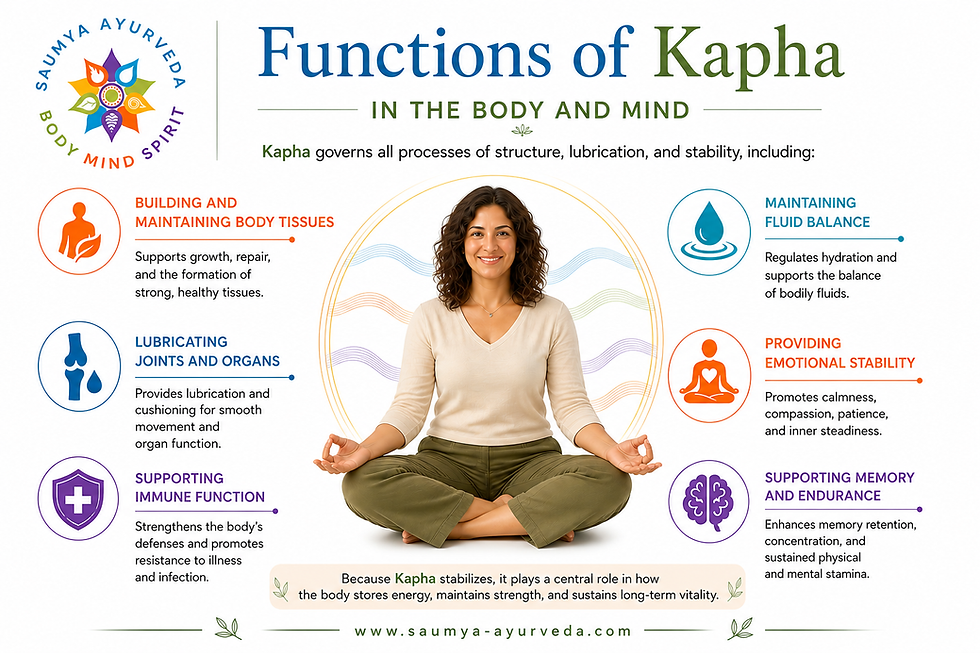
Kapha: When Life Feels Heavy
Kapha provides stability, structure, nourishment, and resilience.
When balanced, Kapha supports patience, compassion, and emotional steadiness.
When excessive, it may contribute to:
Low motivation
Feeling stuck
Excessive sleeping
Lack of inspiration
Understanding these patterns can help us move beyond self-judgment and toward self-awareness.
Wondering whether excess Kapha may be contributing to low energy, sluggish digestion, congestion, emotional eating, brain fog, weight gain, or a feeling of being stuck? Explore our Sturdy List of Kapha Imbalances to discover the common physical, mental, and emotional signs of excess Kapha and learn how Ayurveda helps restore lightness, clarity, motivation, and balance.

The Connection Between Digestion and Mental Well-Being
One of Ayurveda's most fascinating teachings is that mental well-being begins, in part, with digestion.
Long before researchers began exploring the gut-brain connection, Ayurvedic practitioners recognized that digestion influences far more than the digestive tract.
According to Ayurveda, digestion affects energy, immunity, vitality, and mental clarity.
When digestion is functioning well, the body is better able to create nourishment from food and maintain balance throughout the system.
When digestion becomes impaired, the effects may be felt physically, mentally, and emotionally.
This is why Ayurvedic practitioners often ask detailed questions about appetite, bloating, elimination, meal timing, food cravings, and energy patterns—even when someone seeks support for stress or anxiety.
Everything is connected.
The mind affects digestion.
Digestion affects the mind.
Neither exists in isolation.
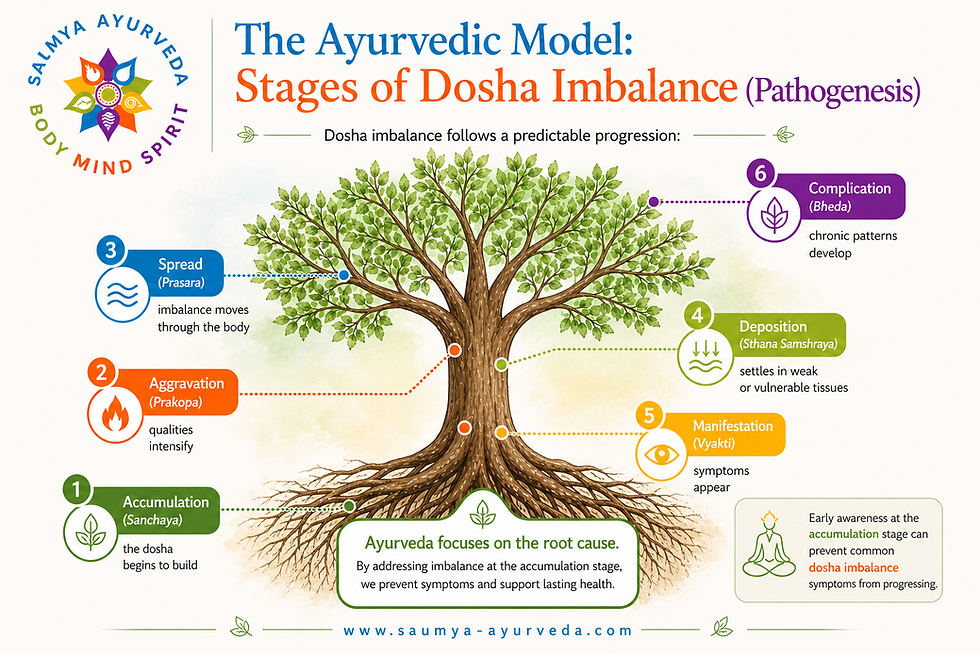
Have You Been Treating the Symptom While Missing the Cause?
Many people spend years searching for answers.
They try a new diet.
A new supplement.
A new exercise program.
A new meditation app.
A new wellness trend.
Sometimes these approaches help.
Sometimes they don't.
The frustrating part is that what works beautifully for one person may do very little for another.
From an Ayurvedic perspective, this makes perfect sense.
Two people may experience anxiety, poor sleep, fatigue, overwhelm, or brain fog, yet the underlying causes may be completely different.
One person's symptoms may be rooted in a Vata imbalance.
Another person's may reflect burnout and excessive Pitta.
Someone else may be dealing with digestive imbalance, depleted energy reserves, irregular routines, or a combination of factors.
The symptoms may look similar.
The root causes may not.
This is why Ayurveda does not offer a one-size-fits-all solution.
The goal is not simply to manage symptoms.
The goal is to understand why they are occurring.
When you understand your unique constitution and patterns of imbalance, the guessing often stops.
You gain clarity about what supports your health, what depletes it, and where to focus your efforts.
For many people, this is the moment everything begins to make sense.

Why Ayurveda Remains Relevant After 5,000 Years
Despite extraordinary advances in technology and healthcare, millions of people continue to struggle with stress, anxiety, exhaustion, poor sleep, and burnout.
Ayurveda remains relevant because it addresses something timeless:
The human need for balance.
Its message is simple but profound.
Your body is not working against you.
Your symptoms are not evidence that you are broken.
Your body is constantly communicating with you.
The question is not whether it is speaking.
The question is whether you are listening.
For more than 5,000 years, Ayurveda has helped people understand the relationship between their daily choices and their well-being. It teaches that health is not created through perfection. It is cultivated through awareness, consistency, and alignment with our natural rhythms.
And perhaps that is Ayurveda's greatest lesson of all:
The calm, clarity, resilience, and vitality you seek are not things you need to chase.
They are qualities that emerge when balance is restored.
Feeling overwhelmed by constant notifications, screen time, and digital demands? Discover practical Ayurvedic strategies for creating healthier technology habits in Ayurveda for Modern Life: Managing Screen Time and Stress with Daily Rituals, and learn how simple daily routines can help reduce stress, restore focus, and bring greater balance to your day.

Continue Your Journey Toward Greater Calm and Balance
If this article resonated with you, these additional resources can help you deepen your understanding of Ayurveda's approach to stress, anxiety, burnout, and nervous system balance:
Ayurveda for Anxiety and Burnout – 7 Ways to Reclaim Your Calm Discover practical Ayurvedic strategies to help calm an overactive mind, reduce overwhelm, and restore emotional resilience.
7 Ayurvedic Treatments for Anxiety Explore seven time-tested Ayurvedic approaches that support greater grounding, relaxation, and mental well-being.
Ayurveda for Stress Relief: 3 Simple Steps Learn three simple yet powerful Ayurvedic practices you can begin using today to reduce stress and cultivate a greater sense of ease.
Remember, healing is not about perfection. Small, consistent steps often create the most meaningful transformation. Every nourishing choice, mindful breath, and supportive daily habit helps guide the body and mind back toward balance.
This version is more engaging than a simple "Related Articles" list because it encourages readers to keep exploring while reinforcing your core message and increasing click-through rates on internal links.

Three Simple Ayurvedic Practices to Calm the Mind and Restore Balance
If you've ever wished you could turn down the volume on a racing mind, feel more grounded during stressful moments, or wake up with greater energy and clarity, these practices are for you.
Ayurveda teaches that the body and mind are deeply interconnected. When the nervous system spends too much time in fight-flight-freeze mode, we may experience anxiety, overwhelm, poor sleep, fatigue, brain fog, and difficulty focusing.
The good news? Small, consistent practices can help guide the body back into a state of rest, restore, and relax—where healing, resilience, and well-being naturally flourish.
The following three practices form the foundation of the Saumya Ayurveda 3-Step Meditation Process. We invite you to explore them using our free guided practices and experience the difference for yourself. Commit to them for 40 days and observe what changes.
1. Change Your Breath, Change Your State
Your breath is one of the fastest ways to influence your nervous system.
Most people unknowingly breathe in a way that reinforces stress and tension. By learning diaphragmatic breathing, you send a signal of safety to the body, helping to quiet the mind, improve focus, and cultivate a greater sense of calm and stability.
This simple practice often becomes the missing link between feeling overwhelmed and feeling grounded. How to Breathe Diaphragmatically and Change Your Life

2. Follow Along with Our Free Guided Practices
Meditation doesn't have to be complicated or time-consuming.
Just 11 minutes in the morning and 11 minutes in the evening can become powerful anchors in your day.
Our free guided practices make it easy to learn the Saumya techniques step-by-step, helping you move from thinking about meditation to actually experiencing its benefits.
If you're not sure where to begin, start here. Let the guidance do the work while you simply follow along.

3. Create a Daily Rhythm That Supports Calm
Ayurveda teaches that healing happens through the small choices we make every day.
Explore our:
Choose just one or two practices that resonate with you. As you combine these rituals with diaphragmatic breathing and meditation, everyday activities become opportunities to cultivate presence, peace, and balance.
You don't have to overhaul your life overnight. Small changes, practiced consistently, can create profound transformation over time.
Ready to begin? Explore our free guided practices and discover what just a few minutes a day can do for your mind, body, and spirit.
Try our free Two-Minute Meditation Practice and discover how a few moments of stillness can transform the way you move through your day.
Frequently Asked Questions
Can Ayurveda help with stress and anxiety?
Ayurveda offers a holistic framework for understanding and supporting stress, anxiety, and mental well-being. Rather than viewing symptoms as isolated problems, Ayurveda seeks to understand the underlying imbalances that may be contributing to them.
Through personalized recommendations involving lifestyle, daily routine, breathing practices, nutrition, and self-care, Ayurveda helps create the conditions for greater dosha balance and resilience.
Why do I feel stressed even when nothing is technically wrong?
Many people come to Ayurveda feeling exactly this way.
Their lab work may be normal. They may be managing their responsibilities and appearing successful on the outside. Yet they feel exhausted, overwhelmed, anxious, disconnected, or simply "not like themselves."
From an Ayurvedic perspective, symptoms often appear long before a diagnosable condition develops. Stress, fatigue, poor sleep, and overwhelm may be early signs that the body is asking for more balance, nourishment, rest, or support.
Which dosha is associated with anxiety?
Vata dosha is most commonly associated with anxiety, worry, racing thoughts, restlessness, and difficulty sleeping.
However, Ayurveda recognizes that every person is unique. Two people may experience anxiety for very different reasons. This is why personalized assessment is often more valuable than simply treating a symptom.
Why does Ayurveda ask so many questions about digestion?
Because Ayurveda views digestion as one of the foundations of health.
Long before researchers began exploring the gut-brain connection, Ayurveda recognized that digestion influences energy, vitality, immunity, and mental clarity. This is why Ayurvedic practitioners often ask about appetite, bloating, elimination, food cravings, and meal timing—even when someone is seeking support for stress or anxiety.
What are the best Ayurvedic practices for stress relief?
Some of the most effective Ayurvedic practices are also the simplest:
Consistent daily routines
Regular meal times
Restorative sleep
Time in nature
Reducing overstimulation
Small practices performed consistently often create greater results than dramatic changes that are difficult to sustain.
Why do wellness recommendations work for some people but not for others?
This is one of Ayurveda's greatest strengths.
Two people may share the same symptom but have entirely different underlying causes. What helps one person may not help another because their constitution, lifestyle, digestion, stress patterns, and imbalances are different.
Ayurveda focuses on understanding the individual rather than applying a one-size-fits-all solution.
How long does it take Ayurveda to work?
The answer depends on the individual and the nature of the imbalance.
Some people notice improvements in their sleep, energy, digestion, or stress levels within days or weeks. More longstanding imbalances often require greater patience and consistency.
Ayurveda is not a quick fix. It is a long-term approach to creating sustainable health and well-being.
Do I need herbs to benefit from Ayurveda?
Not necessarily.
Many people are surprised to learn that some of the most powerful Ayurvedic tools involve daily habits rather than herbs. Sleep, routine, breathing practices, nourishment, stress management, and lifestyle choices often form the foundation of an Ayurvedic wellness plan.
How do I know which Ayurvedic recommendations are right for me?
This is where personalized guidance can be invaluable.
Ayurveda recognizes that each person has a unique constitution and unique patterns of imbalance. Understanding your individual needs can help you focus on the practices most likely to support your health rather than relying on trial and error.
What is the first step toward restoring balance?
The first step is often the simplest: Begin listening.
Notice your energy, digestion, sleep, stress levels, and daily habits without judgment. Your body is constantly providing information. Ayurveda teaches that when we learn to listen to those signals, we can begin making choices that support greater calm, clarity, resilience, and vitality.

Ready to deepen your understanding of Ayurveda? Explore our Free Resources to Learn Authentic Ayurveda, where you'll find educational articles, eBooks, guided practices, and practical tools to help you bring the timeless wisdom of Ayurveda into your daily life.

Final Thoughts
In a world where stress, anxiety, and exhaustion have become increasingly common, Ayurveda offers a refreshingly different perspective. Rather than viewing symptoms as problems to suppress, Ayurveda encourages us to see them as valuable messages—signals that something in the body, mind, or lifestyle may be asking for attention.
The wisdom of Ayurveda reminds us that healing is not about becoming perfect. It is about learning to listen. When we begin to understand the relationship between Ayurveda, stress, and anxiety, we gain powerful insights into how our daily habits, routines, digestion, sleep, and environment influence our overall well-being.
If there is one lesson to take away from 5,000 years of Ayurvedic wisdom, it is this: your body is not working against you. It is constantly communicating with you. The symptoms you experience today may be guiding you toward the balance, resilience, and vitality you seek.
Small, consistent changes can create profound transformation over time. Whether you begin with a few minutes of diaphragmatic breathing, a simple daily routine, or greater awareness of your body's signals, every step toward balance matters.
The journey toward greater calm, clarity, and well-being begins not by fighting your symptoms, but by understanding what they are trying to teach you.
Explore More: Ayurveda Breathwork Pranayama

Discover the Saumya Ayurveda Way
At Saumya Ayurveda, we see you as a whole person—not just a set of symptoms. True health is more than the absence of disease, and our goal is to help you restore balance in body, mind, and spirit through expert Ayurveda care.
Deep down, you already know what you’re searching for: a holistic framework for living that supports your entire being. With Saumya Ayurveda, you’ll receive personalized guidance, lifestyle strategies, and expert Ayurveda consultations designed just for you.
We provide concierge, award-winning Ayurveda consultations that focus on your unique needs—not on selling herbs. Our multi-appointment packages ensure you get experienced support, inspiring guidance, and sustainable results.
Ready to take the first step? Explore our personalized Ayurveda services and book your FREE discovery call today to start your journey toward vibrant health and lasting balance.

Meet Veena: Your Trusted Ayurvedic Guide for Clients Worldwide
Veena Blilie is a Certified Ayurvedic Practitioner, Ayurveda teacher, meditation guide, and monk with over three decades of experience helping clients worldwide achieve greater balance and well-being through Ayurveda.
As founder of Saumya Ayurveda and President Emeritus of the Meditation Center, Veena serves clients worldwide through personalized Ayurvedic wellness guidance, meditation, and yoga practices.
Saumya Ayurveda has been recognized as the #1 Ayurveda cooking blog and the #3 Ayurveda website and blog and has received multiple consecutive awards for best wellness practice.
Through her work, Veena shares practical Ayurvedic guidance, nourishing recipes, and wellness education for modern living.
Inspired from an early age by learning herbal remedies, food as medicine, and traditional healing practices at her grandmother’s knee, Veena combines traditional Ayurvedic wisdom with compassionate, accessible guidance that supports mental, physical, and spiritual well-being.
Known for her warmth, humor, intuitive approach, and accessible style, Veena empowers people to create sustainable health through personalized Ayurvedic wellness plans designed to fit naturally into everyday life.
Veena is also the author of several free Ayurveda eBooks and writes the educational articles published on the Saumya Ayurveda blog.
As seen in:
Voice America
Albuquerque The Magazine
Learn more about Veena and her work through Saumya Ayurveda.
Disclaimer: This information is for educational purposes only and is not a substitute for professional medical advice. Ayurveda works best when tailored to your unique doshic profile, so it’s essential to understand your constitution and imbalances before using herbs, foods, or lifestyle practices. Consult a Certified Ayurvedic Practitioner for personalized guidance.