8 Vata-Balancing Ayurvedic Soup Recipes to Keep You Cozy in November

Updated: Oct 23
Feeling cold, dry, anxious, bloated, scattered, or depleted as the weather turns colder? According to Ayurveda, late autumn and early winter naturally increase Vata dosha, bringing more cold, dryness, wind, and irregularity into both body and mind. Many people notice dry skin, constipation, poor circulation, digestive discomfort, restless sleep, anxiety, and low energy.
One of the most nourishing ways to calm excess Vata is a bowl of warm, grounding Ayurvedic soup made with cooked vegetables, healthy fats, warming spices, and easy-to-digest ingredients. Ayurveda teaches that food becomes medicine when it suits the season and your unique doshic picture.
In this guide, you'll find 8 Vata-balancing Ayurvedic soup recipes to support digestion (Agni), bring warmth and moisture, calm the nervous system, and help you feel grounded and comforted through November and the colder months ahead.
Looking for more ways to bring Ayurveda into the kitchen? Explore the free Ayurveda Recipe eBook Collection.

Vata-balancing Ayurvedic soups are warm, moist, easy-to-digest recipes designed to support digestion and calm excess Vata in late autumn and early winter. These 8 soups, from Creamy Pumpkin Soup to Mellow Mung Bean Soup, use cooked vegetables, healthy fats, and warming spices to ground body and mind.
Learn how to make each soup and adjust it for your dosha in this guide from Saumya Ayurveda.
Key Takeaways
Late autumn increases Vata. Cold, dry, windy weather can leave you feeling anxious, bloated, dry, and depleted.
Soup is natural medicine for Vata. Warm, moist, cooked food brings the opposite qualities that Vata needs to settle.
Healthy fats ground and nourish. Coconut milk, cream, and oil help counter Vata's dryness.
Warming spices support Agni. Ginger, cumin, cinnamon, and turmeric help keep your digestive fire strong.
Food is medicine when it fits your doshic picture. Most people have more than one dosha out of balance, so knowing yours matters.
Every recipe can be adjusted. Simple swaps make each soup suit Vata, Pitta, or Kapha.
Cook once, eat well all week. Batch cooking gives you nourishing lunches and light evening meals.
More grounding recipes are free. Explore the free Ayurveda Recipe eBook Collection for more Vata-balancing dishes and drinks.
Table of Contents

What Is Food as Medicine?
"Food is medicine" is now recognized as a modern food movement, but Ayurveda has understood the healing power of food for over 5,000 years. Food is one of the three pillars of Ayurvedic healing, alongside herbs and the Ayurvedic lifestyle.
The expression means that food does more than provide nourishment. The right food, eaten in the right way, plays a central role in restoring and protecting health.
In Ayurveda, what turns food into medicine is that it balances your unique doshic picture and suits the state of your Agni, your digestive fire.
Picture a bar graph. Somewhere on that graph, each of your doshas lands: Vata, Pitta, and Kapha. Yes, you have all three. One, two, or even all three can be out of balance at the same time.
That is why clarity about your doshic picture comes first. Once it is known, food and lifestyle choices can be truly effective. Without it, the doshas can be pushed further out of balance.
For example, Vata and Pitta are energetically opposed, and many people have both Vata and Pitta imbalances. If you assume “I’m Vata” and don’t recognize the Pitta imbalance, Pitta may become further aggravated.
Discover Veena's favorite warming breakfasts, kitchari, and hearty mains for Vata season: Vata Balancing Recipes: Our Favorite Grounding Ayurvedic Dishes.
When Vata is imbalanced, one of the simplest ways to put food as medicine into practice is a warm, well-spiced bowl of soup. These eight recipes are a nourishing place to begin.

8 Warming Ayurvedic Soup Recipes for Vata Season
These client favorites from the Saumya kitchen are warm, moist, spiced, and easy to digest, the qualities Vata needs most as the weather turns cold. Garlic and ginger notes show where each dosha can use more or less.
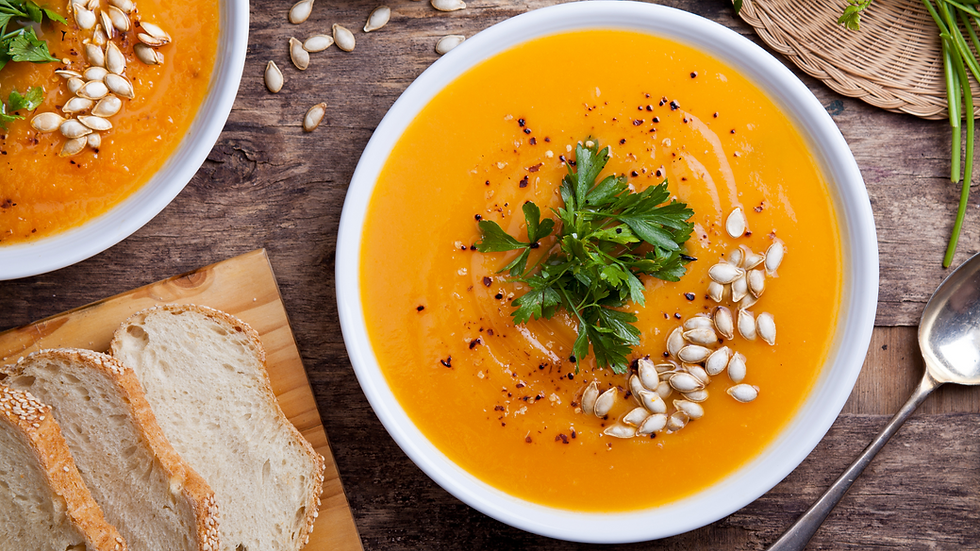
1. Creamy Pumpkin Soup
Rich, velvety, and naturally sweet, this pumpkin soup is a Vata favorite. Ginger, garlic, and cinnamon are warming herbs that kindle digestion (dipana), and coconut milk adds grounding moisture.
Ingredients
2 cups pumpkin puree
1 onion, chopped
3 cloves garlic, minced (Vata and Kapha can use more; Pitta omit or use a modest amount)
2 cups vegetable broth
1 cup coconut milk
1–2 tsp finely minced fresh ginger root (Vata and Kapha can use more; Pitta omit or use a modest amount)
1 tsp cinnamon
Salt and freshly ground black pepper to taste
2 tbsp olive oil
Instructions
Sauté the onion. In a pot, heat the olive oil over medium heat and sauté the onion until translucent.
Add the aromatics. Add the garlic and ginger and cook for another minute, until fragrant.
Add the base. Stir in the pumpkin puree, vegetable broth, and coconut milk.
Season. Add the cinnamon, salt, and pepper to taste.
Simmer and blend. Simmer for about 20 minutes, then blend until smooth.
Serve. Serve warm, garnished with a sprinkle of cinnamon.

2. Spiced Carrot and Ginger Soup
Sweet carrots and fresh ginger make a bright, warming bowl that keeps your energy up while warding off the chill. Ginger and cumin support Agni, and coconut milk softens the heat.
Ingredients
6 large carrots, chopped
1 onion, chopped
2 tbsp fresh ginger, grated (Vata and Kapha can use more)
1 tsp cumin
4 cups vegetable broth
1 can coconut milk
Salt and freshly ground black pepper to taste
2 tbsp olive oil
Instructions
Sauté the onion. Heat the olive oil in a large pot over medium heat. Add the onion and sauté until soft.
Add the carrots and ginger. Stir in the carrots and ginger and cook for another 5 minutes.
Add the liquids. Add the cumin, vegetable broth, and coconut milk, and bring to a boil.
Simmer. Reduce the heat and simmer for about 30 minutes, until the carrots are very soft.
Blend and season. Blend until smooth, then season with salt and pepper.
Serve. Finish with a drizzle of coconut milk.

3. Mellow Mung Bean Soup
Mung beans are among the easiest legumes to digest in Ayurveda, which makes this simple soup ideal for Vata. It is protein-rich, warming, and deeply satisfying without heaviness.
Ingredients
1 cup mung beans, soaked overnight or for several hours
1 onion, chopped
2–4 cloves garlic, minced (Vata and Kapha can use more)
4 cups vegetable broth
1 tsp turmeric powder
Salt and freshly ground black pepper to taste
2 tbsp olive oil
2 cups fresh spinach (Pitta can use more)
Instructions
Sauté the onion. In a pot, heat the olive oil and sauté the onion until golden.
Add the garlic. Add the garlic and cook for another minute.
Add the beans. Stir in the soaked mung beans, vegetable broth, turmeric, salt, and pepper.
Simmer. Bring to a boil, then simmer for about 30 minutes, until the beans are soft.
Wilt the spinach. Add the spinach just before serving and let it wilt gently.
Serve. Enjoy with a squeeze of fresh lemon juice.

Learn which foods warm and ground Vata through the colder months: The Ultimate Guide to Warming Foods in Ayurveda
4. Warm Quinoa and Kale Soup
Quinoa and kale make a nourishing, protein-rich soup full of essential vitamins. Simmering the kale in broth softens its rough, dry quality, so Vata can enjoy it.
Ingredients
1 cup quinoa, rinsed
1 bunch kale, chopped
1 onion, chopped
3 cloves garlic, minced (Vata and Kapha can use more)
4 cups vegetable broth
1 tsp dried thyme
Salt and freshly ground black pepper to taste
2 tbsp olive oil
Instructions
Sauté the onion. In a large pot, heat the olive oil over medium heat and sauté the onion until translucent.
Add the garlic. Add the garlic and cook for another minute.
Add the quinoa. Stir in the quinoa, broth, thyme, salt, and pepper, and bring to a boil.
Simmer, then add the kale. Reduce the heat and simmer for 15 minutes, then add the chopped kale.
Finish cooking. Continue cooking until the quinoa is fluffy and the kale is tender.
Serve. Serve warm with a sprinkling of fresh herbs.

5. Creamy Potato and Leek Soup
This classic comfort soup is smooth, creamy, and grounding on cold days. Leeks bring gentle warmth, and cream or coconut cream adds the moisture Vata craves.
Ingredients
4 large potatoes, peeled and diced
2 leeks, cleaned and sliced
4 cups vegetable broth
1 cup heavy cream, or coconut cream for a dairy-free option
Salt and freshly ground black pepper to taste
2 tbsp olive oil
Instructions
Sauté the leeks. Heat the olive oil in a pot over medium heat and sauté the leeks until soft.
Add the potatoes. Add the potatoes and broth and bring to a boil.
Simmer. Lower the heat and simmer for about 20 minutes, until the potatoes are soft.
Blend. Use an immersion blender to purée until smooth.
Add the cream. Stir in the cream or coconut cream and season with salt and pepper.
Serve. Serve hot, garnished with fresh chives.

6. Beet Soup
Sweet, earthy beets are naturally grounding, and their deep color brightens a winter table. The sweet taste is one of the three tastes that balance Vata.
Ingredients
3 beets, peeled and chopped
1 onion, chopped
4 cups vegetable broth
1 tsp dried thyme
Salt and freshly ground black pepper to taste
2 tbsp olive oil
Instructions
Sauté the onion. In a pot, heat the olive oil and sauté the onion until soft.
Add the beets. Add the beets and stir for a few minutes, then add the vegetable broth and thyme.
Simmer. Bring to a boil, then reduce to a simmer and cook for about 30 minutes, until the beets are tender.
Blend and season. Blend until smooth and season with salt and pepper.
Serve. Serve warm with a dollop of yogurt or sour cream for extra creaminess.

7. Hearty Lentil Soup
Warming and rich in fiber and protein, this lentil soup is a deeply nourishing meal for the colder months. Cumin supports Agni and helps make lentils easier to digest.
Ingredients
1 cup brown lentils, rinsed and drained
1 onion, chopped
2 carrots, diced
3 cloves garlic, minced (Vata and Kapha can use more)
4 cups vegetable broth
1 tsp cumin
Salt and freshly ground black pepper to taste
2 tbsp olive oil
Instructions
Sauté the vegetables. Heat the olive oil in a large pot over medium heat. Sauté the onion, carrots, and garlic until soft.
Add the lentils. Add the lentils, broth, cumin, salt, and pepper.
Simmer. Bring to a boil, then reduce the heat and simmer for 30–40 minutes, until the lentils are tender.
Blend, if you like. For a creamier texture, partially blend with an immersion blender.
Serve. Serve hot, garnished with fresh parsley.

8. Coconut Curry Soup with Tofu
Warming and satisfying, this coconut curry soup brings gentle heat and creamy richness to the table. Curry paste kindles Agni, and coconut milk keeps it grounding.
Ingredients
1 block firm tofu, cubed
1 onion, chopped
1 can coconut milk
1 tbsp curry paste
4 cups vegetable broth
2 cups mixed vegetables (carrots, peas, bell peppers)
Salt and freshly ground black pepper to taste
2 tbsp olive oil
Instructions
Sauté the onion. In a pot, heat the olive oil and sauté the onion until soft.
Brown the tofu. Add the tofu and curry paste and cook until the tofu is lightly browned.
Add the liquids. Pour in the vegetable broth and coconut milk and bring to a boil.
Add the vegetables. Stir in the mixed vegetables and simmer until cooked through.
Season and serve. Season with salt and pepper and enjoy hot, with warm bread for dipping if you like.

Bring more warmth to your table with Veena's favorite grounding breakfasts, kitchari, and mains in the free eBook: Ayurveda Recipes for Balancing Vata Dosha.
Make It Your Own: Adjust Each Soup for Your Dosha
Every soup in this guide can be adjusted to your doshic picture. Small changes in spices, fats, and toppings make a big difference.

Vata: Enjoy the full amount of ginger and garlic, serve soups hot, and finish with a drizzle of ghee or olive oil. Choose the creamy, blended soups often.
Pitta: Use less garlic and ginger, favor coconut milk, and top with fresh cilantro or a squeeze of lime. Go easy on curry paste, and skip the yogurt and sour cream on the beet soup.
Kapha: Add extra ginger and black pepper, use less cream and coconut milk, and favor the lighter soups: mung bean, quinoa and kale, and lentil.
Best Tastes by Dosha
Dosha | Balancing tastes |
Vata | Sweet, sour, salty |
Pitta | Sweet, bitter, astringent |
Kapha | Pungent, bitter, astringent |
Wondering whether Vata is out of balance? Learn the many ways it can show up in body and mind: Wild List of Vata Imbalances.
Agni, Ama, and Ojas
In Ayurveda, how well you digest a meal matters as much as what is in it. Warm, well-cooked soup is easy on Agni, your digestive fire, and it helps prevent Ama, the residue of incomplete digestion. Over time, strong digestion builds Ojas, your deepest reserve of vitality.
"Healthy digestion, assimilation, and elimination begin in the mind. Ground before you eat and your belly will thank you. A calm mind makes better use of what you feed your body. Reduce Ama, balance your Agni, and you'll digest your meal and feel good." – Veena Blilie

Discover how to strengthen your digestive fire for balanced health and vitality: How to Improve Agni for Balanced Health and Vitality.
Learn what Ama is, how it forms, and how to clear it: Understanding Ama or Toxins in Ayurveda is the Key to Good Health.
See how Ojas is built and the signs it needs nourishment: Understanding Ojas: Ayurveda's Guide to Lasting Vitality, Energy & Resilience.
Settle your mind before you eat with a free guided practice: Guided Practices.

Weekend Soup Prep Tips
Double or triple a batch. Enjoy these dosha-balancing soups for lunches during the week and for light evening meals.
Share the cooking. Make extra for family and friends, and let them share their meals with you. It brings variety to your table, and who doesn't appreciate someone else's cooking?
Chop once, cook twice. Vegetables take the most prep time, so chop extra and add them to other meals, such as a vegetable omelet or a light stir-fry.
“In Ayurveda, dinner is the lightest meal of the day. An easy-to-digest evening meal frees the body to cleanse and rejuvenate overnight instead of working hard to digest. We need our calories in the morning and at midday to fuel the day, not at night when we are winding down.” - Veena
Pack these soups for nourishing midday meals, with more easy ideas here: Top Ayurveda Lunches for Work.
Pair your soups with warm, nourishing drinks that soothe Vata through the colder months: Vata Balancing Ayurveda Beverages.
🍃Saumya Ayurveda Self-Observation™ ExerciseThe next time you enjoy one of these soups, take a few moments to notice how it supports you. Before eating: Sit down and take a few slow breaths. Are you truly hungry? Do you feel cold, dry, rushed, or scattered? While eating: Eat slowly and without screens. Notice the warmth, the texture, and the flavors. How does your body respond to the first few spoonfuls? After eating: Notice how you feel 30 minutes and a few hours later. Do you feel warm, grounded, and satisfied? Or heavy, bloated, or still hungry? Over several days, notice which soups leave you feeling most settled and energized. Simply observe. |
Learn to read the signals your body sends every day, from your tongue to your digestion, in the free eBook: Observable Ayurveda: A Beginner's Guide to Ayurvedic Self Observation.

Final Thoughts: 8 Vata-Balancing Ayurvedic Soup Recipes
Food becomes medicine when it is balancing to your unique doshic picture.
When Vata rises in late autumn and early winter, the body and mind ask for warmth, moisture, and grounding. A simple pot of soup offers all three, in a form that is easy to digest and comforting to eat.
Feel free to swap in spices and herbs that suit your taste and your doshic picture. Notice which soups leave you feeling most settled, and return to them often.
Balancing Vata goes beyond food. It also means creating a warm, calm rhythm in your days. Let these soups become part of your seasonal ritual.
Let each warm bowl ground you, nourish you, and carry you gently into winter.

Our Commitment to Accessible Ayurveda Education
At Saumya Ayurveda, we believe Ayurveda's transformative ancient wisdom belongs to everyone—not just those who can afford it. That's why we're committed to making high-quality, authentic Ayurveda education available globally, free of charge.
Through our free eBooks, guides, and educational resources, we offer practical, grounded wisdom to help those seeking greater balance, vitality, and wellbeing integrate Ayurveda into their daily lives.
Accessible. Authentic. Free. Just as it was meant to be.
Free Ayurveda eBooks – Download practical guides, recipes, and wellness resources to support your health journey.
Ayurveda Blog – Enjoy easy-to-read articles, seasonal wellness tips, healthy recipes, and everyday inspiration—always educational, never a sales pitch.
Free Guided Traditional Progressive Meditations – Practice authentic, step-by-step guided meditations to cultivate calm, focus, and inner stillness.
Monthly Educational Newsletter – Receive seasonal Ayurveda insights, new articles, healthy recipes, and free resources delivered to your inbox each month.

Ayurvedic Glossary
Ayurveda: The traditional healing system of India, meaning "the knowledge of life."
Dosha: One of the three functional energies (Vata, Pitta, and Kapha) that make up each person's nature.
Doshic picture: Your unique combination of doshas, including which are out of balance right now.
Vata: The dosha of air and space. It is light, dry, cold, and mobile, and it governs movement in body and mind.
Pitta: The dosha of fire and water. It governs digestion, metabolism, and transformation.
Kapha: The dosha of earth and water. It provides structure, stability, and moisture.
Agni: Digestive fire, which transforms food into nourishment.
Ama: The sticky residue of incomplete digestion.
Ojas: The refined essence of good digestion; your deepest reserve of vitality, resilience, and immunity.
Dipana: Herbs and spices that kindle Agni, such as ginger, cumin, and cinnamon.
Ghee: Clarified butter, prized in Ayurveda for nourishing the tissues and supporting Agni.
Mung beans: Small green legumes, considered among the easiest to digest in Ayurveda.

What Our Clients Say | Saumya Ayurveda Testimonials
Real Transformations Through Ayurveda Consultation
Physician Testimonial (Medical Endorsement)
"As a physician, I have always believed that prevention is better than cure. In today's healthcare environment, Ayurveda offers a logical and natural approach to long-term health and prevention.
I began working with Veena during a very demanding phase of my life, and she made the process accessible even within my busy schedule. I was encouraged to follow a steady, sustainable approach focused on real lifestyle change.
Over time, I experienced meaningful improvements in balance, energy, and well-being. In my medical practice, I now see many patients with similar stress- and diet-related imbalances, which has further reinforced my trust in Ayurvedic principles.
I have since referred several patients to Saumya Ayurveda and consider Veena a valuable resource in supporting holistic well-being."
Dr. Gauri Nagargoje
M.D., Oncology & Hematology
Physician Testimonial (Medical Endorsement)
"As a physician, I initially struggled with Ayurveda's simplicity and depth, but Veena's guidance made it practical, scientific, and deeply effective.
Veena has transformed my health and perspective on healing. I experienced significant improvements in focus, digestion, stress response, and overall vitality.
Her personalized approach made lifestyle changes easy and sustainable.
This journey not only improved my health but also inspired a lifelong commitment to integrating Ayurveda into holistic healthcare."
Dr. Jessica Bedi
D.O., & Ayurvedic Doctor


Anne R., Minneapolis, Minnsota, USA
Explore more client success stories from Saumya Ayurveda and see how Ayurveda supports healing, balance, and transformation.

Discover the Saumya Ayurveda Way
Ayurveda Begins With Seeing the Whole Person
I've Tried Everything. Why Isn't Anything Working?
When health concerns persist, it can be frustrating to keep trying one recommendation after another without understanding why nothing seems to change.
More health information isn't always the answer. In fact, when stress is already part of the picture, having more information to sort through can add to that stress. Sometimes what is needed is not another recommendation, but someone who really listens and takes the time to understand you as a whole person.
Ayurveda looks beyond individual symptoms to understand the whole person and the root causes of the dosha imbalances contributing to how you feel. This makes it possible to move beyond simply managing symptoms and understanding what you specifically need.
Why the Same Symptom Can Require a Different Approach
The same symptom does not necessarily call for the same solution. General health advice—and even general Ayurvedic advice—can fall short because most people experience more than one symptom and may have more than one dosha out of balance. Understanding the doshic picture as a whole is essential for providing truly supportive guidance.
Ayurveda looks beyond the symptoms to understand the root cause of each doshic imbalance, the dynamic interplay between the doshas, and how they affect the whole person.
Personalized Ayurveda, Rooted in Tradition
Saumya Ayurveda combines classical Ayurvedic principles with practical guidance for modern life. Your recommendations are based on your individual prakriti (natural constitution), vikriti (current state of doshic imbalance), lifestyle, environment, and circumstances—not a generic dosha checklist or one-size-fits-all protocol.
The goal is not to overwhelm you with more rules or things to try. It is to help you stop searching and start understanding—so you can make sustainable changes that support balance for you.
For those who want ongoing support, concierge-style Ayurveda consultation packages provide personalized guidance, thoughtful follow-up, and practical tools for bringing Ayurvedic principles into everyday life.
Education First. Personalized Guidance When You Need It.
Veena takes an education-first, client-centered approach. Our favorite product is knowledge.
As you work with Veena, you don't simply receive recommendations—you gain knowledge and self-awareness.
With Saumya Ayurveda, you won't find education built around selling a supplement, herb, or wellness product. Instead, you'll find traditional Ayurvedic perspectives, practical guidance, and timeless principles that cultivate self-awareness and help you make choices that are right for you.
When understanding deepens, better choices naturally follow.
Learn. Observe. Understand. Transform.
Whether you're new to Ayurveda, looking for a deeper understanding of yourself and your nature, or have tried many approaches without finding lasting change, personalized Ayurvedic guidance can help you understand your individual needs and make choices that are appropriate for you.
Begin your Ayurveda journey with a free 15-minute Discovery Call with Veena and explore whether personalized Ayurvedic guidance is right for you.

Meet Veena: Your Trusted Ayurvedic Guide for Clients Worldwide
Veena Haasl-Blilie is a Certified Ayurvedic Practitioner, Ayurveda teacher, meditation guide, and monk with over three decades of experience helping clients worldwide achieve greater balance and well-being through Ayurveda.
As founder of Saumya Ayurveda and President Emeritus of the Meditation Center, Veena serves clients worldwide through personalized Ayurvedic wellness guidance, meditation, and yoga practices.
Saumya Ayurveda has been recognized as the #1 Ayurveda cooking blog and the #3 Ayurveda website and blog and has received multiple consecutive awards for best wellness practice.
Through her work, Veena shares practical Ayurvedic guidance, nourishing recipes, and wellness education for modern living.
Inspired from an early age by learning herbal remedies, food as medicine, and traditional healing practices at her grandmother’s knee, Veena combines traditional Ayurvedic wisdom with compassionate, accessible guidance that supports mental, physical, and spiritual well-being.
Known for her warmth, humor, intuitive approach, and accessible style, Veena empowers people to create sustainable health through personalized Ayurvedic wellness plans designed to fit naturally into everyday life.
Veena is also the author of several free Ayurveda eBooks and writes the educational articles published on the Saumya Ayurveda blog.
As seen in:
Voice America
Albuquerque The Magazine
Learn more about Veena and her work through Saumya Ayurveda.
Disclaimer: This information is for educational purposes only and is not a substitute for professional medical advice. Ayurveda works best when tailored to your unique doshic profile, so it’s essential to understand your constitution and imbalances before using herbs, foods, or lifestyle practices. Consult a Certified Ayurvedic Practitioner for personalized guidance.