


Ayurvedic Morning Routine for Winter: 3 Energizing Rituals for Dark Mornings

Updated: Nov 14
It's 6:30, still dark, and you've already hit snooze three times. When you finally get up, you feel worse than if you'd risen with the first alarm: heavy, foggy and reaching for coffee just to function.
Veena sees it every winter in her practice: "They hit the snooze button several times and wake up even more sluggish." It isn't a lack of willpower. Ayurveda explains exactly why winter mornings feel this way, and how a few warming minutes can change the whole day.
Below are Veena's three energizing winter rituals, plus her grounding sequence in a short and an extended version, so you can meet dark mornings with warmth, clarity and steady energy.
For more winter wellbeing, download the free eBooks The Complete Guide to Balancing Vata in Fall and Early Winter and The Complete Guide to Balancing Kapha in Winter.

An Ayurvedic morning routine for winter brings warmth and movement to dark, cold mornings. Rise before 6 a.m., warm the body with oil massage, breathe diaphragmatically and practice alternate nostril breathing, then sip a warming tea of ginger, turmeric and cardamom. A few focused minutes each day matter more than a long routine.
Key Takeaways
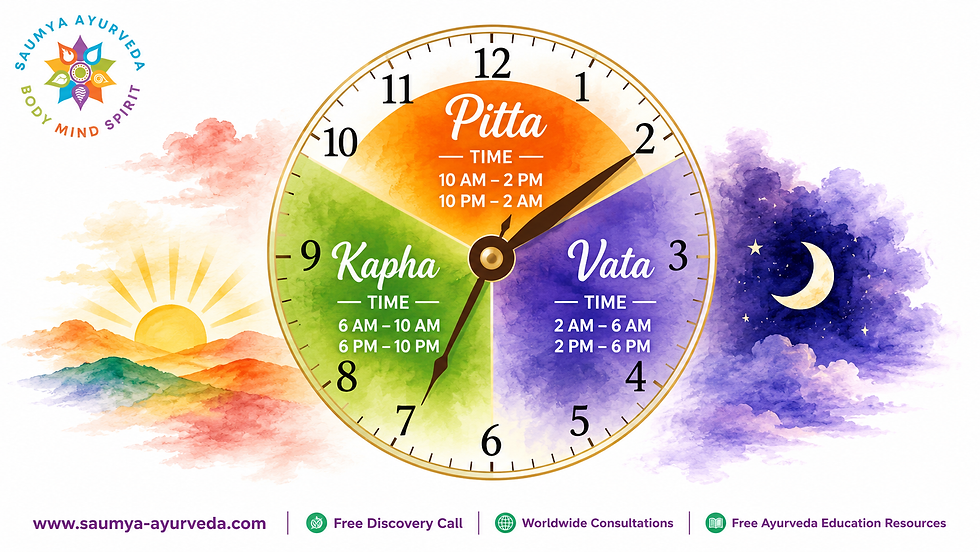
Winter mornings feel heavy for a reason. Cold, dark mornings increase Vata and Kapha, and the hours from about 6 to 10 a.m. are Kapha time.
Rising before 6 a.m. helps. Getting up before Kapha hours begin keeps the morning from starting heavy.
Warm oil warms from the outside in. Abhyanga soothes dry winter skin and calms Vata.
The breath sets the tone for the day. Diaphragmatic and alternate nostril breathing steady the nervous system.
A warming tea kindles agni. Ginger, turmeric and cardamom bring warmth from the inside.
Short and steady beats long and occasional. A few focused minutes daily build lasting change.
Adjust as winter changes. Early winter calls for more oil and grounding; late winter calls for more movement and lightness.
Learn more: the free eBook The Complete Guide to Balancing Kapha in Winter.
Table of Contents
Why Are Winter Mornings So Hard?
Because winter adds cold and darkness to the hours that are already heavy. In Ayurveda, roughly 6 to 10 a.m. is Kapha time, when the body naturally feels steady, slow and heavy. Add a dark, cold winter morning and that heaviness can take over.
Ayurveda's classical texts understood this long before alarm clocks. The Ashtanga Hridayam opens its chapter on daily routine with this teaching: "A healthy person should wake up during brahma muhurta, the time before sunrise, to protect their life and health." (Ashtanga Hridayam, Sutrasthana 2.1)
Early winter adds Vata's dryness and cold, so mornings can feel stiff, chilly and restless. Late winter adds Kapha's dampness, so mornings feel foggy and hard to get going. Getting up before 6 a.m., before Kapha hours begin, and warming the body inside and out make a real difference.
The National Institutes of Health explains how light and darkness set the body's circadian rhythms, which is one reason dark mornings can make waking harder.
For the whole winter picture, from food to sleep: Ayurvedic Tips for a Healthy Winter
If winter tiredness lasts all day, learn why your energy drops and how to restore it: Winter Fatigue and Low Energy: Ayurvedic Solutions That Work
Waking up tired even after a full night's sleep can be a sign of depleted ojas. Learn how to rebuild steady energy in the free eBook Wired, Tired and Low on Ojas.
An easy morning starts the night before. Learn Ayurveda's evening rhythm for deeper, more restful sleep in the free eBook The Complete Guide to Ayurveda for Better Sleep.

The Invigorating Oil Ritual
Understanding Abhyanga
Abhyanga, warm oil self-massage, is one of Ayurveda's most nourishing daily practices. In winter it warms the body, soothes dry skin, supports circulation and calms the nervous system.
Materials Needed
Sesame oil, or an herbal oil suited to your doshic picture
A small heat-safe bowl or bottle
Steps to Follow
Warm the oil by setting the bowl or bottle in hot water for a few minutes. Test it on your wrist; it should feel comfortably warm.
Massage your whole body for about 10 minutes, starting at the feet and working up through the legs, arms and torso, using long strokes on the limbs and circles on the joints.
Give extra attention to the knees, elbows and shoulders for 2 to 3 minutes.
Let the oil soak in for 15 to 30 minutes while you meditate, read or sip something warm.
Rinse off with a warm shower.
Early winter (Vata): oil generously and let it soak in. Late winter (Kapha): use less oil, or dry brush before your shower instead, to wake up circulation.
Learn how to shift your daily routine as each season turns in the free eBook Ritucharya: Ayurveda's Seasonal Routine.
Learn the full self-massage, step by step: Abhyanga Massage
For late winter, try the invigorating at-home method: Ayurveda Dry Brushing: Detoxifying and Invigorating Home Treatment

Breathwork (Pranayama) and Meditation
The Power of Pranayama
The breath sets the tone for the whole day. As Veena says, "If you're not breathing diaphragmatically, your nervous system is stuck in flight-fight-freeze."
Materials Needed
Comfortable, warm clothing
A quiet space
Steps to Follow
Dim the lights and settle in. A candle can make a dark winter morning feel welcoming.
Sit comfortably with your spine tall and relaxed, hands resting on your knees, eyes closed.
Breathe diaphragmatically for a few minutes, letting the belly rise and fall while the chest stays quiet.
Practice Nadi Shodhana, alternate nostril breathing, to balance and steady the mind.
End with a short meditation. Rest in stillness, or hold a positive intention and picture warmth and light filling you.

Learn the breath that settles the nervous system in the free eBook The Complete Guide to Diaphragmatic Breathing, and go deeper with Cultivating Inner Stillness: Pranayama Breathwork Guide.
Learn alternate nostril breathing step by step: Nadi Shodhana: Alternate Nostril Breathing Guide
New to meditation? Begin with the free eBook Meditation Essentials: Finding Stillness in a Noisy World.

Nourishing Herbal Tea Ritual
The Importance of Warmth
A warm, spiced drink first thing kindles agni, the digestive fire, and warms you from the inside. In winter, warm drinks are far kinder to the body than anything cold.
Materials Needed
Warming spices: fresh ginger, turmeric, cardamom and cinnamon
A small pot or kettle
Steps to Follow
Bring about 2 cups of water to a boil.
Add a thumb-sized piece of fresh ginger, sliced (or 1 teaspoon dried), a pinch of turmeric, two crushed cardamom pods and, if you like, a cinnamon stick.
Simmer for about 10 minutes.
Strain into a mug. Add a little honey once it has cooled enough to sip, or a squeeze of lemon, if you like.
Sip slowly and notice the warmth spreading through you.
Saumya Ayurveda does not recommend using herbs like over-the-counter or prescription medicines. Kitchen spices in a warm tea are a gentle place to begin; for anything more, an herb should be part of a plan made for you.
Find 7 warming drink recipes for the cold months in the free eBook Vata-Balancing Beverages: Ayurveda Recipe eBook.
Follow your morning tea with a warm, nourishing breakfast. Find four quinoa breakfasts and a Dosha Breakfast Guide in the free eBook Ayurvedic Quinoa Protein Breakfasts.

Grounding Practices Sequence, Short and Extended
Veena's teaching is clear: "The most powerful way to ground is not the herbs we take or the food we eat." It is the breath. A session can be as short as 15 minutes or longer than an hour. As she puts it, "It is better to start shorter and expand slowly over time."
The sequence:
A few minutes of grounding yoga postures.
Diaphragmatic breathing in makarasana (crocodile pose).
Nadi Shodhana, two or three times a day.
The free guided practices: the 11-minute sessions morning and evening, or the 31-point blue star guided meditation for a longer practice. Find them on the free guided practices page.
Together, these practices prepare you for yoga nidra. "We are creating pure moments of stillness," Veena says. "One moment of that will last you the day."
From Veena's practice: If you have only five minutes on a dark winter morning, Veena recommends "diaphragmatic breathing and our free guided practices, to start the day out focused." Clients who keep a winter morning routine for a few weeks notice "an increase in energy and focus, and improvements in mood."
Find grounding postures for the cold months: The Best Yoga Poses for Vata Dosha


More Saumya Ayurveda Morning Routines
For a calm, centered start any time of year: Ayurvedic Morning Routine: 6 Rituals for a Calm and Centered Day
Short on time? Five minutes to wake up with energy, no coffee needed: Wake Up Energized: A 5-Minute Ayurvedic Morning Routine for Natural Energy
Building your first routine? Start here: A Beginner's Guide: How to Build an Ayurvedic Morning Routine
Ready to reset your daily rhythm for the new year? Begin with the free eBook Ayurvedic New Year Reset: Return to Your Rhythm.
🌿 Saumya Ayurveda Self-Observation™ ExerciseFor one week, choose one of the three routines and practice it each winter morning. Each evening, notice:
Simply observe. Your answers show you which routine suits your body this winter. |
Learn more ways to read your body's signs in the free eBook Observable Ayurveda: A Beginner's Guide to Ayurvedic Self-Observation.
Frequently Asked Questions
What is the best Ayurvedic morning routine for winter?
A warming one: rise before 6 a.m., do a warm oil self-massage, breathe diaphragmatically, practice alternate nostril breathing and sip a warm spiced tea. Even a few minutes of one practice each day helps more than a long routine done now and then.
Why is it so hard to wake up in winter?
Winter's cold and darkness add to the natural heaviness of the early Kapha hours, roughly 6 to 10 a.m. Getting up before 6 a.m., warming the body and moving early help lift that heaviness.
Should I do abhyanga in the morning in winter?
Yes, morning is the classic time. In early winter, use warm sesame oil generously. In late winter, use less oil or dry brush instead, so the skin doesn't feel heavy.
What is a good Ayurvedic morning drink for winter?
A warm spiced tea of fresh ginger, a pinch of turmeric and crushed cardamom, simmered for about 10 minutes, warms you from the inside and kindles digestion. Warm water is a simple alternative.
How long should a winter morning routine take?
As long as you can keep up. Veena teaches that a short, focused daily practice brings results, and that it's better to start shorter and expand slowly over time.

Final Thoughts
Winter will keep the mornings dark for a while yet. How you meet them is up to you.
You don't need all three rituals, and you don't need an hour. Choose one: warm oil, a few minutes of diaphragmatic breathing or a cup of ginger tea. Practice it every morning for one week, then notice when your energy arrives and how your mood feels by mid-morning. Veena's clients describe more energy and focus, and a lift in mood, once a morning routine becomes part of their day.
As Veena reminds her clients, "Remember, quality over quantity. A short focused practice done daily, yields results."
If your mornings stay heavy no matter what you try, that is worth looking at more closely. A free 15-minute Discovery Call with Veena is a simple way to find a morning routine shaped to your own nature and the season you are in.
The alarm will still ring in the dark. This time, you will have a reason to get up.

Download the free eBooks The Complete Guide to Balancing Vata in Fall and Early Winter and The Complete Guide to Balancing Kapha in Winter.
Our Commitment to Accessible Ayurveda Education
At Saumya Ayurveda, we believe Ayurveda's transformative ancient wisdom belongs to everyone—not just those who can afford it. That's why we're committed to making high-quality, authentic Ayurveda education available globally, free of charge.
Through our free eBooks, guides, and educational resources, we offer practical, grounded wisdom to help those seeking greater balance, vitality, and wellbeing integrate Ayurveda into their daily lives.
Accessible. Authentic. Free. Just as it was meant to be.
Free Ayurveda eBooks – Download practical guides, recipes, and wellness resources to support your health journey.
Ayurveda Blog – Enjoy easy-to-read articles, seasonal wellness tips, healthy recipes, and everyday inspiration—always educational, never a sales pitch.
Free Guided Traditional Progressive Meditations – Practice authentic, step-by-step guided meditations to cultivate calm, focus, and inner stillness.
Monthly Educational Newsletter – Receive seasonal Ayurveda insights, new articles, healthy recipes, and free resources delivered to your inbox each month.

Ayurvedic Glossary
Abhyanga: warm oil self-massage.
Agni: digestive fire.
Kapha: the dosha of earth and water; heavy, stable, cool and moist.
Makarasana: crocodile pose, lying face down, used for diaphragmatic breathing.
Nadi Shodhana: alternate nostril breathing.
Pranayama: breathing practices that guide prana, the life force.
Vata: the dosha of air and space; light, dry, cold and moving.
Yoga nidra: a guided practice of deep, conscious relaxation.

What Our Clients Say | Saumya Ayurveda Testimonials
Real Transformations Through Ayurveda Consultation
Physician Testimonial (Medical Endorsement)
"As a physician, I have always believed that prevention is better than cure. In today's healthcare environment, Ayurveda offers a logical and natural approach to long-term health and prevention.
I began working with Veena during a very demanding phase of my life, and she made the process accessible even within my busy schedule. I was encouraged to follow a steady, sustainable approach focused on real lifestyle change.
Over time, I experienced meaningful improvements in balance, energy, and well-being. In my medical practice, I now see many patients with similar stress- and diet-related imbalances, which has further reinforced my trust in Ayurvedic principles.
I have since referred several patients to Saumya Ayurveda and consider Veena a valuable resource in supporting holistic well-being."
Dr. Gauri Nagargoje M.D., Oncology & Hematology
Physician Testimonial (Medical Endorsement)
"As a physician, I initially struggled with Ayurveda's simplicity and depth, but Veena's guidance made it practical, scientific, and deeply effective.
Veena has transformed my health and perspective on healing. I experienced significant improvements in focus, digestion, stress response, and overall vitality.
Her personalized approach made lifestyle changes easy and sustainable.
This journey not only improved my health but also inspired a lifelong commitment to integrating Ayurveda into holistic healthcare."
Dr. Jessica Bedi D.O., & Ayurvedic Doctor
Professional Testimonial (Mental Wellbeing Endorsement)
"Veena is a knowledgeable and experienced Certified Ayurvedic Practitioner. Over the years, she has helped many of my therapy clients, particularly those for whom the allopathic approach to treatment was insufficient.
She treats the whole person in terms of Ayurvedic diet, lifestyle, and herbal treatment. In Veena you'll find both skill and care.
Veena's knowledge, care, and a selfless compassion for other's suffering is palpable."
Dr. Stephen Parker Adjunct Professor, St. Mary's University, Minneapolis, Minnesota
Erin M., Calgary, Alberta Canada


Explore more client success stories from Saumya Ayurveda and see how Ayurveda supports healing, balance, and transformation.

Discover the Saumya Ayurveda Way
Ayurveda Begins With Seeing the Whole Person
I've Tried Everything. Why Isn't Anything Working?
When health concerns persist, it can be frustrating to keep trying one recommendation after another without understanding why nothing seems to change.
More health information isn't always the answer. In fact, when stress is already part of the picture, having more information to sort through can add to that stress. Sometimes what is needed is not another recommendation, but someone who really listens and takes the time to understand you as a whole person.
Ayurveda looks beyond individual symptoms to understand the whole person and the root causes of the dosha imbalances contributing to how you feel. This makes it possible to move beyond simply managing symptoms and understanding what you specifically need.
Why the Same Symptom Can Require a Different Approach
The same symptom does not necessarily call for the same solution. General health advice—and even general Ayurvedic advice—can fall short because most people experience more than one symptom and may have more than one dosha out of balance. Understanding the doshic picture as a whole is essential for providing truly supportive guidance.
Ayurveda looks beyond the symptoms to understand the root cause of each doshic imbalance, the dynamic interplay between the doshas, and how they affect the whole person.
Personalized Ayurveda, Rooted in Tradition
Saumya Ayurveda combines classical Ayurvedic principles with practical guidance for modern life. Your recommendations are based on your individual prakriti (natural constitution), vikriti (current state of doshic imbalance), lifestyle, environment, and circumstances—not a generic dosha checklist or one-size-fits-all protocol.
The goal is not to overwhelm you with more rules or things to try. It is to help you stop searching and start understanding—so you can make sustainable changes that support balance for you.
For those who want ongoing support, concierge-style Ayurveda consultation packages provide personalized guidance, thoughtful follow-up, and practical tools for bringing Ayurvedic principles into everyday life.
Education First. Personalized Guidance When You Need It.
Veena takes an education-first, client-centered approach. Our favorite product is knowledge.
As you work with Veena, you don't simply receive recommendations—you gain knowledge and self-awareness.
With Saumya Ayurveda, you won't find education built around selling a supplement, herb, or wellness product. Instead, you'll find traditional Ayurvedic perspectives, practical guidance, and timeless principles that cultivate self-awareness and help you make choices that are right for you.
When understanding deepens, better choices naturally follow.
Learn. Observe. Understand. Transform.
Whether you're new to Ayurveda, looking for a deeper understanding of yourself and your nature, or have tried many approaches without finding lasting change, personalized Ayurvedic guidance can help you understand your individual needs and make choices that are appropriate for you.
Begin your Ayurveda journey with a free 15-minute Discovery Call with Veena and explore whether personalized Ayurvedic guidance is right for you.
Meet Veena: Your Trusted Ayurvedic Guide for Clients Worldwide

Veena Blilie is a Certified Ayurvedic Practitioner, Ayurveda teacher, meditation guide, and monk with over three decades of experience helping clients worldwide achieve greater balance and well-being through Ayurveda.
As founder of Saumya Ayurveda and President Emeritus of the Meditation Center, Veena serves clients worldwide through personalized Ayurvedic wellness guidance, meditation, and yoga practices.
Saumya Ayurveda has been recognized as the #1 Ayurveda cooking blog and the #3 Ayurveda website and blog and has received multiple consecutive awards for best wellness practice.
Through her work, Veena shares practical Ayurvedic guidance, nourishing recipes, and wellness education for modern living.
Inspired from an early age by learning herbal remedies, food as medicine, and traditional healing practices at her grandmother's knee, Veena combines traditional Ayurvedic wisdom with compassionate, accessible guidance that supports mental, physical, and spiritual well-being.
Known for her warmth, humor, intuitive approach, and accessible style, Veena empowers people to create sustainable health through personalized Ayurvedic wellness plans designed to fit naturally into everyday life.
Veena is also the author of several free Ayurveda eBooks and writes the educational articles published on the Saumya Ayurveda blog.
As seen in:
Voice America
Albuquerque The Magazine
Learn more about Veena and her work through Saumya Ayurveda.
Disclaimer
Disclaimer: This information is for educational purposes only and is not a substitute for professional medical advice. Ayurveda works best when tailored to your unique doshic profile, so it's essential to understand your constitution and imbalances before using herbs, foods, or lifestyle practices. Consult a Certified Ayurvedic Practitioner for personalized guidance.


