Feeling Out of Balance? Discover the Wisdom of Ayurveda

Updated: Jun 1
Many people today are seeking more natural and holistic ways to support physical health, mental clarity, emotional balance, and overall wellbeing. Ayurveda for body, mind, and spirit offers a time-tested approach to holistic wellness through individualized nutrition, daily routine, herbal support, lifestyle practices, and mindful living.
Originating in India thousands of years ago, Ayurveda emphasizes balance and harmony within every aspect of life.
Rather than focusing only on symptoms, Ayurveda seeks to restore balance by understanding each person’s unique constitution, digestion, environment, and daily habits.
From supporting healthy digestion and energy levels to promoting stress management, sleep, and emotional wellbeing, Ayurveda provides a holistic framework for creating greater harmony in everyday life.
In this guide, we’ll explore how Ayurvedic principles can support whole-person wellness and help cultivate a more balanced and conscious way of living through Ayurveda for the body, mind, and spirit.

Saumya Blog, selected top Ayurveda blogs and websites to watch.
What Is Ayurveda?
Ayurveda is a traditional system of holistic wellness that originated in India thousands of years ago. The word Ayurveda comes from the Sanskrit words Ayur meaning “life” and Veda meaning “knowledge” or “wisdom.”
Often translated as the “science of life,” Ayurveda emphasizes living in harmony with nature, daily rhythms, digestion, and individual constitution.
Unlike one-size-fits-all wellness approaches, Ayurveda recognizes that every person has unique physical, mental, and emotional tendencies. Ayurvedic teachings focus on creating balance through personalized nutrition, lifestyle routines, herbal support, mindful practices, sleep habits, and self-awareness.
At the heart of Ayurveda is the understanding that wellbeing is deeply connected to balance within the body, mind, and spirit. When balance is disturbed through stress, poor digestion, irregular habits, environmental factors, or emotional strain, discomfort and imbalance may gradually develop over time.

The Ayurveda View of Body, Mind, and Spirit
Ayurveda views human wellbeing as multidimensional. Rather than separating physical health from emotional or spiritual wellness, Ayurveda sees these aspects as deeply interconnected.
Body
The physical body is supported through proper digestion, nourishment, sleep, movement, and healthy daily habits.
Ayurveda places strong emphasis on maintaining balanced digestion because digestion influences energy, vitality, immunity, and overall wellness.
Factors that may influence physical balance include:
Diet and food quality
Sleep patterns
Stress levels
Seasonal changes
Daily routine
Environmental influences
Physical activity
Ayurvedic lifestyle recommendations often focus on supporting healthy digestion, balanced energy, proper rest, and natural daily rhythms.
Mind
Ayurveda also recognizes the importance of mental and emotional wellbeing. The mind may become disturbed by chronic stress, overstimulation, irregular lifestyle habits, lack of rest, or emotional strain.
Mind-supportive Ayurvedic practices may include:
Meditation
Breathwork practices
Mindful eating
Time in nature
Healthy sleep routines
Calming daily rituals
Balanced sensory input
By supporting mental clarity and emotional steadiness, Ayurveda encourages greater calmness, focus, resilience, and self-awareness.
Spirit
In Ayurveda, spiritual wellbeing does not necessarily refer to religion. Rather, it relates to connection, awareness, purpose, inner harmony, and conscious living.
Many Ayurvedic teachings encourage practices that help cultivate:
Presence
Gratitude
Self-reflection
Compassion
Mindfulness
Connection to nature
Balanced living
This holistic perspective is one reason Ayurveda continues to resonate with people seeking deeper wellness beyond physical symptoms alone.

Spirit and Inner Wellbeing in Ayurveda
In Ayurveda, the concept of spirit is closely connected to awareness, presence, inner calm, and a deeper relationship with oneself. Spiritual wellbeing does not have to involve religion or rigid beliefs.
Instead, Ayurveda encourages practices that help create greater grounding, clarity, stillness, and connection within daily life.
Modern life often keeps the nervous system in a constant state of stimulation through stress, multitasking, noise, screens, irregular schedules, and emotional overwhelm. Ayurvedic practices that support the spirit frequently focus on calming the nervous system and creating space for rest, reflection, and self-awareness.
One important practice is diaphragmatic breathing, also known as deep belly breathing. Slow, conscious breathing may help activate the body’s relaxation response and support a calmer, more regulated nervous system.
In Ayurveda and yogic traditions, the breath is viewed as deeply connected to both mental and emotional balance.
Pranayama, the traditional yogic practice of breath regulation, is often used alongside Ayurveda to help cultivate resilience, focus, emotional steadiness, and inner awareness.
Gentle pranayama practices may support:
Stress management
Mental clarity
Emotional grounding
Nervous system regulation
Improved focus and presence
Greater self-awareness
A deeper sense of calm
Guided relaxation practices, meditation, and moments of stillness may also help individuals reconnect with themselves beneath the constant noise and demands of daily life. Ayurveda teaches that creating space for rest and introspection can support not only the mind and body, but also a deeper sense of inner balance and connection.
For many people, these practices become an opportunity to slow down, breathe more consciously, and gradually rediscover a sense of steadiness, resilience, and authentic self-awareness.
Rather than constantly looking outward for balance, Ayurveda encourages turning inward and developing a more compassionate relationship with oneself through mindful living, breath, and presence.

Understanding the Doshas in Ayurveda
One of the foundational principles of Ayurveda is the concept of the three doshas: Vata, Pitta, and Kapha. These doshas are energetic principles believed to govern physical and mental tendencies within the body.
Every individual contains all three doshas in varying proportions, though one or two are often more dominant.

Vata Dosha
Vata is associated with movement and is linked to the elements of air and space.
Balanced Vata qualities may include:
Creativity
Flexibility
Enthusiasm
Quick thinking
Imbalanced Vata may be associated with:
Dryness
Restlessness
Irregular digestion
Difficulty sleeping
Anxiety or overwhelm
Ayurvedic practices for balancing Vata often emphasize warmth, grounding routines, nourishing foods, and consistency.
If you’re experiencing dryness, restlessness, irregular digestion, or feeling ungrounded, explore Balancing Vata: Your Ayurvedic Guide to learn supportive Ayurvedic practices for restoring greater balance and stability.

Pitta Dosha
Pitta is associated with transformation and is linked to the elements of fire and water.
Balanced Pitta qualities may include:
Focus
Motivation
Intelligence
Strong digestion
Imbalanced Pitta may be associated with:
Irritability
Excess heat
Inflammation
Frustration
Overworking tendencies
Balancing Pitta may involve cooling foods, moderation, rest, and stress management practices.
Summer heat and the intensity of life can aggravate Pitta dosha, leading to irritability, excess heat, and inflammation. Discover supportive cooling practices in the Pitta Dosha Guide: How to Balance Pitta in Summer.

Kapha Dosha
Kapha is associated with structure and stability and is linked to the elements of earth and water.
Balanced Kapha qualities may include:
Calmness
Patience
Stability
Strength
Imbalanced Kapha may be associated with:
Heaviness
Sluggishness
Low motivation
Congestion
Lethargy
Ayurvedic support for Kapha often includes movement, stimulation, lighter foods, and energizing routines.
Late winter and spring may increase Kapha dosha qualities such as heaviness, sluggishness, and low motivation. Explore the Guide to Kapha Season | Late Winter - Spring for Ayurvedic tips to support balance, energy, and wellbeing during Kapha season.

Ayurveda and Digestion
Digestion plays a central role in Ayurvedic wellness philosophy. Ayurveda teaches that healthy digestion supports energy, nourishment, clarity, and vitality throughout the body.
According to Ayurvedic principles, weakened digestion may contribute to imbalance over time. This is why many Ayurvedic lifestyle recommendations begin with supporting digestive health.
Ayurvedic digestive support practices may include:
Eating freshly prepared foods
Maintaining regular mealtimes
Eating mindfully
Avoiding overeating
Choosing foods appropriate for one’s constitution
Supporting healthy daily rhythms
Favoring warm, cooked foods when appropriate
Ayurveda also emphasizes the connection between digestion and emotional wellbeing. Stress, rushed eating, irregular schedules, and overstimulation may all affect digestive balance.

Daily Routine in Ayurveda
A consistent daily routine, often called dinacharya, is considered an important foundation for balance in Ayurveda.
Ayurvedic daily routines may help support:
Better sleep habits
Improved digestion
Stable energy levels
Mental clarity
Emotional steadiness
Stress management
Examples of Ayurvedic daily practices may include:
Waking early
Tongue scraping
Drinking warm water
Gentle movement or yoga
Meditation
Breathwork practices
Regular mealtimes
Limiting overstimulation at night
Creating calming evening rituals
Ayurveda teaches that consistency and rhythm can help the body and mind feel more grounded and balanced.
A consistent morning routine can help support balanced energy, mental clarity, and overall wellbeing. Discover simple Ayurvedic practices in Wake Up Energized: A 5-Minute Ayurvedic Morning Routine for Natural Energy (No Coffee Needed).

Ayurveda and Seasonal Living
Ayurveda recognizes that seasonal transitions influence the body and mind. Changes in temperature, humidity, light exposure, and environment may all affect balance.
For example:
Autumn and early winter may aggravate Vata qualities such as dryness and restlessness.
Summer may increase Pitta qualities such as heat and irritability.
Late winter and spring may elevate Kapha qualities such as heaviness and sluggishness.
Seasonal Ayurvedic adjustments may involve:
Changing foods
Adjusting routines
Modifying activity levels
Supporting digestion differently throughout the year
This seasonal awareness encourages individuals to work with nature rather than against it.
Seasonal transitions can significantly influence digestion, energy, mood, and overall balance. Learn how to align with nature through Ritucharya: Ayurveda Seasonal Tips for Enhanced Wellbeing.

We’re honored to be ranked the #1 Ayurveda cooking blog and #3 Ayurveda site globally—a reflection of the trust and support of our growing international community. Thank you, Feedspot!
Ayurvedic Nutrition and Mindful Eating
Ayurvedic nutrition focuses not only on what people eat, but also how they eat.
Mindful eating practices in Ayurveda may include:
Eating without distraction
Eating at regular times
Sitting down during meals
Eating according to hunger
Favoring freshly prepared foods
Eating in a calm environment
Ayurveda also considers:
Food qualities
Digestive strength
Seasonal needs
Individual constitution
Food combinations
Rather than rigid dietary rules, Ayurveda encourages greater awareness of how foods affect energy, digestion, mood, and overall wellbeing.
Ayurvedic nutrition emphasizes mindful eating, digestion, and choosing foods that support balance within the body and mind. Learn more in Food as Medicine 101: Ayurvedic Nutrition for Body, Mind, & Spirit.

Ayurveda for Stress Management and Emotional Balance
Many people turn to Ayurveda for support with stress management and emotional balance. Ayurveda recognizes that chronic stress can influence digestion, sleep, energy, focus, and overall wellness.
Ayurvedic practices that may support emotional wellbeing include:
Breathwork practices (Pranayama)
Time in nature
Balanced sleep habits
Mindful self-care
Ayurveda encourages slowing down enough to reconnect with natural rhythms, rest, nourishment, and self-awareness.

Ayurveda and Sleep
Sleep is considered deeply important in Ayurveda. Inadequate or irregular sleep may affect mood,
digestion, focus, resilience, and physical wellbeing.
Ayurvedic sleep-supportive practices may include:
Maintaining a consistent bedtime
Reducing screen exposure at night
Eating lighter evening meals
Creating calming nighttime rituals
Practicing relaxation techniques
Supporting digestion before sleep
By promoting healthy sleep habits, Ayurveda seeks to support restoration for both the body and mind.
Creating calming nighttime habits can play an important role in supporting relaxation, sleep quality, and nervous system balance. Explore these 10 Ayurvedic Evening Rituals for a Calming Night to help cultivate greater rest and evening wellbeing.

Bringing Ayurveda Into Everyday Life
Ayurveda does not require perfection or dramatic lifestyle changes. Small, consistent practices may gradually help support greater balance and wellbeing.
Simple Ayurvedic-inspired habits may include:
Eating Ayurvedic meals mindfully
Drinking warm water
Establishing regular routines
Going to sleep earlier
Spending time outdoors
Practicing meditation
Supporting digestion
Reducing overstimulation
Choosing nourishing foods
Over time, these practices may help cultivate a deeper sense of connection between the body, mind, and spirit.

Frequently Asked Questions About Ayurveda
What is Ayurveda?
Ayurveda is a traditional system of holistic wellness that originated in India thousands of years ago. Ayurveda focuses on supporting balance within the body, mind, and spirit through personalized nutrition, daily routine, herbal support, mindful living, and lifestyle practices.
What are the three doshas in Ayurveda?
The three doshas in Ayurveda are Vata, Pitta, and Kapha. These doshas are energetic principles believed to influence physical, mental, and emotional tendencies within the body. Every person contains all three doshas in different proportions.
How does Ayurveda support digestion?
Ayurveda places strong emphasis on digestive health because digestion is believed to influence energy, vitality, and overall wellbeing. Ayurvedic digestive support may include mindful eating, regular mealtimes, freshly prepared foods, and lifestyle practices that help maintain balance.
Can Ayurveda help with stress management?
Many people use Ayurvedic practices to support stress management and emotional balance. Practices such as meditation, pranayama, grounding routines, mindful living, and healthy daily rhythms may help support a calmer nervous system and greater emotional steadiness.
What is pranayama in Ayurveda?
Gentle pranayama practices may help support mental clarity, focus, emotional grounding, relaxation, and nervous system balance.
Conscious breathing practices can help support nervous system balance, emotional wellbeing, mental clarity, and inner calm. Explore our Pranayama Guide to learn foundational Ayurvedic breathwork practices for body, mind, and spirit.
Is Ayurveda only about physical health?
No. Ayurveda takes a holistic approach to wellness and considers the connection between the body, mind, and spirit. Ayurvedic teachings may support physical wellbeing, emotional balance, mental clarity, self-awareness, and inner calm.
What are simple ways to begin practicing Ayurveda?
Simple Ayurvedic-inspired practices may include:
Eating meals mindfully
Drinking warm water
Maintaining regular routines
Getting adequate sleep
Practicing meditation or breathwork
Supporting digestion
Spending time in nature
Small, consistent habits are often emphasized in Ayurveda over extreme or restrictive approaches.

Our Commitment to Accessible Ayurveda Education
At Saumya Ayurveda, we believe Ayurveda's transformative ancient wisdom belongs to everyone — not just those who can afford it.
That's why we're committed to making high-quality, authentic Ayurveda education available globally, for free.
Through our eBooks and resources, we offer practical, grounded guidance to help those seeking greater balance and wellbeing integrate Ayurveda into their daily lives. Free and accessible to all, as it was meant to be.
Visit the Saumya Ayurveda Shop to download free Ayurvedic eBooks and explore authentic resources for holistic wellness, mindful living, digestion, dosha balance, and natural wellbeing.

Final Thoughts on Ayurveda for Body, Mind, and Spirit
Ayurveda offers a holistic and individualized approach to supporting physical health, mental clarity, emotional wellbeing, and inner balance.
By emphasizing digestion, daily routine, mindful living, breathwork practices, seasonal awareness, and personalized wellness practices, Ayurveda encourages greater harmony throughout all aspects of life.
Rather than focusing solely on symptoms or temporary wellness trends, Ayurveda encourages a deeper understanding of the connection between the body, mind, and spirit.
Through consistent daily habits, conscious breathing, nourishing foods, rest, and self-awareness, many people find that Ayurvedic principles help cultivate greater balance, resilience, grounding, and overall wellbeing.
Whether someone is exploring Ayurveda for stress management, digestive support, sleep, emotional wellness, or a deeper sense of connection within themselves, Ayurveda provides timeless guidance for living with greater awareness, balance, and harmony.

What Our Clients Say | Saumya Ayurveda Testimonials
Real Transformations Through Ayurveda Consultation
Physician Testimonial (Medical Endorsement)
“As a physician, I have always believed that prevention is better than cure. In today’s healthcare environment, Ayurveda offers a logical and natural approach to long-term health and prevention.
I began working with Veena during a very demanding phase of my life, and she made the process accessible even within my busy schedule. I was encouraged to follow a steady, sustainable approach focused on real lifestyle change.
Over time, I experienced meaningful improvements in balance, energy, and well-being. In my medical practice, I now see many patients with similar stress- and diet-related imbalances, which has further reinforced my trust in Ayurvedic principles.
I have since referred several patients to Saumya Ayurveda and consider Veena a valuable resource in supporting holistic well-being.”
Dr. Gauri Nagargoje
M.D., Oncology & Hematology
Physician Testimonial (Medical Endorsement)
“As a physician, I initially struggled with Ayurveda’s simplicity and depth, but Veena’s guidance made it practical, scientific, and deeply effective.
Veena has transformed my health and perspective on healing. I experienced significant improvements in focus, digestion, stress response, and overall vitality.
Her personalized approach made lifestyle changes easy and sustainable.
This journey not only improved my health but also inspired a lifelong commitment to integrating Ayurveda into holistic healthcare.”
Dr. Jessica Bedi
D.O., & Ayurvedic Doctor
A.A., Minneapolis, Minnesota, USA
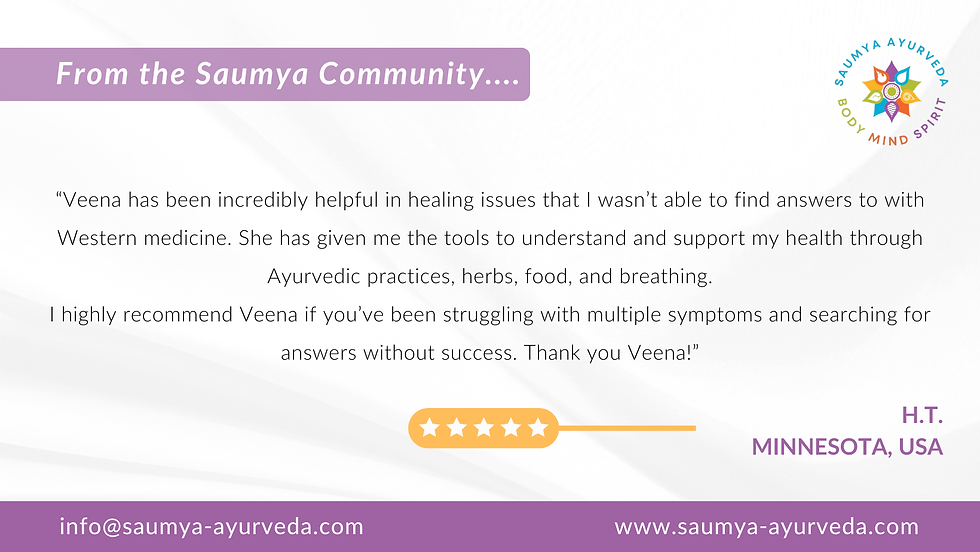


Explore more client success stories from Saumya Ayurveda and see how Ayurveda supports healing, balance, and transformation.

Discover the Saumya Ayurveda Way
At Saumya Ayurveda, we see you as a whole being—not just a collection of symptoms. True health is more than the absence of disease; it is a state of balance between body, mind, and awareness.
Many people today feel unheard or only partially supported in conventional health systems, especially when symptoms persist without clear answers.
This is where Ayurveda offers a different path.
If you are seeking a holistic approach to health and balanced living, you are in the right place. Saumya Ayurveda provides personalized Ayurvedic guidance designed to support physical, mental, and emotional harmony—helping you move toward a more vibrant and aligned life.
Our approach is rooted in classical Ayurveda and adapted for modern life, with a focus on understanding your unique dosha and prakriti (your natural constitution) so recommendations are truly individualized—not generic.
Saumya Ayurveda offers concierge-style, client-centered care, meaning your experience is personal, supportive, and free from retail or product pressure. The focus is entirely on education, clarity, and sustainable lifestyle transformation.
Through structured Ayurveda consultation packages, you receive ongoing guidance, thoughtful coaching, and practical tools to help you create lasting change—not temporary fixes.

Meet Veena: Your Trusted Ayurvedic Guide for Clients Worldwide
Veena Blilie is a Certified Ayurvedic Practitioner, Ayurveda teacher, meditation guide, and monk with over three decades of experience helping clients worldwide achieve greater balance and well-being through Ayurveda.
As founder of Saumya Ayurveda and President Emeritus of the Meditation Center, Veena serves clients worldwide through personalized Ayurvedic wellness guidance, meditation, and yoga practices.
Saumya Ayurveda has been recognized as the #1 Ayurveda cooking blog and the #3 Ayurveda website and blog and has received multiple consecutive awards for best wellness practice.
Through her work, Veena shares practical Ayurvedic guidance, nourishing recipes, and wellness education for modern living.
Inspired from an early age by learning herbal remedies, food as medicine, and traditional healing practices at her grandmother’s knee, Veena combines traditional Ayurvedic wisdom with compassionate, accessible guidance that supports mental, physical, and spiritual well-being.
Known for her warmth, humor, intuitive approach, and accessible style, Veena empowers people to create sustainable health through personalized Ayurvedic wellness plans designed to fit naturally into everyday life.
Veena is also the author of several free Ayurveda eBooks and writes the educational articles published on the Saumya Ayurveda blog.
As seen in:
Voice America
Albuquerque The Magazine
Learn more about Veena and her work through Saumya Ayurveda.
Disclaimer: This information is for educational purposes only and is not a substitute for professional medical advice. Ayurveda works best when tailored to your unique doshic profile, so it’s essential to understand your constitution and imbalances before using herbs, foods, or lifestyle practices. Consult a Certified Ayurvedic Practitioner for personalized guidance.