


Best Foods to Support Healthy Testosterone Naturally: An Ayurvedic Guide

Updated: Sep 3
Feeling more tired than you used to? Experiencing lower energy, reduced muscle strength, stubborn weight gain, decreased libido, or brain fog? While these changes are often blamed on aging, they may also reflect that your body needs better support for healthy testosterone production.
The good news is that supporting healthy testosterone doesn't begin with expensive supplements or the latest wellness trend. It begins with the food you eat every day.
From an Ayurvedic perspective, testosterone isn't something you simply "boost." It's the natural result of a well-nourished, balanced body. When agni (digestive fire) is strong, nutrients are properly absorbed, tissues are nourished, and healthy hormone production is naturally supported.
In this guide, you'll discover the best foods to support healthy testosterone naturally, along with Ayurvedic principles that promote vitality, resilience, and long-term hormonal health. You'll also learn which foods and daily habits may be working against you—and simple ways to support your body so you can feel stronger, healthier, and more energized.

The best foods to support healthy testosterone naturally include healthy fats, high-quality proteins, zinc-rich foods, magnesium-rich foods, seasonal vegetables, antioxidant-rich fruits, warming digestive spices, nuts, seeds, and dosha-balancing whole foods. According to Ayurveda, healthy digestion (Agni), restorative sleep, stress management, and daily routine are equally important for healthy hormone production.
Key Takeaways
Healthy testosterone is built, not boosted. Ayurveda supports men's vitality by strengthening the body's natural foundations through food as medicine, strong digestion (Agni), restorative sleep, stress management, regular exercise, and healthy daily routines.
Strong Agni (digestive fire) is the foundation of hormonal health. Even the most nutrient-rich foods cannot fully nourish the body when digestion is weak or Ama (toxins) interferes with proper absorption and metabolism.
The foods you eat every day matter. A diet rich in healthy fats, quality protein, legumes, whole grains, nuts, seeds, seasonal fruits, vegetables, and Ayurvedic spices helps nourish the tissues responsible for strength, vitality, and healthy hormone function.
Ayurveda never recommends a one-size-fits-all diet. The foods that best support your health depend on your Vata, Pitta, or Kapha dosha, digestive strength, age, activity level, and current state of balance.
Healthy testosterone is only one aspect of men's vitality. Ayurveda focuses on cultivating energy, stamina, resilience, reproductive health, longevity, and overall wellbeing by addressing the root causes of imbalance—not simply increasing a hormone level.
Food works best as part of a holistic lifestyle. Combining wholesome nutrition with meditation, diaphragmatic breathing, restorative sleep, Abhyanga (Ayurvedic self-massage), regular movement, and individualized herbal support creates the strongest foundation for long-term health.
Small, consistent choices produce lasting results. Every nourishing meal is an opportunity to strengthen your body, support healthy hormone balance, and invest in vibrant health for years to come.
Table of Contents
Final Thoughts

Why Food Matters in Ayurveda
In Ayurveda, food is medicine. Every bite you take has the power to either nourish your body, strengthen your vitality, and support healthy hormone function—or gradually contribute to imbalance.
Long before modern nutrition recognized the importance of whole foods, Ayurveda taught that the quality of your health is deeply connected to the quality of your digestion and the foods you eat every day.
When it comes to supporting healthy testosterone naturally, Ayurveda looks beyond individual nutrients or trendy "superfoods." Instead, it asks a more important question: Can your body properly digest, absorb, and transform the food you eat into healthy tissues and lasting vitality?
This process begins with Agni, your digestive fire. A strong Agni transforms food into nourishment that supports every tissue in the body, including Shukra Dhatu, the reproductive tissue associated with vitality, fertility, and healthy sexual function.
When digestion is weak, Ama (toxins) can accumulate, interfering with nutrient absorption and the body's natural ability to maintain optimal health.
Ayurveda also recognizes that there is no single perfect diet for everyone. The foods that best support your health depend on your Vata, Pitta, or Kapha dosha, your age, activity level, digestive strength, the season, and your current state of balance.
Rather than following restrictive diets or chasing the latest nutrition trends, Ayurveda encourages eating in harmony with your unique constitution.
Healthy testosterone is not built by one food alone. It is the result of strong digestion, nourishing meals, balanced daily habits, restorative sleep, regular movement, and mindful living. Every wholesome meal is an opportunity to strengthen your body, nourish your tissues, and invest in vibrant health for years to come.

Agni, Ama, and Hormonal Health
You can eat the healthiest foods in the world, but if your body cannot properly digest, absorb, and utilize them, they cannot fully support your health.
This is one of Ayurveda's most important teachings and one of the reasons healthy digestion is considered the foundation of healthy hormones, vitality, and longevity.
This vital process depends on Agni, your digestive fire. Agni governs digestion, metabolism, and the transformation of food into nourishment.
When Agni is strong, the body efficiently converts wholesome foods into the nutrients needed to nourish all seven Dhatus (body tissues), including Shukra Dhatu, the reproductive tissue associated with male vitality, fertility, healthy libido, reproductive health, and resilience.
When Agni becomes weak or imbalanced, food may not be completely digested. Ayurveda teaches that this can lead to the formation of Ama, a sticky, toxic byproduct of incomplete digestion.
As Ama accumulates, it can interfere with healthy digestion, nutrient absorption, metabolism, and the body's natural ability to maintain balance. Over time, this may contribute to fatigue, sluggishness, poor digestion, and diminished vitality.

Although Ayurveda does not describe testosterone in the same way as modern medicine, it has long recognized that healthy reproductive function depends on strong digestion, balanced doshas, well-nourished tissues, and minimal Ama.
Before focusing on individual foods, herbs, or supplements, Ayurveda first seeks to create the internal conditions that allow the body to thrive naturally.
This is why Ayurveda emphasizes strengthening Agni, reducing Ama, and choosing foods that are appropriate for your unique Vata, Pitta, or Kapha dosha.
When digestion is functioning optimally, every nourishing meal becomes an opportunity to support healthy testosterone, sustained energy, strength, resilience, and long-term vitality.
As you'll discover next, many everyday foods naturally support strong digestion, healthy tissue nourishment, and vibrant men's health, making them valuable additions to an Ayurvedic lifestyle.

The Best Foods to Support Healthy Testosterone Naturally
What are the best foods to support healthy testosterone naturally?
According to Ayurveda, the best foods to support healthy testosterone naturally include ghee, soaked almonds, black sesame seeds, pumpkin seeds, mung beans, red lentils, whole grains, seasonal fruits, leafy green vegetables, and digestive spices.
Rather than relying on a single "superfood," Ayurveda emphasizes strong digestion (Agni), reducing Ama (toxins), nourishing Shukra Dhatu, and consistently eating wholesome foods to support long-term vitality and healthy hormone function.
Ayurveda teaches that food is medicine. Every meal is an opportunity to nourish your body, strengthen digestion, and support healthy hormones. Rather than searching for one food that "boosts testosterone."

Ayurveda focuses on creating an internal environment where the body can naturally thrive. This begins with strong Agni, balanced doshas, wholesome nutrition, mindful eating, and healthy daily habits.
Related Reading: Raising Testosterone Levels with Ayurveda's Natural Testosterone Support — Discover how Ayurveda supports men's vitality through Vajikarana, herbs, lifestyle practices, digestion, and a whole-person approach to healthy testosterone and long-term wellbeing.
Ayurveda also recognizes that how you eat is just as important as what you eat. Eating in a calm environment, chewing your food thoroughly, avoiding overeating, and eating regular meals all help strengthen Agni, improve nutrient absorption, and reduce the formation of Ama.
Likewise, choosing fresh, seasonal, and minimally processed foods helps keep the body in harmony with nature and supports optimal health throughout the year.
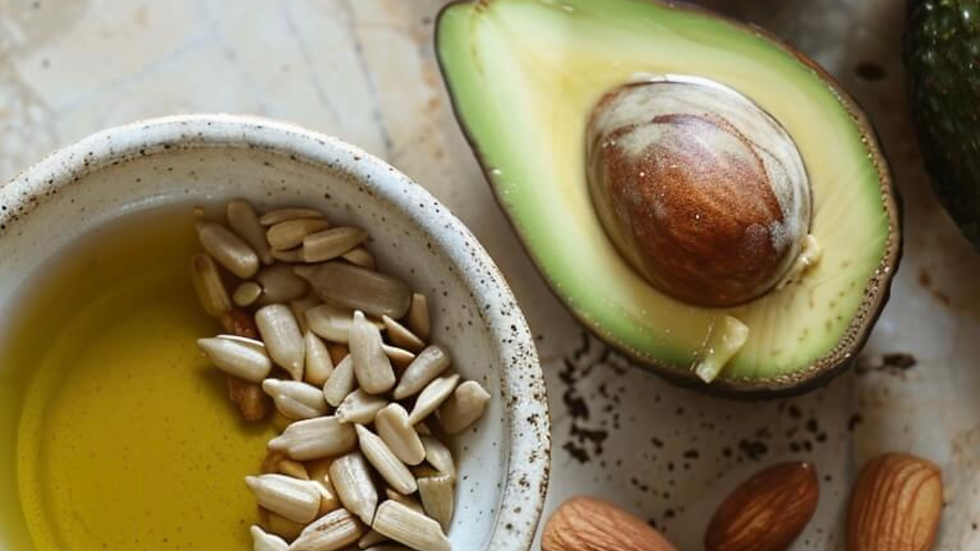
Healthy Fats That Nourish Shukra Dhatu
Healthy dietary fats provide important building blocks for healthy hormone production while nourishing Shukra Dhatu, the reproductive tissue associated with male vitality, fertility, healthy libido, strength, and resilience. Ayurveda has long valued wholesome fats for their ability to lubricate tissues, support the nervous system, improve nutrient absorption, and promote healthy aging.
Ghee
Often called Ayurveda's "liquid gold," ghee strengthens Agni, enhances the absorption of fat-soluble nutrients, nourishes the deeper tissues, and supports healthy digestion. Enjoy a small amount daily over cooked vegetables, soups, lentils, or whole grains.
Soaked Almonds
Traditionally recommended to promote strength, stamina, and longevity, almonds provide healthy fats, plant protein, vitamin E, magnesium, and antioxidants. Ayurveda recommends soaking almonds overnight and removing the skins to improve digestibility.
Black Sesame Seeds
Rich in healthy fats, calcium, iron, zinc, magnesium, and antioxidants, black sesame seeds nourish the bones, reproductive tissues, and healthy aging. Sprinkle them over cooked vegetables, rice dishes, or warm breakfast cereals.
Avocados
Although not traditionally Ayurvedic, avocados are an excellent source of heart-healthy monounsaturated fats, fiber, and potassium. When appropriate for your constitution and digestion, they can be a nourishing addition to a balanced diet.
Ayurveda Tip: Include a small amount of healthy fat with each meal to improve nutrient absorption and help nourish Shukra Dhatu.
Protein-Rich Foods That Build Strength
Protein provides the amino acids needed to build and repair tissues while supporting healthy muscles, energy production, and overall vitality. Ayurveda encourages choosing fresh, minimally processed protein sources that are easy to digest and appropriate for your dosha.
Mung Beans
Among legumes, mung beans are especially prized because they are generally easier to digest while providing plant protein, fiber, vitamins, and minerals. They nourish without overburdening digestion and are commonly used in traditional Ayurvedic cleansing programs.
Red Lentils
Red lentils provide high-quality plant protein while pairing beautifully with digestive spices such as ginger, cumin, coriander, turmeric, and fennel, helping strengthen Agni while supporting healthy nourishment.
Organic Dairy (When Well Tolerated)
Fresh organic milk, cultured yogurt, kefir, and paneer, when appropriate for your constitution, have traditionally been used to nourish Shukra Dhatu, promote strength, and support healthy reproductive tissues. Ayurveda recommends consuming dairy warm, fresh, and appropriately spiced to improve digestibility.
Ayurveda Tip: Cooking legumes with digestive spices helps strengthen Agni, improve nutrient absorption, and reduce gas and bloating.
Mineral-Rich Foods That Support Men's Vitality
Healthy hormone function depends on adequate vitamins and minerals obtained through a balanced diet.
Pumpkin Seeds
Pumpkin seeds are naturally rich in zinc, magnesium, healthy fats, and antioxidants. Zinc contributes to normal reproductive function and makes pumpkin seeds an excellent addition to a nutrient-dense diet.
Dark Leafy Greens
Spinach, kale, Swiss chard, collard greens, and other leafy vegetables provide magnesium, folate, vitamin K, iron, and antioxidants that support overall health. Ayurveda generally recommends lightly cooking vegetables to make them easier to digest, particularly for those with weaker Agni.
Whole Grains That Sustain Energy
Whole grains provide slow-burning carbohydrates that help maintain steady energy, balanced metabolism, and healthy digestion throughout the day.
Excellent choices include:
Barley
Oats
Brown rice
Quinoa
Unlike refined carbohydrates, whole grains provide fiber, vitamins, minerals, and lasting nourishment while helping maintain balanced energy.
Naturally Sweet Foods That Nourish the Body
Ayurveda considers the sweet taste, when obtained from wholesome foods rather than refined sugar, to be deeply nourishing for the body's tissues.
Excellent choices include:
Pomegranates
Dates
Figs
Seasonal berries
Ripe grapes
Seasonal mangoes
These fruits provide vitamins, antioxidants, fiber, and natural sweetness while helping nourish the deeper tissues responsible for vitality.
Digestive Spices That Strengthen Agni
One of Ayurveda's greatest contributions to nutrition is its emphasis on supporting digestion.
Healthy digestion allows the body to transform food into nourishment rather than Ama.
Everyday spices that naturally strengthen Agni include:
Fresh ginger
Turmeric
Cumin
Coriander
Fennel
Cardamom
Cinnamon
Black pepper
These spices not only enhance flavor but also improve digestion, support nutrient absorption, encourage healthy metabolism, and help reduce the accumulation of Ama.
Ayurveda Tip: Season your meals with a variety of digestive spices instead of relying on excessive salt, sugar, or processed sauces.

Food Is Medicine
One of Ayurveda's greatest teachings is that lasting vitality is created through consistent daily choices—not quick fixes. There is no single food capable of dramatically increasing testosterone overnight.
Instead, every nourishing meal becomes an opportunity to strengthen Agni, reduce Ama, nourish Shukra Dhatu, and support the body's natural ability to maintain healthy hormone function.
Nutrition is only one piece of the puzzle. When combined with restorative sleep, stress management, meditation, diaphragmatic breathing, regular exercise, healthy daily routines, and individualized herbal support, wholesome foods become a powerful foundation for healthy testosterone, sustained energy, healthy aging, and lifelong vitality.

Foods That Nourish Shukra Dhatu
Healthy testosterone is only one expression of healthy Shukra Dhatu. In Ayurveda, true male vitality is measured by far more than a hormone level. It reflects the health of your deepest body tissues, your strength, stamina, fertility, libido, resilience, creativity, and capacity for healthy aging.
Rather than chasing a single laboratory value, Ayurveda seeks to cultivate vibrant health by nourishing the entire body from the inside out.
Shukra Dhatu is the seventh and final Dhatu (body tissue) formed through digestion and metabolism. Ayurveda teaches that the body nourishes its tissues in sequence—from Rasa (plasma), Rakta (blood), Mamsa (muscle), Meda (fat), Asthi (bone), and Majja (bone marrow and nervous tissue)—before finally nourishing Shukra Dhatu.
Because it is formed last, the health of Shukra Dhatu depends upon the proper nourishment of every tissue that comes before it. This is one of the reasons Ayurveda places such a strong emphasis on healthy digestion (Agni) and balanced nutrition.
Rather than recommending a handful of "testosterone-boosting" foods, Ayurveda asks a more important question:
Are you eating foods your body can digest, absorb, and transform into healthy tissues?
Foods that nourish Shukra Dhatu share several important qualities. They are generally fresh, wholesome, minimally processed, nutrient-dense, easy to digest, naturally rejuvenating, and supportive of strong Agni.
When digestion is healthy and Ama (toxins) is minimized, these foods help provide the nourishment needed to support healthy reproductive tissues, vitality, resilience, and overall wellbeing.
Some of the most highly regarded foods for nourishing Shukra Dhatu include:
Ghee
Soaked almonds
Black sesame seeds
Pumpkin seeds
Fresh organic milk (when well tolerated)
Dates and figs
Pomegranates
Mung beans and red lentils
Whole grains, including barley, oats, and brown rice
Seasonal fruits and vegetables
Digestive spices, including ginger, cumin, coriander, fennel, turmeric, cinnamon, cardamom, and black pepper
Ayurveda also teaches that how you eat is just as important as what you eat. Preparing meals with care, eating in a calm environment, chewing food thoroughly, avoiding overeating, and eating at regular times all help strengthen Agni, improve nutrient absorption, and reduce the formation of Ama.
Choosing fresh, seasonal, and locally available foods whenever possible further supports the body's natural rhythms and changing nutritional needs throughout the year.
Classical Ayurveda Insight"Vajikarana promotes strength, nourishment, happiness, longevity, and healthy progeny." — Charaka Samhita, Chikitsa Sthana 2 (Vajikarana Adhyaya)
Ultimately, Shukra Dhatu cannot be nourished by one food alone. It is strengthened through the combined effects of food as medicine, strong Agni, reduced Ama, restorative sleep, regular movement, stress management, and healthy daily routines.
Every wholesome meal becomes an opportunity to nourish your body's deepest tissues, support healthy reproductive function, and invest in lasting vitality, strength, and healthy aging.

Foods to Limit for Healthy Testosterone and Men's Vitality
Ayurveda teaches that every meal is either an opportunity to nourish the body or contribute to imbalance. Just as wholesome foods strengthen Agni (digestive fire), nourish the Dhatus (body tissues), and support long-term vitality, other foods and eating habits may gradually weaken digestion, contribute to the accumulation of Ama (toxins), and reduce the body's ability to maintain optimal health.
One of the greatest strengths of Ayurveda is its balanced approach to nutrition. Rather than encouraging restrictive diets or labeling foods as "good" or "bad," Ayurveda emphasizes consistency over perfection. An occasional dessert, celebration meal, or favorite comfort food is unlikely to undo healthy habits built over months and years. Lasting vitality comes from making nourishing choices most of the time.
Foods That May Increase Ama
According to Ayurveda, Ama is a toxic byproduct of incomplete digestion that develops when food is not fully digested or metabolized.
Over time, Ama may interfere with healthy digestion, reduce nutrient absorption, and contribute to imbalance throughout the body. Choosing fresh, wholesome foods helps minimize its formation.
Foods that may contribute to Ama, particularly when eaten frequently, include:
Highly processed foods
Fast food
Packaged snack foods
Processed meats
Deep-fried foods
Excess refined sugar
Artificially sweetened beverages
Highly processed convenience meals
These foods are often high in refined carbohydrates, unhealthy fats, sodium, preservatives, and artificial ingredients while providing relatively little nutritional value. Replacing them with whole, minimally processed foods helps nourish the body more effectively.
Foods That May Weaken Agni
Healthy hormones depend on healthy digestion. Even nutrient-rich foods cannot fully nourish the body if Agni is weak.
Several eating habits may gradually impair digestion, including:
Frequently overeating
Eating too quickly
Skipping meals and then overeating later
Constant snacking without allowing digestion to finish
Eating while stressed, distracted, or working
Consuming excessive iced beverages, which Ayurveda teaches may diminish digestive fire in some individuals
Supporting Agni begins not only with choosing healthy foods, but also with eating mindfully and giving your digestive system the attention it deserves.

Ayurveda Tip: Before eating, listen to our free 2-Minute Meditation to help you pause, ground yourself, restore slow diaphragmatic breathing, and relax your entire body. Beginning your meal in a calm, present state supports your body's natural rest-and-digest response, helping optimize digestion and nutrient absorption. Then enjoy your meal slowly, chewing thoroughly and minimizing distractions whenever possible.
Avoid Refined Sugar
Ayurveda recognizes that the sweet taste is naturally nourishing when it comes from wholesome foods such as fresh fruit, dates, figs, or sweet root vegetables. However, refined sugar, candy, pastries, desserts, and sugar-sweetened beverages may contribute to sluggish digestion, metabolic imbalance, and reduced vitality.
Whenever possible, satisfy your sweet tooth with fresh seasonal fruit or naturally sweet whole foods.
Choose Fresh Foods More Often
Freshly prepared meals have long been valued in Ayurveda because they are believed to contain the greatest amount of Prana (life force) and nourishment.
Whenever practical, choose:
Freshly prepared meals
Seasonal fruits and vegetables
Whole grains
Fresh legumes
Freshly cooked soups and stews
Rather than relying heavily on:
Highly processed foods
Fast food
Repeatedly reheated meals
Packaged convenience foods
While leftovers can certainly be enjoyed occasionally, building your diet around fresh, wholesome meals better supports digestion and overall vitality.
Avoid or Limit Alcohol Consumption
Excessive alcohol intake may negatively affect sleep quality, recovery, liver health, energy levels, and overall wellbeing. Ayurveda encourages moderation and emphasizes protecting the body's natural ability to repair, restore, and regenerate.
Replacing alcoholic beverages with water, herbal teas, or naturally flavored water more often can help support long-term health.
Healthy Testosterone Depends on More Than Food
Although nutrition plays an essential role, healthy testosterone is influenced by much more than the foods you eat. Chronic stress, inadequate sleep, physical inactivity, smoking, excessive alcohol consumption, and poor daily habits can all affect energy, resilience, hormonal health, and overall vitality.
This is why Ayurveda takes a whole-person approach. Along with food as medicine, it emphasizes strong Agni, reduced Ama, restorative sleep, stress management, meditation, diaphragmatic breathing, regular movement, healthy daily routines, and individualized herbal support to help cultivate lasting health.
Ayurveda Tip: Aim for progress, not perfection. Healthy testosterone and vibrant vitality are not created by one meal or one supplement—they are built through consistent daily choices that nourish your body over months and years.
A Final Thought
In Ayurveda, health is rarely transformed by one meal—it is shaped by the choices we make every day. Every wholesome meal strengthens Agni, helps reduce Ama, nourishes the body's tissues, and supports your natural capacity for healthy testosterone, sustained energy, resilience, and lifelong vitality.

Dosha-Specific Food Guidance for Healthy Testosterone
One of the greatest strengths of Ayurveda is that it recognizes there is no one-size-fits-all diet. While many nutrition plans recommend the same foods for everyone, Ayurveda teaches that your ideal diet depends on your unique balance of Vata, Pitta, and Kapha doshas, your digestive strength (Agni), your age, activity level, the season, and your current state of health.
This personalized approach is one of the reasons Ayurveda has remained relevant for over 5,000 years. Rather than chasing the latest nutrition trend, Ayurveda encourages choosing foods that restore balance, strengthen digestion, reduce Ama (toxins), and nourish the body's tissues—including Shukra Dhatu, the reproductive tissue associated with vitality, fertility, healthy libido, and healthy aging.

Vata Dosha: Nourish and Ground
Vata is composed of the elements air and space and governs movement throughout the body, including the nervous system, circulation, breathing, and elimination. When balanced, Vata promotes creativity, enthusiasm, flexibility, and vitality.
When aggravated, it may contribute to fatigue, anxiety, poor sleep, constipation, dry skin, irregular digestion, and reduced stamina.
To restore balance, Ayurveda recommends warm, nourishing, moist, and grounding foods that strengthen Agni and provide lasting nourishment.
Foods that generally support Vata include:
Ghee
Warm cooked vegetables
Oats
Brown rice
Sweet potatoes
Mung dal
Soaked almonds
Dates
Black sesame seeds
Healthy soups and stews
Warming spices, including ginger, cinnamon, cumin, cardamom, and fennel
Limiting cold foods, excessive raw vegetables, skipping meals, highly processed foods, and iced beverages may also help keep Vata balanced.

Pitta Dosha: Cool and Restore
Pitta is composed primarily of fire and water and governs digestion, metabolism, and transformation. When balanced, Pitta supports healthy digestion, confidence, intelligence, motivation, and strong metabolism. When excessive, it may contribute to inflammation, irritability, heartburn, excessive body heat, impatience, and burnout.
Cooling, hydrating foods help calm excess Pitta while continuing to nourish the body's tissues.
Foods that generally support Pitta include:
Barley
Basmati rice
Leafy green vegetables
Asparagus
Cucumbers
Zucchini
Pomegranates
Sweet ripe fruits
Fresh cilantro
Coconut
Cooling spices, including coriander, fennel, mint, and cardamom
Moderating very spicy foods, fried foods, excessive alcohol, highly processed foods, and excessive caffeine may also help maintain healthy balance.

Kapha Dosha: Lighten and Energize
Kapha is composed of earth and water and provides structure, stability, endurance, and strength. When balanced, Kapha promotes steady energy, emotional resilience, healthy immunity, and physical strength.
When aggravated, it may contribute to sluggish digestion, weight gain, congestion, fatigue, water retention, and reduced motivation.
To restore balance, Ayurveda recommends lighter, warming, and more stimulating foods that strengthen Agni and help reduce the accumulation of Ama.
Foods that generally support Kapha include:
Barley
Quinoa
Legumes
Leafy green vegetables
Broccoli
Cauliflower
Apples
Pears
Beans
Digestive spices, including ginger, turmeric, black pepper, mustard seed, cumin, and cinnamon
Reducing heavy desserts, excessive dairy, fried foods, refined sugar, highly processed foods, and oversized portions may help improve digestion and support healthy energy levels.
Ready to begin your Ayurveda journey? Schedule your complimentary Discovery Call today.

Remember: Most People Are a Combination of Doshas
Although these recommendations provide helpful guidance, very few people are purely Vata, Pitta, or Kapha. Most individuals have a unique combination of doshas, and those doshas naturally change throughout the seasons and different stages of life.
For this reason, Ayurveda does not rely on rigid meal plans or restrictive diets. Instead, it emphasizes individualized nutrition based on your complete constitutional picture, the strength of your Agni, the presence of Ama, your lifestyle, your age, and your current state of balance.
The best diet is not the one that worked for someone else—it is the one that brings your own body back into balance.
By choosing foods that support your unique constitution while strengthening Agni and nourishing Shukra Dhatu, you create the foundation for healthy testosterone, sustained energy, resilience, and lifelong vitality.
Related Reading: Signs Your Doshas Are Out of Balance and How Ayurveda Restores Harmony — Learn how identifying your Vata, Pitta, or Kapha imbalances can help you personalize your diet, strengthen Agni, and support healthy hormones, energy, and overall wellbeing.

Sample One-Day Ayurvedic Meal Plan for Healthy Testosterone and Men's Vitality
One of the easiest ways to bring Ayurveda into your daily life is through simple, nourishing meals that support your body's natural ability to thrive.
Rather than searching for one "testosterone-boosting" food, Ayurveda emphasizes food as medicine—choosing wholesome foods that strengthen Agni (digestive fire), reduce Ama (toxins), and nourish Shukra Dhatu, the reproductive tissue associated with vitality, fertility, healthy libido, strength, and healthy aging.
This sample meal plan reflects general Ayurvedic principles and can be adapted throughout the year using fresh, seasonal foods that best support your Vata, Pitta, or Kapha dosha. The goal is not perfection but creating a sustainable way of eating that promotes healthy testosterone, balanced energy, strong digestion, and long-term wellbeing.
Breakfast
Warm Cinnamon Oatmeal with Ghee and Soaked Almonds
Steel-cut or rolled oats
1 teaspoon ghee
Chopped soaked almonds
Fresh seasonal berries
Cinnamon and cardamom
Warm herbal tea or warm water with fresh ginger
Why it supports vitality: This nourishing breakfast provides healthy fats, fiber, warming spices, and slow-burning carbohydrates that help strengthen Agni, provide sustained energy, and begin the day with foods that support healthy tissue nourishment.
Ayurveda Tip: Before eating, take a moment to pause, appreciate your meal, and settle your mind. Eating in a calm, relaxed state supports stronger digestion and helps your body absorb nourishment more efficiently.
Mid-Morning Snack (Optional)
Fresh apple, pear, or pomegranate
Small handful of pumpkin seeds
Why it supports vitality: This light snack provides fiber, antioxidants, zinc, and healthy fats without relying on highly processed convenience foods.
Lunch — Your Most Important Meal
In Ayurveda, lunch is traditionally the largest meal of the day because Agni is strongest around midday, allowing the body to digest, absorb, and utilize nutrients most efficiently.
Mung Dal Bowl with Brown Rice and Seasonal Vegetables
Mung dal seasoned with turmeric, cumin, coriander, ginger, and fennel
Brown rice or barley
Steamed seasonal vegetables
Small drizzle of ghee
Fresh cilantro
Why it supports vitality: This balanced meal provides plant protein, healthy fats, fiber, vitamins, minerals, and digestive spices that nourish the body's tissues while supporting healthy digestion and sustained afternoon energy.
Afternoon Snack
Dates stuffed with almond butter
Tulsi, ginger, or fennel herbal tea
Why it supports vitality: Naturally sweet whole foods help nourish Shukra Dhatu while satisfying hunger without excessive refined sugar.
Dinner
Choose a meal that is lighter than lunch while still providing satisfying nourishment.
Option 1
Baked Wild-Caught Salmon
Roasted sweet potatoes
Steamed broccoli
Quinoa
Option 2 (Vegetarian)
Mung Bean Soup
Quinoa
Roasted seasonal vegetables
Small drizzle of ghee
Why it supports vitality: A lighter evening meal supports healthy digestion overnight while providing high-quality protein, healthy fats, vitamins, minerals, and antioxidants needed for tissue repair and recovery.
Evening Beverage
Choose one:
Warm golden milk with turmeric, cinnamon, cardamom, and nutmeg (if dairy is well tolerated)
or
A calming herbal tea such as tulsi, chamomile, or fennel
Why it supports vitality: Restorative sleep is one of Ayurveda's most important pillars of healthy hormone function, recovery, and long-term vitality.
Simple Dosha Modifications
This menu can be easily personalized according to your constitution.
Vata
Add a little extra ghee.
Choose warm soups and stews.
Emphasize cooked vegetables and warming spices.
Pitta
Include more cooling vegetables such as cucumber, asparagus, zucchini, and leafy greens.
Reduce very spicy foods.
Enjoy cooling herbs such as cilantro, mint, and fennel.
Kapha
Increase vegetables and legumes.
Slightly reduce grains and heavy dairy.
Emphasize warming spices such as ginger, turmeric, black pepper, and cumin.

Ayurvedic Eating Habits That Support Healthy Testosterone
The foods you eat are only part of the picture. Ayurveda teaches that how you eat has a profound influence on digestion and overall health.
To strengthen Agni and minimize Ama, try to:
Eat at regular times each day.
Choose fresh, seasonal, minimally processed foods whenever possible.
Enjoy your largest meal at lunch, when digestion is naturally strongest.
Sit down and eat without distractions.
Chew your food thoroughly and eat mindfully.
Stop eating when comfortably satisfied, rather than overly full.
Season meals with digestive spices such as ginger, cumin, coriander, fennel, turmeric, cinnamon, and cardamom.
Stay well hydrated, but avoid drinking beverages with meals.
Remember: Ayurveda recognizes that there is no universal "healthy diet." The foods that nourish one person may not be appropriate for another. Through an individualized Ayurvedic assessment, your Prakruti (constitution), Vikruti (current imbalance), Agni (digestive fire), Ama (toxic accumulation), stage of life, seasonal influences, and health goals are considered to determine which foods will best support your healing and vitality.
"Food becomes medicine when it is correct for the indivudual." — Veena Blilie, Saumya Ayurveda
A Final Thought
In Ayurveda, every meal is an opportunity to strengthen Agni, reduce Ama, nourish Shukra Dhatu, and support healthy testosterone naturally.
By consistently choosing wholesome foods that are appropriate for your unique constitution, you lay the foundation for lasting energy, resilience, healthy aging, and vibrant wellbeing.
Related Reading: The Healing Power of Ayurvedic Foods — Discover how food as medicine can strengthen digestion, restore balance, and become one of your most powerful tools for lifelong health.
Beyond Food: Living Ayurveda Every Day

"Your body exists within your field of awareness, but your mind and consciousness are far greater than your physical body alone." - Veena Blilie, Saumya Ayurveda
The Saumya Ayurveda Three-Step Meditation Process helps shift us from fight-flight-freeze mode into rest-restore-relax mode—the state from which healing, digestion, sleep, and rejuvenation naturally occur.
When combined with a regular Abhyanga practice, meditation and breathwork can deepen your sense of grounding, relaxation, and connection to yourself.
Give these practices a try for forty days and observe the changes. The more grounded, centered, and relaxed we become, the more smoothly life tends to flow.
"The breath is the connection between the mind and body. By training the breath, we become calm, focused, and grounded. We slow the aging process by reducing the effects of stress." — Veena, Saumya Ayurveda
1. Learn Diaphragmatic Breathing and Change Your Life
When we relearn how to breathe diaphragmatically, we shift from the body's stress response—fight, flight, or freeze—into a state of rest, restoration, and relaxation. This is where we want to live. This is where healing, clarity, resilience, and vitality thrive.
Learn Diaphragmatic Breathing and Change Your Life. Download your free eBook and discover how breathing correctly each day can help shift your nervous system from fight-flight-freeze into rest, restore, and relax—the state from which we want and need to live.

2. Deepen Your Experience with Guided Meditation
After completing your Abhyanga massage, spend 11 minutes in quiet reflection or guided meditation.
This allows the oil additional time to penetrate the tissues while helping the nervous system absorb the calming effects of the practice.
Our guided meditations make wonderful morning and evening companions to Abhyanga.
3. Create a Sustainable Ayurvedic Daily Routine
Abhyanga is most powerful when it becomes part of a larger daily rhythm of self-care.
Explore:
Choose the practices that provide you with the greatest support and begin there.
Choose a couple of practices from the routines that provide you with the greatest support. Perform them while applying our two-minute meditation technique and your mundane tasks transform into a mellifluous meditation. This is meditation applied to daily life.

Frequently Asked Questions About Foods That Support Healthy Testosterone
What are the best foods to support healthy testosterone naturally?
According to Ayurveda, foods that support healthy testosterone and men's vitality include ghee, soaked almonds, black sesame seeds, pumpkin seeds, mung beans, red lentils, whole grains, seasonal fruits, leafy green vegetables, and digestive spices.
Rather than relying on a single "superfood," Ayurveda emphasizes strong digestion (Agni), reducing Ama (toxins), and consistently eating wholesome foods that nourish the body's tissues.
Does Ayurveda recommend a special testosterone diet?
No. Ayurveda does not recommend a one-size-fits-all testosterone diet. Instead, it emphasizes personalized nutrition based on your Vata, Pitta, or Kapha dosha, digestive strength, age, lifestyle, and current state of health. The goal is to nourish the whole person rather than focus on a single hormone.
How does digestion affect healthy testosterone?
According to Ayurveda, healthy digestion (Agni) is essential because it transforms food into nourishment for the body's tissues, including Shukra Dhatu, the reproductive tissue associated with vitality and reproductive health. Weak digestion may contribute to the accumulation of Ama (toxins), reducing the body's ability to fully absorb and utilize nutrients.
Which foods should men limit to support healthy testosterone?
Ayurveda encourages limiting highly processed foods, excessive refined sugar, deep-fried foods, excessive alcohol, and heavily processed convenience foods. Choosing fresh, whole foods more often helps strengthen digestion, reduce Ama, and support long-term vitality.
Are healthy fats important for testosterone?
Yes. Healthy fats provide important building blocks for normal hormone production and overall health. Ayurveda traditionally recommends nourishing foods such as ghee, soaked almonds, black sesame seeds, pumpkin seeds, and other whole-food sources of healthy fats as part of a balanced diet.
Can food alone increase testosterone?
No single food has been proven to dramatically increase testosterone on its own. Ayurveda teaches that healthy testosterone is supported by a combination of nourishing foods, strong digestion, restorative sleep, stress management, regular exercise, and healthy daily routines.
What does Ayurveda say about protein and men's health?
Protein-rich foods help support muscle maintenance, tissue repair, and overall vitality. Ayurveda encourages choosing wholesome, minimally processed protein sources that are easy to digest, such as mung beans, red lentils, legumes, organic dairy (when appropriate), nuts, seeds, and other quality protein sources suited to your constitution.
Does my dosha affect the foods I should eat?
Yes. Ayurveda recognizes that Vata, Pitta, and Kapha doshas each have different nutritional needs. While some foods are beneficial for nearly everyone, the most supportive diet depends on your unique constitution, digestive strength, the season, and your current state of balance.
Why is Shukra Dhatu important for men's vitality?
In Ayurveda, Shukra Dhatu is the body's seventh and final tissue. It is associated with reproductive health, vitality, healthy libido, fertility, strength, resilience, and healthy aging. Nourishing Shukra Dhatu begins with strong Agni, wholesome nutrition, healthy lifestyle habits, and balanced daily routines.
Is food enough to support healthy testosterone naturally?
Food provides an essential foundation, but Ayurveda views nutrition as one part of a comprehensive approach. Lasting vitality is supported through food as medicine, healthy digestion, restorative sleep, stress management, meditation, diaphragmatic breathing, regular movement, healthy daily routines, and individualized Ayurvedic care.
If you're looking for a more comprehensive approach, read Raising Testosterone Levels with Ayurveda's Natural Testosterone Support, where you'll learn how these lifestyle practices work together to promote men's health and long-term vitality.

Glossary of Ayurvedic Terms
Understanding these foundational Ayurvedic concepts can help you better understand why nutrition recommendations are always personalized rather than one-size-fits-all.
Agni (Digestive Fire)
Agni is your body's digestive and metabolic fire. It governs how efficiently you digest food, absorb nutrients, and transform nourishment into healthy body tissues. Strong Agni supports energy, vitality, hormone balance, and overall wellbeing, while weakened Agni can contribute to poor digestion and reduced nutrient absorption.
Related Reading: Understanding Agni: Ayurveda's Digestive Fire
Ama
Ama refers to incompletely digested food and metabolic waste that accumulates when digestion is impaired. According to Ayurveda, excess Ama may interfere with the body's natural functions and contribute to imbalance. Supporting healthy digestion helps reduce Ama and improves your body's ability to utilize nutrients effectively.
Related Reading: What Is Ama? Understanding Toxins in Ayurveda
Doshas
The three doshas—Vata, Pitta, and Kapha— are the biological energies that govern every function of the body and mind. Each person has a unique combination of these doshas, influencing digestion, metabolism, body type, personality, and nutritional needs. Because every individual is unique, Ayurveda does not recommend the same foods for everyone.
Free Ayurveda eBook: Observable Ayurveda: A Beginner's Guide to Ayurvedic Self-Observation — Learn how to identify your unique constitution (Prakruti), recognize your current imbalances (Vikruti), and begin making personalized Ayurvedic lifestyle choices.
Prakruti (Your Natural Constitution)
Prakruti is your unique constitutional blueprint established at conception. It represents your natural balance of Vata, Pitta, and Kapha and serves as the foundation for personalized Ayurvedic nutrition and lifestyle recommendations.
Vikruti (Current Imbalance)
Vikruti refers to your current state of imbalance. Unlike Prakruti, Vikruti changes over time and is influenced by factors such as stress, diet, illness, sleep, age, environment, and the seasons. Ayurvedic recommendations are based on both your Prakruti and your current Vikruti.
Related Reading: Signs Your Doshas Are Out of Balance
Shukra Dhatu (Reproductive Tissue)
Shukra Dhatu is the body's reproductive tissue and is associated with fertility, reproductive health, healthy libido, vitality, tissue regeneration, and healthy aging. Ayurveda teaches that Shukra Dhatu is nourished through wholesome food, strong digestion, restorative sleep, balanced lifestyle habits, and appropriate herbal support when needed.
Ojas
Ojas is considered the body's vital essence and the foundation of resilience, immunity, strength, emotional stability, and longevity. Healthy digestion, nourishing foods, quality sleep, healthy relationships, and balanced daily routines all help build and preserve Ojas.
Food as Medicine
One of Ayurveda's foundational principles is that food becomes medicine when it is personalized to the individual. The ideal diet is determined through a comprehensive Ayurvedic assessment that considers your Prakruti (constitution), Vikruti (current imbalance), Agni (digestive fire), the presence or absence of Ama, your stage of life, the season, and your overall state of health.
Rather than recommending one "perfect diet" for everyone, Ayurveda recognizes that the foods supporting health, vitality, and longevity are those best suited to your unique needs.
Ready to bring the wisdom of food as medicine into your own kitchen? Explore our collection of free Ayurveda recipe eBooks, featuring nourishing recipes, seasonal meal ideas, healing beverages, and practical guidance for balancing Vata, Pitta, and Kapha.
Whether you're looking for warming recipes to calm Vata, cooling meals to soothe Pitta, or lighter dishes to energize Kapha, these complimentary resources make it easy to prepare delicious foods that support balanced digestion, vibrant health, and long-term wellbeing.

Final Thoughts
Healthy testosterone is not about finding one perfect food or trying to force the body to produce more of a single hormone. Ayurveda takes a broader view.
Begin with the foundations: nourish yourself with wholesome foods, support strong digestion, eat according to your constitution, and make room for restorative sleep, movement, meditation, and a calmer daily rhythm.
Small choices, made consistently, can become powerful forms of self-care. When you nourish the whole body, you are supporting far more than testosterone—you are cultivating strength, energy, resilience, reproductive health, and vitality for the years ahead.
Food becomes medicine when it is appropriate for you. Your constitution, digestion, current state of balance, stage of life, and daily habits all matter.
That is the heart of the Ayurvedic approach: rather than chasing a hormone, create the conditions in which the whole body can thrive.

Continue Exploring Men's Health with Ayurveda
Healthy testosterone is just one aspect of men's health. Ayurveda offers a comprehensive approach to supporting energy, strength, resilience, healthy aging, digestion, stress management, and long-term vitality. Continue your learning with these in-depth guides from Saumya Ayurveda.
The Best Ayurvedic Daily Routine (Dinacharya) for Men's Health — Learn daily habits that support energy, focus, digestion, resilience, and long-term vitality.
8 Steps to Boost Energy, Build Strength & Improve Vitality Naturally — Practical strategies to restore strength, stamina, and overall well-being.
Best Foods to Support Healthy Testosterone Naturally: An Ayurvedic Guide — Discover foods that nourish healthy hormone production and men's vitality.
Raising Testosterone Levels with Ayurveda's Natural Testosterone Support — Explore how nutrition, lifestyle, digestion, and personalized herbal care support healthy testosterone naturally.
Ayurveda for Depression in Men: Causes, Symptoms, and Natural Support — Learn how Ayurveda supports emotional well-being, stress resilience, and mental health.
Ayurveda Approach to a Better Sex Life | Tips for Vata, Pitta, and Kapha — Understand how dosha balance influences intimacy, vitality, and reproductive health
Burnout in Men: Causes, Symptoms, and Ayurvedic Support -- Learn how Ayurveda helps men recover from burnout in our comprehensive guide.
Ayurvedic Barley Soup for Enhanced Libido | A Nourishing Recipe for Vata, Pitta & Kapha --Nourish vitality from the inside out with our.
Missing Your Zzzing Because of Night Time Peeing? Ayurvedic Insights --Frequent nighttime urination can disrupt both sleep and overall health. Learn how Ayurveda approaches this common concern.
Understanding Ojas: Ayurveda's Guide to Lasting Vitality, Energy & Resilience
Our Commitment to Accessible Ayurveda Education
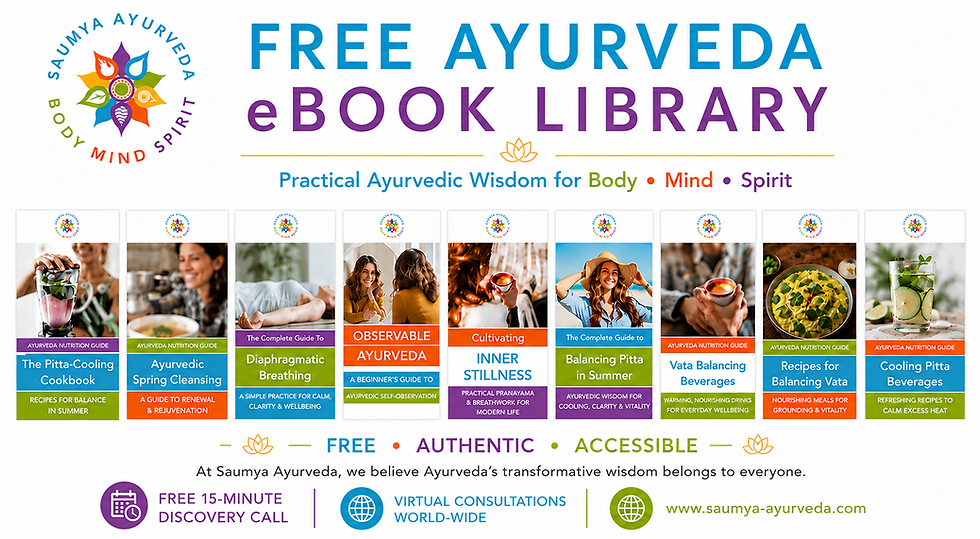
At Saumya Ayurveda, we believe Ayurveda's transformative ancient wisdom belongs to everyone—not just those who can afford it. That's why we're committed to making high-quality, authentic Ayurveda education available globally, free of charge.
Through our free eBooks, guides, and educational resources, we offer practical, grounded wisdom to help those seeking greater balance, vitality, and wellbeing integrate Ayurveda into their daily lives.
Accessible. Authentic. Free. Just as it was meant to be.
Free Ayurveda eBooks – Download practical guides, recipes, and wellness resources to support your health journey.
Ayurveda Blog – Enjoy easy-to-read articles, seasonal wellness tips, healthy recipes, and everyday inspiration—always educational, never a sales pitch.
Free Guided Traditional Progressive Meditations – Practice authentic, step-by-step guided meditations to cultivate calm, focus, and inner stillness.
Monthly Educational Newsletter – Receive seasonal Ayurveda insights, new articles, healthy recipes, and free resources delivered to your inbox each month.

What Our Clients Say | Saumya Ayurveda Testimonials
Real Transformations Through Ayurveda Consultation
Physician Testimonial (Medical Endorsement)
“As a physician, I have always believed that prevention is better than cure. In today’s healthcare environment, Ayurveda offers a logical and natural approach to long-term health and prevention.
I began working with Veena during a very demanding phase of my life, and she made the process accessible even within my busy schedule. I was encouraged to follow a steady, sustainable approach focused on real lifestyle change.
Over time, I experienced meaningful improvements in balance, energy, and well-being. In my medical practice, I now see many patients with similar stress- and diet-related imbalances, which has further reinforced my trust in Ayurvedic principles.
I have since referred several patients to Saumya Ayurveda and consider Veena a valuable resource in supporting holistic well-being.”
Dr. Gauri Nagargoje
M.D., Oncology & Hematology
Physician Testimonial (Medical Endorsement)
“As a physician, I initially struggled with Ayurveda’s simplicity and depth, but Veena’s guidance made it practical, scientific, and deeply effective.
Veena has transformed my health and perspective on healing. I experienced significant improvements in focus, digestion, stress response, and overall vitality.
Her personalized approach made lifestyle changes easy and sustainable.
This journey not only improved my health but also inspired a lifelong commitment to integrating Ayurveda into holistic healthcare.”
Dr. Jessica Bedi
D.O., & Ayurvedic Doctor
Real Men. Real Stories. Real Results.
"Recently I've had the pleasure of working with Veena on some major health issues. She listened carefully to what I shared and truly seemed to understand what was happening in my body. Because of that, she was able to guide my lifestyle choices and recommend the right Ayurvedic remedies. Over the past few months, I've made significant progress. Not only am I planning to continue working with Veena, but I can wholeheartedly recommend her to my relatives, friends, and colleagues." — Randall Krause, Los Angeles, California
"A year ago, after some lab tests, I was told I had an 'abnormal' liver. I thought of my mother, who had died fairly young from liver disease. Veena's Ayurvedic recommendations, which included herbs and healthy foods, turned things around in less than six months. My liver was retested, and each lab result was in the 'normal' range. This testifies to my longstanding mantra: 'In Veena I Trust."
"When my father first saw blood in his urine, he was dead from bladder cancer in less than three years. So when my doctor told me I had blood in my urine, I was scared to death. Veena recommended specific Ayurvedic herbs, cranberry juice, and certain yoga asanas. The blood in my urine, which had persisted despite surgery, was gone in less than a couple of months, thanks to Ayurveda and Veena's guidance. Both have my utmost respect."— D.F., USA
"Veena has been an incredible resource, helping me get aligned with food, herbs, and mind-body-spirit practices so I feel more grounded and present. I love the daily guided practices—a routine that feels truly embodying. She has made an outsized impact on my life in a short amount of time."— Mark, Boulder, Colorado
"I feel greatly improved. Stress fell off like an old hairy coat. I'm just not anxious. My depression is way decreased. I was haunted by anxiety my whole life, and it's just gone. The mudra and mantra... WOW. I have regained hope. Something wonderful is taking place. You and your knowledge came to me after a lifetime of searching and prayer. I am forever grateful."— Mark Hughes, USA
"Saumya Ayurveda has helped me beyond my expectations! Veena is a wonderfully astute Ayurvedic practitioner. She's exceptionally intuitive and empathic and can truly 'see' me and accurately assess my concerns through virtual visits. Veena has been of immense value in helping me address chronic health issues that my doctor could not. I highly recommend Saumya Ayurveda."— Paul Kellett, St. Paul, Minnesota
"I recommend Veena to anyone looking to improve their health through the wisdom of Ayurveda. Veena is an extraordinary listener and extremely detail-oriented in her approach. The health plan she created for me was personalized, clear, and easy to follow, with multiple options and approaches for improving my health. I highly recommend her."— S.P. Jayaraj, St. Paul, Minnesota
"Veena at Saumya Ayurveda is an exceptional professional. Her attentive listening, kindness, and profound expertise make her a true gem in her field. With her remarkable problem-solving skills, she consistently provides the right guidance and thoughtful solutions for my needs."— Jesus Quintana, Mexico
Explore more client success stories from Saumya Ayurveda and see how Ayurveda supports healing, balance, and transformation.

Discover the Saumya Ayurveda Way
Ayurveda begins with seeing the whole person.
At Saumya Ayurveda, symptoms are not viewed in isolation. Ayurveda looks at the relationship between digestion, elimination, sleep, stress, energy, daily rhythms, mind, stage of life, season, climate, constitution, and current dosha imbalances to understand the patterns that influence how you feel.
When health concerns persist, it can be frustrating to feel that individual symptoms are being addressed without understanding the bigger picture. Ayurveda offers another way—one that asks not only “What is the symptom?” but also “What are the body and mind communicating?”
Personalized Ayurveda, Rooted in Tradition
Saumya Ayurveda combines classical Ayurvedic principles with practical guidance for modern life. Your Ayurveda plan is based on your individual prakriti (natural constitution), virkriti (current imbalances of the doshas), lifestyle, and circumstances—not a generic dosha checklist or one-size-fits-all protocol.
The goal is not to overwhelm you with rules. It is to help you understand your own body and mind, and make sustainable changes that fit naturally into your life, informed by the wisdom of Ayurveda.
For those who want ongoing support, concierge-style Ayurveda consultation packages provide personalized guidance, thoughtful follow-up, and practical tools to help turn Ayurvedic principles into everyday habits.
Education First. Personalized Guidance When You Need It.
Veena takes an education-first, client-centered approach. At Saumya Ayurveda, our favorite product is knowledge. You won’t find education built around selling a supplement, herb, or wellness product. Instead, you’ll find traditional Ayurvedic perspectives, practical guidance, and timeless principles that help you better understand your body, mind, and unique constitution.
When understanding deepens, better choices naturally follow.
For those who want ongoing support, Saumya Ayurveda consultation packages provide personalized guidance, thoughtful follow-up, and practical tools to help turn Ayurvedic principles into everyday habits.
Learn. Observe. Understand. Transform.
Begin your Ayurveda journey with a free 15-minute Discovery Call with Veena and explore whether personalized Ayurvedic guidance is right for you.

MEET VEENA: YOUR TRUSTED AYURVEDIC GUIDE FOR CLIENTS WORLDWIDE
Veena Blilie is a Certified Ayurvedic Practitioner, Ayurveda teacher, meditation guide, and monk with more than three decades of experience helping people cultivate greater balance and well-being through Ayurveda.
As founder of Saumya Ayurveda and President Emeritus of the Meditation Center, Veena combines traditional Ayurvedic wisdom with practical, compassionate guidance for modern life.
Her work integrates Ayurveda, meditation, and yoga with an emphasis on self-observation, education, and sustainable daily practices.
Veena's connection to traditional healing began early, learning about herbal remedies, food as medicine, and natural healing practices at her grandmother's knee.
Today, she brings that foundation into accessible Ayurvedic education, personalized wellness guidance, nourishing recipes, and practical tools that help people better understand their own bodies and minds.
Saumya Ayurveda has been recognized as the #1 Ayurveda cooking blog and #3 Ayurveda website and blog, along with multiple consecutive awards for excellence in wellness practice.
Known for her warmth, humor, intuitive approach, and accessible teaching style, Veena helps people create personalized Ayurvedic wellness plans that fit naturally into everyday life rather than adding another complicated set of rules.
Veena is also the author of several free Ayurveda eBooks and writes the educational articles published on the Saumya Ayurveda blog, sharing Ayurveda knowledge with readers and clients around the world.
As seen in:
Voice America
Albuquerque The Magazine
Learn more about Veena and her work through Saumya Ayurveda.
Disclaimer: This information is for educational purposes only and is not a substitute for professional medical advice. Ayurveda works best when tailored to your unique doshic profile, so it’s essential to understand your constitution and imbalances before using herbs, foods, or lifestyle practices. Consult a Certified Ayurvedic Practitioner for personalized guidance.


